Silky buttered noodles and golden sliced chicken land on the plate fast, but they still eat like something you meant to make. The noodles are glossy, the garlic butter clings instead of pooling, and the Parmesan melts into the hot pasta just enough to give every bite a salty, savory edge. It’s the kind of dinner that disappears while the pan is still warm.
What makes this version work is the timing. The chicken gets its own hard sear first, then rests while the butter sauce comes together in the same skillet, which picks up all the browned bits left behind. A splash of reserved pasta water turns the butter into a light sauce that coats the noodles instead of turning greasy, and that small move makes the whole dish feel finished instead of just tossed together.
Below, I’ll walk through the few details that matter most: how to keep the chicken juicy, how much pasta water to add, and what to change if you want this dinner a little richer, lighter, or dairy-free.
The chicken stayed juicy and the noodles picked up every bit of that garlic butter. I added just a little pasta water and the sauce coated the noodles perfectly instead of getting oily.
Save these garlic butter noodles with seared chicken for the nights when you want comfort food on the table in under 35 minutes.
The Part That Keeps the Noodles Glossy Instead of Greasy
The biggest mistake with butter noodles is treating butter like a sauce all on its own. Butter coats, but it doesn’t emulsify on its own for long, and if the pan is too hot or the pasta is dry, it slides off and leaves a slick at the bottom of the bowl. That’s why the reserved pasta water matters here: the starch gives the butter something to cling to, and just a few tablespoons changes the texture from oily to silky.
The other detail that matters is the skillet itself. The browned chicken bits left behind after searing are part of the sauce, so don’t scrub the pan clean. When the garlic hits that warm butter, it lifts the flavor from the bottom without burning, and the noodles pick up all of it as soon as they go in.
What Each Ingredient Is Actually Doing in This Dish
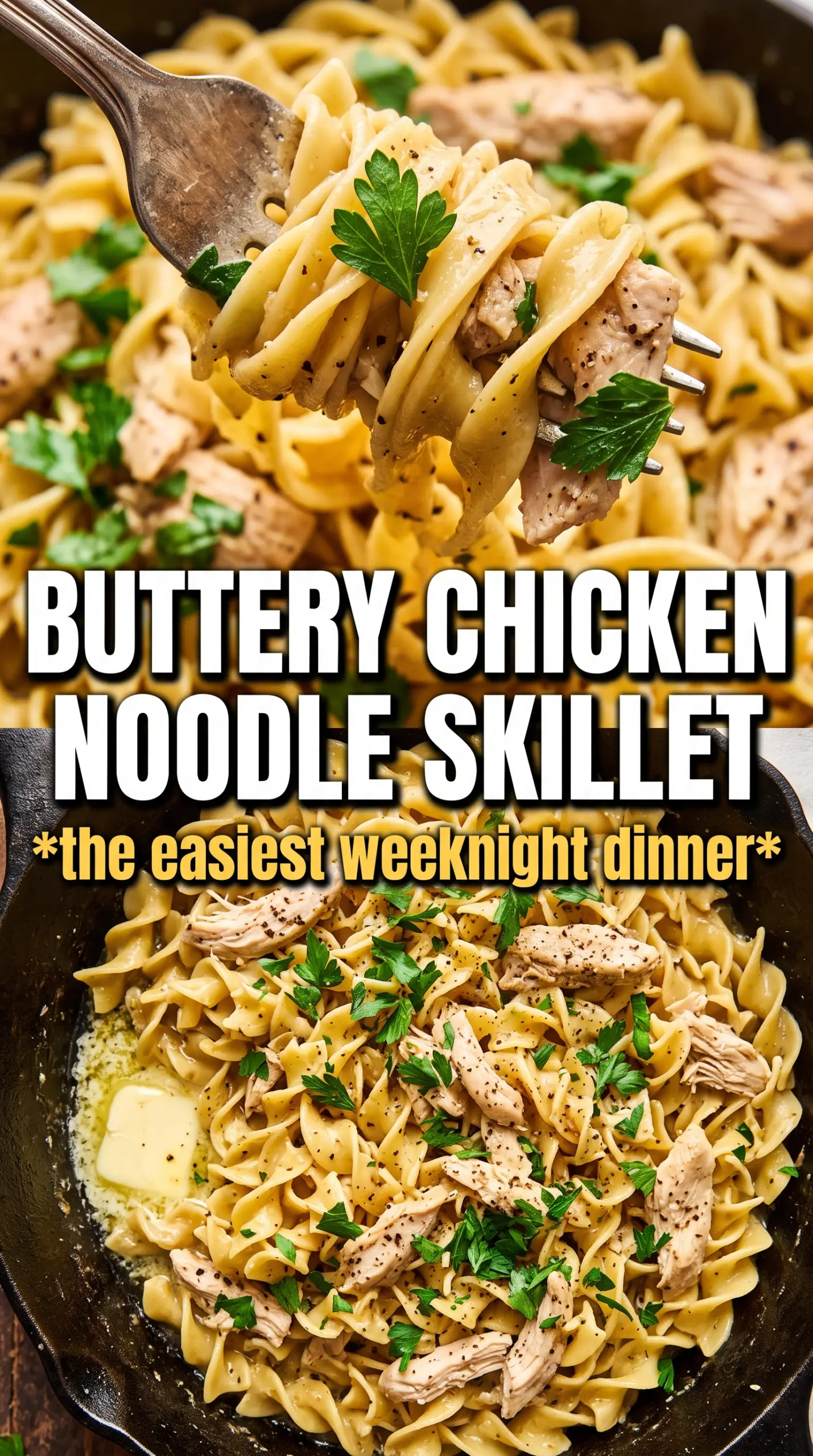
- Egg noodles — Their soft, springy texture is what makes this dish feel like comfort food. They hold onto butter better than thinner pasta shapes, and they stay tender even after a quick toss in the skillet.
- Chicken breasts — They cook fast and slice cleanly over the noodles. If yours are thick on one end, pound them to an even thickness so the thinner part doesn’t dry out before the center reaches 165°F.
- Butter — This is the backbone of the sauce, so use real butter, not a spread. Salted or unsalted both work, but unsalted gives you more control once the Parmesan goes in.
- Parmesan — Freshly grated Parmesan melts into the hot noodles and gives the sauce body. The shelf-stable powdery kind won’t melt the same way and can turn the coating grainy.
- Reserved pasta water — This is the fix for noodles that would otherwise eat dry. Add it a little at a time until the butter looks glossy and lightly coats the pasta.
- Garlic and red pepper flakes — Garlic gives the sauce its main savory note, and the flakes keep it from tasting flat. If you don’t want heat, leave the pepper flakes out; the dish still works.
Getting the Chicken Sear and the Butter Sauce to Meet at the Right Time
Seasoning the Chicken Evenly
Pat the chicken dry before seasoning it so it browns instead of steaming. A simple coat of salt, pepper, garlic powder, and Italian seasoning is enough here because the sauce is carrying the rest of the flavor. If the breasts are uneven in thickness, pound them lightly so they cook at the same pace and the outside doesn’t overcook before the center is safe.
Building the Sear
Heat the olive oil until it shimmers, then lay the chicken in without moving it. You want a deep golden crust on the first side before you flip, and that usually takes five to six minutes depending on thickness. If the chicken sticks when you try to turn it, leave it alone for another minute; it will release when the crust is ready.
Making the Garlic Butter Coat
After the chicken rests, lower the heat before the garlic goes in. Garlic burns fast in butter, and once it turns bitter there’s no saving the sauce. Cook it just until fragrant, then add the noodles and toss right away so the butter doesn’t sit in one spot and scorch.
Finishing the Noodles
Add pasta water a spoonful at a time until the noodles look glossy and lightly slicked, not wet or soupy. Stir in the parsley off the heat if your skillet runs hot so it stays bright instead of turning dull. Then slice the chicken and lay it over the top so the juices run into the noodles when you serve.
Make it richer with extra Parmesan
Add another handful of Parmesan at the end if you want the noodles to lean creamier and saltier. Stir it in off the heat so it melts into the butter without clumping.
Go dairy-free without losing the garlic note
Swap in a plant-based butter and leave off the Parmesan, then use a little extra pasta water and a pinch more salt to keep the noodles from tasting flat. The sauce will be lighter and less savory, but the garlic still carries the dish.
Use chicken thighs for a juicier result
Boneless thighs stay more forgiving if you’re worried about overcooking. They take a little longer than breasts, but they bring a deeper, richer flavor that fits the buttered noodles nicely.
Turn it into a one-pan pasta meal
Toss in cooked peas, spinach, or steamed broccoli right at the end for more color and a little freshness. Add them after the noodles are coated so they stay bright and don’t water down the sauce.
Storage and Reheating
- Refrigerator: Store leftovers in an airtight container for up to 3 days. The noodles will absorb some of the butter as they sit.
- Freezer: The chicken freezes fine, but the noodles lose some of their texture after thawing. If you plan to freeze it, do it in portions and expect softer pasta when reheated.
- Reheating: Warm gently in a skillet over low heat with a splash of water or broth. The common mistake is blasting it in the microwave until the chicken dries out and the butter separates.
Questions I Get Asked About This Recipe
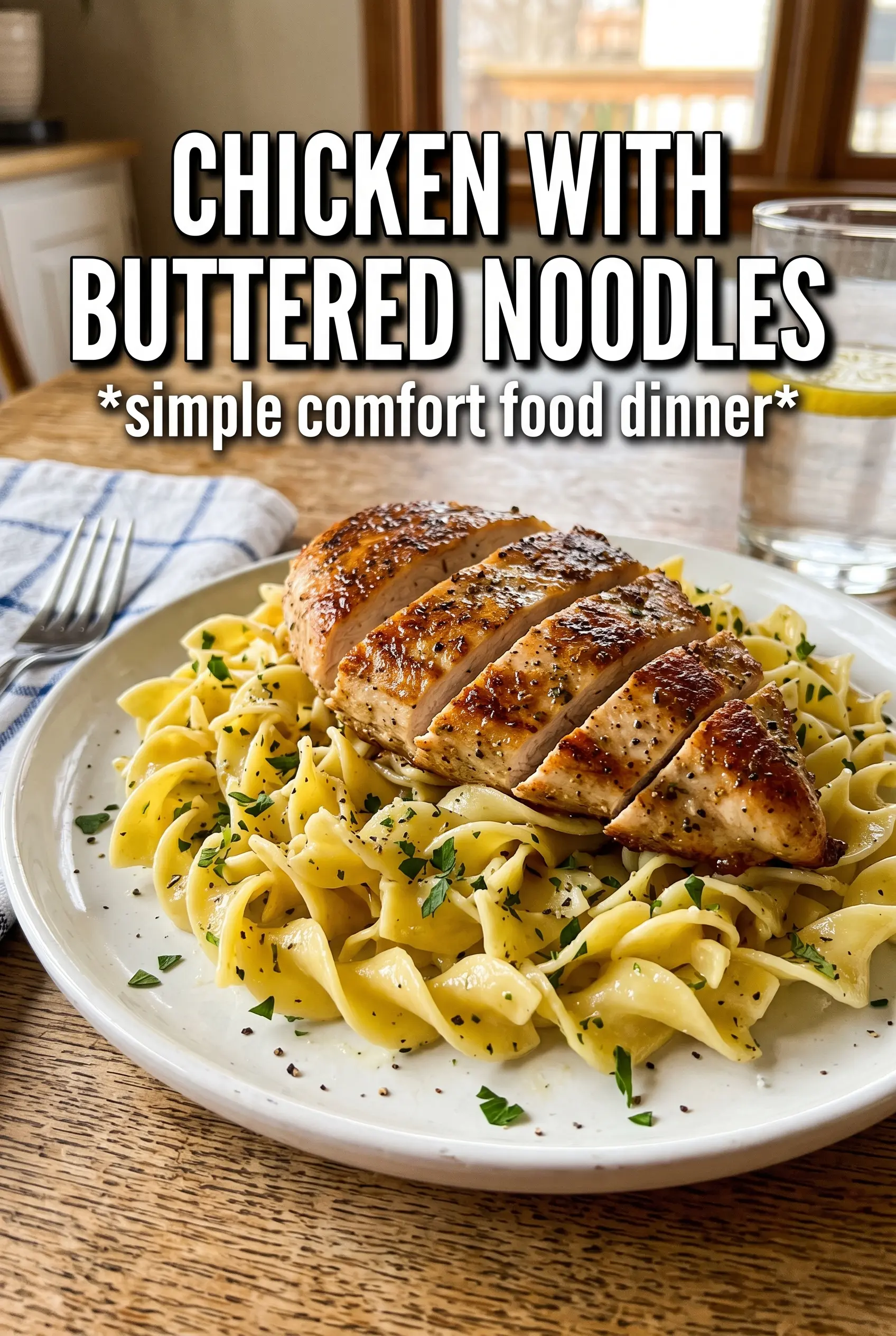
Chicken with Butted Noodles
Ingredients
Equipment
Method
- Pat the chicken breasts dry and season all over with salt, pepper, garlic powder, and Italian seasoning. Heat olive oil in a cast iron skillet over medium-high heat and sear until golden, 5-6 minutes per side, reaching an internal temperature of 165°F.
- Transfer the chicken to a plate, rest briefly, then slice into pieces.
- Melt the butter in the same skillet over medium heat, then add minced garlic and red pepper flakes. Cook for 1-2 minutes until fragrant, without browning the garlic too far.
- Add the cooked egg noodles to the garlic butter and toss to coat. Add reserved pasta water a splash at a time to loosen and create a silky coating.
- Season with salt and pepper to taste, then stir in chopped fresh parsley.
- Divide the noodles among 4 plates and top each with sliced chicken. Scatter Parmesan generously over the top and serve immediately.