Vegetarian taco soup lands in the bowl with the kind of bold, layered flavor that makes people go back for a second ladle before they’ve even finished the first. The broth gets cozy and savory from the taco seasoning, but it still stays bright thanks to the tomatoes, lime, and cilantro on top. Every spoonful gives you beans, corn, and tender peppers in a base that tastes like it simmered all afternoon, even though it comes together fast.
What makes this version work is the way the canned tomatoes and beans are handled. Using Rotel, diced tomatoes, and fire-roasted tomatoes gives the soup depth without needing extra steps, and the fire-roasted can adds that little bit of smoky flavor people usually try to build with bacon or chiles. The spices go in early with the onion and bell pepper, which wakes them up before the broth goes in and keeps the soup from tasting flat.
Below you’ll find the small details that matter most, including the bean-and-broth balance that keeps the soup hearty instead of thin, plus a few swaps if you want to make it dairy-free or stretch it for a bigger crowd.
The broth thickened just enough after 20 minutes, and the mix of black beans, pinto beans, and fire-roasted tomatoes gave it way more body than I expected. My husband kept saying it tasted like a restaurant soup.
Save this vegetarian taco soup for nights when you want a smoky, bean-packed dinner that tastes even better after the flavors have had time to settle.
The Trick to Keeping This Soup Thick Instead of Brothy
The biggest mistake with taco soup is treating it like a thin tomato soup and dumping in all the liquid too early. Beans, tomatoes, and corn already bring moisture, so the broth should support the soup, not drown it. When the seasoning hits the warm onion and pepper first, it has a chance to bloom in the oil and cling to the vegetables instead of floating around in a flat-tasting broth.
Fire-roasted tomatoes help a lot here because they add a deeper, cooked flavor without extra simmer time. If your soup tastes watery at the end, the fix is almost always one of two things: too much broth, or not enough simmering time for the starch from the beans to lightly thicken the pot. A few more minutes uncovered usually solves it.
What Each Bean and Tomato Is Actually Doing Here
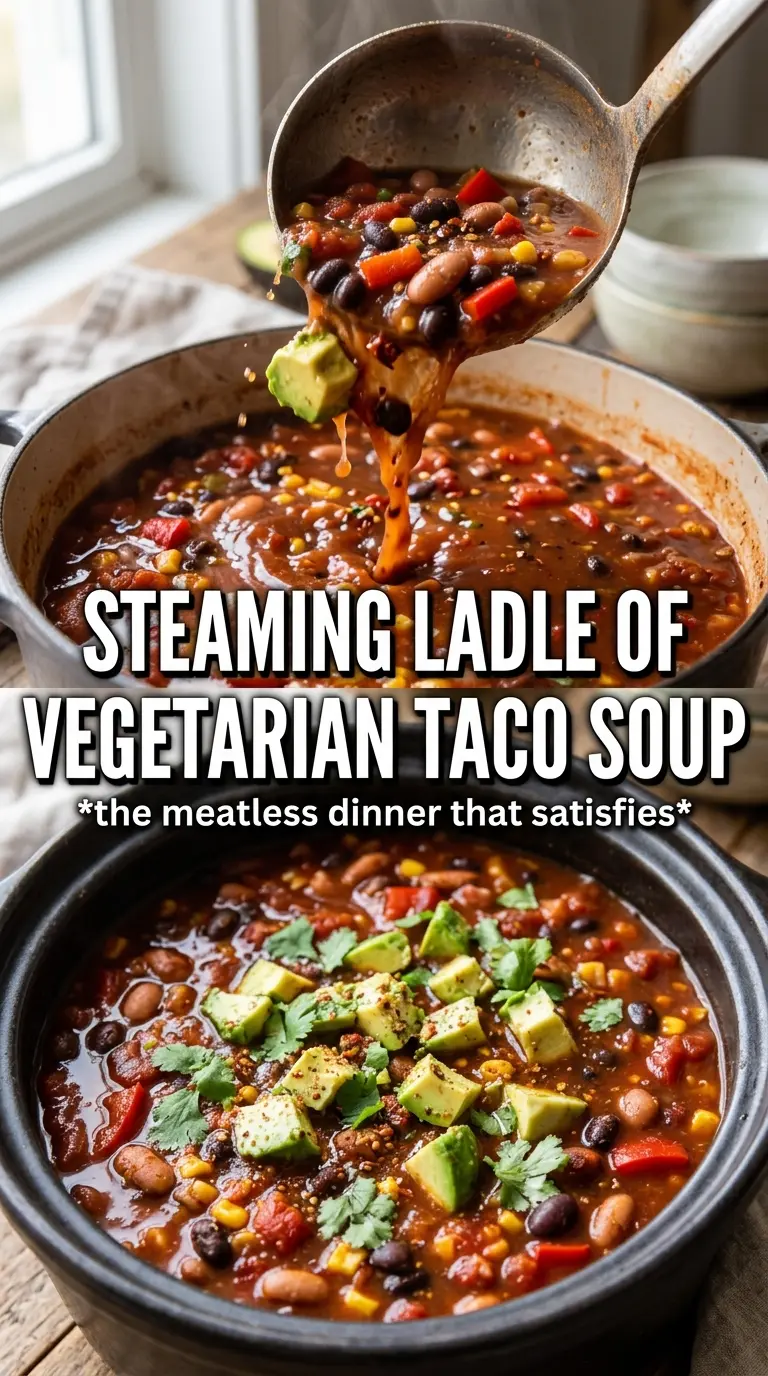
- Black beans — These give the soup its dark, earthy base and hold their shape well. They’re the bean most likely to stay intact instead of turning mushy, which keeps every spoonful texturally interesting.
- Pinto beans — Pintos soften a little more than black beans and help make the broth feel fuller. If you only have one type of bean, use it, but the mix is what gives this soup that layered, hearty feel.
- Kidney beans — These add a firmer bite and a little more visual contrast. They’re also sturdy enough to handle the simmer without falling apart, which matters in a soup like this.
- Rotel, diced tomatoes, and fire-roasted tomatoes — This trio is doing the heavy lifting on both acidity and body. Rotel brings a little heat and seasoning, diced tomatoes keep the soup juicy, and fire-roasted tomatoes add the smoky edge that makes the whole pot taste more developed.
- Taco seasoning plus cumin, chili powder, and smoked paprika — The packet gives you an easy all-in-one base, but the extra spices make the flavor taste cooked-in instead of packet-forward. Smoked paprika is small but important here; it rounds out the tomato and bean flavor without making the soup spicy.
- Vegetable broth — Use a broth you’d actually drink on its own. Since this is a simple soup with a lot of canned ingredients, a bland broth will show up immediately in the finished bowl.
Building the Pot So the Flavor Tastes Cooked, Not Canned
Start with the Onion and Bell Pepper
Heat the olive oil first, then cook the diced onion and bell pepper until the onion turns translucent and the pepper softens at the edges. This is where the soup gets its first layer of sweetness, and if you rush it, the finished pot tastes sharper and more canned. A little browning is fine, but you don’t want actual caramelization here — just enough softening to take the raw edge off.
Wake Up the Spices in the Oil
Add the garlic, taco seasoning, cumin, chili powder, and smoked paprika and stir for about a minute. The mixture should smell fragrant and warm, not burnt or bitter. If the garlic starts sticking or darkening fast, lower the heat right away; garlic burns quickly and will take the whole pot with it.
Let the Soup Simmer Long Enough to Meld
Pour in the beans, corn, tomatoes, and vegetable broth, then bring everything to a boil before dropping the heat to a steady simmer. After 15 to 20 minutes, the broth should look slightly deeper in color and taste more unified, with the beans and tomatoes no longer reading as separate ingredients. If the soup still tastes sharp at the end, it usually needs just a few more minutes uncovered and a final pinch of salt.
Finish with the Fresh Toppings
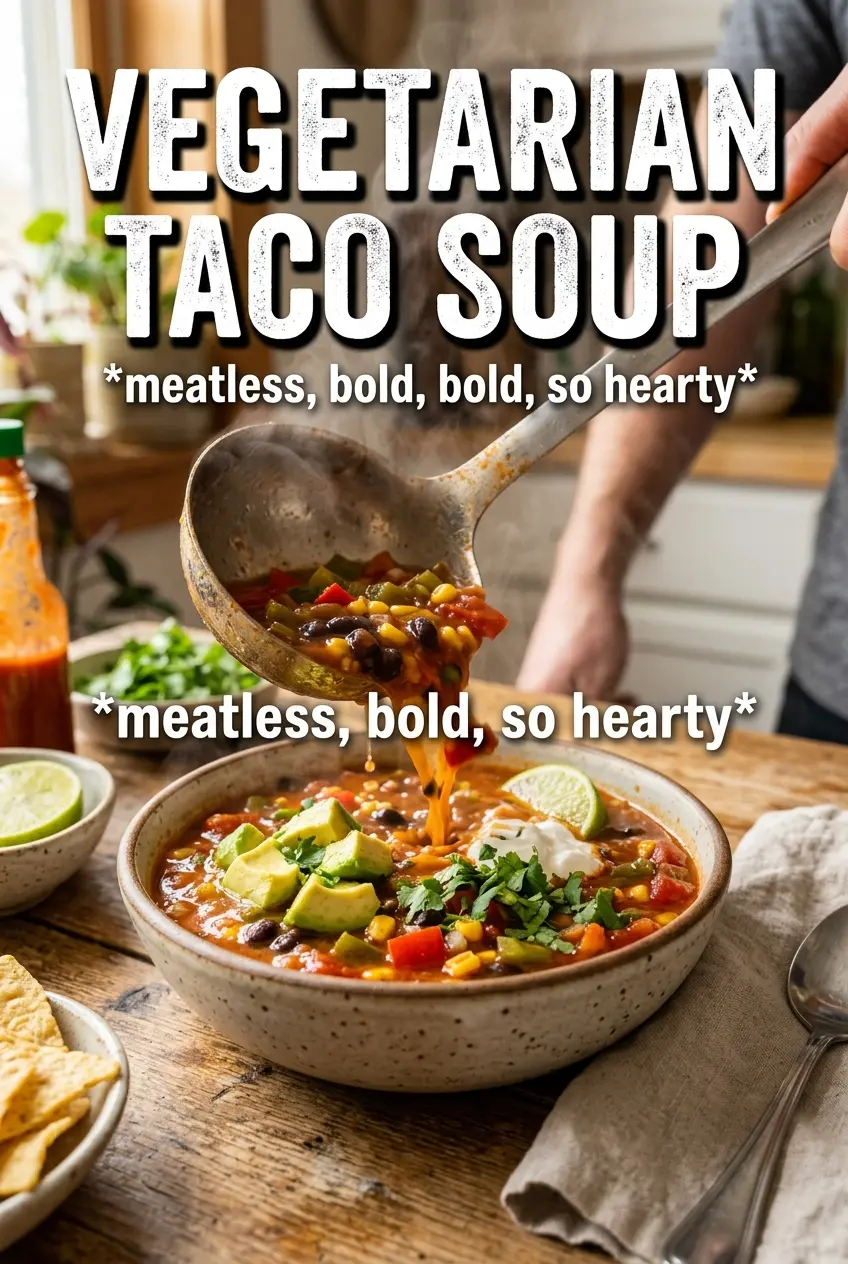
Serve the soup with avocado, cilantro, lime wedges, sour cream or vegan sour cream, and tortilla chips. The lime matters more than it looks like it should; it cuts through the beans and brings the whole bowl into focus. Add the chips right before eating so they stay crisp instead of going soggy in the broth.
How to Adjust This Soup for Different Kitchens and Different Eaters
Make It Dairy-Free Without Losing the Creamy Finish
Skip the sour cream and use vegan sour cream or extra avocado on top. The soup itself is already dairy-free, so this swap only changes the finish, not the body of the dish. You still get that cool, creamy contrast against the smoky broth.
Use Frozen Corn When That’s What You Have
Frozen corn works better than canned if you want a slightly sweeter bite and a cleaner texture. Add it straight from frozen with the broth and beans; there’s no need to thaw it first. Canned corn is softer and a little saltier, which is fine if that’s what you’ve got.
Make It Spicier Without Throwing Off the Balance
Add a diced jalapeño with the onion and bell pepper, or stir in a pinch of cayenne with the spices. That gives you heat in the broth instead of just on top, which makes the spice feel integrated rather than sharp. A little goes a long way once the soup simmers.
Stretch It for a Bigger Crowd
Add another can of beans and another cup or two of broth if you need to feed more people. Keep the seasoning in proportion and taste at the end, because the extra broth can flatten the flavor if you don’t adjust salt and lime. This is a forgiving soup, but it still tastes best when the broth stays bold.
Storage and Reheating
- Refrigerator: Store in an airtight container for up to 4 days. The soup thickens as it sits because the beans keep releasing starch.
- Freezer: It freezes well for up to 3 months. Cool it completely first and leave a little headspace in the container so the broth can expand.
- Reheating: Warm it gently on the stove over medium-low heat, adding a splash of broth or water if it has become too thick. The main mistake is boiling it hard, which can make the beans split and the vegetables go mushy.
Answers to the Questions Worth Asking
Vegetarian Taco Soup
Ingredients
Equipment
Method
- Heat olive oil in a large pot, then sauté onion and bell pepper for 4-5 minutes. Stir occasionally until the vegetables soften and look slightly translucent.
- Add garlic and cook for 1 minute, stirring to prevent burning. The mixture should smell fragrant and warmed through.
- Stir in taco seasoning, cumin, chili powder, and smoked paprika, and cook for 30 seconds. You should see the spices darken slightly and become aromatic.
- Add black beans, pinto beans, kidney beans, corn, Rotel tomatoes, diced tomatoes, fire-roasted tomatoes, and vegetable broth. Bring everything to a boil over medium-high heat.
- Simmer the soup for 15-20 minutes until flavors meld, stirring once or twice. The broth should be richly colored and slightly thickened.
- Season with salt and pepper to taste. Serve hot with avocado, cilantro, lime wedges, sour cream (or vegan sour cream), and tortilla chips.