Plump cheese tortellini and carbonara belong together in a way that feels almost unfair. The pasta brings its own soft, cheesy filling, and the sauce wraps around each piece in a glossy layer that tastes rich without turning heavy. Crispy pancetta, a sharp hit of parmesan, and plenty of black pepper keep every bite moving instead of flattening out.
The trick is treating this like carbonara, not like a cream sauce. The heat comes from the pasta and the pan residue, not from the burner once the egg mixture goes in. That keeps the sauce silky instead of scrambled. The reserved pasta water matters here too, because the starch helps the eggs and cheese loosen into a smooth coating that clings to the tortellini instead of sliding off.
Below, I’ve included the small timing details that make the difference, plus a few swaps for when you only have bacon, want to skip the pork, or need to reheat leftovers without drying everything out.
The sauce stayed silky and coated every tortellini without turning grainy. I tossed in the pasta water a little at a time, and the pancetta stayed crisp all the way through dinner.
Save this tortellini carbonara for a fast skillet dinner with crispy pancetta and a silky parmesan-egg sauce.
The Part That Stops the Eggs from Scrambling
Carbonara fails when the pan is too hot and the eggs seize before they can emulsify. Tortellini makes that risk a little higher because the pasta holds heat in those folds and seams, so the sauce can go from glossy to grainy fast if you hesitate. The fix is simple: pull the pan off the heat before the egg mixture goes in, then toss immediately so the residual warmth does the work.
The other thing that matters is how much liquid you add. Too little pasta water and the sauce stays tight and clumpy. Add it in small splashes and keep tossing until the sauce loosens into a coating that looks fluid in the pan but clings when it lands on the pasta.
What Each Ingredient Is Actually Doing in This Dish
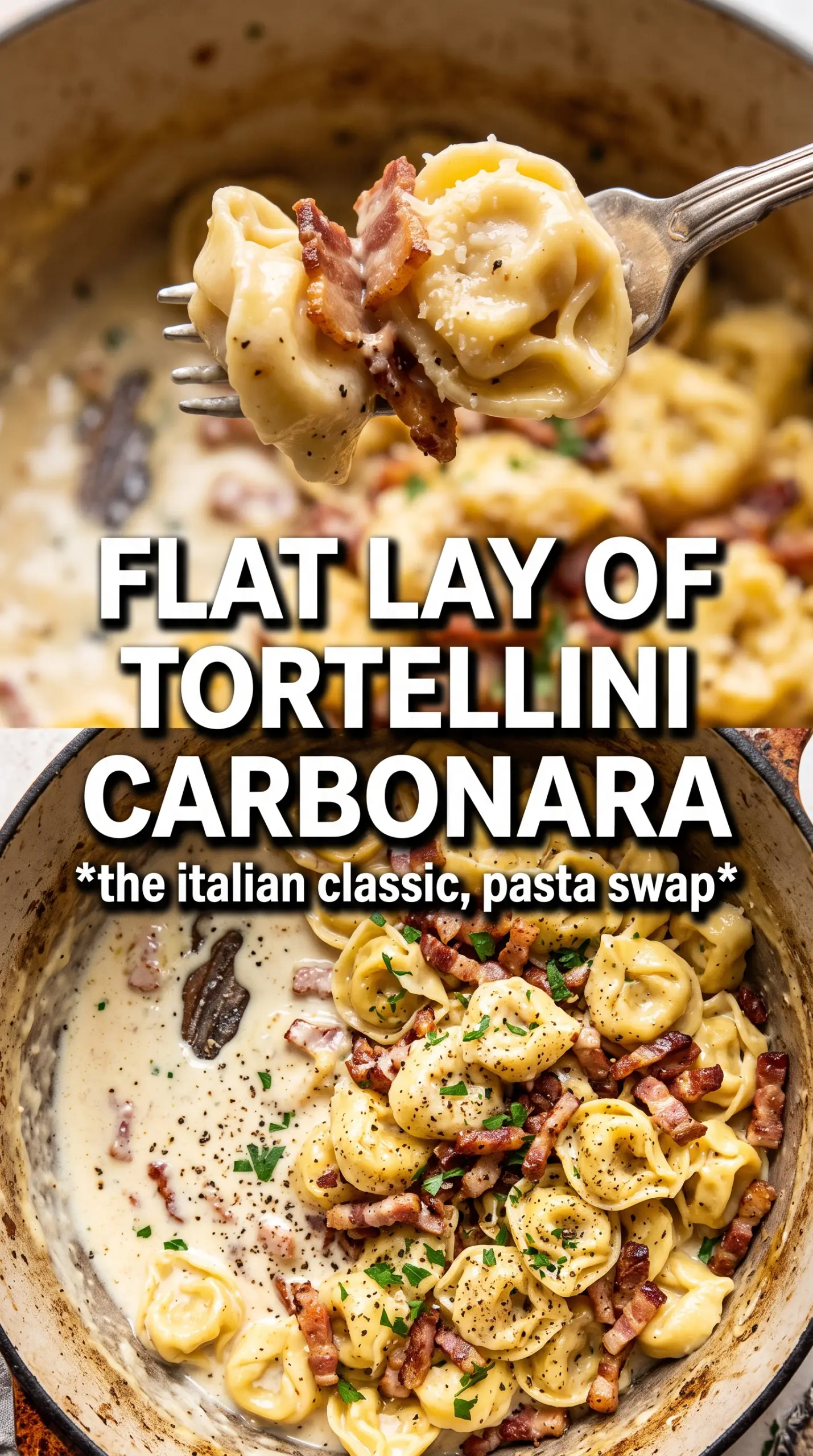
- Refrigerated cheese tortellini — This is the backbone of the dish, and the cheese filling makes the whole bowl taste richer than plain pasta ever could. Fresh refrigerated tortellini cooks quickly and stays tender; dried tortellini can work, but it usually takes longer and doesn’t have the same soft bite.
- Pancetta or thick-cut bacon — Pancetta gives a cleaner, savory pork flavor, while bacon brings more smoke. Either one works, but cut it small so it crisps evenly and leaves enough rendered fat to carry the garlic and help coat the pasta.
- Egg yolks plus one whole egg — The yolks bring body and that classic carbonara silkiness, while the whole egg keeps the sauce from feeling too dense. If you use only yolks, the sauce gets richer but heavier; the whole egg gives you a little more flexibility when you toss in the pasta water.
- Parmesan — Finely grated parmesan melts into the sauce instead of clumping. Pre-grated cheese often has anti-caking agents that can make the sauce less smooth, so grate it fresh if you want the best texture.
- Freshly cracked black pepper — Don’t treat this like a garnish. Pepper is part of the sauce here, and the sharp bite keeps the egg and cheese from tasting flat.
- Reserved pasta water — This is what turns the egg-and-cheese mixture into a sauce. The starch helps bind everything together, so don’t drain the tortellini and walk away before you scoop some out.
Building the Sauce Without Losing the Creamy Texture
Cook the Tortellini Just to Tender
Boil the tortellini in well-salted water until they’re just tender and floating, then reserve at least a cup of the cooking water before draining. Refrigerated tortellini goes from perfect to bloated fast, so start checking early. If they overcook, they’ll split when you toss them with the sauce and the filling can leak into the pan.
Crisp the Pancetta and Wake Up the Garlic
Cook the pancetta over medium heat until the fat renders and the pieces turn deeply golden at the edges. Add the garlic and stir it for about a minute, just until fragrant. If the garlic browns, it turns bitter and that bitterness carries straight into the sauce, so pull the pan off the heat as soon as it smells sweet and sharp.
Whisk the Egg Mixture Until It Looks Thick
Whisk the yolks, whole egg, parmesan, nutmeg, and a generous amount of black pepper until the mixture looks thick and shaggy. The parmesan won’t fully dissolve here, and that’s fine. What you want is a cohesive paste that can melt into the hot pasta without separating into little scrambled bits.
Toss Off the Heat and Loosen With Pasta Water
Add the hot tortellini to the pancetta pan and keep it off the burner while you pour in the egg mixture. Toss constantly so the eggs coat the pasta instead of sitting in one hot spot. Add pasta water a splash at a time until the sauce turns glossy and silky; if it looks greasy, it usually needs more tossing and a little more water, not more heat.
Finish With Salt, Parsley, and More Parmesan
Taste before you salt, since pancetta and parmesan both bring plenty of seasoning. Add just enough salt to sharpen the flavors, then finish with parsley and another shower of parmesan. The parsley isn’t there for decoration only — it cuts through the richness and keeps the bowl from tasting one-note.
How to Adapt Tortellini Carbonara Without Losing the Point
Use bacon instead of pancetta
Bacon works well when that’s what you have, but it brings smoke and a little sweetness that pancetta doesn’t. Use thick-cut bacon and cook it until crisp, then keep an eye on the salt at the end because bacon usually seasons the dish more aggressively.
Make it meatless
Skip the pancetta and start by gently cooking the garlic in butter or olive oil instead. You’ll lose the smoky pork flavor, but the parmesan, pepper, and egg still make a satisfying sauce. A pinch of smoked paprika can help replace some of the savory depth if you want it.
Gluten-free version
Use a gluten-free cheese tortellini if you can find one that holds up well in boiling water. The sauce itself is naturally gluten-free, but gluten-free pasta can be more fragile, so toss gently and stop cooking as soon as it’s tender.
Dairy-aware swap for the parmesan
If you need a softer, less sharp cheese, use a finely grated pecorino-parmesan blend. Pecorino is saltier and more assertive, so cut back on the added salt until the end. The sauce will taste punchier and a little less mellow, but it still clings beautifully.
Storage and Reheating
- Refrigerator: Store leftovers up to 3 days. The sauce will tighten as it chills, and the tortellini will absorb some of the moisture.
- Freezer: I don’t recommend freezing this dish. Egg-based sauces and filled pasta both lose their best texture after thawing.
- Reheating: Rewarm gently in a skillet over low heat with a splash of water or milk, stirring often. High heat will scramble the sauce and make the tortellini rubbery before the center warms through.
Questions I Get Asked About This Recipe
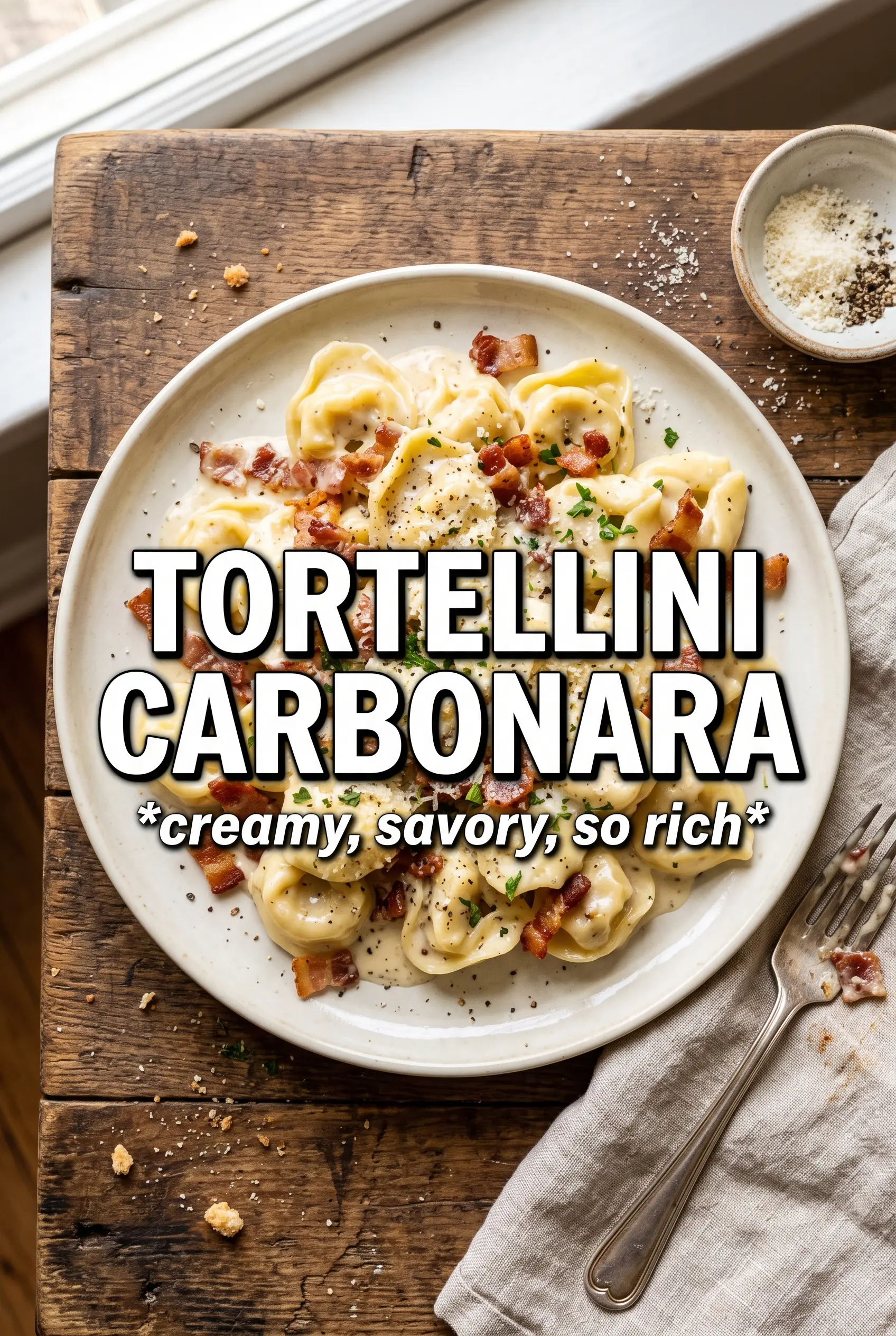
Tortellini Carbonara
Ingredients
Equipment
Method
- Bring a large pot of well-salted water to a boil and cook the refrigerated cheese tortellini until tender, then reserve 1 cup of pasta cooking water.
- Keep the tortellini hot and set aside while you crisp the pancetta. (Do not drain completely dry.)
- Cook diced pancetta in a large skillet over medium heat until crispy.
- Add minced garlic to the crispy pancetta and cook for 1 minute, then remove from heat.
- In a bowl, whisk egg yolks, whole egg, finely grated parmesan, nutmeg, and lots of freshly cracked black pepper until smooth and thick.
- Add the hot tortellini to the pancetta pan off the heat, then quickly pour in the egg mixture.
- Toss vigorously so the sauce coats the tortellini, adding pasta water a splash at a time until silky and creamy.
- Season with salt to taste, then top with fresh parsley and extra parmesan. Serve immediately with abundant cracked black pepper on top.