Golden chicken breasts tucked into a bright tomato basil skillet are the kind of dinner that looks like you worked harder than you did. The chicken stays juicy, the tomatoes collapse into a light sauce with just enough body to cling to every slice, and the fresh basil at the end keeps the whole dish tasting clean instead of heavy. A shower of Parmesan and a little olive oil pull everything together without hiding the tomatoes.
What makes this version work is the order of the pan work. The chicken sears first, then the garlic goes in briefly so it stays sweet, not bitter, and the cherry tomatoes cook until they burst and give up their juices. A splash of white wine or broth loosens the browned bits from the skillet, which is where most of the flavor lives. Balsamic adds just enough depth to make the tomatoes taste fuller without turning the sauce sweet.
Below you’ll find the exact timing that keeps the chicken tender, plus the swaps that still give you a good skillet dinner when you’re out of white wine or fresh basil.
The tomatoes burst down into the prettiest sauce and the chicken stayed juicy instead of drying out. I used broth instead of wine and still got a pan that tasted like it had been simmering much longer than 25 minutes.
Save this tomato basil chicken for the night you want a fast skillet dinner with burst tomatoes, fresh basil, and a glossy pan sauce.
The Chicken Needs Color Before the Tomatoes Go In
The biggest mistake with skillet chicken is crowding the pan or moving too soon. If the breasts don’t get a proper sear, the sauce has to carry the whole dish, and that leaves you with pale chicken and a flat-tasting pan. You want a deep golden crust on both sides before the chicken comes out; that color is what gives the sauce its backbone.
Once the chicken leaves the pan, don’t rinse out those browned bits. The garlic and tomatoes go into the same skillet, and the moisture from the tomatoes starts lifting everything off the bottom. That’s what turns a simple sauté into a sauce that tastes rounded and savory instead of watery.
What the Tomatoes, Wine, and Balsamic Are Doing Here
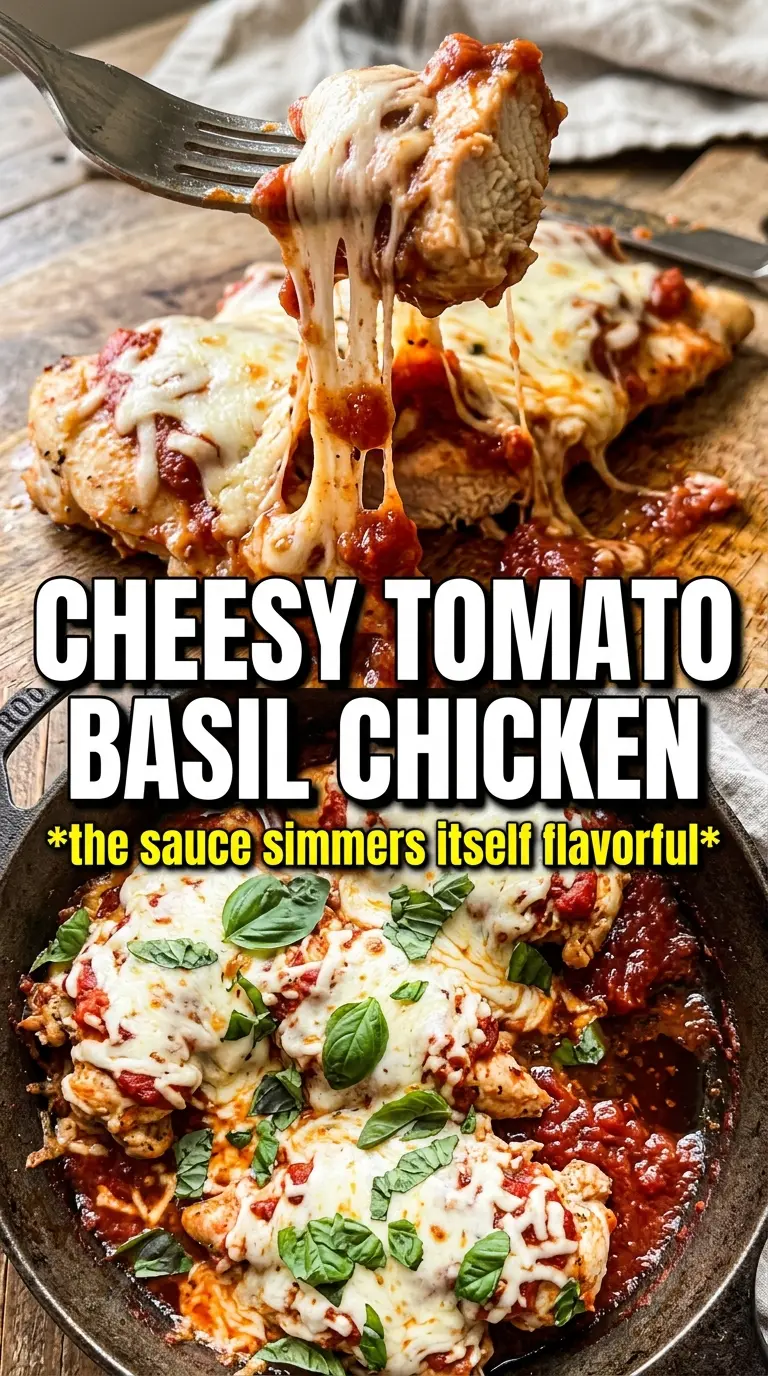
- Cherry tomatoes — These are worth using fresh because they burst into a light sauce instead of turning mushy like larger tomatoes often do. Halve them so they release juice quickly, then leave the heat alone for a minute or two so they can blister and split on their own.
- Dry white wine or chicken broth — Wine gives the sauce a little lift and acidity, but broth works well if that’s what you have. What matters is using that liquid to deglaze the pan; it should bubble hard enough to loosen the fond, not just warm through.
- Fresh basil — Dried basil won’t give the same finish here. Add the fresh basil at the very end so it stays fragrant and green instead of fading into the sauce.
- Balsamic vinegar — This isn’t here to make the dish taste sweet. It deepens the tomatoes and sharpens the sauce, especially if your tomatoes are a little bland.
Building the Skillet Sauce Without Drying Out the Chicken
Season and Sear
Pat the chicken dry, season it well, and lay it in the hot olive oil without crowding the skillet. It should sizzle right away. Let it cook untouched for 5 to 6 minutes per side so a crust forms; if you keep nudging it, the surface steams and the color never develops. Pull the chicken once it reaches 165°F, then let it rest on a plate while you build the sauce.
Wake Up the Pan
Turn the heat down just enough that the garlic won’t scorch, then stir it for about 30 seconds until it smells sweet. Add the cherry tomatoes and give them time to soften and burst. If the pan looks dry before the tomatoes release enough juice, don’t add more oil first; the tomatoes need a minute on the heat to do their job.
Reduce and Finish
Pour in the wine or broth and scrape the bottom of the skillet with a wooden spoon. Let it bubble for a minute so the sharp edge cooks off and the sauce starts to thicken slightly. Add the Italian seasoning, red pepper flakes, and balsamic, then return the chicken and spoon sauce over the top. A two-minute simmer is enough to rewarm the chicken without pushing it past tender.
The Final Layer
Take the pan off the heat before you add the basil and Parmesan. That keeps the basil fresh and prevents the cheese from turning grainy or clumping in the sauce. Finish with a little extra olive oil if you want the sauce to look glossy and restaurant-style, then serve it straight from the skillet while the tomatoes are still bright.
How to Make This Skillet Dinner Fit What You’ve Got
Use chicken thighs instead of breasts
Boneless skinless thighs stay juicier and are more forgiving if your skillet runs hot. They need a few extra minutes to cook through, but the sauce and finishing method stay the same.
Make it dairy-free
Skip the Parmesan and finish with a drizzle of good olive oil plus a pinch of flaky salt. You lose the salty, nutty finish from the cheese, but the tomato-basil sauce still carries the dish on its own.
Swap in canned cherry tomatoes when fresh ones aren’t great
Use drained canned whole tomatoes or cherry tomatoes if the fresh ones are pale and hard. The sauce will taste deeper and less bright, so finish with a little extra basil or a tiny squeeze of lemon to lift it back up.
Storage and Reheating
- Refrigerator: Store leftovers in an airtight container for up to 3 days. The chicken stays good, and the sauce gets a little richer overnight.
- Freezer: Freeze cooked chicken and sauce together for up to 2 months. The tomatoes soften more after thawing, so the texture won’t be as fresh, but it still works well for a second dinner.
- Reheating: Warm gently in a covered skillet over low heat with a splash of broth or water. High heat dries out the chicken fast and makes the Parmesan separate.
Answers to the Questions Worth Asking
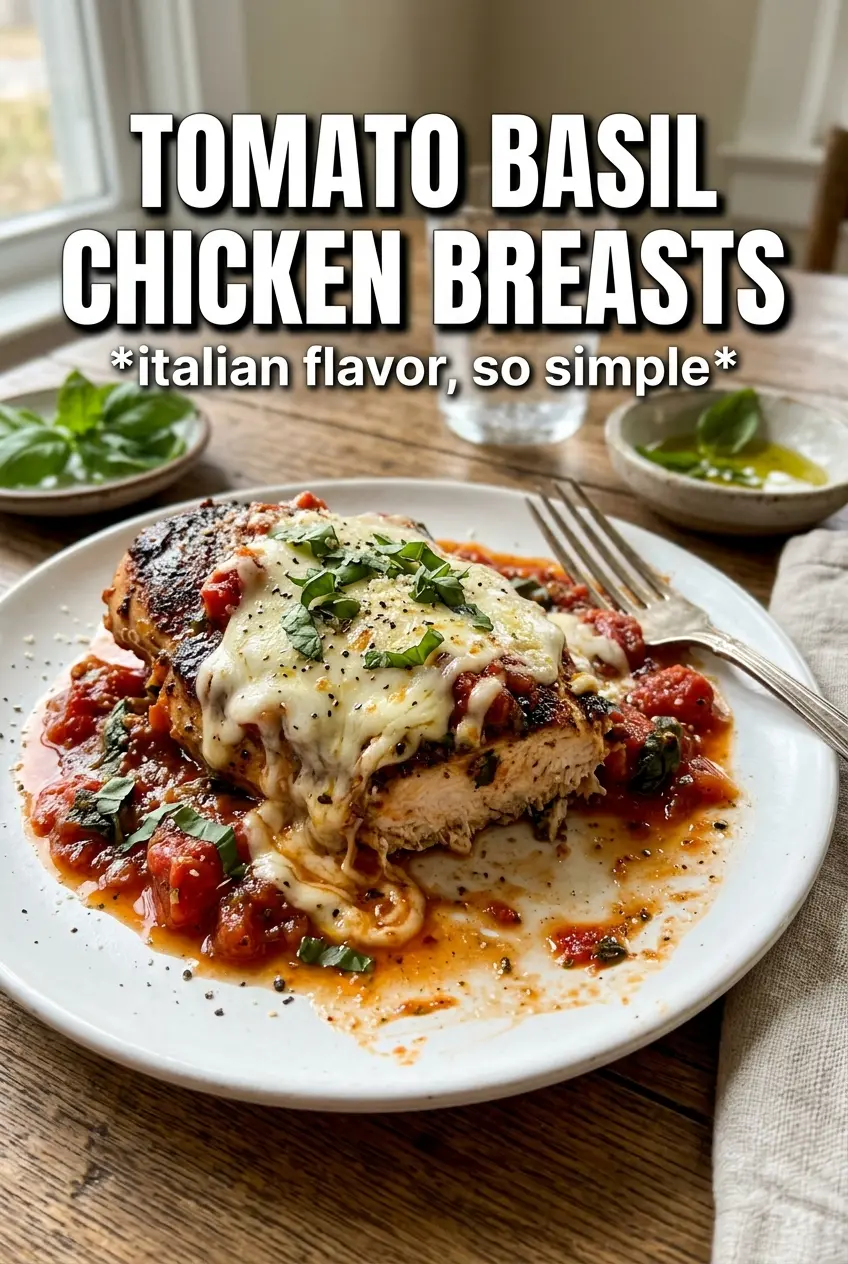
Tomato Basil Chicken Breasts
Ingredients
Equipment
Method
- Season boneless skinless chicken breasts with salt, pepper, garlic powder, and Italian seasoning to taste. Heat olive oil in a large skillet over medium-high heat and sear until golden, 5-6 minutes per side, until internal temperature reaches 165°F, then remove.
- In the same pan, cook garlic over medium-high heat for 30 seconds. Add cherry tomatoes and cook for 3-4 minutes until they burst and release their juices.
- Pour in dry white wine or chicken broth and let it bubble for 1 minute. Stir in dried Italian seasoning, red pepper flakes, and balsamic vinegar.
- Return chicken to the pan and spoon the tomato sauce over each breast. Simmer for 2 minutes to heat through and meld flavors.
- Scatter fresh basil over the top. Finish with shaved Parmesan and extra olive oil before serving.