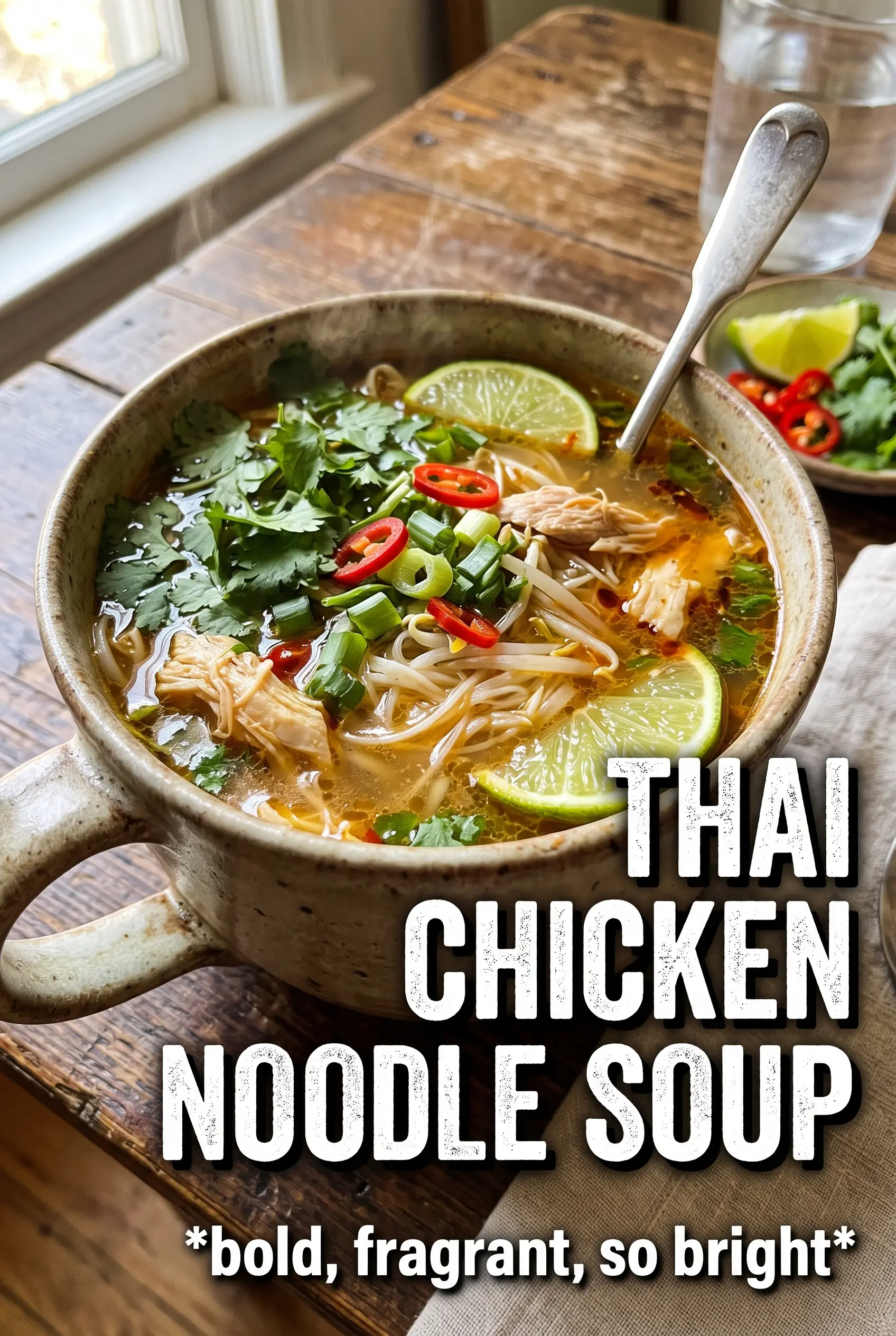
Silky coconut broth, tender chicken, and slippery rice noodles make this Thai chicken noodle soup the kind of bowl that disappears fast. The broth lands right in that sweet spot between rich and bright: curry paste for heat and depth, lime for lift, fish sauce for salt, and a little brown sugar to round everything out. It eats like comfort food, but it never feels heavy.
What makes this version work is the order. The curry paste gets a minute in the pot first so it can bloom in the oil and lose that raw edge. Then the coconut milk and broth go in together, which gives the soup body without making it greasy. Thinly sliced chicken cooks quickly and stays tender, and the rice noodles are added at the end so they keep their bounce instead of turning soft and dull in the pot.
Below, I’ve included the small details that matter here: how to keep the broth balanced, when to pull the aromatics, and what to change if you need a dairy-free, gluten-free bowl that still tastes complete.
The broth was spot-on and the noodles stayed springy even after serving. I added the lime at the end like you said and it made the coconut curry flavor pop.
Save this Thai Chicken Noodle Soup for the nights when you want a coconut-curry broth that tastes bright, balanced, and finished with fresh herbs.
The Trick to Keeping the Broth Bright Instead of Flat
Thai soup can go bland fast if the seasoning gets added in the wrong order. Curry paste needs heat and fat first, which is why it goes into the pot before the liquids. That quick bloom wakes up the spices and gives the broth depth instead of that one-note canned-coconut taste you get when everything is dumped together.
The second thing that matters is balance at the end. Fish sauce brings salt and savoriness, lime juice brings sharpness, and brown sugar smooths the edges without making the soup sweet. If the broth tastes dull, it usually needs acid, not more salt. If it tastes harsh, it usually needs a little more coconut milk or sugar to round it back out.
What Each Ingredient Is Actually Doing in This Bowl
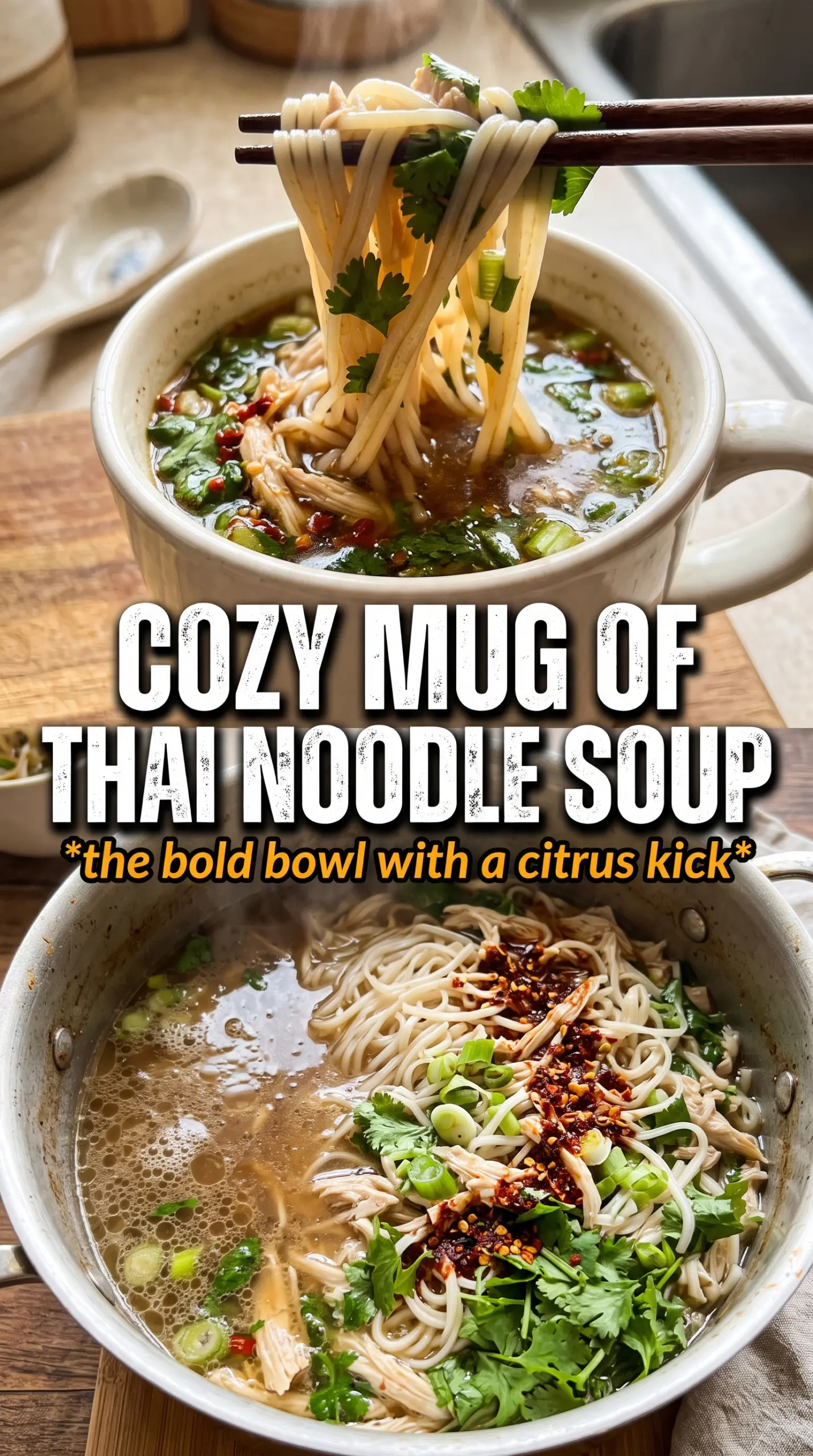
- Red curry paste — This is the backbone of the soup. It carries chili, lemongrass, garlic, and spice in one ingredient, and it needs to be cooked in the pot first so the flavors open up. Different brands vary a lot, so taste yours if you know it runs hot or mild.
- Coconut milk — Full-fat coconut milk gives the broth its silky body and keeps the curry from tasting thin. Light coconut milk will work, but the soup loses some of that lush texture. Shake the can well before opening so the cream and liquid go back together.
- Lemongrass and galangal — These aromatics bring the clean, citrusy Thai note that makes the soup taste layered. If you can’t find galangal, fresh ginger is the best swap, even if it’s a little less piney and floral. Bruise the lemongrass before it goes in so it actually gives up flavor.
- Rice noodles — These are best soaked separately and added at the end. If they simmer the whole time, they turn mushy and start stealing broth from the pot. Thin rice sticks or medium-width noodles both work here.
- Fish sauce and lime juice — These two finish the soup. Fish sauce gives salt and depth; lime wakes up everything else. The lime should go in near the end, not at the start, or it can taste muted by the simmer.
Building the Soup in the Right Order
Bloom the Curry Paste First
Warm the oil in a large pot, then cook the curry paste for a minute or two until it smells fragrant and a little darker. You’re not trying to brown it hard; you’re looking for that moment when the paste loosens and the oil takes on a red-gold tint. If it sticks or burns, the heat is too high and the soup will taste harsh, so lower the burner before adding the aromatics.
Infuse the Broth Before the Chicken Goes In
Add the garlic, lemongrass, and galangal or ginger, then pour in the coconut milk and broth. Let that simmer for about 10 minutes so the aromatics perfume the liquid without turning bitter. This is where the broth develops its body, so keep the heat gentle; a hard boil can make coconut milk separate and leave the surface looking grainy.
Cook the Chicken Just Until It Turns Tender
Slide in the sliced chicken and keep the simmer steady until the pieces are opaque and cooked through, about 8 to 10 minutes. Thin slices cook fast, which is the point, but they also overcook fast if the soup is boiling aggressively. Pull the pot back to a gentle simmer and stop as soon as the chicken loses its pink center.
Finish With Noodles and Freshness
Remove the lemongrass and galangal before adding the drained noodles. Let them heat through for just a couple of minutes so they stay soft but still have a little chew. Taste the broth one last time, then serve it with bean sprouts, green onions, basil, cilantro, lime wedges, and chili so each bowl gets freshness at the table, not just in the pot.
How to Adjust This Soup Without Losing What Makes It Work
Make it dairy-free and still rich
This soup is naturally dairy-free as written, and full-fat coconut milk is what gives it that creamy finish. Don’t swap in a thinner plant milk, or the broth will lose its body and taste more like spicy stock than curry soup.
Make it gluten-free without changing the texture
Use a gluten-free curry paste and check your fish sauce label, since some brands include wheat. Rice noodles are already the right choice here, so once those two ingredients are verified, the soup stays naturally gluten-free.
Use shrimp instead of chicken
Shrimp works well if you want a faster version, but add it only in the last few minutes. It turns rubbery fast, and the broth doesn’t need much time once the curry base is already built.
Make it ahead for easier weeknights
Cook the broth and chicken ahead, but keep the noodles separate until serving. Rice noodles keep absorbing liquid as they sit, so if they go into the pot too early, the soup turns starchy and the noodles swell past their best texture.
Storage and Reheating
- Refrigerator: Store the broth and chicken for up to 3 days. The noodles soften as they sit, so they’re best stored separately if possible.
- Freezer: The broth base freezes well for up to 2 months, but freeze it without the noodles and fresh herbs. Coconut milk can separate a little after thawing; whisk it gently while reheating and it comes back together.
- Reheating: Warm the soup over low to medium-low heat until steaming, not boiling. Add fresh noodles or rewarm leftover noodles separately, because boiling the whole pot will overcook both the chicken and the coconut broth.