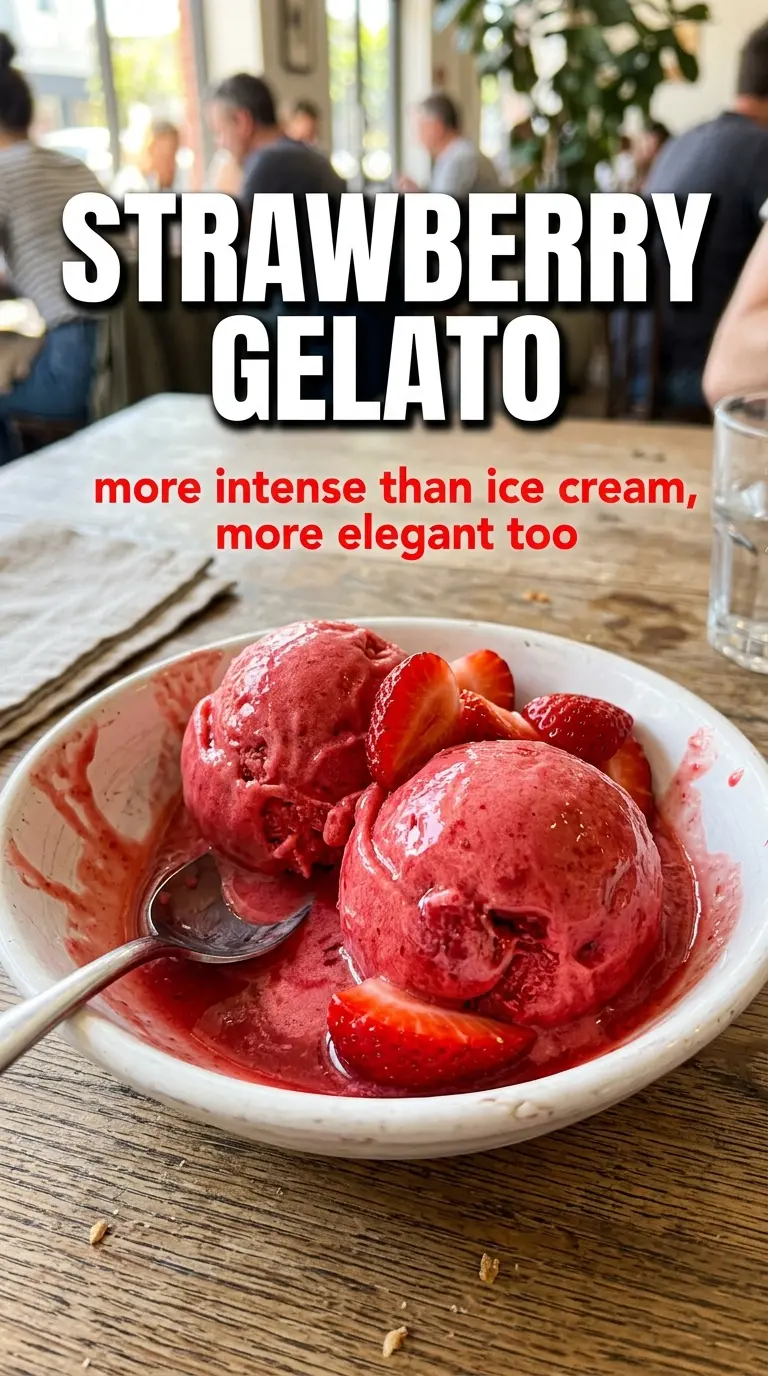
Strawberry gelato hits differently when the fruit is handled with care. The flavor comes through bright and concentrated, not muddled by too much dairy, and the texture stays dense and silky instead of airy. When it’s done right, you get a scoop that tastes like ripe strawberries first and dessert second.
This version leans on a simple cooked custard for body, but it keeps the milk and cream in a supporting role so the berries stay front and center. The strawberry puree goes in after the custard thickens, which helps preserve that fresh, vivid taste. A little cornstarch gives the base extra stability, so the gelato churns up smooth and holds a clean scoop without turning icy.
Below, I’ll walk through the one part that matters most for texture, plus the ingredient choices that keep the strawberry flavor sharp instead of flat. If you’ve ever had homemade gelato come out too soft, too sweet, or a little dull, this version fixes those problems at the source.
The strawberry flavor stayed bright even after churning, and the custard thickened up perfectly without any eggy taste. I chilled it overnight and it scooped like a dream the next day.
Like this bright, creamy strawberry gelato? Save it to Pinterest for the times you want a dense, fruity dessert with true berry flavor.
The Part That Keeps Strawberry Gelato Bright Instead of Flat
The biggest mistake with strawberry gelato is cooking the berries too hard or too long. Once fruit gets boiled into the dairy, the flavor turns dull and the color loses that clean pink-red look. This recipe keeps the strawberry puree out of the heat until the custard has already thickened, so the fruit tastes fresh and the finish stays vivid.
The other quiet win is the cornstarch. Gelato should feel dense, not fluffy, and cornstarch helps the base hold that tighter texture without needing extra egg yolks. If your gelato usually turns icy after freezing, it’s often because the base was too loose before churning. A thicker custard starts you off with a better freeze.
- Fresh strawberries — Use ripe berries with a strong aroma. Soft or pale strawberries will taste weak no matter how much sugar you add.
- Lemon juice — This sharpens the fruit and keeps the flavor from reading jammy. Bottled lemon juice works in a pinch, but fresh tastes cleaner here.
- Egg yolks — They give the gelato body and that custardy, Italian-style richness. Whole eggs won’t give the same smooth finish.
- Cornstarch — This is the texture insurance. It thickens the base a little more and helps the gelato scoop with fewer ice crystals.
- Whole milk and heavy cream — Don’t swap these for low-fat dairy if you want the same dense, velvety result. The fat matters for mouthfeel and helps carry the strawberry flavor.
What Each Ingredient Is Actually Doing in This Ice Cream
- Base ingredient (cream, milk, or custard) — This provides the foundation and richness. Quality matters.
- Sweetener (sugar, honey, or condensed milk) — This sweetens and prevents ice crystals. The ratio is critical.
- Flavor element (vanilla, fruit, chocolate, or other) — This defines the ice cream personality. Use quality ingredients.
- Egg yolks (if making custard base) — These create richness and silky texture. Optional but elevates ice cream.
- Churning (if using ice cream maker) — This incorporates air and prevents ice crystals. Critical for smooth texture.
- Freezing temperature and time — Proper freezing prevents rock-hard texture. Store at 0°F or below.
- Mix-ins (chocolate, cookies, fruit, or swirls) — These add texture and prevent one-dimensional flavor. Add near end of churning.
- Serving temperature (slightly soft, not rock hard) — This provides creamy mouthfeel. Remove from freezer 5 minutes before serving.
Building the Custard So the Gelato Stays Silky
Start with the strawberry puree
Blend the strawberries with part of the sugar and the lemon juice until smooth, then strain out the seeds. Straining matters here because tiny seeds can make the finished gelato feel grainy, especially once it’s frozen. Set the puree aside while you build the base so it stays bright and fresh.
Heat the dairy gently
Warm the milk and cream until steaming, not boiling. If the dairy comes up too fast, it can scorch or develop a cooked taste that competes with the strawberries. Steaming is enough to temper the yolks and get the custard moving without making the dairy heavy.
Thicken the base without scrambling the eggs
Whisk the yolks, remaining sugar, and cornstarch until smooth, then slowly stream in the hot milk while whisking constantly. That slow pour is what keeps the yolks from curdling. Once everything goes back into the saucepan, stir over medium heat until it looks like pudding and leaves a clear path when you drag a spoon across the bottom.
Finish with the fruit and chill hard
Take the pan off the heat before stirring in the strawberry puree and vanilla. The residual heat is enough to blend everything without dulling the fruit. Then cool the base over an ice bath and refrigerate it until it is fully cold; if the mixture goes into the churn warm, it won’t freeze densely and you’ll lose that gelato texture.
How to Adapt This Strawberry Gelato Without Losing the Texture
Dairy-Free Version
Use full-fat canned coconut milk in place of the milk and cream. The gelato will taste a little coconut-forward and won’t be as cleanly dairy-rich, but the texture still works because the fat content stays high. Chill the base well before churning, since coconut milk can seem loose when warm.
More Intense Strawberry Flavor
If your berries are extremely ripe, reduce the sugar in the puree by a tablespoon or two. That keeps the strawberry flavor front and center instead of candy-like. You can also roast the berries briefly before blending if you want a deeper, jammy note, but the color will turn slightly darker.
No Ice Cream Maker
Freeze the chilled base in a shallow pan and stir it every 30 minutes for the first 2 to 3 hours. The texture won’t be as dense as churned gelato, but it will stay smoother than a full freeze if you break up the ice crystals early and often.
Storage and Reheating
- Refrigerator: Keep the base, before churning, covered for up to 2 days. Once churned, the gelato is best within 1 week, though it will harden more after the first day.
- Freezer: Gelato freezes well, but the texture gets firmer than store-bought versions because there are no stabilizers. Press parchment or plastic wrap directly on the surface to slow ice crystals.
- Reheating: Not applicable. Let frozen gelato sit at room temperature for 5 to 10 minutes before scooping so the edges soften first. If it’s rock hard, the freezer was too cold or it sat uncovered.
Questions I Get Asked About This Recipe
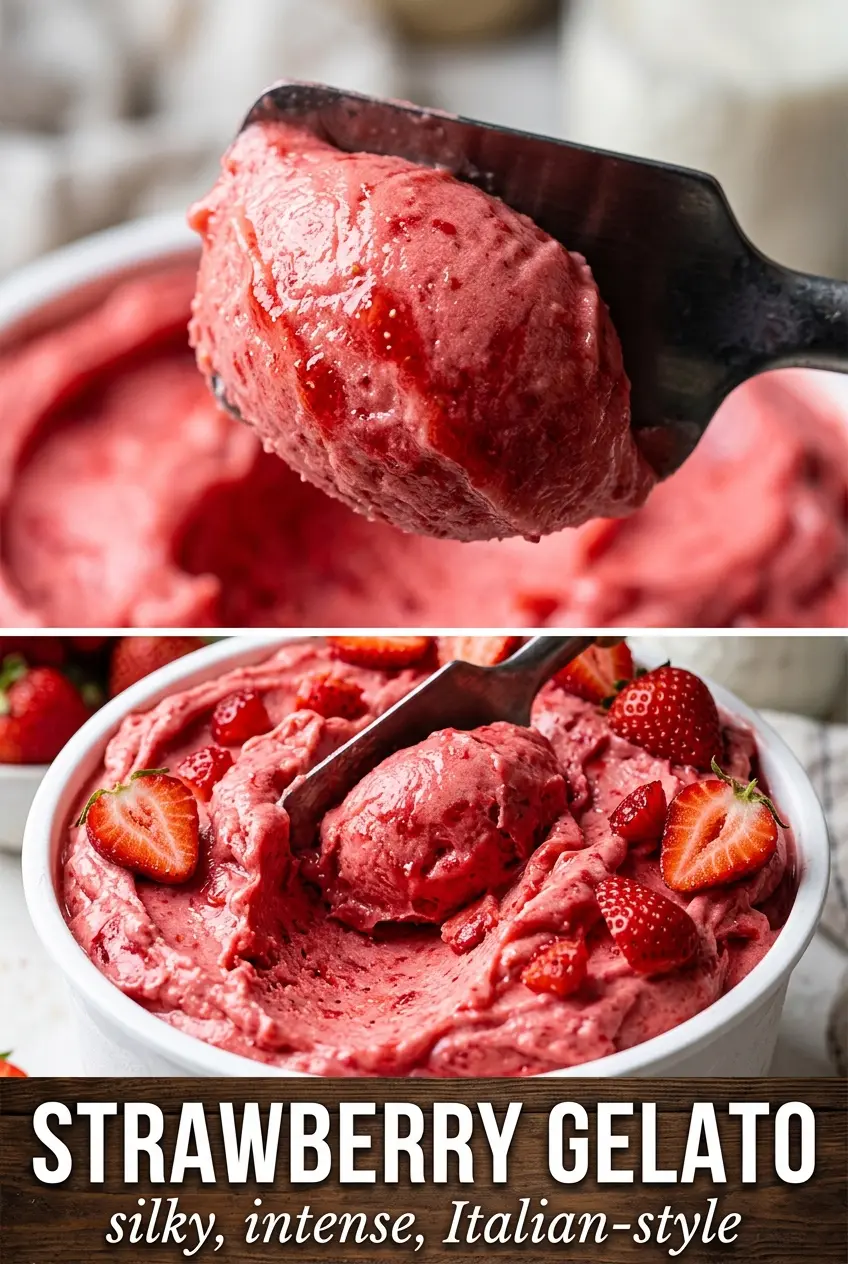
Strawberry Gelato
Ingredients
Equipment
Method
- Blend the hulled strawberries with 1/4 cup sugar and the lemon juice until completely smooth; strain to remove seeds and set the puree aside with a vivid, thick texture.
- Heat the whole milk and heavy cream together until steaming, but not boiling, so small bubbles form around the edges.
- Whisk the egg yolks, the remaining 1/2 cup sugar, and the cornstarch until smooth and glossy, with no visible lumps.
- Slowly whisk the hot milk mixture into the egg yolk mixture to temper it, using steady additions for a silky consistency.
- Return everything to a saucepan and cook over medium heat, stirring constantly, until thickened like pudding—about 5 minutes—then remove from the heat.
- Stir the strawberry puree and vanilla into the hot custard until evenly blended into a vivid pink-red color.
- Cool the mixture completely over an ice bath, stirring until it feels cool to the touch and the surface looks smooth.
- Refrigerate at least 4 hours (chilling) until very cold for best churning results.
- Churn in an ice cream maker on the lowest setting until dense and gelato-style, then serve soft for immediate scoops.
- For firmer texture, transfer to a container and freeze 1-2 hours, until scoopable while still dense.