Clear broth, tender chicken, and soft egg noodles are what make stovetop chicken noodle soup earn a permanent place in the weeknight rotation. When it’s done right, the broth tastes clean but still full, the carrots hold a little bite, and the noodles stay springy instead of collapsing into mush. It’s the kind of bowl that fixes a long day without asking much from you.
The trick is building flavor in layers instead of dumping everything into the pot at once. Sautéing the onion, carrots, and celery first gives the broth a deeper base, and keeping the chicken breasts whole while they simmer keeps the meat juicy enough to shred instead of turning stringy. The noodles go in at the end on purpose, after the chicken comes back to the pot, so they don’t steal all the broth while they cook.
Below, I’m walking through the small choices that matter here: when to salt, when to stop simmering, and how to keep the broth bright instead of cloudy. There’s also a simple storage note, because this soup changes a little once the noodles sit in it overnight.
The broth stayed clear, the chicken shredded beautifully, and the noodles were still tender without getting swollen or gummy. I added the celery seed and it gave the soup that old-school chicken noodle flavor I was hoping for.
Save this stovetop chicken noodle soup for the nights when you want a clear broth, tender chicken, and noodles that still have a little bite.
The Mistake That Makes Chicken Noodle Soup Taste Flat
The broth in chicken noodle soup can taste thin even when you’ve used plenty of chicken, and the reason is usually timing. If the vegetables go in raw and the chicken is boiled hard from the start, you end up with cloudy broth and tired-tasting vegetables. Starting with a short sauté changes that immediately because the onion, carrot, and celery soften enough to release their flavor before the liquid ever hits the pot.
The other place people lose the soup is the noodles. If they simmer too long, they swell, turn soft in the center, and soak up broth like a sponge. Add them only after the chicken is out and shredded, then cook just until tender. That keeps the texture balanced and leaves you with soup instead of stew by the time it reaches the table.
What Each Ingredient Is Actually Doing In This Soup
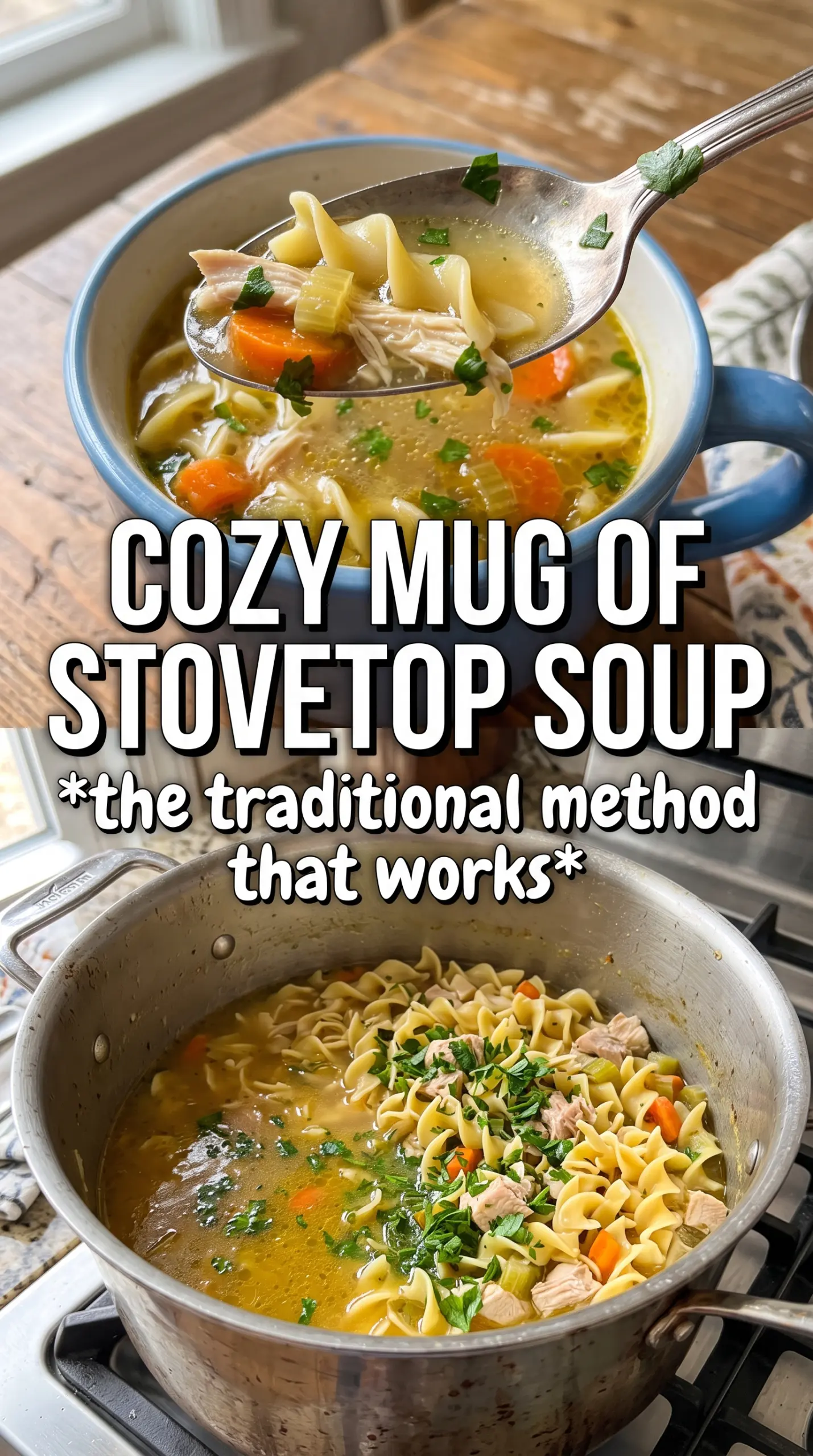
- Chicken breast — Keeping it whole while it simmers makes shredding easier and helps the meat stay juicy. Thighs work too if you want a richer, slightly softer result, but breasts give you that clean, classic chicken noodle texture.
- Chicken broth — This is the backbone of the soup, so use the best broth you have. If yours tastes weak, the soup will taste weak; if it’s very salty, hold back on adding salt until the end.
- Carrots, celery, and onion — This trio builds the base flavor and gives the soup its familiar sweetness and savory depth. Cut them evenly so they cook at the same pace; large chunks stay firm while smaller pieces disappear.
- Egg noodles — Egg noodles bring the soft, comforting texture people expect here. Standard dried egg noodles are fine, but cook them only until just tender because they keep softening in the hot broth.
- Celery seed — Optional, but it adds a deeper soup-shop flavor that reads as “homemade” fast. If you don’t have it, the soup still works, but the broth will taste a little less rounded.
Building Flavor Without Overcooking the Broth
Softening the Vegetables First
Heat the olive oil in a heavy-bottomed pot and cook the onion, carrots, and celery over medium heat until the onion turns translucent and the carrots look slightly glossy. You’re not trying to brown them hard; you’re building a sweet, savory base that will carry the broth. If the pot runs too hot, the onion edges will darken before the carrots soften, and the soup will taste sharper than you want.
Letting the Chicken Poach Gently
Add the broth and seasonings, then slide in the whole chicken breasts and bring everything up to a boil only long enough to get the pot moving. After that, lower the heat and simmer until the chicken is cooked through and just tender enough to pull apart with two forks. A hard boil is the enemy here because it tightens the meat and makes the broth murky.
Finishing With the Noodles
Remove the chicken before adding the egg noodles so the broth has room to cook them evenly. Once they go in, keep the simmer active and watch closely; they should be tender with a little spring left in the center. Return the shredded chicken at the end and season generously with salt and pepper, since the noodles will mute a little of the broth’s intensity.
How to Adapt This for Different Eaters and Leftover Nights
Use chicken thighs for a richer bowl
Chicken thighs give the soup a deeper, more savory broth and stay tender even if they simmer a little longer. The flavor is fuller, but the meat will be slightly darker and softer than breast meat. If you like a more classic deli-style chicken noodle soup, breasts are still the cleaner choice.
Make it gluten-free with the right noodle swap
Use a gluten-free egg noodle or a sturdy rice noodle, but add it carefully because many gluten-free noodles soften faster than wheat noodles. Cook them just to tender and serve the soup soon after, since they can go from pleasant to bloated more quickly in hot broth.
Make it dairy-free and still keep the comfort-food feel
This recipe is naturally dairy-free as written, which is one reason it works so well for a wide table. Keep the broth clean and finish with parsley and black pepper instead of trying to add richness with cream. The soup stays light, clear, and still satisfying.
Storage and Reheating
- Refrigerator: 3 to 4 days. The noodles will keep soaking up broth, so expect the soup to thicken as it sits.
- Freezer: It freezes best without the noodles. Freeze the broth, chicken, and vegetables, then cook fresh noodles when you reheat.
- Reheating: Warm gently on the stove over medium-low heat until steaming, not boiling. If the soup has thickened, add a splash of broth or water before heating so the noodles don’t turn soft and the chicken doesn’t dry out.
Questions I Get Asked About This Recipe
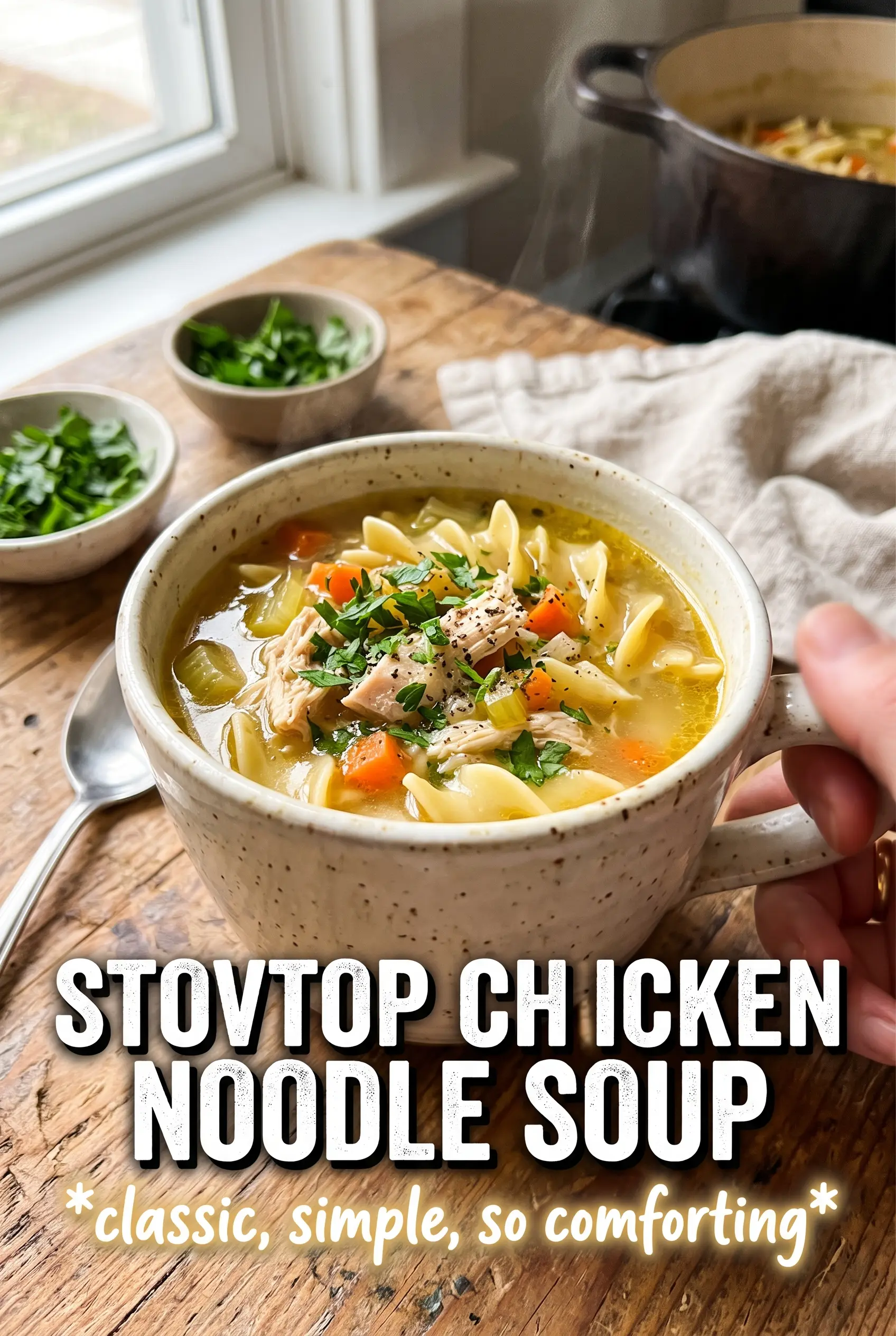
Stovetop Chicken Noodle Soup
Ingredients
Equipment
Method
- Heat the olive oil in a large heavy-bottomed Dutch oven over medium heat. Sauté the onion, carrots, and celery for 5 minutes until they soften and turn glossy.
- Add the garlic and cook for 1 minute, stirring constantly. Cook just until fragrant, about 1 minute.
- Add the chicken broth, dried thyme, garlic powder, onion powder, and celery seed (optional). Stir well to combine and bring the mixture to a simmer.
- Add the whole chicken breasts to the pot and bring everything to a boil. Keep it at a boil until you see steady bubbling, then move to simmer.
- Reduce heat and simmer for 18-20 minutes until the chicken is fully cooked. You should see gentle bubbles throughout and the chicken should reach 165°F in the center.
- Remove the chicken from the pot and shred it with two forks. Shred into bite-size pieces while it’s still warm.
- Bring the soup back to a boil. Resume rolling bubbles so the noodles cook evenly.
- Add the egg noodles and cook for 6-8 minutes until tender. Stir occasionally so the noodles don’t stick.
- Return the shredded chicken to the pot and stir to combine. Heat just until warmed through, about 1-2 minutes.
- Season the soup generously with salt and pepper. Taste and adjust, then finish with fresh parsley garnish.