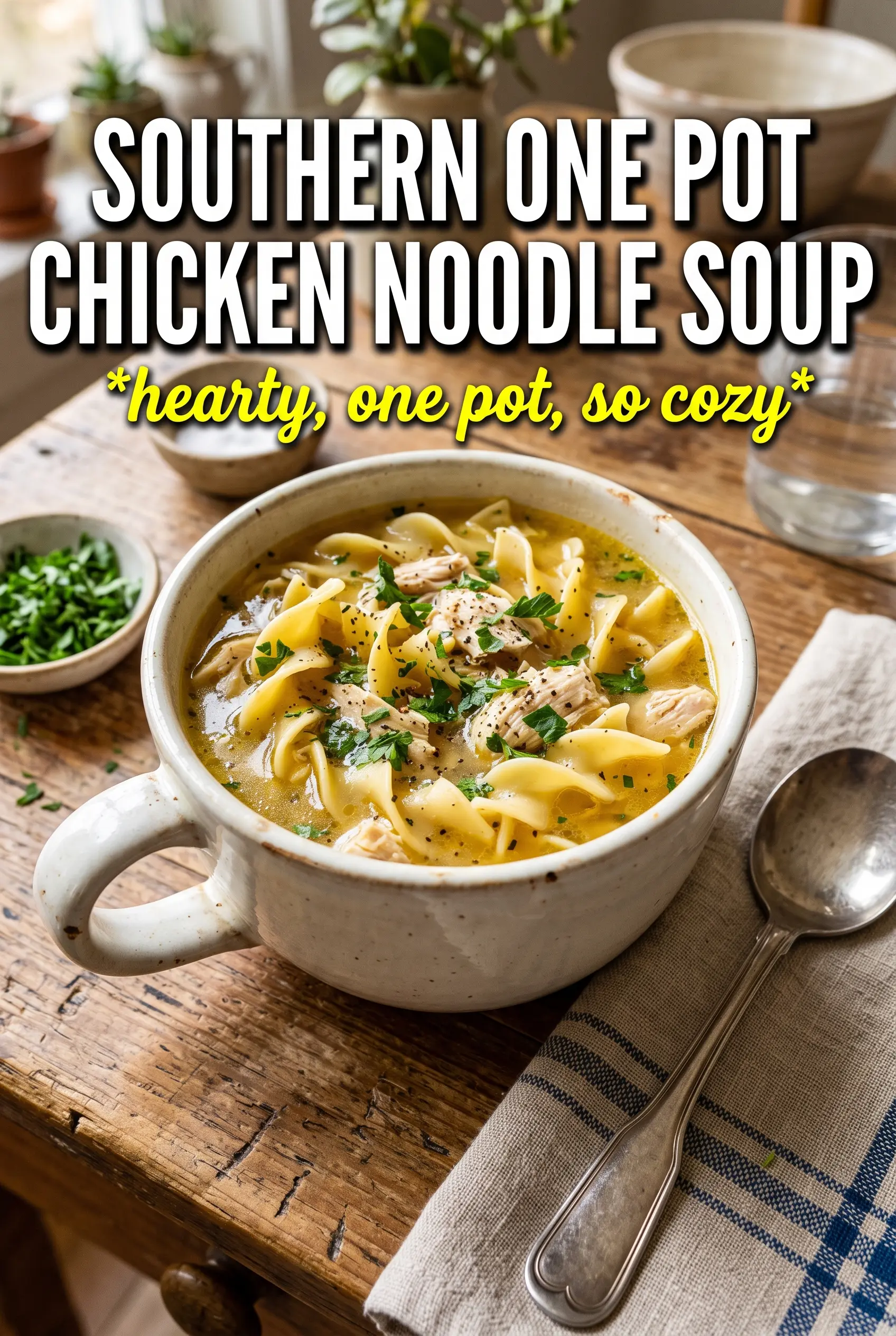
Golden broth, tender chicken, and wide egg noodles make this Southern-style chicken noodle soup the kind of pot that disappears fast. The broth gets a deeper, rounder taste from butter, a good simmer, and just enough poultry seasoning to taste like chicken soup should without turning muddy or overworked. It’s hearty without being heavy, and the noodles hold onto the broth instead of sinking into mush.
The trick here is building the soup in one pot from the start. Sautéing the onion, carrots, and celery in butter gives the broth a little sweetness and body before the liquid ever goes in, and adding the herbs briefly in the hot fat wakes them up so they don’t taste flat. Bone-in thighs help the broth taste richer than boneless chicken ever will, and the meat stays juicy even after shredding.
Below, I’ve included the small details that matter most: when to pull the chicken so it shreds cleanly, how to keep the noodles from going past tender, and what to do if you want a creamier finish without making the broth heavy.
The broth had that rich, homemade taste and the noodles stayed tender instead of getting gummy. I loved how the butter and poultry seasoning gave it that old-fashioned Southern chicken soup flavor.
Save this Southern Style One Pot Chicken Noodle Soup for a rich, buttery broth and tender egg noodles that taste like they’ve been simmering all afternoon.
The Part That Keeps the Broth from Tasting Flat
Most chicken noodle soup tastes thin because the vegetables and herbs go straight into the broth without any base. That’s fine for speed, but it leaves you with something that tastes boiled instead of cooked. Butter changes that here. It carries the onion, carrot, celery, and garlic long enough to soften them properly, and it gives the broth a little richness that you notice most in the first spoonful.
The other key move is using bone-in thighs instead of breast meat. Thighs stay tender through the simmer and give the broth more body as they cook. If you use chicken breast, pull it earlier than you think or it’ll go stringy before the noodles are done. The noodles finish in the broth, so the soup gets thicker naturally instead of depending on flour or cornstarch.
- Butter — This is the quiet difference between a broth that tastes homemade and one that tastes thin. You can use salted butter in a pinch, but unsalted gives you more control once the broth reduces.
- Bone-in chicken thighs — They bring more flavor than boneless chicken and stay moist after shredding. Skin-on is fine; you’ll discard it after cooking.
- Wide egg noodles — These hold up better than thin noodles in a creamy soup. If you swap in a different pasta, watch the pot closely because smaller shapes can go soft fast.
- Half-and-half or heavy cream — Half-and-half keeps the soup lighter, while heavy cream gives it a silkier finish. Either one goes in at the end so the dairy stays smooth instead of separating.
What Each Ingredient Is Actually Doing in This Recipe

- Primary ingredient (the star) — Quality matters most. Choose the best you can find.
- Cooking medium (oil, butter, or broth) — This carries flavors and prevents dryness.
- Seasonings (salt, pepper, spices, herbs) — Layer flavors so nothing overpowers. Build depth gradually.
- Aromatics (garlic, onion, herbs) — Cook with fat to bloom flavors. Become the foundation.
- Supporting ingredients — Complement the main ingredient without overpowering it.
- Sauce or liquid (if applicable) — Brings flavors together. Balance richness with acid.
- Acid (lemon, vinegar, wine, or other) — Brightens and prevents flat-tasting results.
- Final finish (garnish, glaze, or sauce) — Prevents one-dimensional taste and adds visual appeal.
Building the Soup So the Noodles Stay Tender
Softening the Vegetables in Butter
Melt the butter in a large Dutch oven, then cook the onion, carrots, and celery until the onion turns translucent and the carrots start to lose their raw crunch. You’re not looking for browning here. If the vegetables start sticking, the heat is too high and the butter is scorching before the soup has a chance to build flavor. A gentle sauté gives you a sweeter, rounder base.
Waking Up the Herbs
Add the garlic, poultry seasoning, thyme, and sage and cook just until fragrant, about a minute. This short step matters because dried herbs need fat and heat to bloom; if they go straight into liquid, they can taste dusty. The garlic should smell warm and savory, not sharp or browned. Once garlic starts to color, you’ve gone too far and it will turn bitter in the broth.
Simmering the Chicken Until It Shreds Easily
Pour in the broth, add the chicken thighs, and bring the pot to a boil before dropping it to a steady simmer. The surface should move with small bubbles, not a hard rolling boil, or the chicken can get tough at the edges before the center is cooked through. After about 25 minutes, the meat should pull apart easily with two forks and the bones should release cleanly. If the thighs still feel tight, give them a few more minutes; undercooked chicken won’t shred well and will fight you the whole way.
Adding the Noodles at the End
Take the chicken out, shred it, then return the meat to the pot before adding the egg noodles. This order keeps the chicken from overcooking while the pasta finishes. Cook the noodles until they’re just tender with a little bite in the center, because they’ll keep softening in the hot broth even after you turn off the heat. Stir in the half-and-half last so it blends into the soup without curdling.
Small Changes That Still Keep the Soup in Southern Territory
Dairy-Free Version
Skip the half-and-half and finish the soup with an extra splash of broth if needed. You’ll lose a little of the creamy finish, but the buttered vegetable base and bone-in chicken still give the soup plenty of body. If you want more richness without dairy, a tablespoon of olive oil stirred in at the end helps round it out.
Using Boneless Chicken Thighs
Boneless thighs work fine and still stay juicy, but the broth won’t get quite the same depth. Cut the simmer time down by a few minutes and start checking early so they don’t turn stringy. Shred them just enough to keep some texture; overly fine shreds disappear into the noodles.
Making It Ahead
If you know you’ll have leftovers, cook the noodles separately and add them to each bowl when serving. That keeps them from soaking up too much broth overnight. It’s the best move if you want the soup to taste fresh on day two instead of thick and soft.
Storage and Reheating
- Refrigerator: Store in an airtight container for up to 4 days. The noodles will keep absorbing broth, so expect the soup to thicken.
- Freezer: Freeze the soup without the noodles for the best texture. Thaw overnight in the fridge, then cook fresh noodles and add them when reheating.
- Reheating: Warm gently on the stove over medium-low heat until steaming. A hard boil can make the chicken dry and the dairy look split, so keep the heat low and stir often.
Answers to the Questions Worth Asking
Southern Style One Pot Chicken Noodle Soup
Ingredients
Equipment
Method
- Melt the butter in a large Dutch oven over medium heat, then sauté the onion, carrots, and celery for 5 minutes until slightly softened and fragrant.
- Add the garlic and poultry seasoning, thyme, and sage, then cook for 1 minute, stirring constantly, until the spices smell toasted.
- Add the chicken broth and the chicken thighs to the Dutch oven, bring to a boil, then reduce to a simmer and cook for 25 minutes until the chicken is tender.
- Transfer the chicken to a plate, shred the meat, and discard the bones and skin.
- Return the shredded chicken to the pot, add the wide egg noodles, and cook for 6 to 8 minutes until the noodles are tender.
- Stir in the half-and-half or heavy cream and cook for 1 minute more just to warm through.
- Season generously with salt and pepper to taste.
- Garnish with fresh parsley and serve hot, with the surface flecked with herbs.