Southern squash casserole is at its best when the squash turns tender and the top bakes into a buttery, crisp crust that crackles under the spoon. The filling should be creamy, savory, and just firm enough to hold its shape, not puddle on the plate. When it’s done right, you get that classic mix of soft summer squash, sharp cheddar, and a Ritz topping that tastes like it belongs on every Southern table.
The part that makes or breaks this dish is moisture. Yellow squash holds a lot of water, and if you rush the draining step, the casserole turns loose instead of rich and spoonable. Cooking the squash with the onion first softens both vegetables and drives off some liquid before the eggs and dairy go in, which keeps the center from getting watery in the oven.
Below, I’ll show you the simple cues that tell you the squash is drained enough, how to keep the topping crisp, and which swaps still give you that true Southern casserole feel.
The squash baked up creamy instead of watery, and the Ritz topping stayed crisp even after dinner. I drained it really well like you said, and that made all the difference.
Save this Southern squash casserole for the nights when you want creamy yellow squash, sharp cheddar, and that buttery Ritz crust in one pan.
The Part That Keeps Squash Casserole From Turning Watery
Most squash casseroles fail for the same reason: the squash goes into the baking dish carrying too much moisture. Yellow squash softens fast, and if you skip the draining step, the eggs and dairy can’t set cleanly around all that liquid. You end up with a casserole that tastes fine but lands loose and soupy instead of creamy and spoonable.
The fix is simple and worth respecting. Cook the squash and onion first until the slices are tender, then drain them well in a colander before mixing in the cheese, sour cream, mayonnaise, and eggs. I like to let the squash sit for a minute or two after draining so steam escapes too. That small pause helps the filling bake up rich and steady instead of wet at the edges.
What Each Ingredient Is Actually Doing In This Dish
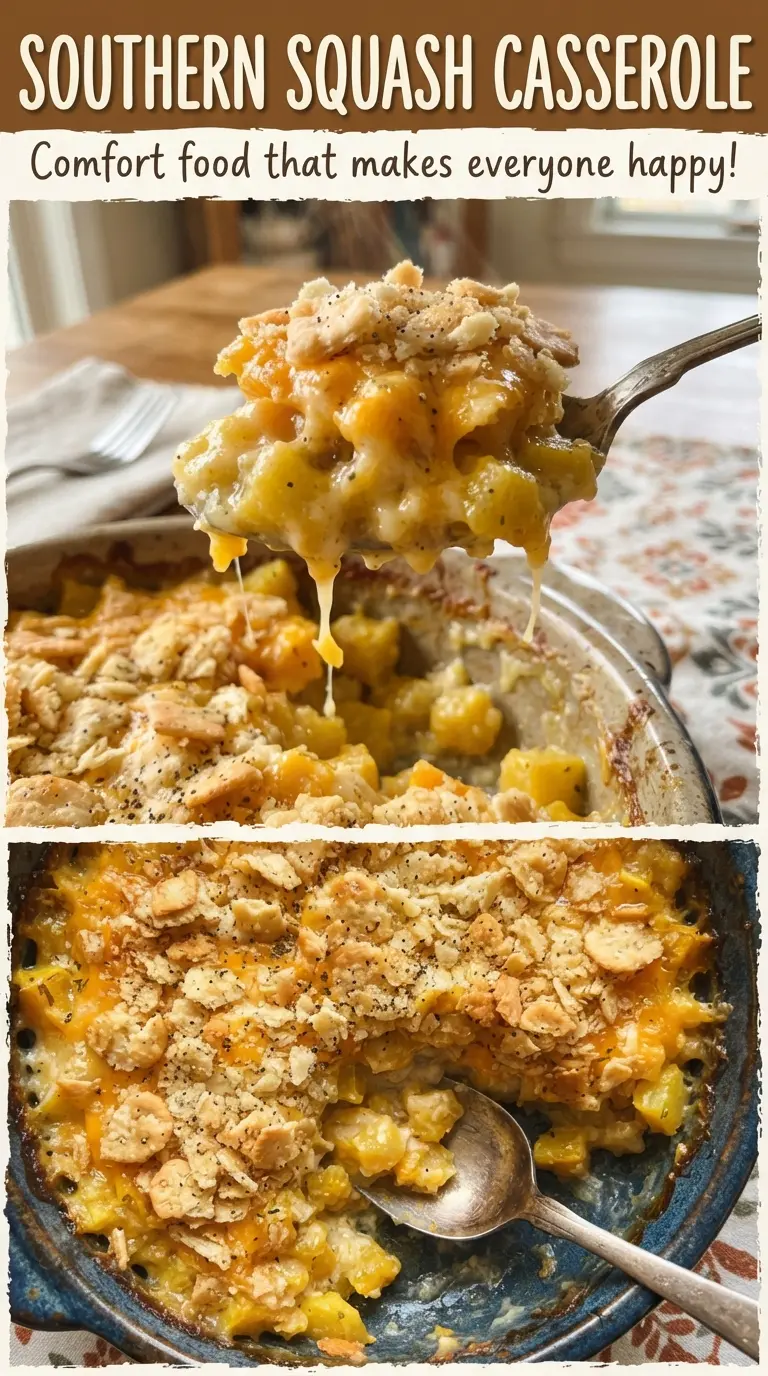
The squash gives you the soft, mild base that makes this casserole taste like home, but it needs the other ingredients to hold its shape and carry the seasoning. Use fresh yellow squash if you can. Older squash can get seedy and fibrous, which gives the filling a stringy texture instead of a smooth one.
- Sharp cheddar — This brings the salty bite that keeps the casserole from tasting flat. Mild cheddar works, but sharp cheddar gives the filling more backbone and stands up to the crackers on top.
- Sour cream and mayonnaise — These are the creamy binders. Sour cream adds tang, while mayonnaise gives the filling body and richness. If you substitute both with plain yogurt, the casserole will taste brighter but lose some of that classic Southern roundness.
- Eggs — The eggs set the casserole so it slices and scoops instead of collapsing. Beat them before adding so they distribute evenly through the squash mixture.
- Ritz crackers — These make the topping. Their buttery, salty crumbs brown faster and taste richer than plain breadcrumbs, which is why the crust feels unmistakably old-school Southern.
- Butter — Use real butter for both the squash and the topping. It helps the onions soften without browning harshly and gives the cracker layer that deep, toasted finish.
Building The Casserole So It Stays Creamy, Not Soupy
Softening the Squash and Onion
Cook the sliced squash and diced onion in butter over medium heat until the squash is tender and the onion looks translucent. The goal isn’t color; it’s softness and some moisture loss. If the pan looks crowded, the vegetables will steam instead of cook, so use a large skillet and stir often. By the end, the squash should break apart easily with a spoon but still hold some shape.
Draining Off the Extra Water
Tip the cooked vegetables into a colander and let them drain well. Press gently with the back of a spoon if they still look wet, but don’t mash them into puree. This is the step that keeps the finished casserole thick enough to scoop. If you skip it, the eggs can’t set cleanly and the center turns loose after baking.
Mixing the Filling
Stir the cheddar, sour cream, mayonnaise, eggs, salt, and pepper together before folding in the squash. Mixing the dairy and eggs first helps everything distribute evenly, so you don’t end up with pockets of plain squash or streaks of cheese. The filling should look thick and creamy, not runny. Spread it into the baking dish as soon as it’s mixed so the eggs don’t start setting in the bowl.
Finishing with the Cracker Crust
Toss the crushed Ritz crackers with melted butter until every crumb looks lightly coated, then scatter them over the top in an even layer. That butter coating is what helps the crust bake into a crisp, golden top instead of dry crumbs. Bake until the edges are bubbling and the center is set when you nudge the pan. If the top browns too fast, lay a loose piece of foil over it for the last few minutes.
How To Adapt This For Different Tables And Timing
Gluten-Free Version
Swap the Ritz crackers for a gluten-free buttery cracker or crushed gluten-free breadcrumbs mixed with the melted butter. You’ll still get a browned top, but the texture may be a little less delicate and more crumbly. Keep the layer thin so it crisps instead of turning sandy.
Lighter Dairy Swap
You can replace the sour cream with plain Greek yogurt for a tangier, slightly sharper filling. The casserole will still set, but the texture will be less plush and a little less rich. I wouldn’t swap the mayonnaise unless you’re ready for a firmer, less classic result.
Make-Ahead Assembly
You can cook and drain the squash mixture a day ahead, then chill it before adding the eggs, dairy, and topping. If you assemble the whole casserole too early, the cracker crust softens in the fridge. For best texture, add the topping right before baking.
Storage and Reheating
- Refrigerator: Store covered for up to 4 days. The topping softens, but the filling stays creamy.
- Freezer: It freezes reasonably well if you freeze it before baking. Wrap tightly and thaw in the refrigerator overnight before baking, or freeze leftovers in portions for a softer texture later.
- Reheating: Reheat covered at 325F until warmed through, then uncover for the last few minutes to re-crisp the top. Microwaving works in a pinch, but it makes the crackers soggy and can turn the filling loose.
Answers to the Questions Worth Asking
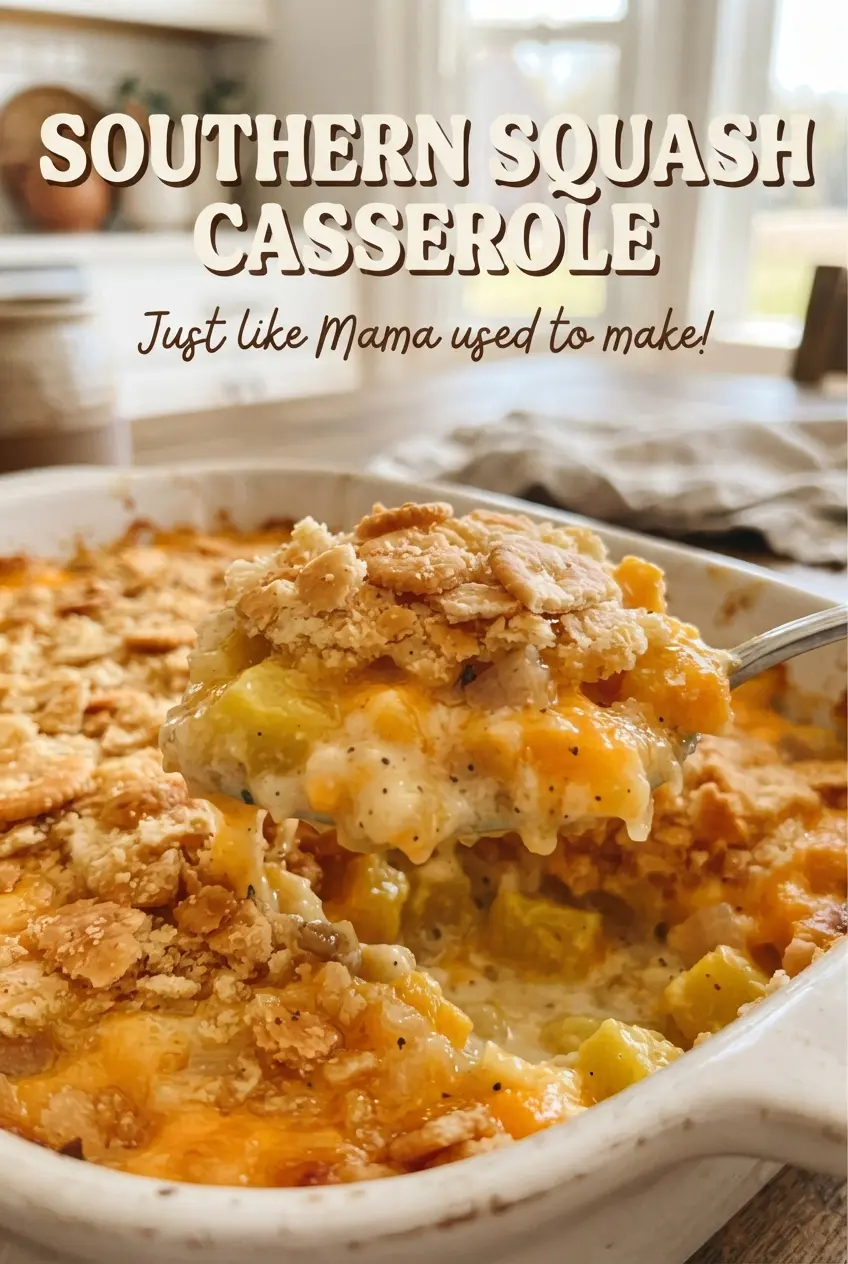
Southern Squash Casserole
Ingredients
Equipment
Method
- Preheat the oven to 350°F and grease a 9x13-inch baking dish with a light coating. Set the dish aside for filling.
- Cook the sliced yellow squash and diced onion in 2 tablespoons butter for 10-12 minutes until tender. Stir occasionally so the squash softens evenly.
- Drain the cooked squash and onion well in a colander. Press lightly to remove extra moisture before mixing.
- In a mixing bowl, combine the shredded sharp cheddar, sour cream, mayonnaise, beaten eggs, salt, and black pepper. Mix until smooth and evenly combined.
- Fold the drained squash and onion into the cheese mixture. Stir just until everything is coated.
- Spread the filling into the greased baking dish. Level the top so the crust bakes evenly.
- Toss the crushed Ritz crackers with the 3 tablespoons melted butter. Make sure the crumbs look evenly moistened.
- Sprinkle the buttery crushed crackers over the top of the casserole. Use an even layer for consistent browning.
- Bake for 30-35 minutes at 350°F until the top is golden and the center is set. Look for bubbling edges and a firm, sliceable middle.