Southern fried cabbage hits that sweet spot between tender and crisp, with silky onions, smoky bacon, and edges of cabbage that caramelize instead of turning watery. When it’s done right, the cabbage still has a little bite in the thickest pieces, the bacon brings salt and crunch, and the whole skillet tastes deeper than the short ingredient list suggests.
This version works because it starts with bacon drippings and gives the onion time to soften before the cabbage goes in. That first layer of flavor matters. A small amount of sugar nudges the cabbage toward browning, and the splash of apple cider vinegar at the end keeps the whole dish from tasting heavy. The result is balanced, not greasy, which is where a lot of fried cabbage recipes miss the mark.
Below, I’ll walk you through the part that matters most: how to keep the cabbage from steaming in its own liquid, plus a few smart swaps if you want to make it lighter or adapt it for what’s already in your kitchen.
The cabbage stayed tender with those browned edges I was hoping for, and the vinegar at the end kept it from feeling too rich. My husband went back for seconds before I’d even sat down.
Save this Southern fried cabbage for a smoky, caramelized side with bacon, sweet onion, and that bright vinegar finish.
The Part That Stops Fried Cabbage From Turning Watery
The biggest mistake with fried cabbage is crowding the pan and rushing the heat. Cabbage throws off moisture as it cooks, and if the skillet isn’t hot enough to evaporate that liquid fast, you end up with soft cabbage sitting in its own steam instead of browned edges and real flavor. A large skillet matters here, and cast iron is ideal because it holds heat when the cabbage goes in.
The other thing worth respecting is the order. Bacon first, onion second, garlic for just a half minute, then cabbage with the butter and seasonings. That sequence builds sweetness and depth before the cabbage has a chance to water everything down. The vinegar goes in at the end, after the cabbage is tender, because acid added too early can slow browning and flatten the bacon flavor.
What Each Ingredient Is Actually Doing In This Skillet
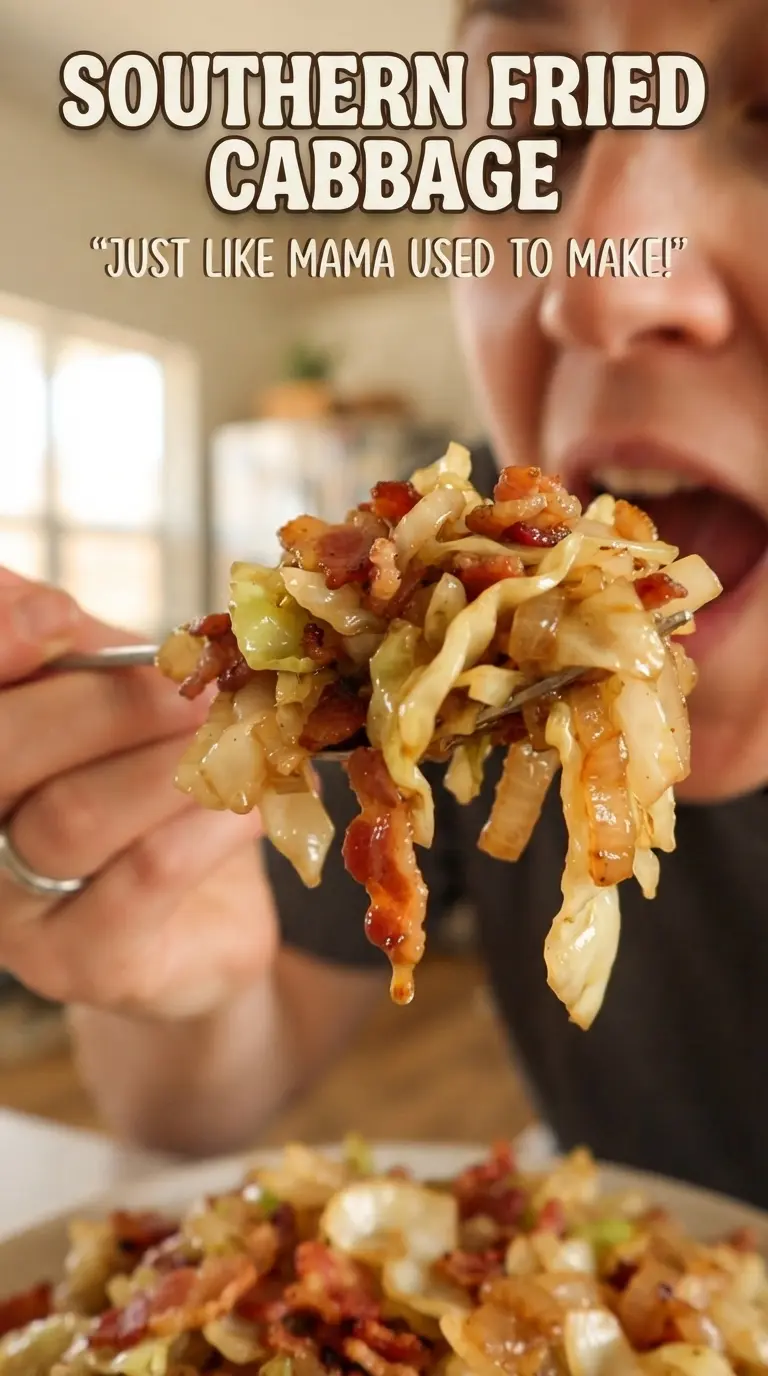
- Bacon — This is the base flavor, the fat, and the salty crunch all in one. Use regular sliced bacon rather than thick-cut so it renders fast and leaves enough drippings to coat the pan.
- Yellow onion — It softens into the bacon fat and turns sweet, which gives the cabbage a rounder flavor. White onion works in a pinch, but yellow has a better balance for this dish.
- Green cabbage — Green cabbage holds its shape better than savoy or red cabbage, and it browns nicely without collapsing. Chop it into medium pieces so some bits caramelize while others stay tender.
- Butter — Bacon fat gives flavor, but butter adds richness and helps the cabbage pick up color. Don’t skip it unless you need to, because it smooths out the edges of the dish.
- Apple cider vinegar — This is the finishing touch that keeps the skillet from tasting one-note. If you don’t have it, a small splash of white vinegar works, but cider vinegar gives the best sweet-sharp balance.
Building Tender, Caramelized Cabbage Without Overcooking It
Rendering the Bacon Properly
Start the bacon in a cold or just-warm skillet over medium heat and let it cook until crisp and deeply browned at the edges. If the heat is too high, the bacon toughens before enough fat renders out, and you lose the base that makes the cabbage taste rich. Pull the bacon out once it’s crisp, but leave the drippings in the pan.
Softening the Onion Before the Cabbage
Add the sliced onion to the hot drippings and cook until it turns translucent and a little golden around the edges. That takes about five minutes, and it matters because raw onion can make the finished dish taste sharp instead of savory. Stir in the garlic only for the last 30 seconds so it perfumes the skillet without burning.
Letting the Cabbage Sit Long Enough To Brown
Add the cabbage with the butter, salt, pepper, red pepper flakes, and sugar, then stir it enough to coat everything but not so much that it never sits on the hot pan. The cabbage needs those undisturbed moments against the skillet to caramelize. If you stir constantly, it steams; if you leave it alone in short stretches, the edges take on color and the texture stays tender instead of mushy.
Finishing With Acid and Bacon
Once the cabbage is tender and the edges look browned, stir in the vinegar and return the crispy bacon to the skillet. The vinegar wakes up the whole dish and cuts through the fat without making it taste sour. Taste after that final stir; if it needs more salt, add it in small pinches because the bacon already carries plenty.
How To Adapt This Skillet For What You’ve Got On Hand
Dairy-Free and Still Rich
This recipe is naturally dairy-free if you skip the butter and use an extra spoonful of bacon drippings instead. You’ll lose a little of the buttery finish, but the bacon fat keeps the dish savory and the cabbage still browns well.
Vegetarian Version With More Depth
Use olive oil or butter in place of the bacon drippings and add a pinch of smoked paprika or a little smoked salt to replace the smoky note. You won’t get the same crisp bacon texture, but you’ll still get a skillet of cabbage with real body and a browned edge.
How To Use Purple Cabbage
Purple cabbage works, but the finished skillet will look darker and the flavor is a touch earthier. It also softens a little faster, so keep an eye on it near the end and pull it once the thickest pieces are tender with a little structure left.
Storage and Reheating
- Refrigerator: Store leftovers in an airtight container for up to 4 days. The cabbage softens a little more as it sits, but the flavor stays good.
- Freezer: It freezes, but the texture turns softer after thawing. If you do freeze it, cool it completely first and use it within 2 months.
- Reheating: Warm it in a skillet over medium-low heat so the excess moisture can cook off. The microwave works in a pinch, but it tends to make the cabbage limp instead of bringing back any edge.
Answers to the Questions Worth Asking
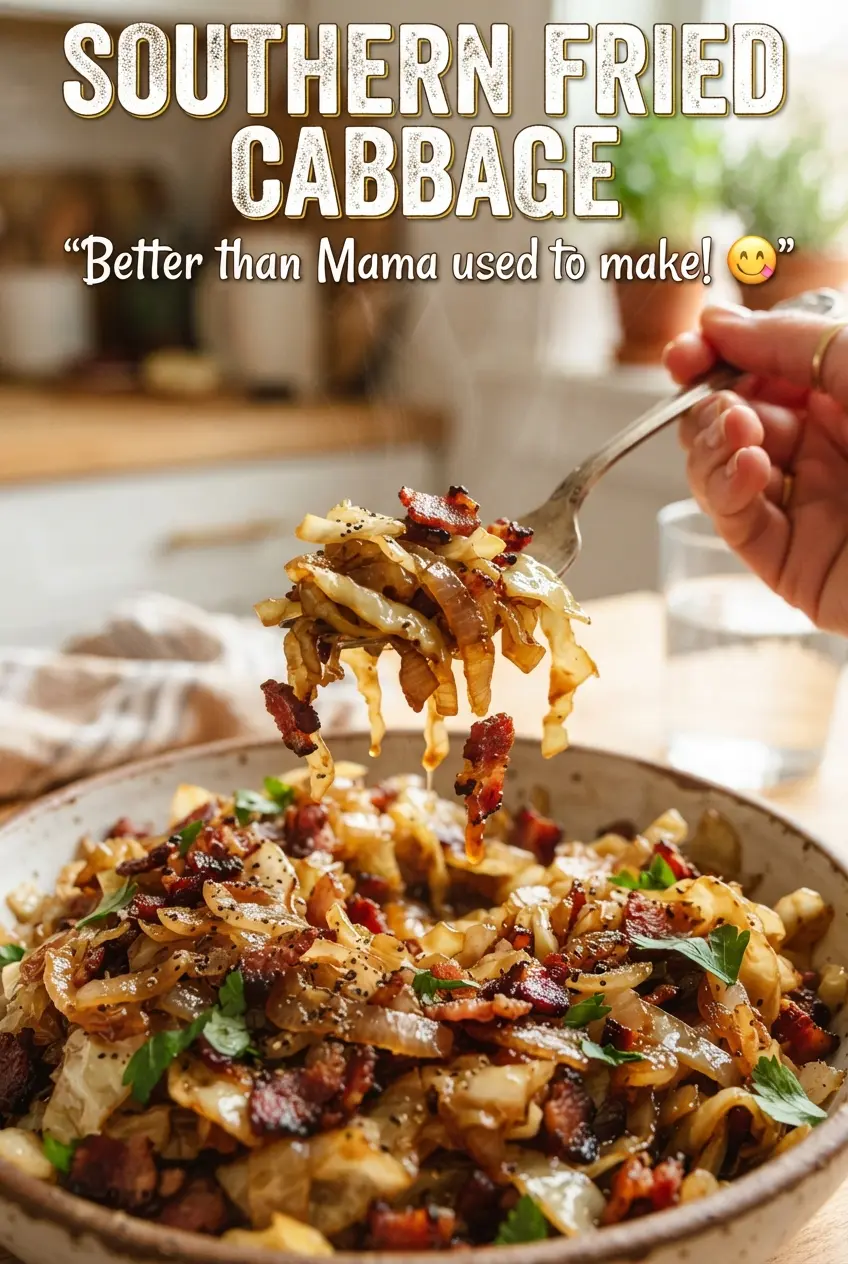
Southern Fried Cabbage
Ingredients
Equipment
Method
- Place chopped bacon in a large cast iron skillet over medium heat and cook for 8 minutes, until crisp, then remove and set aside, leaving the drippings in the skillet.
- Add sliced onion to the same skillet and cook for 5 minutes, stirring occasionally, until softened; stir in minced garlic for 30 seconds.
- Add chopped cabbage, butter, salt, black pepper, red pepper flakes, and sugar, then cook for 12-15 minutes, stirring occasionally, until tender and caramelized at the edges.
- Stir in apple cider vinegar and the reserved crispy bacon, then serve warm.