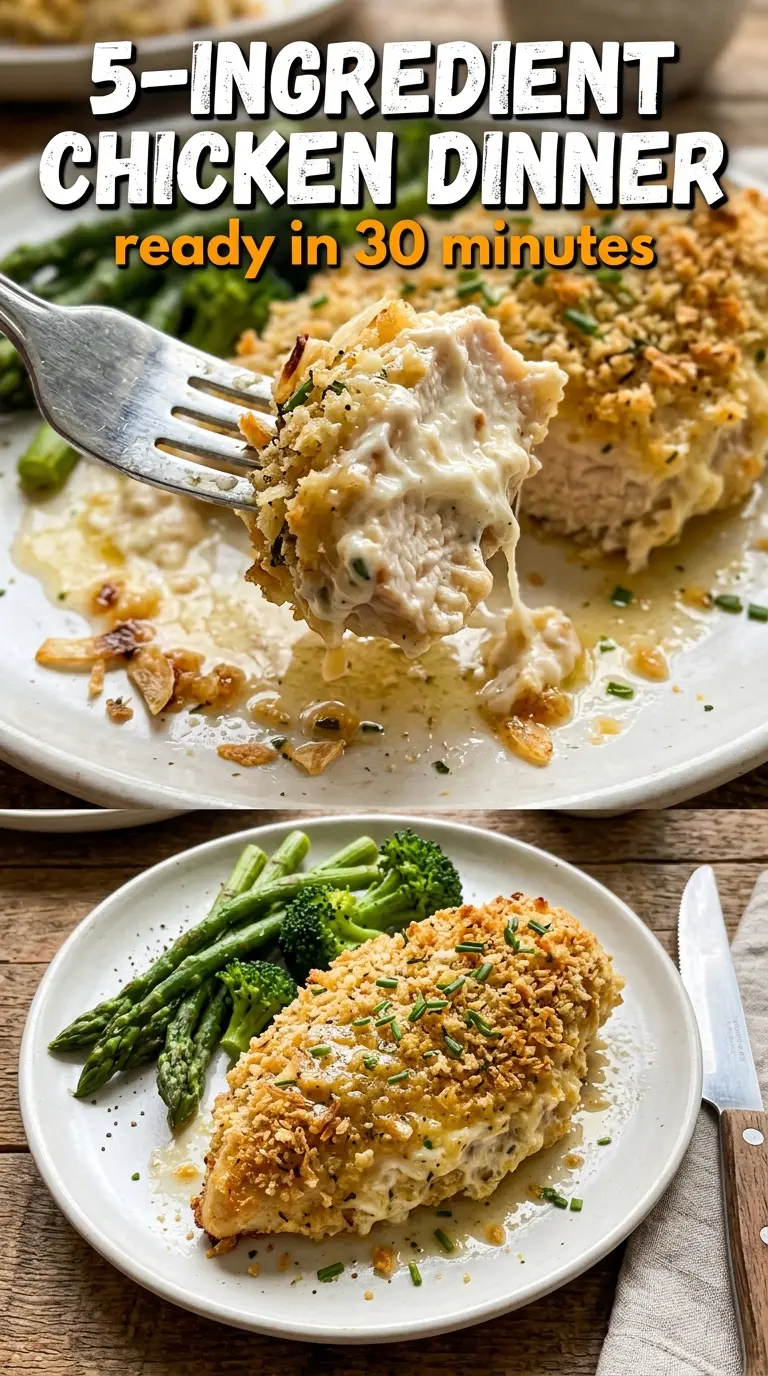
Sour cream and onion chicken lands in that sweet spot between comfort food and weeknight practicality: juicy chicken under a thick, tangy coating with a crackled, savory crust that turns golden in the oven. The topping bakes up like the best part of a casserole and keeps the chicken underneath tender instead of dry.
What makes this version work is the layering. The sour cream mixture clings to the chicken and acts like a cushion, while the crushed crispy onions and Parmesan bake into a salty, crunchy lid. The onion soup mix brings instant seasoning, but the real trick is pressing the topping on firmly so it stays put and browns instead of sliding off.
Below, I’ve included the small details that matter most: how to keep the coating thick enough to hold, how to tell when the chicken is done without overbaking it, and a few smart variations if you want to change the texture or make it fit what’s already in your kitchen.
The coating stayed on the chicken, the onions got perfectly crisp, and the sour cream kept everything moist without turning the topping soggy.
Love the crispy onion crust and creamy tang of this sour cream and onion chicken? Save it to Pinterest for an easy baked chicken dinner with a golden topping.
The Reason the Topping Stays Crisp Instead of Turning Mushy
The mistake with chicken bakes like this is usually moisture management. If the sour cream layer is too thin or the onion topping is too light, the crust softens before the chicken finishes. Here, the sour cream mixture stays thick enough to hold the crumbs and onions in place, and the Parmesan helps the topping set into a browned shell instead of a damp blanket.
Pressing the topping on firmly matters more than people think. You want the onion mixture in full contact with the sour cream, not sitting loosely on top where it can dry out and fall off. A hot oven at 375°F is enough to brown the surface without blasting the chicken dry before the center reaches temperature.
- Chicken breasts — Use evenly sized breasts so they finish at the same time. If one is much thicker, pound it to an even thickness or it’ll still be warming through when the smaller one is already done.
- Sour cream — Full-fat sour cream gives the best texture and the cleanest tang. Light sour cream works, but it’s a little looser and the coating won’t cling quite as well.
- Crushed crispy fried onions — These bring the crunch. Crush them enough to press onto the chicken, but leave some texture so the topping bakes into little crisp ridges.
- Parmesan — This adds salt and helps the crust brown. Finely grated Parmesan melts and binds better than big shreds.
What Each Layer Is Doing in the Pan
- Onion soup mix — This is the shortcut that gives the sour cream layer its punch. It seasons the whole dish fast, and there isn’t a substitute that gives quite the same onion-soup depth without adding extra work.
- Garlic powder — This rounds out the onion flavor and keeps the topping from tasting flat. Fresh garlic isn’t a great swap here because it can burn before the crust sets.
- Crispy fried onions for topping — Save a small handful for the end. They stay more textured than the ones fully baked into the crust and give you that fresh crunch right after serving.
- Chives — They’re not just garnish. The fresh green bite cuts through the richness and makes the finished dish taste brighter.
Building the Coating So It Bakes Up Cleanly
Mix the Sour Cream Base First
Stir the sour cream and onion soup mix until the mixture is completely even and thick. You want it spreadable, not runny, because a loose coating slides off the chicken and collects in the pan. If it looks watery, the chicken will steam under it instead of baking under a creamy layer.
Press on the Crunch, Don’t Sprinkle It
After coating the chicken, pack the onion-Parmesan mixture onto the top with your fingers. Don’t just dust it over the surface. Pressure is what helps the crust adhere and form those crisp, browned patches instead of falling into the baking dish.
Bake Until the Center Hits Temperature
Bake at 375°F until the crust is golden and the chicken reaches 165°F in the thickest part. The topping should look dry and toasted on top, with the sour cream layer bubbling gently around the edges. If the crust is getting dark too fast, cover loosely with foil for the last few minutes so the chicken can finish without burning the topping.
How to Adapt This for a Different Kitchen or a Different Craving
Make It Gluten-Free
Use a certified gluten-free onion soup mix and gluten-free crispy fried onions. The texture stays close to the original, but check the seasoning on the mix before adding extra salt, since some gluten-free versions are saltier than the standard packet.
Swap In Chicken Thighs
Boneless skinless thighs work well if you want a juicier result. They usually need a few extra minutes in the oven, and the topping can brown a little faster, so start checking for doneness early and use temperature rather than timing alone.
Use Greek Yogurt for a Tangier Finish
Plain Greek yogurt can replace some or all of the sour cream if you want a sharper bite and a little more protein. It’s a bit less rich, and it can tighten up faster in the oven, so keep an eye on the chicken and don’t overbake it.
Storage and Reheating
- Refrigerator: Store leftovers in an airtight container for up to 3 days. The crust softens a little, but the flavor holds well.
- Freezer: It freezes, but the sour cream layer and onion topping lose some texture after thawing. If you do freeze it, wrap tightly and thaw overnight in the refrigerator before reheating.
- Reheating: Reheat in a 325°F oven, loosely covered at first, until hot through. The microwave will warm it fast, but it turns the topping soggy and can make the chicken rubbery.
Questions I Get Asked About This Recipe
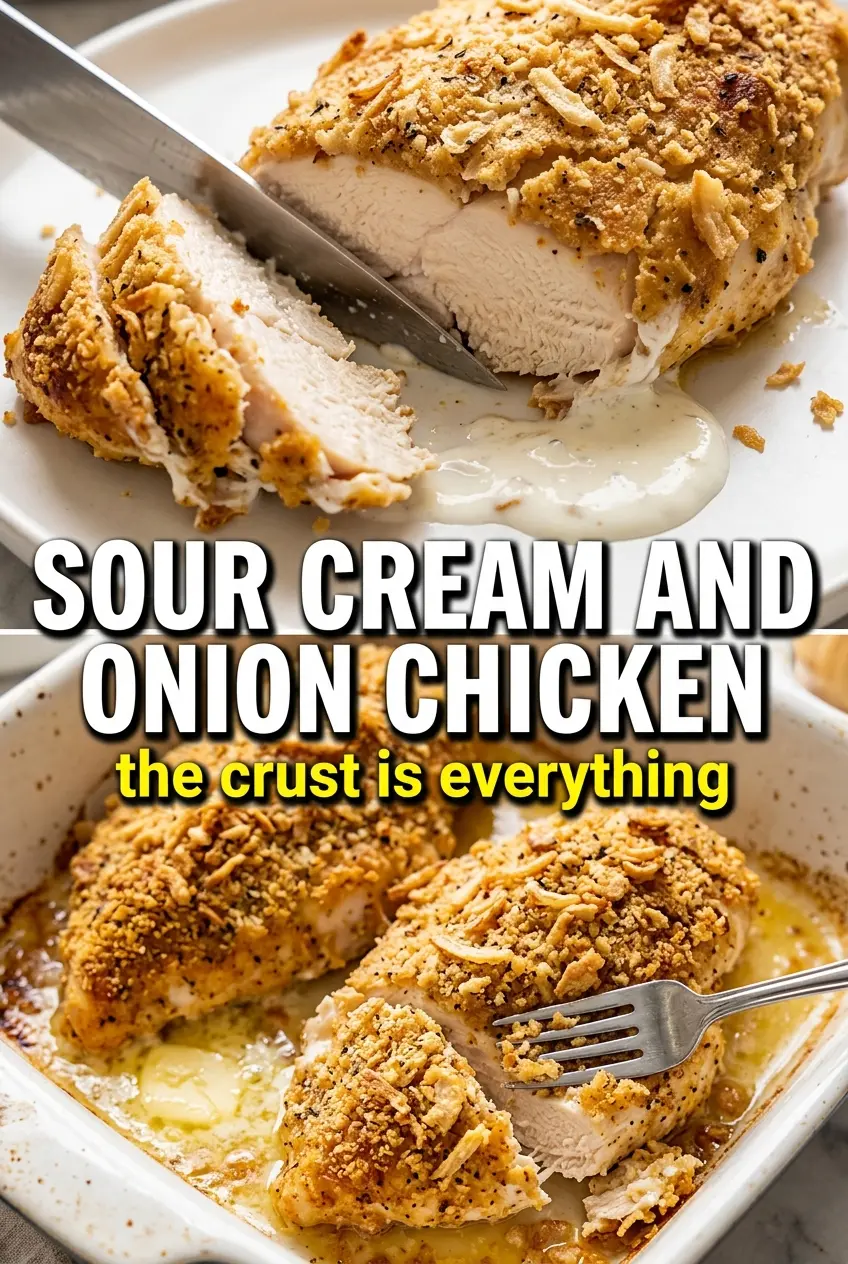
Sour Cream and Onion Chicken
Ingredients
Equipment
Method
- Preheat the oven to 375°F and grease a baking dish, leaving it ready for the coated chicken. Visual cue: the dish should be lightly greased so the topping bakes without sticking.
- Mix sour cream and onion soup mix until well combined. Visual cue: the mixture should look smooth and thick with an even onion-soup seasoning color.
- Combine crushed crispy fried onions, Parmesan cheese, and garlic powder in a separate bowl. Visual cue: the mixture should be crumbly and well coated, with no dry Parmesan pockets.
- Season the chicken breasts with salt and pepper. Visual cue: each breast surface should show even speckling of seasoning.
- Coat each breast thickly with the sour cream mixture. Visual cue: you should see a uniform, creamy layer covering the top and sides.
- Press the onion-Parmesan mixture firmly onto the top of each sour cream-coated breast. Visual cue: crumbs should adhere with a packed, even layer so they won’t slide off.
- Bake for 25-28 minutes at 375°F until the topping is golden and puffy, and the internal temperature reaches 165°F. Visual cue: the crust should look crackled and crisp with a creamy interior when cut.
- Garnish with extra crispy fried onions and fresh chives before serving. Visual cue: the top should look freshly topped and bright with green chives.