Smothered pork steak is the kind of dinner that settles into the pan and comes out tasting like it took all afternoon, even when it didn’t. The pork turns fork-tender in a dark onion gravy, and every bite gets that mix of seared edges, softened onions, and rich pan juices that clings to mashed potatoes like it was made for them.
What makes this version work is the order. The steaks get a light flour dredge before searing, which helps build a browned crust and gives the gravy just enough body later on. Then the onions and mushrooms cook in the same skillet, picking up every bit of flavor left behind. That’s the part that gives the gravy its depth instead of a flat, one-note sauce.
Below, I’ll show you how to keep the gravy smooth when the sour cream goes in, what to do if your pork steaks are a little thicker or thinner than average, and the simple trick that keeps this from turning into a tough, dry skillet dinner.
The gravy turned out glossy and thick, and the pork was tender enough to cut with a fork after the full simmer time. I served it over mashed potatoes and my husband asked if we could have it again next week.
Save this smothered pork steak recipe for a tender pork dinner with dark onion gravy and mushrooms.
The Reason Pork Blade Steaks Stay Tender Here
Pork blade steaks can go from tender to chewy if they’re rushed, especially when the heat is too high during the braise. The sear is there for flavor, but the real tenderness comes from keeping the liquid at a steady, gentle simmer after the steaks go back into the pan. If the gravy is boiling hard, the edges tighten up before the connective tissue has time to loosen.
The flour on the outside does two jobs at once. It helps the pork brown better in the skillet, and it gives the gravy just enough structure without turning it pasty. The pan should look lively, not aggressive: small bubbles around the edges, steam rising, pork barely moving in the sauce.
- Pork blade steaks or pork shoulder steaks — These are the right cuts for this style of cooking because they have enough fat and connective tissue to get tender during a braise. Lean loin steaks won’t give you the same result and are much easier to dry out.
- Flour — A light dredge is enough. Don’t skip it if you want gravy that lightly coats the pork instead of pooling thinly at the bottom of the pan.
- Onion and mushrooms — The onion builds sweetness and depth, while the mushrooms add a savory base that makes the gravy taste fuller. Slice them evenly so they cook down at the same pace.
- Chicken broth and Worcestershire sauce — Broth brings the liquid, but Worcestershire adds the darker, meatier note that makes the sauce taste finished. If you use low-sodium broth, the seasoning stays easier to control.
- Sour cream — This is what turns the gravy silky at the end. Add it off the heat or over very low heat so it doesn’t split.
What Each Ingredient Is Actually Doing in This Recipe

- Primary ingredient (the star) — Quality matters most. Choose the best you can find.
- Cooking medium (oil, butter, or broth) — This carries flavors and prevents dryness.
- Seasonings (salt, pepper, spices, herbs) — Layer flavors so nothing overpowers. Build depth gradually.
- Aromatics (garlic, onion, herbs) — Cook with fat to bloom flavors. Become the foundation.
- Supporting ingredients — Complement the main ingredient without overpowering it.
- Sauce or liquid (if applicable) — Brings flavors together. Balance richness with acid.
- Acid (lemon, vinegar, wine, or other) — Brightens and prevents flat-tasting results.
- Final finish (garnish, glaze, or sauce) — Prevents one-dimensional taste and adds visual appeal.
Building the Gravy Without Breaking It
Searing the Pork First
Season the steaks well, then dredge them lightly in flour and lay them into hot oil. You want a deep golden crust, not a pale surface with flour dust on it. If the pan is crowded, the pork will steam instead of sear, and you’ll lose the browning that gives the gravy its backbone. Work in batches if the skillet looks packed.
Cooking Down the Onions and Mushrooms
Once the pork is out, add the onions and mushrooms to the same pan and let them cook until they soften and pick up color. The bottom of the pan should loosen as the vegetables release their moisture, and that’s what keeps all the browned bits from going to waste. If the pan looks dry before the onions soften, the heat is too high; lower it and let the vegetables do the work.
Bringing the Pork Back for the Braise
Pour in the broth and Worcestershire, then nestle the pork back into the skillet. Cover the pan and keep the heat low enough that the liquid only simmers around the edges. This is the stage that makes the steaks tender, so don’t rush it. The pork is ready when a fork slides in without resistance and the gravy has thickened slightly from the flour and the reduced liquid.
Finishing with Sour Cream
Take the pan off the heat before stirring in the sour cream. If the sauce is too hot, the dairy can separate and turn grainy. Stir until the gravy looks smooth and glossy, then spoon it over the steaks right away. A sprinkle of fresh thyme at the end gives the whole dish a clean finish that cuts through the richness.
How to Adjust This for What’s in Your Kitchen
Dairy-Free Version
Leave out the sour cream and finish the gravy with a splash of unsweetened oat cream or a tablespoon of cold butter if dairy isn’t the issue but you still want a smoother finish. The sauce will taste a little less tangy, but it still stays rich and spoonable.
Gluten-Free Swap
Use a gluten-free all-purpose flour blend for dredging the pork. The crust won’t brown quite the same way as wheat flour, but it still helps the meat sear and gives the gravy enough body.
No Mushrooms
Skip them and add a little more onion. The gravy will be lighter and less earthy, but the dish still works because the browned pork and slow-cooked onions carry the flavor.
Making It Ahead
This reheats well, and the gravy often tastes even better the next day after the flavors settle. Keep the pork in the gravy so it stays moist, then warm it gently instead of boiling it hard on the stove.
Storage and Reheating
- Refrigerator: Store leftovers in an airtight container for up to 4 days. The gravy thickens as it chills, so it may look a little firmer the next day.
- Freezer: Freeze for up to 2 months. The sour cream can change texture slightly after thawing, so expect a less silky sauce unless you reheat it gently and whisk well.
- Reheating: Warm covered over low heat with a splash of broth until the gravy loosens and the pork is heated through. Don’t boil it, or the meat can toughen and the sauce can separate.
Questions I Get Asked About This Recipe
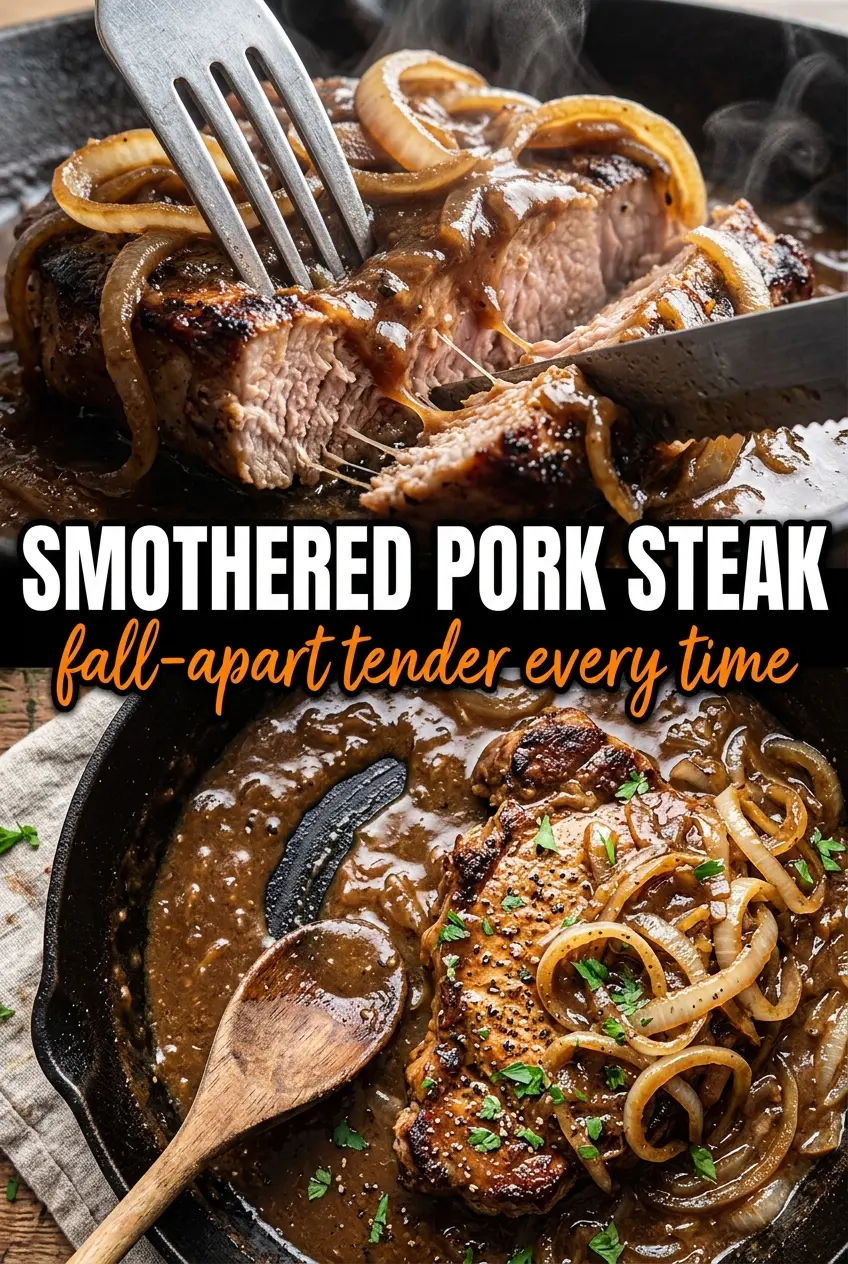
Smothered Pork Steak
Ingredients
Equipment
Method
- Season pork steaks with salt, pepper, garlic powder, and paprika to taste, then dredge in flour so the surface is lightly coated. Set aside while you heat the pan.
- Heat oil in a skillet over medium-high heat and sear pork steaks for 3–4 minutes per side until golden. Move the steaks to a plate and leave any browned bits in the pan.
- Cook onion and mushrooms in the same pan over medium-high heat for 6–7 minutes until caramelized. Stir occasionally until they turn deep brown.
- Add garlic and cook for 30 seconds, stirring, until fragrant. Keep it moving so it doesn’t brown too much.
- Stir in chicken broth and Worcestershire sauce, scraping up any browned bits from the bottom of the pan. Bring the mixture to a gentle simmer.
- Return pork steaks to the gravy, cover, and braise on medium-low for 20–25 minutes until very tender. Look for fork-tender meat and gravy that has thickened slightly.
- Remove the pork steaks and stir sour cream into the gravy until smooth. Keep stirring until the sauce turns glossy and uniform.
- Pour the onion gravy over the steaks and garnish with fresh thyme. Serve hot with extra gravy pooling around the meat.