Smoky beef potato soup lands in the bowl with tender chunks of beef, soft Yukon gold potatoes, and a broth that tastes like it simmered all afternoon even though it doesn’t need that long. The smoked paprika gives it a deep, woodsy backbone, while the fire-roasted tomatoes keep the pot from tasting heavy. It eats like a full meal, not a starter, and the kind of meal that gets quiet at the table for a minute because everyone is busy going back for another spoonful.
The key is building flavor in layers instead of trying to force it all at the end. Browning the beef hard gives you the base, and blooming the spices in the fat wakes up the paprika and chipotle before the broth goes in. Yukon golds hold their shape better than russets, so you get a soup that’s hearty without turning starchy and thick.
Below you’ll find the small details that matter most: how dark the beef should get in the pan, when to add the potatoes so they stay intact, and a few smart swaps if you need to stretch the soup or make it work with what you’ve got.
The beef got that deep browned edge I never seem to get right in soup, and the potatoes held their shape all the way through. The smoked paprika and chipotle gave it a warm kick without making it too hot.
Save this smoky beef potato soup for a night when you want a hearty pot of beef, potatoes, and fire-roasted tomato broth with real depth.
The Browning Stage That Gives This Soup Its Backbone
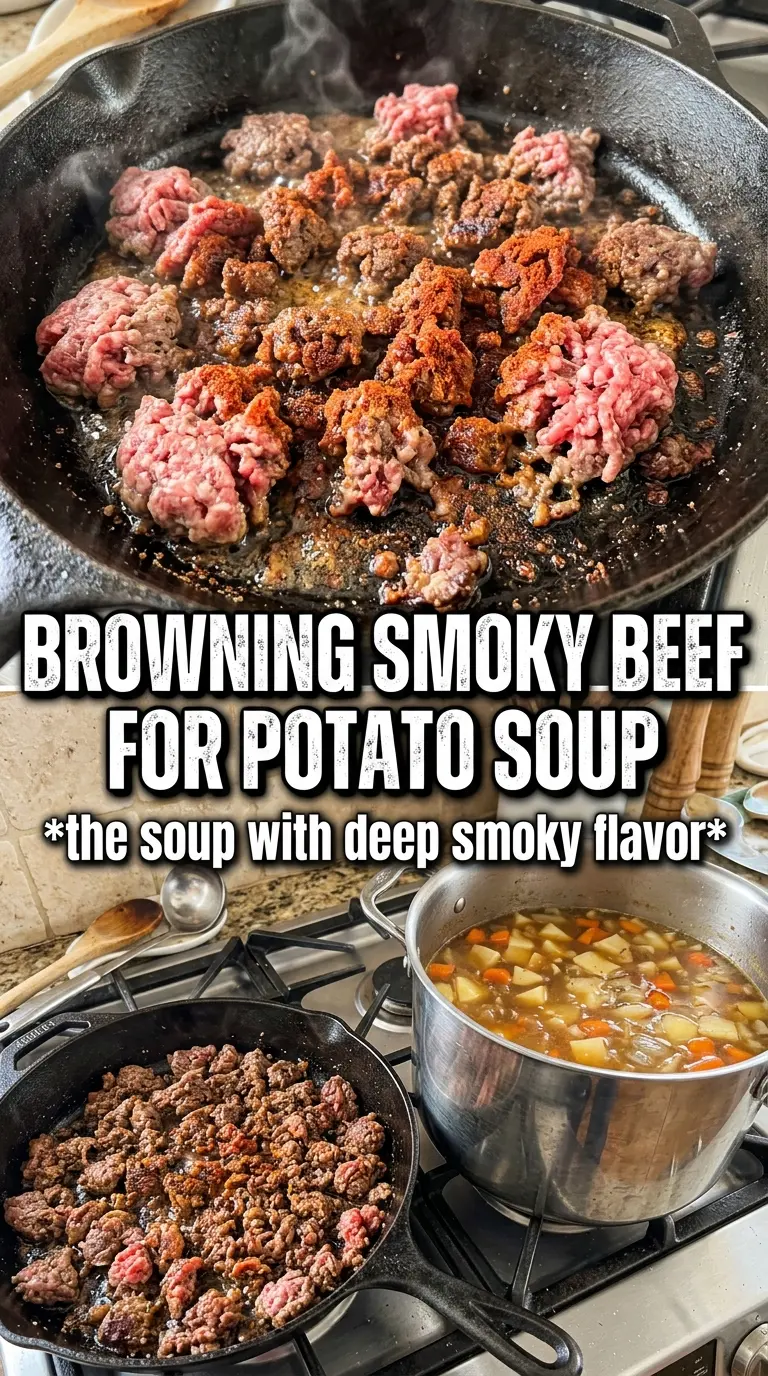
The biggest mistake with beef soup is rushing past the sear. If the beef goes in pale, the whole pot tastes flatter no matter how long it simmers. You want deep brown edges on the meat and a dark fond on the bottom of the pot. That is the flavor base, and it matters more here than in a lighter soup because the potatoes will soak up whatever broth you give them.
After the beef comes out, don’t clean the pot. The onions, carrots, and celery should loosen those browned bits as they soften, and that is where the soup starts tasting finished instead of just boiled. If the bottom looks black and burnt, the heat was too high and the fond has gone bitter. Aim for dark brown, not charred.
What Each Ingredient Is Doing in the Pot
- Beef stew meat or chuck — Chuck gives you better flavor and a silkier bite after simmering. Stew meat works too if that’s what you can get, but chuck is more forgiving and usually less likely to stay chewy. Cut it into even cubes so it browns at the same rate and finishes tender at the same time.
- Yukon gold potatoes — These hold their shape better than russets and give the soup a naturally creamy body without turning it gluey. If you swap in russets, expect more breakdown and a thicker broth. Dice them a little larger if you want distinct potato pieces after simmering.
- Smoked paprika, cumin, and chipotle powder — This combination gives the soup its smoky backbone. The paprika is the main event, the cumin adds warmth, and the chipotle brings a little heat and deeper smoke. If you only have sweet paprika, the soup will still work, but it won’t taste as layered.
- Fire-roasted tomatoes — These add acidity and a subtle charred note that keeps the broth from tasting heavy. Regular diced tomatoes are fine in a pinch, but the fire-roasted version makes the whole pot taste more intentional.
- Worcestershire sauce — This small amount rounds out the beefy flavor and helps the broth taste fuller. It doesn’t make the soup taste like Worcestershire; it just fills in the gaps. If you need a substitute, use a splash of soy sauce, but keep it light so the soup doesn’t skew salty.
Building the Soup So the Potatoes Stay Whole
Brown the Beef First and Hard
Season the beef before it hits the pan, then let it sit in a single layer until it develops a deep crust. If the pieces are crowded, they’ll steam and gray out instead of browning. Work in batches if the pot looks packed. Once the meat is dark on several sides, pull it out and leave the browned bits behind.
Wake Up the Spices in the Fat
After the onion, carrots, and celery soften, stir in the garlic, smoked paprika, cumin, and chipotle for a short minute before adding liquid. The heat should smell warm and smoky, not sharp or scorched. This step keeps the paprika from tasting dusty. If the pot looks dry, the vegetables should still have enough moisture and rendered fat to protect the spices; if not, add a little more oil.
Simmer the Beef Before the Potatoes Go In
Let the beef cook in the broth and tomatoes until it starts to turn tender, then add the potatoes for the final stretch. If you add everything at once, the potatoes break down before the beef is ready. The goal is tender beef and intact potato cubes, not a thick mash. Keep the simmer gentle; a hard boil roughs up the potatoes and tightens the meat.
Finish by Adjusting the Salt at the End
Once the potatoes are tender, taste the broth again before serving. Potatoes soak up salt, and broth brands vary more than people expect. A final pinch of salt and pepper can pull the whole soup into focus. Fresh parsley on top gives the bowl a clean finish and keeps the smoke from feeling too heavy.
How to Make This Soup Fit What You’ve Got
Make It Dairy-Free Without Losing Body
This soup is naturally dairy-free as written, which is one reason it works so well for a crowd. If you want an even silkier finish, mash a few potato cubes against the side of the pot instead of adding cream. That gives the broth body without changing the flavor.
Turn Up or Down the Heat
Chipotle powder brings a steady, smoky heat. For a milder pot, cut it in half and lean on more black pepper at the end. For more heat, add a pinch more chipotle or a diced jalapeño with the onions, but keep the smoked paprika in place because that’s the flavor the soup really needs.
Stretch It for a Bigger Crowd
You can add an extra pound of potatoes and another cup of broth if you need more servings. The soup gets a little lighter in beef flavor, so bump the Worcestershire and paprika slightly to keep it balanced. Add the extra broth only after the potatoes have cooked, so you don’t water down the simmer while the beef is tenderizing.
Storage and Reheating
- Refrigerator: Store covered for up to 4 days. The broth thickens as it sits and the potatoes soften a bit more, which is normal.
- Freezer: It freezes well, though the potatoes will be softer after thawing. Cool it completely, portion it into freezer-safe containers, and leave a little headspace.
- Reheating: Warm it gently over medium-low heat on the stove, stirring occasionally. A hard boil can break down the potatoes and make the beef firmer than you want.
Questions I Get Asked About This Recipe
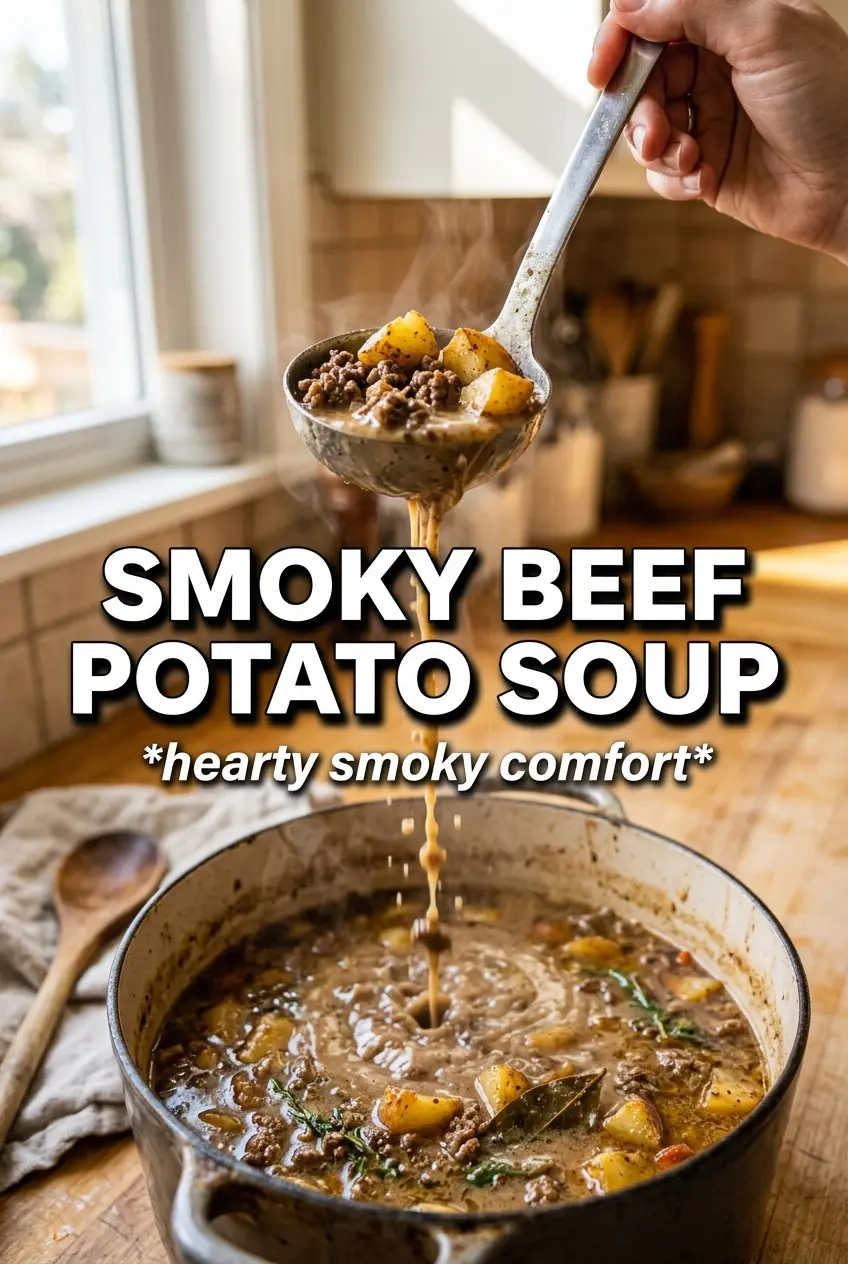
Smoky Beef Potato Soup
Ingredients
Equipment
Method
- Season beef with salt, pepper, and 1 tablespoon smoked paprika. Heat olive oil in a Dutch oven over high heat and sear beef until deeply browned on all sides, then remove.
- In the same pot, sauté onion, carrots, and celery for 5 minutes. Add garlic and cook for 1 minute.
- Stir in remaining smoked paprika, cumin, and chipotle powder and cook for 1 minute, until fragrant. Keep the heat moderate so spices don’t scorch.
- Add beef broth, fire-roasted tomatoes, Worcestershire sauce, and browned beef to the pot. Bring to a boil, scraping up any browned bits.
- Reduce heat to a steady simmer and cook for 25-30 minutes. Add potatoes and simmer 20 more minutes until beef and potatoes are tender.
- Season with salt and pepper to taste, then garnish with fresh parsley. Serve hot and smoky with a visible mix of beef and potato chunks.