Small batch chicken noodle soup lands exactly where a good bowl of soup should: light enough to eat without effort, but full enough to feel like dinner. The broth stays clear and savory, the chicken turns tender enough to shred with a fork, and the noodles cook right in the pot so they pick up the flavor instead of tasting like a separate add-in. It’s the kind of pot that disappears fast, which is probably why it keeps getting made again.
What makes this version work is restraint. A single chicken breast is enough for two generous bowls, and keeping the chicken whole while it simmers gives you juicier meat than tossing in pre-shredded pieces. The lemon goes in at the end, after the noodles are tender, so the soup finishes bright instead of flat. That last squeeze doesn’t make it taste lemony; it just wakes everything up.
Below, I’ll walk through the part that matters most: how to keep the broth clean, how to avoid overcooking the noodles, and the easiest way to adjust the soup if you want it a little heavier or a little lighter.
The broth stayed clear, the noodles held their shape, and the lemon at the end made the whole bowl taste fresh instead of heavy. I had lunch ready for two with almost no leftovers to manage.
Save this small batch chicken noodle soup for the nights when you want clear broth, tender chicken, and just enough noodles for two bowls.
The Mistake That Turns Chicken Noodle Soup Cloudy and Flat
The difference between a clean, comforting broth and a dull one usually comes down to heat and timing. If the soup boils hard after the chicken goes in, the broth turns cloudy and the chicken tightens up before it has a chance to get tender. A slow simmer keeps the meat soft and gives the vegetables time to soften without falling apart.
The other place people lose this soup is the noodles. Egg noodles keep cooking after the burner turns off, so if you wait until they feel fully done in the pot, they’ll go soft in the bowl. Pull the soup when they’re just tender and still have a little bite. That little bit of carryover heat matters here.
What Each Ingredient Is Actually Doing in the Pot

- Chicken breast — Keeping it whole while it simmers gives you juicier shreds than cutting it up first. Thighs work too if you want a richer soup, but breast keeps the broth a little lighter and is easy to portion for two.
- Carrots, celery, and onion — This is the base flavor. Dice the onion small and slice the carrots and celery evenly so they soften at the same pace. Bigger chunks stay too firm in such a short cook time.
- Chicken broth — Since the ingredient list is short, the broth matters. Use one you’d actually sip on its own. If yours tastes thin, a pinch more salt at the end helps more than extra seasoning early on.
- Egg noodles — They bring the soup from light lunch to real dinner. Add them near the end and cook until just tender; if you want leftovers, undercook them slightly so they don’t go mushy in the fridge.
- Lemon juice — This is the quiet finishing move. It doesn’t make the soup sour. It sharpens the broth and keeps the whole bowl from tasting sleepy.
Building the Broth Without Overcooking the Chicken
Softening the vegetables first
Start with the olive oil, onion, carrots, and celery in a medium saucepan over medium heat. You want the onion to turn translucent and the carrots to just start softening, not browning hard at the edges. If the pan runs dry or the vegetables start to catch, lower the heat a notch; browned vegetables change the flavor of this soup more than you want.
Keeping the chicken gentle
Add the garlic for just a minute, then pour in the broth and herbs before adding the chicken breast whole. The soup should stay at a lazy simmer, with only a few bubbles breaking the surface. If it boils, the chicken gets stringy before the center cooks through. After 18 to 20 minutes, the thickest part should be cooked through and shred cleanly with two forks.
Finishing the noodles and broth
Once the chicken is shredded and returned to the pot, add the egg noodles and cook until tender, usually 6 to 7 minutes. Stir now and then so they don’t stick to the bottom. Turn off the heat, then stir in the lemon juice and season with salt and pepper. The lemon at the end keeps the broth bright; if you add it too early, the flavor gets lost.
How to Adapt This Soup for Different Nights
Make it dairy-free and gluten-free
This version is already dairy-free, so the only real change is the noodles. Swap in a gluten-free egg noodle or short rice pasta and cook it just until tender. Gluten-free pasta softens faster and can break down if it sits too long, so serve it right away.
Use chicken thighs for a richer bowl
Boneless, skinless thighs give you a deeper, more savory soup and stay tender even if they simmer a little longer than the breast. They’ll make the broth feel fuller and the shredded chicken a bit more succulent. Use the same timing, but check for tenderness rather than relying only on the clock.
Turn it into a larger batch
Double everything except the noodles if you want a soup that still feels brothy instead of starchy. For a bigger pot, add a little extra broth only if the chicken and vegetables are crowded; otherwise the soup can thin out fast. Cook the noodles separately if you plan on leftovers, then add them to each bowl.
Storage and Reheating
- Refrigerator: Store in an airtight container for up to 4 days. The noodles will keep absorbing broth, so expect the soup to thicken.
- Freezer: Freeze the soup without the noodles for the best texture. Egg noodles get soft and a little bloated after freezing, so cook a fresh batch when you reheat.
- Reheating: Warm gently on the stove over medium-low heat until steaming. Add a splash of broth or water if it looks too thick, and don’t let it boil or the chicken will dry out.
Answers to the Questions Worth Asking
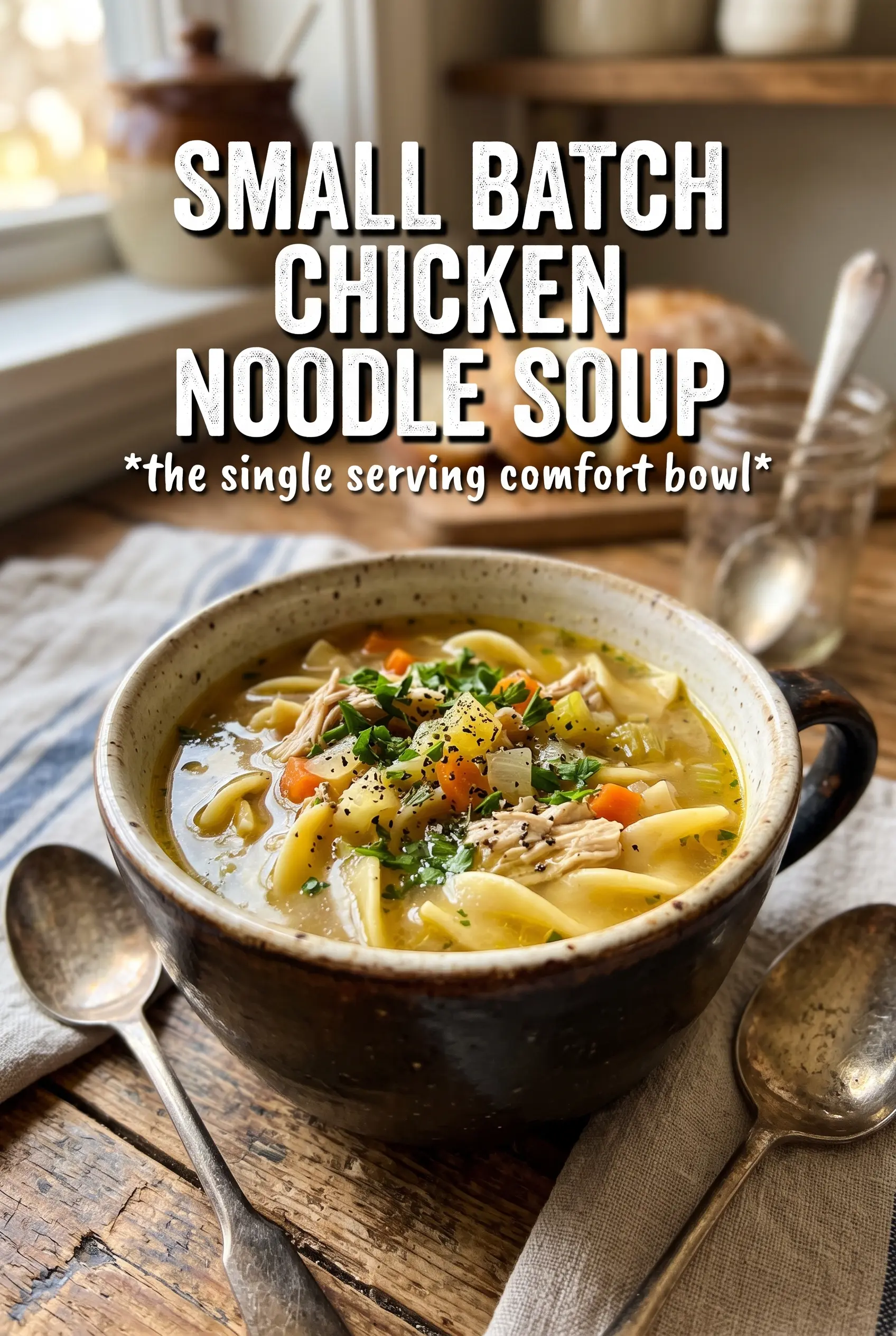
Small Batch Chicken Noodle Soup
Ingredients
Equipment
Method
- Heat olive oil in a medium saucepan over medium heat, then sauté onion, carrots, and celery for 4 minutes until glossy and slightly softened.
- Add garlic and cook for 1 minute, then pour in the chicken broth and stir in thyme and dried parsley.
- Add the chicken breast whole and simmer for 18-20 minutes, until the chicken is cooked through and no longer pink in the center.
- Remove the chicken breast, shred it, and return the shredded chicken to the pot.
- Add egg noodles and cook for 6-7 minutes, stirring occasionally, until tender.
- Squeeze in lemon juice, then season with salt and pepper to taste until the flavor balances.
- Garnish with fresh parsley and serve hot in two bowls.