Slow Cooker Italian Chicken Noodle Soup lands in that sweet spot between comforting and practical: tender chicken, soft vegetables, brothy tomato-rich flavor, and noodles that soak up just enough of the soup without turning it muddy. The slow cooker does the heavy lifting here, but the soup still tastes finished, not lazy. It’s the kind of pot that disappears fast because every bowl feels balanced and hearty.
What makes this version work is the order of operations. The chicken, carrots, celery, onion, garlic, tomatoes, beans, and broth all go in together so the base can turn rich and savory without any extra fuss. The noodles and spinach wait until the end, which keeps the pasta from going bloated and keeps the greens bright instead of dull. That little bit of restraint is what keeps the texture on point.
Below, I’ll show you how to keep the broth flavorful, when to add the pasta so it cooks cleanly, and which swaps work best if you want to adjust the soup for what you’ve got on hand.
The broth came out rich and tomato-kissed, and the noodles stayed tender instead of falling apart. I added the spinach at the very end like you said, and it kept the soup bright and fresh-tasting.
Save this Slow Cooker Italian Chicken Noodle Soup for a cozy bowl with shredded chicken, cannellini beans, and pasta that stays tender without getting mushy.
The Trick to Keeping the Noodles from Going Soft
The biggest mistake with slow cooker soup is letting the pasta sit in the broth for hours. Ditalini or egg noodles will keep absorbing liquid long after they look done, and that’s how you end up with a pot that goes thick, gluey, and overcooked. Adding the noodles only for the last 20 to 30 minutes keeps them tender with a little bite, which is what you want in a bowl like this.
The second thing that matters is not overcooking the chicken until it dries out. Chicken thighs are forgiving, which is why they work so well here, but they still taste better when you shred them once they’re fully cooked and return them to the broth right away. That keeps the meat juicy and lets it soak up the tomato, garlic, and herb flavor already in the pot.
- Chicken thighs — Thighs stay tender through a long cook and give the broth a deeper, richer taste than chicken breast. If you use breast meat, pull it as soon as it’s cooked through or it can turn stringy.
- Cannellini beans — They add body and a creamy texture without any dairy. Great Northern beans work too, but cannellini hold their shape a little better.
- Diced tomatoes — These bring the tomato note that makes the broth taste Italian-American instead of plain chicken soup. Use the full can, juices included, because that liquid helps the base develop.
- Spinach — Stir it in at the end so it just wilts. If it goes in too early, it disappears into the broth and loses the fresh finish that balances the soup.
What Each Ingredient Is Actually Doing in This Recipe

- Primary ingredient (the star) — Quality matters most. Choose the best you can find.
- Cooking medium (oil, butter, or broth) — This carries flavors and prevents dryness.
- Seasonings (salt, pepper, spices, herbs) — Layer flavors so nothing overpowers. Build depth gradually.
- Aromatics (garlic, onion, herbs) — Cook with fat to bloom flavors. Become the foundation.
- Supporting ingredients — Complement the main ingredient without overpowering it.
- Sauce or liquid (if applicable) — Brings flavors together. Balance richness with acid.
- Acid (lemon, vinegar, wine, or other) — Brightens and prevents flat-tasting results.
- Final finish (garnish, glaze, or sauce) — Prevents one-dimensional taste and adds visual appeal.
Building the Broth in the Right Order
Layer the Base Before the Heat Does the Work
Everything except the noodles, spinach, and garnish goes into the slow cooker at the start. The vegetables soften into the broth, the garlic mellows, and the tomatoes lose their sharp edge as the soup cooks low and slow. This is where the flavor gets built, so don’t skimp on the seasoning at the beginning; the broth needs enough salt and herbs to carry the noodles later.
Let the Chicken Cook Until It Shreds Cleanly
Cook on low for 6 to 8 hours, or on high for 3 to 4 hours, until the chicken pulls apart easily with two forks. If the chicken fights you, it needs more time. Shredding it too early leaves you with tough pieces, and leaving the pieces whole means they won’t absorb as much broth when they go back in.
Add the Pasta Only When the Soup Is Nearly Done
Stir in the noodles after the chicken has been shredded and returned to the pot. Keep the heat on high and watch for the noodles to turn tender but still intact, usually 20 to 30 minutes depending on shape. If you walk away too long, the pasta will drink up too much broth and the soup will turn heavy instead of brothy.
Finish with Greens and a Bright Garnish
Spinach only needs a few minutes to wilt, so add it at the very end and stir until it turns dark green and soft. Taste the soup after that and season with salt and pepper, because the broth often needs one last adjustment once the noodles are in. A handful of parmesan and fresh basil on top gives the bowl a salty, fresh finish that makes the whole pot taste more complete.
How to Adapt This Soup for Different Kitchens and Diets
Make It Gluten-Free Without Losing the Comfort
Use gluten-free pasta and add it near the end, just like regular noodles, but start checking it a few minutes earlier because it can soften fast. The rest of the soup already fits naturally into a gluten-free bowl as long as your broth is labeled gluten-free.
Skip the Beans for a Lighter Broth
Leave out the cannellini beans if you want a cleaner, more classic chicken noodle soup texture. You’ll lose a little creaminess and body, so add an extra handful of carrots or a bit more pasta if you want the pot to feel just as hearty.
Use Chicken Breast for a Leaner Version
Chicken breast works if that’s what you have, but it needs a little more attention. Check for doneness earlier and shred it as soon as it’s cooked through, because breast meat dries out faster than thighs in a long simmer.
Storage and Reheating
- Refrigerator: Keep leftovers for up to 4 days. The noodles will absorb more broth as it sits, so expect the soup to thicken.
- Freezer: Freeze the soup without the noodles for the best texture. Pasta gets soft and grainy after freezing, so cook fresh noodles when you reheat.
- Reheating: Warm it gently on the stove over medium-low heat with a splash of broth or water. Boiling hard is the fastest way to break the noodles and make the vegetables fall apart.
Questions I Get Asked About This Recipe
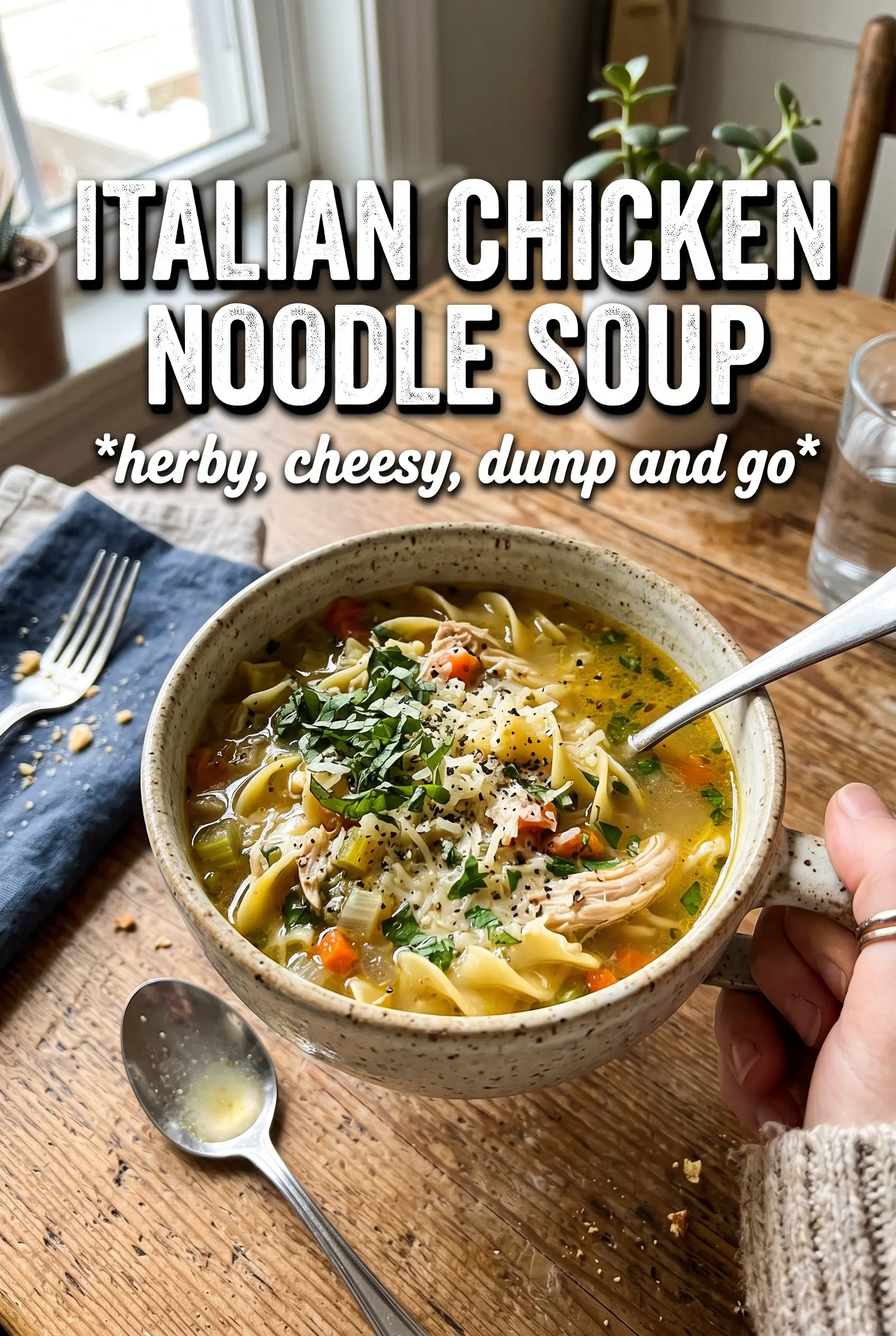
Slow Cooker Italian Chicken Noodle Soup
Ingredients
Equipment
Method
- Add the chicken thighs, carrots, celery, onion, garlic, diced tomatoes, cannellini beans, chicken broth, Italian seasoning, dried basil, and red pepper flakes to the slow cooker. Stir so the seasonings are evenly distributed.
- Cover and cook on Low for 6-8 hours, until the chicken is cooked through and the broth looks richly infused with tomato. (Or cook on High for 3-4 hours.)
- Remove the chicken, shred it, and return the shredded chicken to the pot. The soup should look thick and flavorful after the chicken goes back in.
- Add the ditalini (or egg noodles) and cook on High for 20-30 minutes, until the noodles are tender and the broth stays active with small bubbles. Stir occasionally to prevent sticking.
- Stir in the fresh spinach and cook for 5 minutes, until it wilts and turns bright green. You should see the spinach evenly dispersed throughout the soup.
- Season with salt and black pepper to taste, then ladle into bowls. Top each serving with parmesan shavings and fresh basil.