Slow cooker chicken noodle soup earns its place in the rotation because it gives you a clear, comforting broth without babysitting a pot on the stove. The chicken turns tender enough to shred with almost no effort, the vegetables soften into the broth instead of collapsing into mush, and the noodles soak up just enough flavor without going limp if you add them at the end.
The difference here is timing. Bone-in chicken thighs bring more body and better flavor than boneless breasts, and the slow cooker has time to pull everything into one broth that tastes cooked, not rushed. Adding the noodles in the last stretch keeps them from bloating and turning cloudy, which is the mistake that ruins a lot of soup recipes at home.
Below, I’m walking through the small choices that matter most: why the broth tastes better when the chicken goes in raw, how to keep the noodles from overcooking, and the one adjustment that makes leftovers hold up instead of turning soft by dinner time the next day.
The broth stayed clear, the chicken shredded beautifully, and the noodles were perfect because I added them at the end instead of letting them sit in the Crockpot all day.
Save this slow cooker chicken noodle soup for the kind of night when you want clear broth, tender chicken, and noodles that stay just right.
The Trick to Clear Broth and Tender Noodles in a Slow Cooker
Slow cooker soups get muddy when the noodles sit in the pot for hours or the broth boils too hard on high heat for too long. This version avoids both problems by building the broth first and treating the noodles like a finish, not a base. That keeps the liquid clean and lets the pasta hold its shape.
Bone-in thighs matter here because they give you richer broth and more forgiving meat. Breast meat works, but it dries out faster and turns stringy if the soup goes past the ideal window. The vegetables also need enough time to soften before the noodles go in, so the soup tastes layered instead of separately cooked.
- Chicken thighs — Bone-in thighs bring more flavor to the broth than boneless pieces. They also stay juicy through a long cook, which is exactly what you want in a slow cooker.
- Egg noodles — These are best added at the end because they absorb liquid fast. If they go in early, they swell, turn soft, and soak up too much broth.
- Fresh herbs at the end — Dill or parsley on top wakes the soup back up. Dried herbs build the base; fresh herbs give the bowl its clean finish.
What Each Ingredient Is Actually Doing in the Pot

- Bone-in chicken thighs — These are the engine of the soup. The bones help flavor the broth, and the dark meat stays tender after hours of gentle cooking. Boneless thighs can work in a pinch, but the broth won’t have the same depth.
- Chicken broth — This does most of the heavy lifting, so use one you’d actually drink. A better broth means you don’t have to over-salt or rely on extra bouillon to make the soup taste finished.
- Carrots, celery, onion, and garlic — This is the soup base, and the slow cooker gives these vegetables time to melt into the broth. Dice the onion and slice the carrots and celery evenly so nothing disappears while the larger pieces stay underdone.
- Dried thyme, dried dill, garlic powder, and onion powder — The dried herbs season the whole pot from the start. Dill in particular gives this soup its classic chicken noodle character, but it’s best paired with fresh dill at the end so the flavor doesn’t go flat.
- Egg noodles — Standard egg noodles are the right choice because they cook quickly and bring that old-school chicken soup texture. If you swap in a sturdier pasta, you’ll need a longer finish and a little extra broth.
Building the Soup So Nothing Gets Mushy
Load the Crockpot in the Right Order
Start with the chicken on the bottom and pile the vegetables, garlic, broth, and seasonings over the top. That keeps the meat submerged and lets the broth move through the vegetables as it heats. You don’t need to brown anything first for this soup; the long cook gives the broth enough time to develop on its own.
Cook Until the Chicken Shreds Without a Fight
After 6 to 8 hours on Low, the chicken should pull apart easily and the carrots should be tender but not falling apart. If the meat is still tight, give it more time instead of cranking the heat and rushing it. High heat can cook the edges of the chicken before the broth has had time to take on enough flavor.
Add the Noodles at the End
Remove the chicken, shred it, and return it to the pot before the noodles go in. Then add the egg noodles and cook just until they’re tender, usually 20 to 30 minutes on High. If you leave them in too long, they’ll drink up the broth and get bloated, which is the fastest way to turn a good soup into a thick, gummy one.
Finish with Salt, Pepper, and Fresh Herbs
Taste the soup after the noodles are cooked, not before. The noodles absorb seasoning, so the pot often needs a final hit of salt and pepper right at the end. Fresh dill or parsley should go on top just before serving so the aroma stays bright instead of disappearing into the broth.
How to Adjust This Soup When Your Pantry or Diet Changes
Gluten-Free Version with the Same Comfort
Use gluten-free egg-style noodles or another short gluten-free pasta, but add it with extra care because some brands soften faster than others. Check the pot a few minutes early so the noodles stay tender instead of breaking apart. The broth and chicken don’t need any other changes.
Using Chicken Breasts Instead of Thighs
You can swap in bone-in chicken breasts, but shorten the cook if they’re done early. Breasts are leaner, so they dry out faster and the broth will taste a little lighter. Pull them as soon as they shred easily and don’t let them sit in the hot broth longer than needed.
Making It Dairy-Free and Naturally Comforting
This soup is already dairy-free as written, which is part of why it stays so clean and brothy. Keep the garnish to parsley or dill and skip any creamy additions if you want the lightest version. The flavor comes from the broth, herbs, and long cook, not from dairy.
How to Stretch It for a Bigger Crowd
Double the vegetables and broth before you double the noodles. That keeps the soup from turning into a pasta-heavy pot with not enough liquid. If you’re serving it later, hold the noodles separately and add them to each bowl so the leftovers stay brothy.
Storage and Reheating
- Refrigerator: Store for up to 4 days. The noodles will keep absorbing broth, so expect the soup to thicken a bit.
- Freezer: Freeze the soup without the noodles for the best texture. Add freshly cooked noodles after thawing, because frozen noodles turn soft and grainy.
- Reheating: Warm gently on the stove over medium-low heat or in the microwave in short bursts. If it’s been refrigerated with noodles in it, add a splash of broth before reheating so the soup doesn’t turn dry.
Answers to the Questions Worth Asking
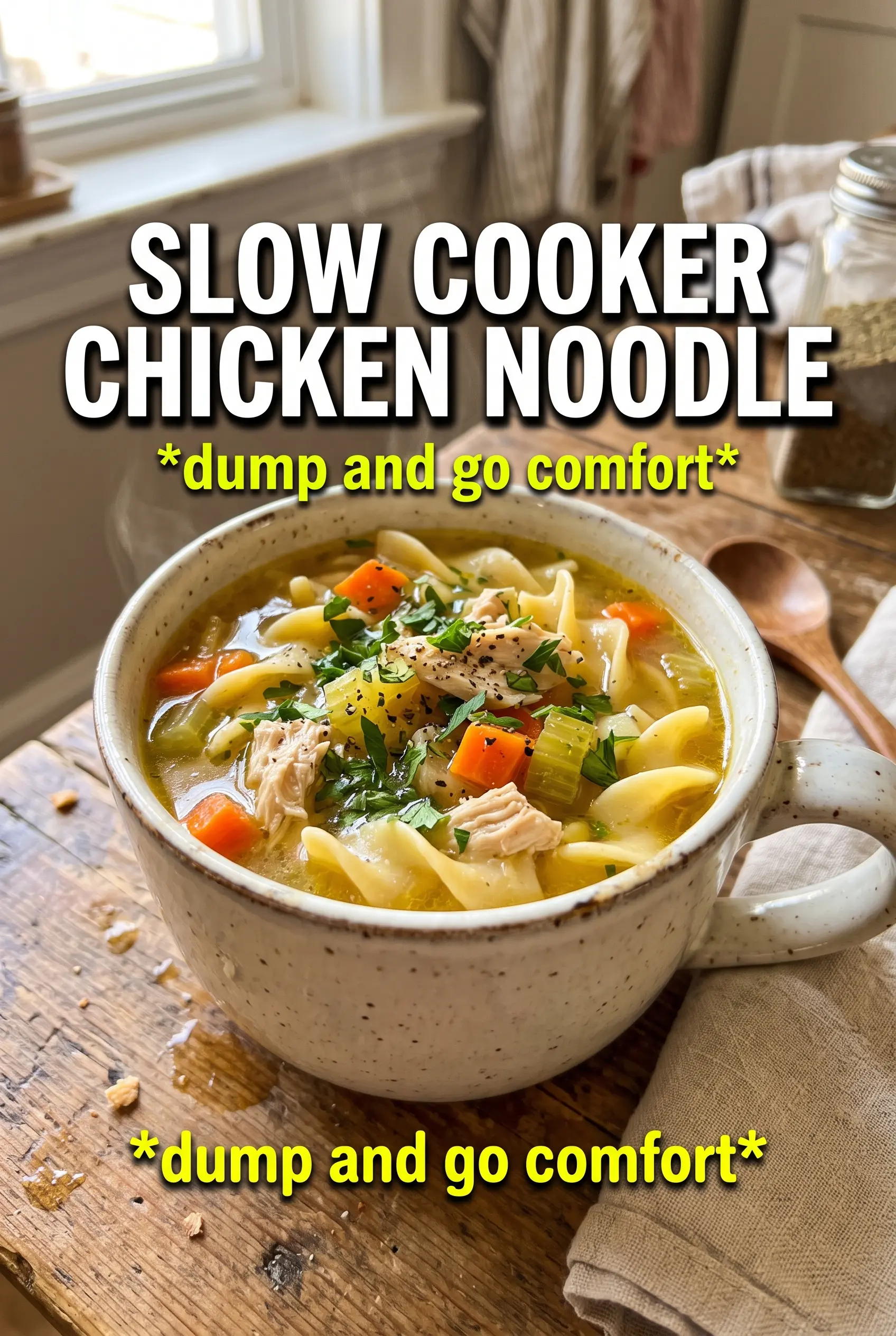
Slow Cooker Chicken Noodle Soup
Ingredients
Equipment
Method
- Place chicken thighs in the slow cooker, then add carrots, celery, onion, garlic, chicken broth, thyme, dill, bay leaves, garlic powder, and onion powder.
- Cook on Low for 6–8 hours or High for 3–4 hours until the chicken is very tender.
- Remove the chicken thighs, discard the skin and bones, and shred the meat.
- Remove bay leaves, then return the shredded chicken to the slow cooker.
- Add egg noodles, then cook on High for 20–30 minutes until tender.
- Season generously with salt and pepper, then garnish with fresh dill.