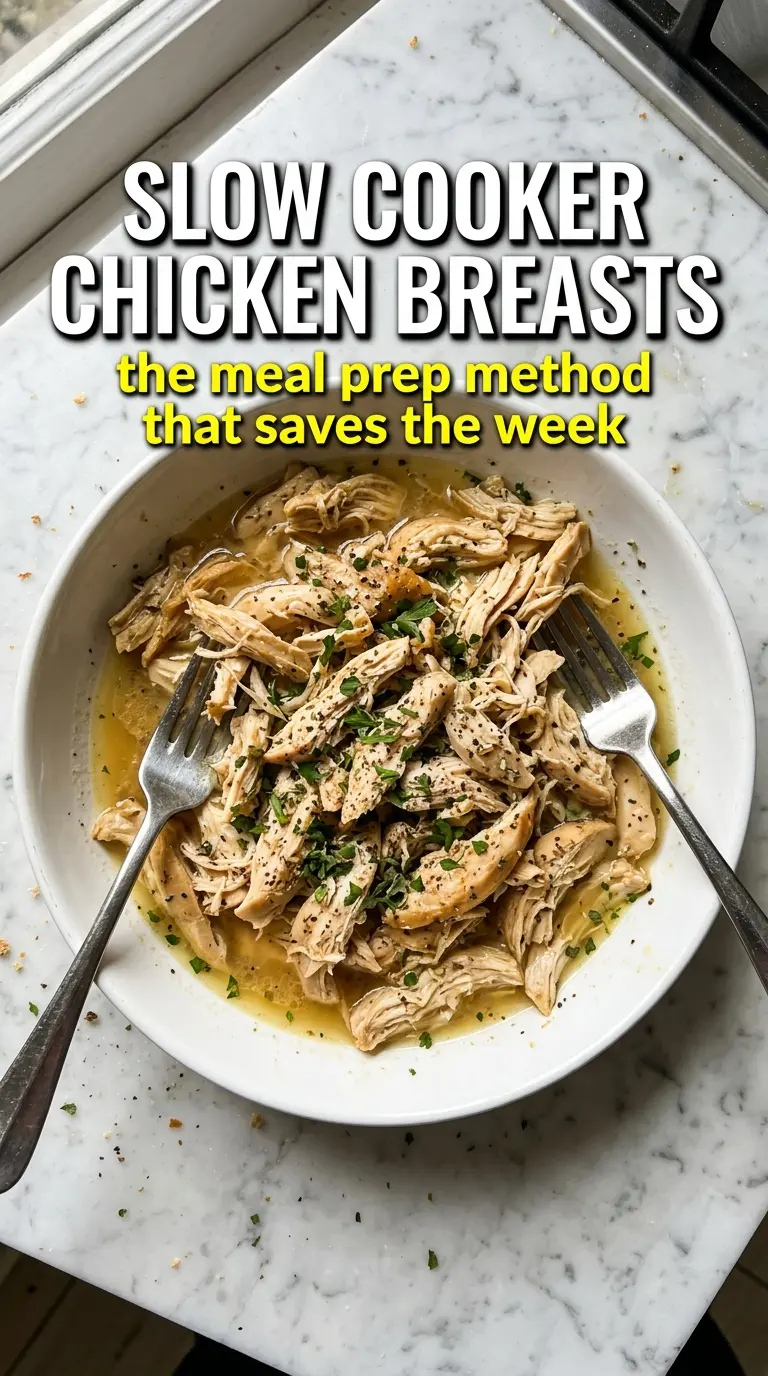
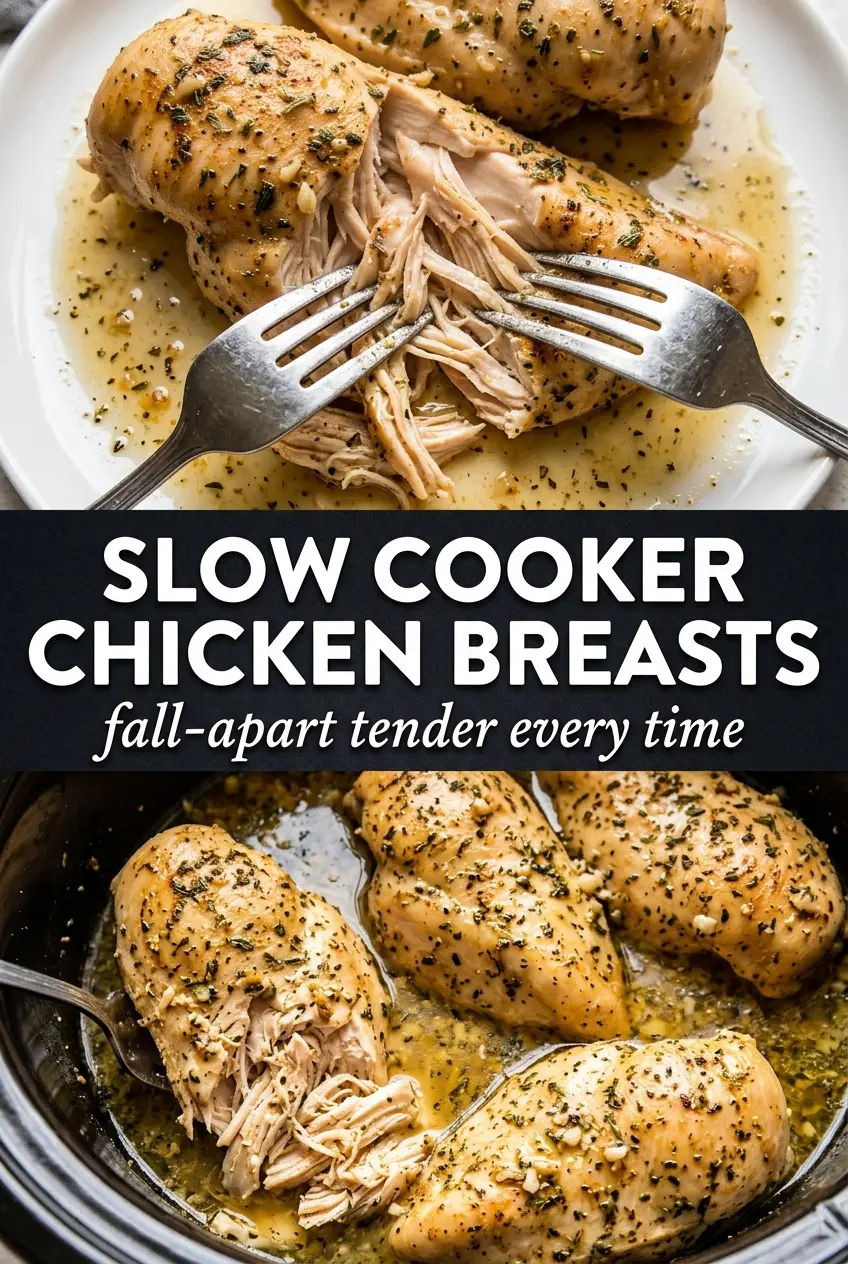
Slow cooker chicken breasts can go from plain to genuinely worth repeating when they stay juicy instead of turning stringy and dry. This version keeps the seasoning direct and the liquid restrained, so the chicken steams gently in a savory broth while the surface still picks up enough flavor to taste finished, not bland. The result is tender slices that hold together at the knife and still pull apart easily with a fork.
The trick is in the balance. Too much liquid and the chicken tastes washed out; too little and the slow cooker has nothing to work with. A modest amount of broth, plus butter and garlic, gives you enough moisture to protect the meat and enough flavor to turn the juices into a light sauce at the end. The seasoning blend leans on garlic, onion, paprika, and Italian seasoning, which keeps the chicken from tasting flat without needing a long marinade.
Below, I’ll show you how to keep the breasts from overcooking, what to swap if you only have one or two ingredients on hand, and how to turn the cooking liquid into the part everyone wants spooned over the top.
I cooked this on low for 3 1/2 hours and the chicken was still juicy enough to slice without falling apart. The broth and butter made the best little sauce, and my family asked me to keep this one in the rotation.
Save these slow cooker chicken breasts for an easy dinner with juicy meat, seasoned broth, and a simple pan sauce.
The Part That Keeps Slow Cooker Chicken Breasts from Going Dry
Chicken breasts dry out in the slow cooker when they sit too long, not because the method itself is bad. The low, steady heat is gentle, but breast meat has a narrow window between done and overdone. That’s why the cook time here matters more than the ingredient list. On low, start checking around 3 hours if your chicken breasts are small or thin. If they’re thick, they may need the full 4 hours, but not much beyond that.
The other mistake is drowning the chicken in liquid. You only need enough broth to create steam and collect the seasoned drippings. The butter melts into the broth, the garlic perfumes everything, and the chicken stays moist without boiling in its own juices. If you want slices that hold their shape, take the chicken out as soon as it reaches 165°F in the thickest part and let it rest before cutting.
- Chicken breasts — Use similar-sized pieces so they finish at the same time. If one breast is much larger than the others, tuck the thickest end toward the outside of the slow cooker where the heat is strongest.
- Broth — Low-sodium broth gives you control over the salt level and leaves room for the seasoning on the chicken. Water works in a pinch, but you lose the built-in savory base that makes the sauce worth keeping.
- Butter — This adds body to the cooking juices. You can use olive oil, but the finished sauce won’t taste as round or rich.
What the Seasoning and Broth Are Doing in the Pot
- Garlic powder, onion powder, smoked paprika, and Italian seasoning — This blend seasons the chicken all the way through without needing a marinade. The smoked paprika adds a little warmth and color, while the Italian seasoning keeps the broth from tasting one-note.
- Minced garlic — Fresh garlic softens in the heat and gives the sauce a deeper savory edge. If you only have garlic powder, use a little extra and stir it into the broth so it doesn’t clump on the chicken.
- Parsley and lemon — Don’t skip the finish. The parsley gives the dish a fresh edge, and the lemon wakes up the sauce right before serving. Without that brightness, the chicken can taste heavier than it should.
How to Keep the Chicken Juicy All the Way to the Plate
Seasoning the Breasts Evenly
Lay the chicken breasts out and season both sides generously so every bite has some flavor, not just the top. Press the spices in lightly with your fingers so they cling. If the seasoning looks patchy, the finished chicken will taste patchy too. Don’t dump everything in the slow cooker and hope the broth fixes it later; the surface seasoning is what gives the meat its first layer of flavor.
Setting Up the Slow Cooker
Pour the broth around the chicken, not directly over it, so you don’t wash off the seasoning before the heat starts working. Add the butter and garlic on top, then cover the pot and leave the lid closed. Every time you lift it, you lose heat and slow the cook. That matters here because the line between tender and dry is short.
Knowing When to Stop Cooking
Check the chicken near the earliest time listed and look for an opaque center and juices that run clear. If you have a thermometer, pull it at 165°F in the thickest part. The meat should feel firm but still springy when pressed, not tight or rubbery. If it starts shredding the second you touch it, it has gone a little too far for neat slicing, though it will still work fine for sandwiches or salads.
Finishing the Sauce
Let the chicken rest for 5 minutes before slicing so the juices settle back into the meat. Spoon the cooking liquid over the top like a simple sauce; if it seems thin, that’s normal for a slow cooker. What matters is the concentration of flavor, not thickness. A little lemon at the end sharpens the broth and keeps the whole dish from tasting heavy.
Three Smart Ways to Adjust This Without Losing the Texture
Make it dairy-free
Swap the butter for olive oil or a dairy-free butter alternative. You’ll still get moisture and a little richness, but the sauce will be lighter and less silky. If you use oil, add an extra squeeze of lemon at serving to bring the finish back into balance.
Make it low-sodium
Use low-sodium broth and season the chicken a little more assertively before it goes in. That keeps the flavor from landing flat after the long cook. The broth reduces in taste, not in volume, so the salt can sneak up on you if you start with a salty stock.
Turn it into meal prep
Slice the chicken after it rests and spoon a little of the broth over each portion before storing. That extra moisture keeps the meat from drying out in the fridge. It reheats best when the slices are already cut, because whole breasts take longer to warm through and tend to lose texture.
Use thighs instead
Boneless skinless chicken thighs will give you a richer, more forgiving result. They can go a little longer without drying out, but they also release more fat into the broth. The sauce ends up deeper and more savory, while the texture becomes softer and less sliceable.
Storage and Reheating
- Refrigerator: Store leftovers in an airtight container for up to 4 days. Keep the chicken with a spoonful of the cooking juices so it stays moist.
- Freezer: It freezes well. Cool it completely, portion it with some broth, and freeze for up to 3 months. Thaw in the fridge overnight before reheating.
- Reheating: Warm gently in a covered skillet over low heat or in the microwave at 50% power. High heat tightens the meat and pulls out the moisture you worked to keep in.
Questions I Get Asked About This Recipe
Slow Cooker Chicken Breasts
Ingredients
Equipment
Method
- Season the chicken breasts generously on both sides with garlic powder, onion powder, smoked paprika, Italian seasoning, salt, and cracked black pepper.
- Place the chicken in the slow cooker and pour the chicken broth around the chicken.
- Add the butter and the minced garlic to the slow cooker.
- Cover and cook on LOW for 3-4 hours or HIGH for 2-2.5 hours, until the chicken is tender and not dry (do not overcook).
- Remove the chicken and let it rest for 5 minutes before slicing.
- Pour the cooking juices over the sliced chicken as a pan sauce, spooning until the surface looks glossy and well-coated.
- Garnish with fresh parsley and lemon wedges for bright color and a fresh finish.