Golden seared chicken breasts tucked into a dark, silky mushroom wine sauce are the kind of dinner that looks like you spent all evening on it, even though the whole skillet comes together in under 40 minutes. The chicken stays juicy, the mushrooms turn deeply savory, and the sauce lands somewhere between glossy pan gravy and elegant cream sauce.
What makes this version work is the order of operations. The chicken sears first so you get browned bits in the pan, then the mushrooms cook in the same fat until they stop looking pale and start taking on color of their own. That’s what gives the sauce its depth instead of a flat, creamy finish. A little Dijon sharpens the wine and cream just enough to keep the sauce from tasting heavy.
Below, you’ll find the detail that matters most: how to build the sauce so it reduces properly without breaking, plus a few smart swaps if you only have white wine or want to make the dish dairy-free.
The sauce thickened up exactly right and stayed silky when I put the chicken back in. My husband kept spooning it over the mashed potatoes and asked if we could have it again next week.
Like this skillet chicken and mushroom wine sauce? Save it to Pinterest for the nights when you want a glossy pan sauce and a restaurant-style dinner from one pan.
The Trick Is Keeping the Pan Brown, Not Clean
The biggest mistake with skillet chicken in wine sauce is rushing past the browned bits. Those little caramelized spots left behind after searing the chicken are the backbone of the sauce, and if you wash them away or crowd the pan so the chicken steams, the finished dish tastes thin. You want a deep golden crust on the chicken and a dark, sticky layer at the bottom of the skillet before the mushrooms go in.
Another common failure point is heat. Once the cream is in, the sauce needs a gentle simmer, not a boil. High heat can make the dairy tighten up and lose its smooth texture, especially after the wine has reduced. Keep the sauce moving with a spoon and let it thicken gradually until it coats the back of the spoon.
- Chicken breasts — Boneless, skinless breasts cook quickly and take on the sauce well, but they dry out if they’re overcooked. If yours are very thick, pound them to an even thickness so they sear and finish at the same rate.
- Dry red wine — This gives the sauce its deeper color and a more savory edge. A dry white wine works too, but the sauce will be lighter and a little brighter. Use something you’d actually drink.
- Cremini mushrooms — These hold their shape and brown better than white button mushrooms. If you slice them too thin, they collapse before they can caramelize.
- Dijon mustard — Just a teaspoon wakes up the whole pan sauce. It doesn’t make the sauce taste mustardy; it sharpens the cream and keeps the wine from tasting flat.
How the Sauce Goes from Thin and Sharp to Silky and Balanced

- Heavy cream — This is what turns the pan juices into a velvety sauce. Half-and-half can work in a pinch, but it won’t reduce as richly and is more likely to look thin at the end.
- Fresh thyme — Dried thyme seasons the chicken, but fresh thyme in the sauce gives the dish its lift. If you only have dried, use a small pinch; too much can make the sauce taste dusty.
- Butter — Butter cooks the mushrooms and adds body to the sauce. Olive oil alone will brown the mushrooms, but the finished sauce won’t have the same roundness.
- Garlic — Add it after the mushrooms have browned. If it goes in too early, it burns before the sauce even starts, and burnt garlic will dominate everything.
Building the Skillet in the Right Order
Season and Sear the Chicken First
Season the chicken generously with salt, pepper, garlic powder, and dried thyme so the meat itself tastes seasoned, not just the sauce. Sear it in hot olive oil over medium-high heat until it releases easily from the pan and the first side is deeply golden. If the chicken sticks hard, give it another minute; forcing it too early tears off the crust you worked to build. Cook it through to 165°F, then move it to a plate so it doesn’t overcook while you finish the sauce.
Brown the Mushrooms Until They Smell Nutty
Melt the butter in the same skillet and add the mushrooms in a single layer if you can. Let them sit long enough to take on color before stirring, because mushrooms that are constantly moved just steam and turn rubbery. You’re looking for shriveled edges, deep brown color, and a smell that turns earthy and almost nutty. Once they’ve browned, add the garlic for just a minute, long enough to perfume the pan without letting it burn.
Deglaze, Then Reduce
Pour in the wine and scrape the bottom of the skillet with a wooden spoon to release every browned bit. This is where the sauce gets its depth, so don’t rush through it. Let the wine simmer until it loses the raw alcohol smell and reduces a little before you add the broth and cream. If you skip that reduction, the sauce can taste sharp instead of rounded.
Finish the Sauce Gently
Stir in the broth, cream, Dijon, and thyme, then keep the heat low enough for a steady simmer. The sauce should thicken enough to coat a spoon in about 5 to 6 minutes. If it still looks thin, give it another minute or two rather than cranking the heat; fast boiling is how a creamy sauce turns grainy. Return the chicken to the skillet, spoon the sauce over the top, and let it warm through before serving.
How to Adapt This Without Losing the Character of the Dish
White Wine Version
Use dry white wine instead of red for a lighter, brighter sauce that leans a little more French bistro than steakhouse. You’ll lose some of the deep color, but the cream and mushrooms still carry the dish. This is a good move if you want the thyme and Dijon to show up more clearly.
Dairy-Free Version
Swap the butter for more olive oil and use full-fat coconut cream or an unsweetened dairy-free cooking cream in place of heavy cream. The sauce won’t taste exactly the same, and coconut cream adds a faint sweetness, but you’ll still get a glossy, spoonable pan sauce if you keep the heat gentle.
Chicken Thigh Swap
Boneless skinless thighs work well here and bring a little more richness. They’ll need a few extra minutes in the pan, and the sauce may seem slightly more luxurious because the thighs release more flavor into the skillet. Keep the sear strong so they still pick up color before the sauce goes in.
Gluten-Free Serving Note
The sauce itself is naturally gluten-free as written, which makes this an easy dinner to serve with mashed potatoes, rice, or gluten-free pasta. Just check your broth label, since that’s the one ingredient most likely to hide a gluten issue.
Storage and Reheating
- Refrigerator: Store leftovers in an airtight container for up to 3 days. The sauce will thicken as it chills.
- Freezer: You can freeze it, but the cream sauce may separate a little when thawed. If you plan to freeze it, undercook the chicken slightly and thaw it slowly in the refrigerator.
- Reheating: Rewarm gently in a skillet over low heat with a splash of broth or water. Don’t boil it, or the sauce can split and the chicken can turn stringy.
Questions I Get Asked About This Recipe
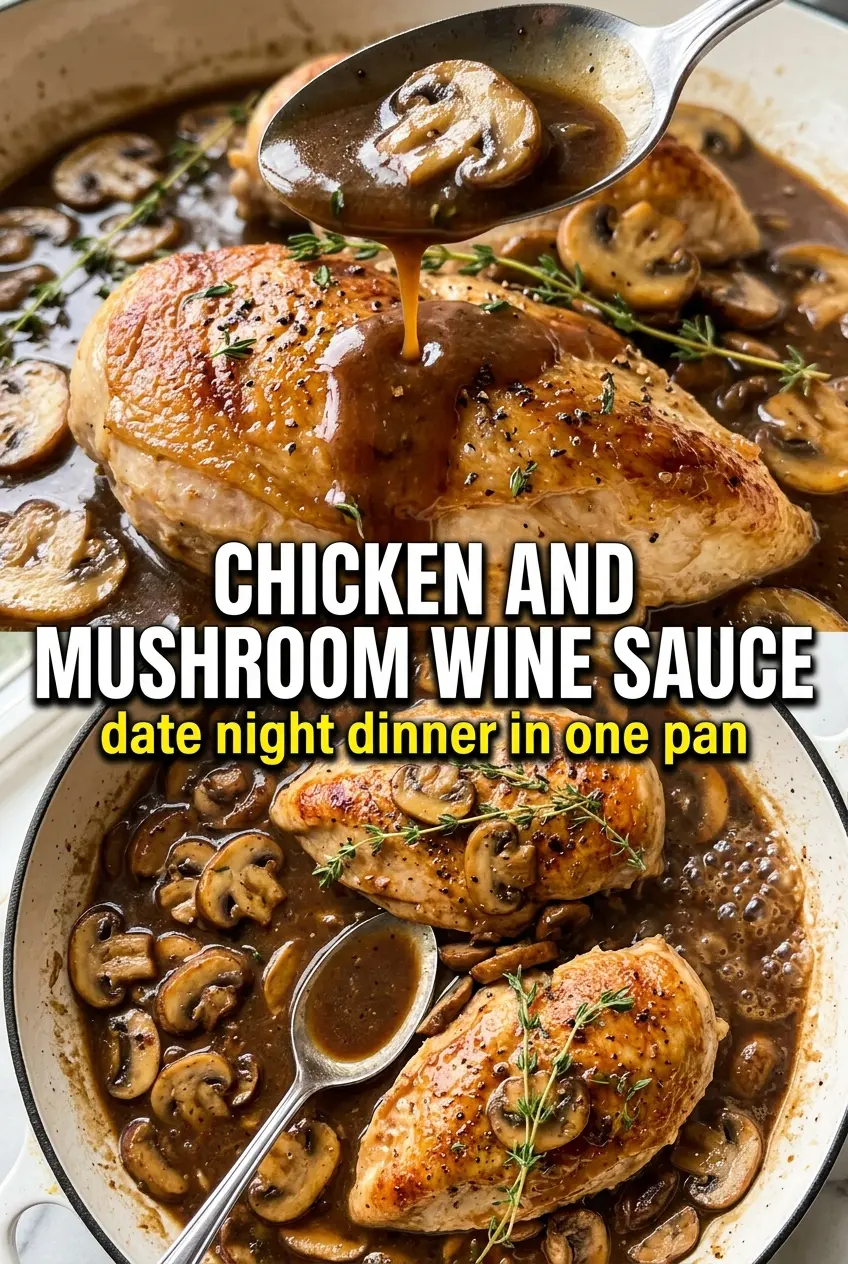
Skillet Chicken and Mushroom Wine Sauce
Ingredients
Equipment
Method
- Season the chicken generously with salt, pepper, garlic powder, and dried thyme. Sear in olive oil in a large skillet over medium-high heat for 5-6 minutes per side until golden and cooked through to 165°F, then remove.
- Melt the butter in the same pan over medium-high heat. Cook the cremini mushrooms for 5-6 minutes until deeply golden, then add the minced garlic and cook 1 minute.
- Pour in the dry red wine (or white wine) and deglaze the pan, scraping up all browned bits. Simmer for 3 minutes to reduce slightly.
- Add the chicken broth, heavy cream, Dijon mustard, and fresh thyme leaves to the skillet. Simmer for 5-6 minutes until the sauce thickens and looks dark and glossy with herb flecks.
- Return the chicken to the pan and spoon the sauce over each breast. Garnish with fresh thyme sprigs and serve.