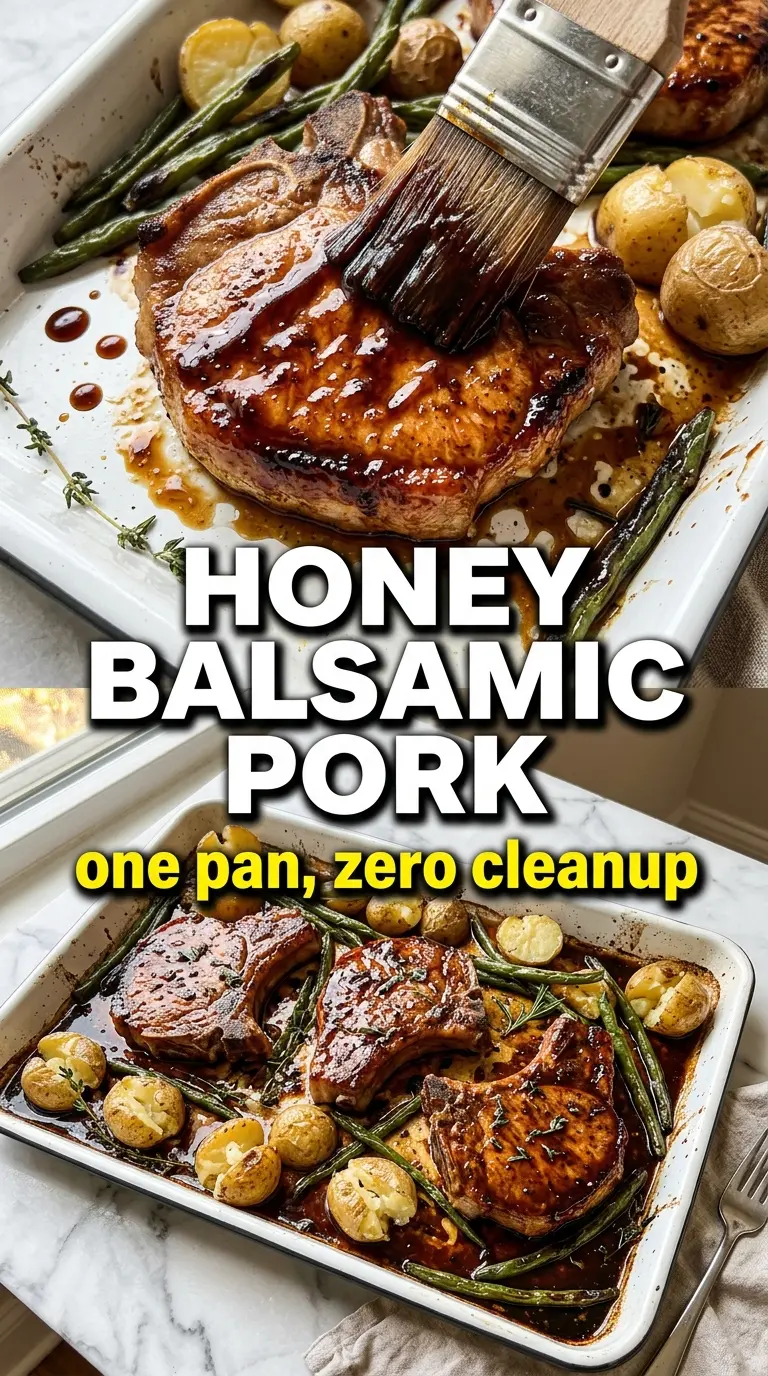
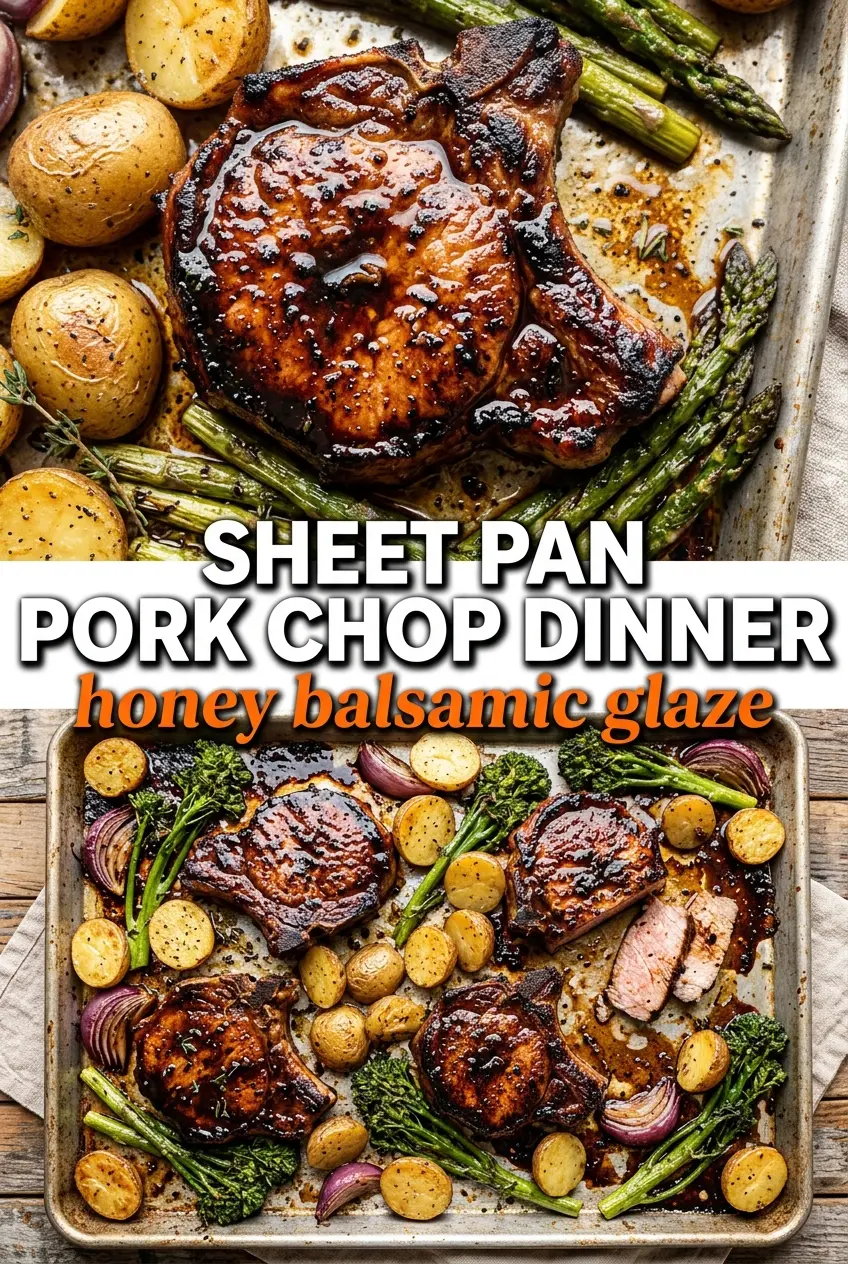
Sticky honey-balsamic pork chops come off the pan with a deep mahogany glaze, juicy centers, and roasted vegetables that pick up every bit of that tangy-sweet sauce. The Brussels sprouts turn crisp at the edges, the cherry tomatoes collapse into little bursts of acidity, and the whole sheet pan tastes like it cooked for twice as long as it did.
What makes this dinner work is the timing. The vegetables get a head start so they can start browning before the pork goes in, and the glaze goes on late enough that the honey doesn’t scorch before the chops are done. The Dijon matters here too — it gives the glaze enough body to cling to the meat instead of sliding off into the pan.
Below, I’ll walk through the little details that keep the pork juicy and the glaze glossy, plus a few swaps if you need to work with what’s already in your kitchen.
The glaze turned sticky and dark in the best way, and the Brussels sprouts roasted right in the pork drippings. My husband said the chops tasted like something from a restaurant.
Save this sheet-pan honey-balsamic pork chop dinner for a caramelized one-pan meal with juicy pork and roasted vegetables.
The Trick to Keeping Honey From Burning Before the Pork Is Done
Honey and balsamic are a great pair, but honey turns from glossy to scorched fast once the oven heat really gets moving. The reason this sheet-pan dinner stays balanced is that the vegetables roast first, the pork goes in after they’ve started to soften, and the glaze is brushed on when the chops still have enough time left to caramelize without drying out. That timing gives you a sticky finish instead of a bitter one.
The other thing worth knowing is that the pork chops need to be a full inch thick. Thin chops cook too quickly for this method and the glaze can over-reduce before the meat is ready. Bone-in chops also stay juicier through the high-heat roast, which matters when the whole dinner is happening on one pan.
- Head start for the vegetables — Brussels sprouts need that first 10 minutes so their cut sides can start browning. If they go in with the pork from the beginning, they usually steam instead of caramelizing.
- Glaze texture — Dijon and olive oil help the glaze cling. Without them, the balsamic and honey tend to separate and run off the meat.
- Broil only at the end — A short broil deepens the color fast. Leave it on too long and the honey turns from lacquered to bitter in a minute.
What Each Ingredient Is Actually Doing in This Dish
- Bone-in pork chops — These stay juicier than boneless chops in a hot oven. If you only have boneless, cut the roasting time down and start checking early so they don’t dry out.
- Balsamic vinegar — This gives the glaze its sharp, dark backbone. Cheap balsamic is fine here because it’s being reduced with honey and mustard, but avoid anything so thin and harsh that it tastes sharp even after roasting.
- Honey — Honey is what makes the glaze stick and turn shiny. Maple syrup can work in a pinch, but the finish will taste a little less rounded and the glaze won’t set quite as firmly.
- Dijon mustard — Dijon thickens the glaze and keeps the sweetness from taking over. Grainy mustard can work, but it gives a different texture and a more rustic look.
- Brussels sprouts and cherry tomatoes — This is the balance on the pan. The sprouts bring bite and browning, while the tomatoes soften into little acidic pockets that cut through the glaze.
Building the Pan So Everything Finishes at the Same Time
Roasting the Vegetables First
Spread the Brussels sprouts and cherry tomatoes in a single layer and roast them before the pork goes on the pan. You want the sprouts starting to brown on the cut sides and the tomatoes just beginning to wrinkle. If the pan is crowded, the vegetables will steam, so give them space even if it means using a larger sheet pan.
Coating the Pork with the Glaze
Whisk the glaze until it looks smooth and slightly thickened, then brush it generously over the pork chops once they’re nestled among the vegetables. The goal is a visible layer on top of the meat, not a puddle underneath it. If you pour all the glaze on at once, most of it will end up on the pan and scorch before it ever touches the pork.
Knowing When the Chops Are Done
Roast until the pork reaches 145°F in the thickest part and the glaze looks dark, shiny, and slightly sticky at the edges. The chops should feel firm but still have a little give when pressed. If the glaze is done before the pork, pull the pan out and tent the chops loosely; carryover heat will finish them without drying them out.
The Final Broil
A brief broil adds the last bit of color and turns the glaze lacquer-like. Stay close. Honey can go from deep caramel to burnt in under a minute, especially near the top element. Once the edges look bronzed and the vegetables have a few charred spots, it’s done.
How to Adapt This Dinner When You Need a Different Version
Dairy-Free and Naturally Gluten-Free
This dinner already fits both of those boxes as written. Keep an eye on the Dijon label if you’re cooking for someone sensitive to gluten, since a few brands use additives that aren’t certified gluten-free.
Swap the Vegetables
Broccoli florets, red onion wedges, or halved baby potatoes all work here, but each changes the timing a little. Potatoes need more time and should go in with the first roast, while broccoli and onions can follow the same schedule as the Brussels sprouts.
Use Boneless Pork Chops
Boneless chops will work, but they cook faster and dry out more easily. Start checking them a few minutes early and pull them the moment they hit 145°F, because the glaze won’t protect them from overcooking once the center is done.
Make It Lower in Sugar
Cut the honey down by a tablespoon and add a touch more Dijon for balance. The glaze will be less shiny and a little sharper, but it will still caramelize enough to coat the pork and vegetables.
Storage and Reheating
- Refrigerator: Store leftovers in an airtight container for up to 3 days. The glaze will tighten a bit as it chills, but the flavor holds up well.
- Freezer: The pork freezes fine, though the vegetables soften after thawing. Freeze in portions for up to 2 months.
- Reheating: Warm gently in a 325°F oven, covered loosely with foil, until heated through. High heat will dry out the pork and make the glaze sticky in the wrong way, so skip the microwave if you can.
Answers to the Questions Worth Asking
Sheet-Pan Honey-Balsamic Pork Chop Dinner
Ingredients
Equipment
Method
- Preheat the oven to 400°F. Set a large sheet pan inside while the oven heats so the vegetables start roasting right away (visual cue: oven fully at temperature).
- Whisk all glaze ingredients together in a bowl until smooth. Make it glossy and uniform (visual cue: mustard is fully blended).
- Toss Brussels sprouts and cherry tomatoes with olive oil, salt, and pepper on the sheet pan and spread evenly. Roast for 10 minutes so they begin to caramelize at the edges (visual cue: browned spots forming).
- Season pork chops with salt and pepper, then push the vegetables to the edges and nestle the pork chops in the center of the pan. Keep chops snug in the hot middle (visual cue: vegetables stay around the perimeter).
- Brush glaze generously over the pork chops and drizzle any extra over the vegetables. Use a thick layer so it can reduce into a sticky coating (visual cue: glaze looks pooled and glossy on top).
- Roast for 18–22 minutes until pork reaches 145°F and the glaze is caramelized. Broil for 2 minutes for extra color (visual cue: deep mahogany glaze bubbling and darkening).