Scalloped potatoes earn their place on the table when the layers turn soft and custardy underneath a browned, lightly crisp top. The best version isn’t watery or gluey. It slices cleanly, holds together on the plate, and still spills a little creamy sauce when you press a fork through it.
What makes this version work is the balance between the starch from the russets and the richness of the milk-and-cream sauce. The flour gets cooked long enough to take away that raw taste, then the sauce is simmered until it coats a spoon before it ever hits the potatoes. That extra thickness matters because the potatoes release moisture as they bake, and a thin sauce can’t keep up.
Below, I’ve included the little details that keep the sauce smooth, the potatoes tender, and the top properly browned. If you’ve had scalloped potatoes split, turn soupy, or bake up with crunchy centers, the fixes are in the process notes.
The sauce stayed creamy all the way through and the potatoes were tender without falling apart. The Parmesan on top gave it a salty little crust that made the whole dish taste finished.
Pin these creamy scalloped potatoes for the next holiday dinner or Sunday roast.
The Reason Scalloped Potatoes Turn Soupy or Starchy
The two biggest failures in scalloped potatoes are a thin sauce and undercooked potatoes. If the sauce doesn’t thicken before baking, the dish can turn loose and watery as the potatoes release moisture. If the slices are cut too thick, the outside softens while the center stays firm and chalky.
Russet potatoes are the right choice here because their starch helps thicken the sauce a little as the dish bakes. The catch is that they need even slicing. Any slice much thicker than 1/8 inch will lag behind the rest of the pan, which is how you end up with a mixed texture instead of a tender, cohesive bake.
- Cook the flour long enough. One minute in the butter takes off the raw taste and keeps the sauce from tasting pasty.
- Simmer before layering. The sauce should lightly coat a spoon. It will loosen a little in the oven, so don’t rush it.
- Slice evenly. A mandoline helps, but a sharp knife works if you keep the slices consistent.
- Rest after baking. The dish needs those 15 minutes to settle so the sauce thickens back up.
What Each Ingredient Is Actually Doing in These Scalloped Potatoes
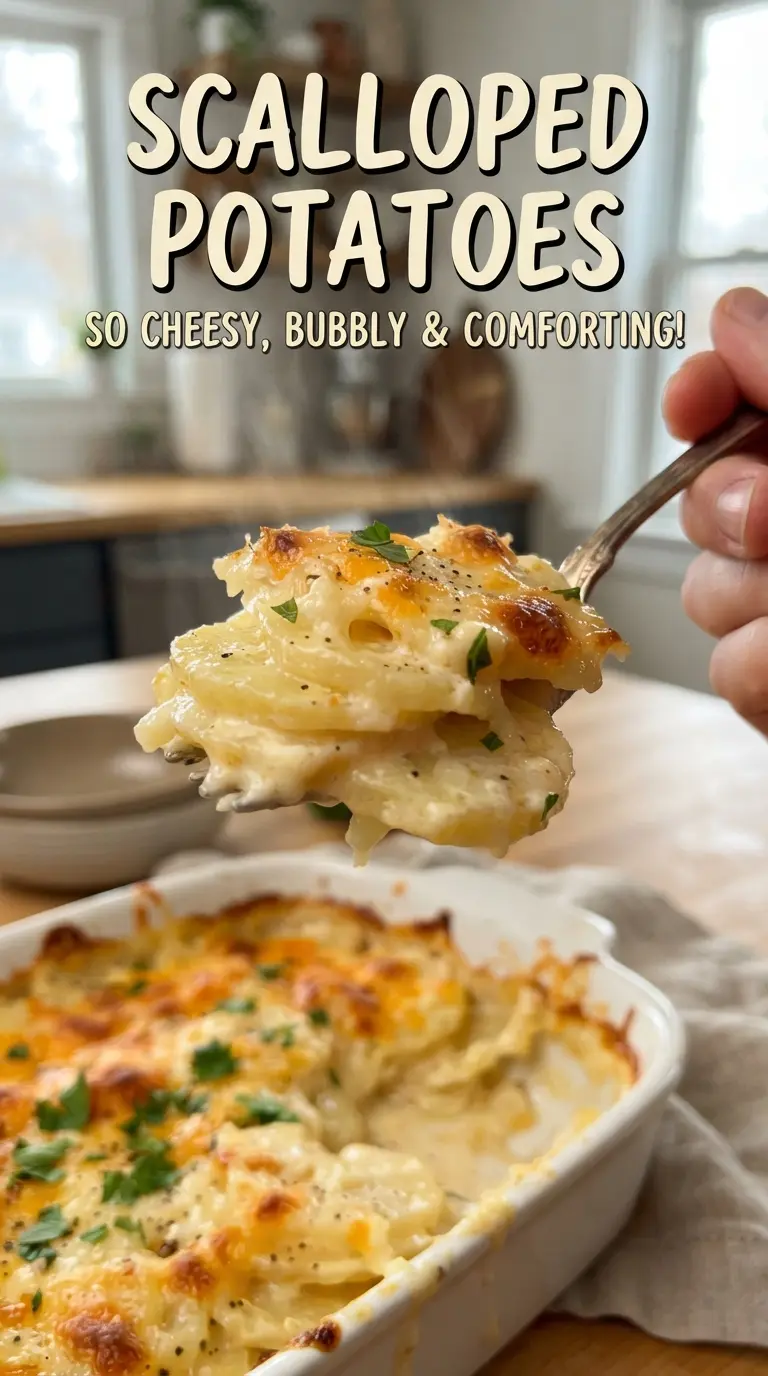
- Russet potatoes — Their starch gives the sauce body and helps the layers bake up tender instead of slick. Yukon Golds work, but the final texture will be creamier and a little less structured.
- Whole milk and heavy cream — This combination gives the sauce enough richness to stay silky without turning greasy. You can swap in half-and-half for part of the cream, but the dish won’t be as lush.
- Butter and flour — This is the base that keeps everything together. Don’t skip the flour step; it’s what keeps the sauce from breaking into a thin puddle.
- Onion and garlic — The onion softens in the bake and gives the sauce a savory backbone. The garlic should only cook for 30 seconds before the flour goes in, or it can turn bitter.
- Parmesan — It adds a salty, browned top and helps the surface crisp a little. If you use a finely grated cheese, it melts and browns more evenly than a coarse shred.
- Thyme — Fresh thyme keeps the sauce from tasting flat and heavy. Dried thyme works in a pinch, but use less because it reads stronger after baking.
Building the Layers So the Center Bakes Through
Start with the sauce base
Melt the butter, cook the garlic briefly, then whisk in the flour until it looks smooth and a little foamy. That minute matters because raw flour gives the finished sauce a grainy, chalky edge. When you add the milk and cream, whisk steadily and keep the heat at a gentle simmer. If the sauce looks thin, give it a few more minutes before it goes anywhere near the potatoes.
Layer the potatoes with intention
Arrange the potatoes and onion in three even layers, and pour sauce over each layer instead of saving it all for the top. That helps the sauce work its way down through the dish instead of sitting on the surface. Press the layers down lightly with a spoon so there aren’t big air pockets. If the potatoes are piled loosely, the top browns before the middle softens.
Cover first, then finish uncovered
The foil phase is where the potatoes steam and turn tender. After an hour, the slices should be close to done but not fully browned. Uncovering the pan lets the Parmesan melt and the top take on that deep golden color. If the top browns too quickly, the center needs more time, so keep the foil on longer and give it the final browning at the end.
Rest before serving
The casserole needs time out of the oven or the sauce will run all over the plate. Fifteen minutes is enough for the starches to settle and the sauce to tighten. Cut in too early and the layers slide apart. Wait, and you get neat scoops with creamy edges and a properly set center.
How to Adapt These Scalloped Potatoes Without Losing the Texture
Gluten-Free Version
Replace the flour with a gluten-free all-purpose blend that contains xanthan gum, or use cornstarch slurry if that’s what you have. The sauce will still thicken, but it won’t have quite the same classic roux flavor. Keep the simmer gentle so the starch doesn’t turn stringy.
Lighter Dairy Swap
You can swap half-and-half for the milk and cream mix if you want something a little lighter. The dish will still bake up creamy, but the sauce won’t be quite as rich or velvety. Don’t go lower than that, or the sauce can turn thin and lose body in the oven.
Extra Savory Version
Add a pinch of nutmeg or a small amount of grated sharp cheddar along with the Parmesan if you want a more pronounced cheesy finish. Cheddar brings more flavor but can make the top a little heavier, so keep it modest. This works best when serving the potatoes with plain roasted meat or chicken.
Storage and Reheating
- Refrigerator: Store covered for up to 4 days. The sauce will thicken as it chills, and the potatoes will soften a little more.
- Freezer: It freezes, but the texture is not quite as silky after thawing. Wrap tightly and freeze in portions for up to 2 months, then thaw in the refrigerator before reheating.
- Reheating: Cover with foil and warm in a 350°F oven until heated through. If you uncover it too soon, the top can dry out before the center is hot.
Questions I Get Asked About This Recipe

Scalloped Potatoes
Ingredients
Equipment
Method
- Preheat oven to 375F and butter a 9x13-inch baking dish.
- Peel and slice russet potatoes into 1/8-inch-thick rounds, then thinly slice the onion.
- Melt butter, then cook garlic for 30 seconds.
- Whisk in all-purpose flour and cook for 1 minute.
- Gradually whisk in whole milk and heavy cream, then simmer until slightly thickened, stirring often.
- Season with salt, black pepper, and fresh thyme leaves and stir until evenly combined.
- Layer potatoes and onion in the dish in three layers, pouring sauce over each layer as you build.
- Cover with foil and bake for 1 hour.
- Uncover, sprinkle with Parmesan, and bake 25 to 30 minutes until golden and fork-tender.
- Rest for 15 minutes before serving so the layers set.