Santa Fe taco soup lands somewhere between a cozy chicken soup and a loaded taco bowl, and that’s exactly why it gets made on repeat. It’s brothy, smoky, a little tangy from the tomatoes, and packed with black beans, corn, and shredded chicken so every spoonful has some body. The toppings matter here too. A little sour cream melts into the hot broth, avocado adds creaminess, and cotija gives you that salty finish that keeps the whole bowl from tasting flat.
What makes this version work is the balance between the taco seasoning, ranch mix, and the fire-roasted tomatoes. That combination builds a deeper, rounder base than plain seasoning alone, and the green chiles keep it tasting bright instead of heavy. I also like using cooked shredded chicken here because it stays tender in the broth and lets the soup come together fast without turning the stove into a project.
Below you’ll find the ingredient notes that matter most, plus the little process details that keep the broth tasting full and the toppings fresh. If you’ve ever had taco soup that tasted thin or muddy, this version fixes both problems.
The broth had that perfect taco-soup thickness, and the ranch mix gave it a little extra depth without tasting weird. I topped mine with avocado and cotija, and my husband went back for a second bowl before I’d even sat down.
Save this Santa Fe Taco Soup for the nights when you want a smoky, cheesy bowl of Tex-Mex comfort in under 40 minutes.
The Part That Keeps Taco Soup from Tasting Flat
The biggest mistake with taco soup is treating it like a dump-and-simmer recipe and expecting the seasoning packets to carry everything. They won’t. The ranch mix and taco seasoning need enough liquid to spread through the pot, but they also need time to lose that raw packet taste and blend with the tomatoes and broth. Fifteen minutes of simmering is enough here because the chicken is already cooked; any longer and the beans start to soften too much while the broth loses its bright edge.
Fire-roasted tomatoes matter more than people think. They bring a deeper, slightly smoky base that keeps the soup from tasting like plain chicken broth with add-ins. The green chiles do a different job: they give the bowl lift without making it spicy-hot. If your soup tastes thin, it’s usually because the broth-to-add-in ratio is off or the soup never simmered long enough for the seasonings to settle in.
What Each Ingredient Is Doing in the Pot
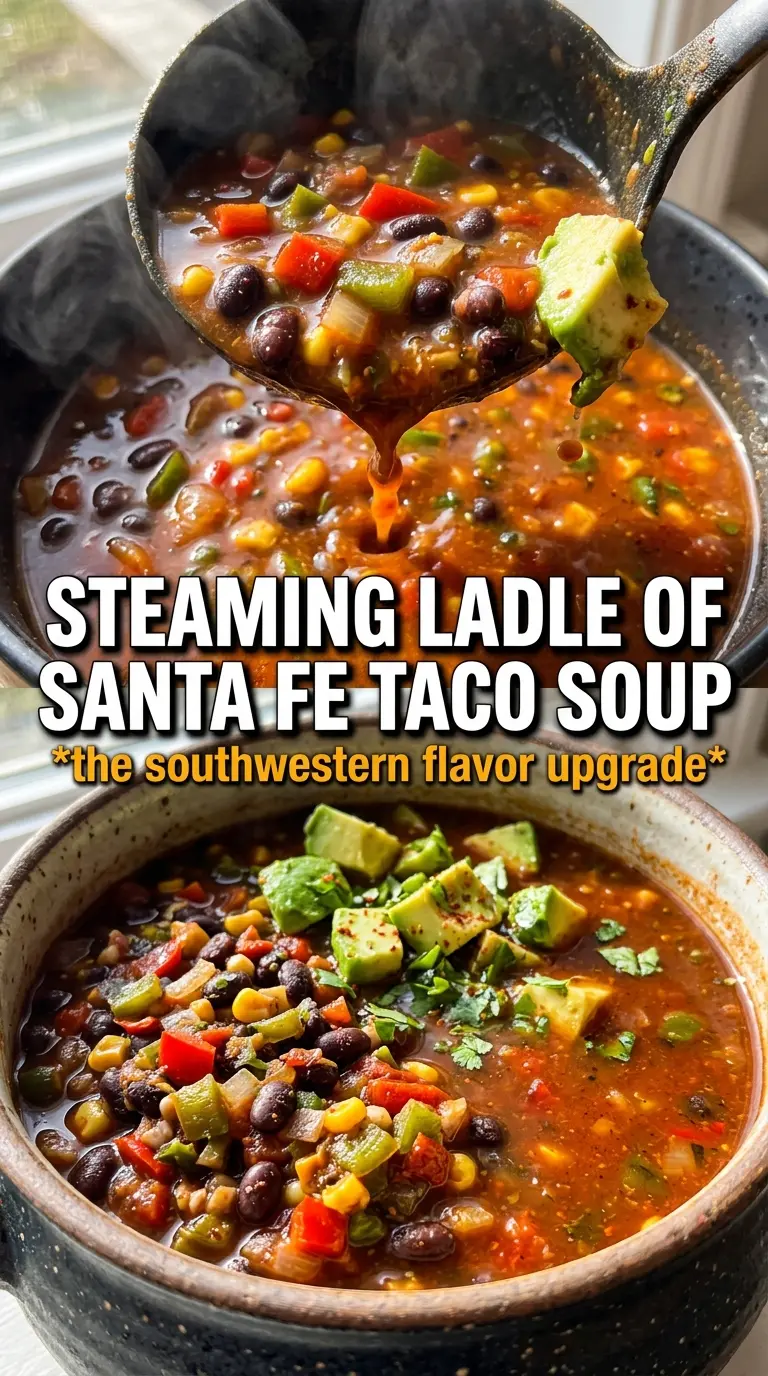
- Cooked shredded chicken — This gives you the hearty, soup-like body without needing raw chicken simmer time. Rotisserie chicken works well here, and it’s the fastest option if you’re in a hurry. If you cook the chicken yourself, shred it while it’s still warm so it stays tender and doesn’t turn stringy.
- Black beans — They add substance and make the soup feel complete. Drain them so the broth doesn’t turn muddy, but don’t rinse them so aggressively that you wash away all the flavor clinging to the beans.
- Corn — Corn brings sweetness and little pops of texture that balance the smoky tomatoes and seasoning. Frozen corn works just as well as canned; use it straight from the freezer if that’s what you have.
- Rotel and fire-roasted tomatoes — This is the flavor base. Rotel adds tang and a little heat, while fire-roasted tomatoes add depth. If you only have regular diced tomatoes, the soup will still work, but it will taste a little less layered.
- Taco seasoning and ranch mix — These are the shortcut that makes the broth taste finished fast. The ranch mix sounds unusual, but it adds oniony, herby depth and a creamy-savory note that keeps the soup from tasting one-dimensional.
- Cotija, avocado, cilantro, and lime — These toppings are not optional if you want the full Santa Fe feel. They add fresh contrast, salt, and creaminess right at the end, which is what makes each bowl taste lively instead of heavy.
Building the Broth Without Overcooking the Chicken
Combine Everything Before the Heat Gets Too High
Start with the shredded chicken, beans, corn, chiles, tomatoes, seasonings, broth, cumin, and smoked paprika in a large pot. Stir well enough that the seasoning packets disappear into the liquid instead of sitting in dusty clumps. If you add everything and then wait to mix, the bottom of the pot can catch on the first simmer and the seasoning won’t distribute evenly.
Bring It to a Boil, Then Back It Down
Let the pot come to a boil over medium-high heat so the flavors wake up quickly, then lower the heat and keep it at a gentle simmer. You want lazy bubbles, not a hard rolling boil. If the soup boils too aggressively, the chicken tightens up and the broth can reduce faster than you want, which makes the salt level climb.
Finish with a Taste Test That Fixes the Bowl
After 15 minutes, taste the broth before you add anything else. This is the point where you decide if it needs salt, pepper, or just a squeeze of lime at the table. If the soup tastes a little flat, it usually needs acid, not more seasoning; lime wakes up the tomatoes and makes the whole pot taste cleaner.
Make It Spicier Without Breaking the Balance
Add a chopped jalapeño with the tomatoes or stir in a little chipotle powder at the end. That gives you heat with a smoky edge instead of just raw spice. Start small, because the toppings and seasoning packets already bring plenty of flavor.
Dairy-Free and Still Creamy at the Bowl
Skip the sour cream and use avocado, extra cilantro, and a squeeze of lime for richness and freshness. The soup itself is already dairy-free as written, so this swap only changes the topping finish. You won’t lose much texture, and the bowl still feels complete.
Low-Carb Bowl with the Same Tex-Mex Flavor
Leave out the corn and serve the soup with extra avocado and cotija. You’ll lose some sweetness and crunch, but the broth will still have the same smoky, savory backbone. This is the cleanest way to cut carbs without changing the base recipe.
Stretch It for a Bigger Crowd
Add another can of beans, another cup or two of broth, and an extra half packet each of taco seasoning and ranch mix. The soup will keep its structure, but don’t scale the seasonings all the way up too fast or the broth can turn overly salty. Taste after the first simmer and adjust from there.
Storage and Reheating
- Refrigerator: Store in an airtight container for 4 days. The broth may thicken a little as it sits, which is normal.
- Freezer: This freezes well for up to 3 months. Cool it completely first, then freeze without the toppings; avocado and sour cream should always be added fresh.
- Reheating: Warm gently on the stove over medium-low heat or in the microwave in short bursts, stirring between rounds. Add a splash of broth if it looks too thick, since the beans will keep absorbing liquid in the fridge.
The Questions That Usually Come Up With Santa Fe Taco Soup
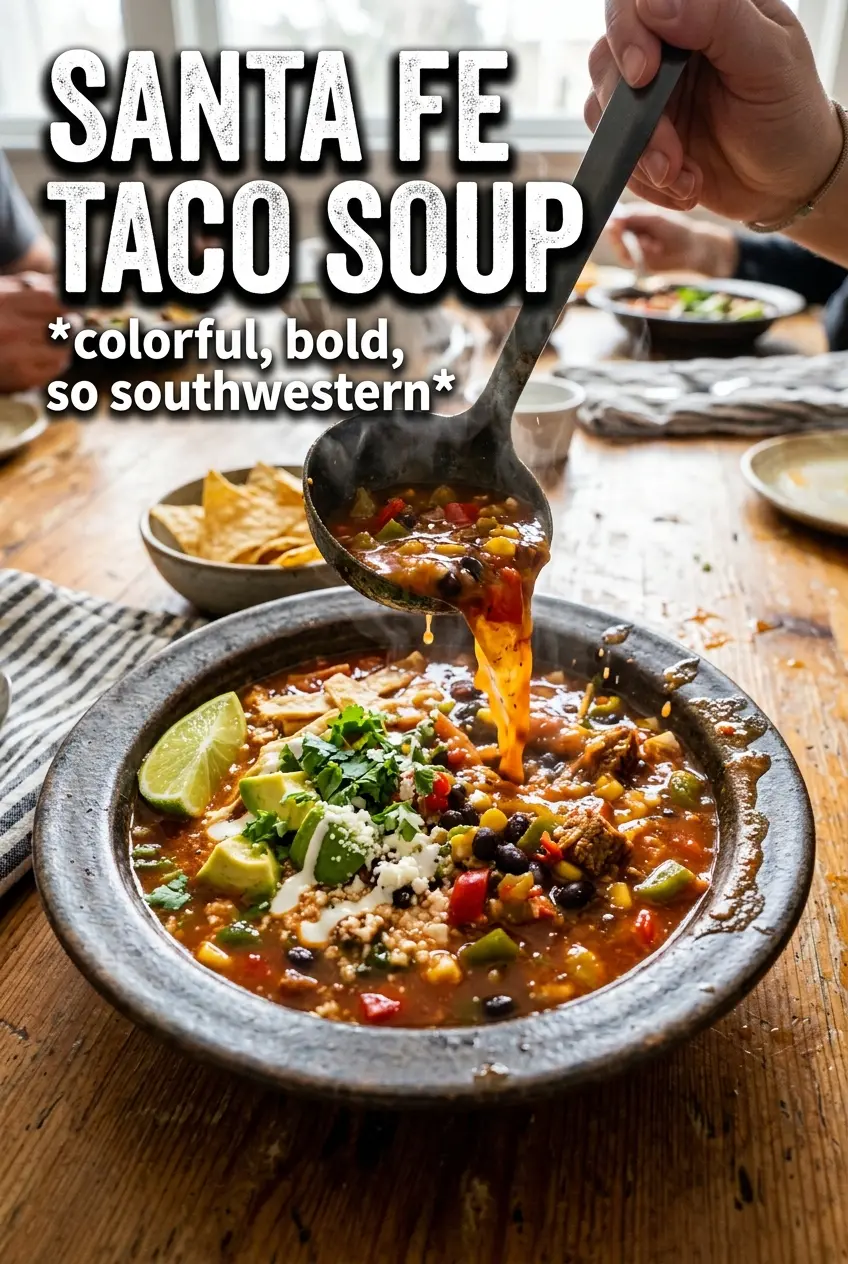
Santa Fe Taco Soup
Ingredients
Equipment
Method
- Add shredded chicken, black beans, corn, green chiles, Rotel tomatoes, fire-roasted diced tomatoes, taco seasoning, ranch dressing mix, chicken broth, cumin, and smoked paprika to a large pot. Stir until the chicken and beans are evenly coated.
- Bring the soup to a boil over medium-high heat. When it reaches a rolling boil, reduce the heat and simmer for 15 minutes.
- Season with salt and pepper to taste. Taste and adjust, then simmer 2 more minutes if you want a stronger seasoning presence.
- Ladle the hot soup into bowls. Top each serving with sour cream, diced avocado, crumbled cotija, fresh cilantro, and lime wedges.
- Finish each bowl with crispy tortilla strips. Serve immediately so the strips stay crunchy.