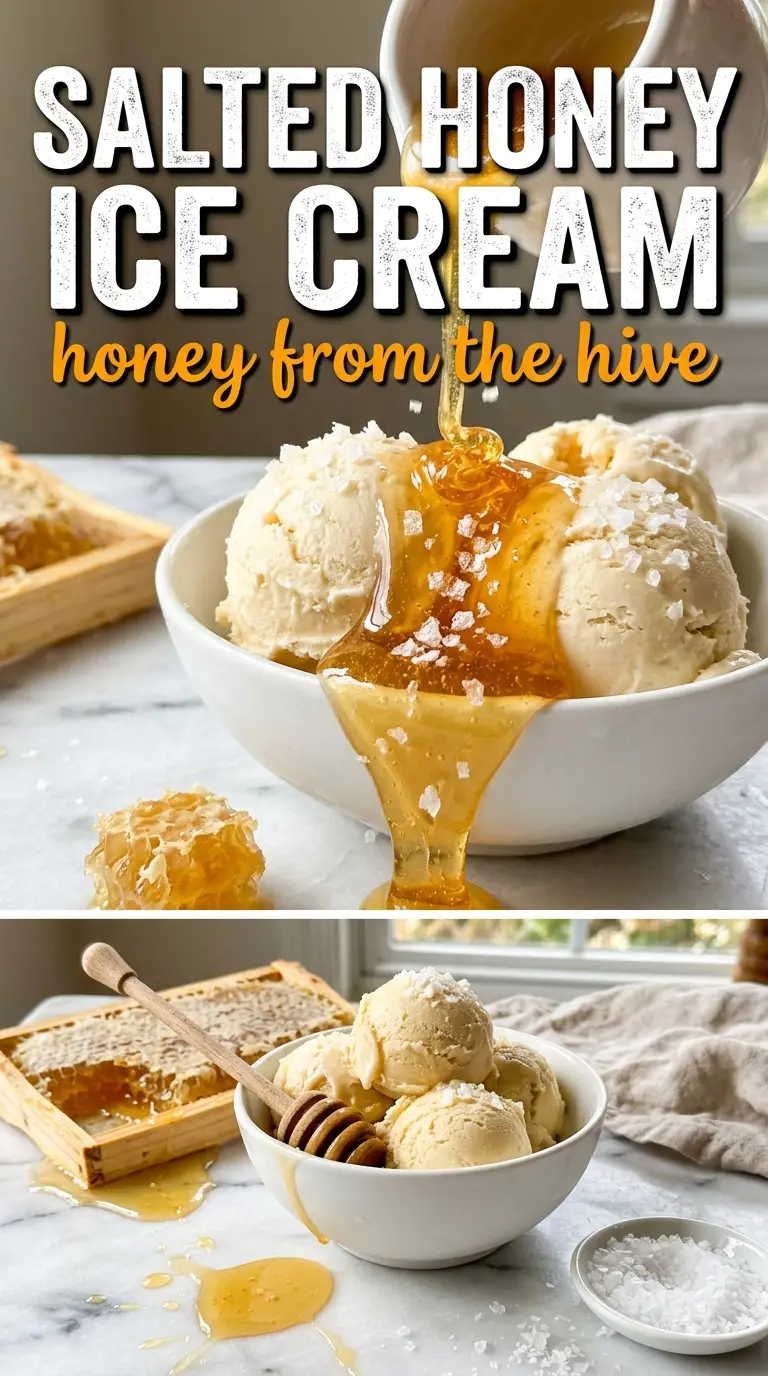
Salted honey ice cream tastes like the kind of dessert you keep thinking about after the bowl is empty. The honey comes through warm and floral instead of flat and sugary, and the salt keeps each spoonful from tipping cloying. What you get is a custard-based ice cream with a dense, silky body and a clean finish that makes the honey flavor linger.
This version leans on egg yolks for richness, but the real trick is treating the honey like the main flavor, not just the sweetener. Warming it with the milk and cream helps it dissolve completely and bloom its aroma before it ever hits the custard. That matters, because cold honey can taste one-note and get lost once the base is churned.
Below, I’ve included the timing cue that keeps the custard smooth, plus a few notes on the best honey to use and how to keep the salt balanced. If you’ve ever had homemade ice cream taste a little dull straight from the freezer, this is the fix.
The custard turned out perfectly silky and the honey flavor stayed bright even after freezing. I loved the little hit of flaky salt on top — it kept the whole thing from tasting too sweet.
Love the golden custard and salty finish? Save this salted honey ice cream for the next time you want a floral, custardy dessert that churns up extra smooth.
Why This Custard Stays Smooth Instead of Turning Grainy
The biggest mistake with honey ice cream is rushing the custard and letting the eggs scramble. Honey adds both sweetness and thickness, so the base can look ready before it actually is. Keep the heat at medium-low and stir constantly once the yolks go back in. The custard should coat the back of a spoon and reach 175F, not boil.
Straining matters here. Even if the custard looks smooth in the pan, a few tiny bits of cooked egg can sneak in, and those little lumps show up after churning. The ice bath also isn’t optional if you want a clean honey flavor. Cooling the base quickly keeps it from cooking past the point where the texture turns heavy.
What Each Ingredient Is Doing in the Bowl
- Good-quality honey — This is the flavor, so use one you’d actually enjoy on toast. Wildflower brings a deeper, more complex note; clover tastes lighter and cleaner. Avoid honey that’s overly processed or bland, because it disappears once frozen.
- Heavy cream and whole milk — This balance gives the ice cream body without making it greasy. The cream carries the richness, while the milk keeps it from becoming too dense. Don’t swap in low-fat milk here; the custard will freeze icier.
- Egg yolks — They make the texture luxurious and help the base churn into a scoopable custard. Whole eggs won’t give the same silkiness. If the custard gets too hot, the yolks will curdle, so go low and slow.
- Sea salt and flaky sea salt — The fine salt inside the base sharpens the honey and keeps the sweetness in check. The flaky salt on top gives each bite a little crunch and a cleaner finish. Don’t skip the finishing salt if you want the full sweet-salty contrast.
- Vanilla extract — Vanilla rounds out the honey and makes the custard taste fuller. It shouldn’t take over, just soften the edges. Add it after straining so the aroma stays bright.
Cooking the Honey Custard Without Breaking It
Warming the Honey Base
Combine the cream, milk, and honey in a saucepan and heat it until the mixture is steaming and the honey has fully dissolved. You’re not looking for a boil; you just want enough heat to blend the honey into the dairy and wake up its aroma. If you see tiny bubbles around the edge, pull it off the heat and move on. Overheating here doesn’t help the flavor, and it makes the next step harder to control.
Tempering the Yolks
Whisk the egg yolks in a bowl, then slowly stream in the hot dairy while whisking constantly. This gradual addition keeps the yolks from seizing into little bits of scrambled egg. Once the yolks are warmed, pour everything back into the saucepan. If you dump the hot liquid in all at once, the eggs can curdle before they ever reach the stove again.
Cooking to the Right Thickness
Cook the custard over medium-low heat, stirring all the time and scraping the bottom and corners of the pan. It’s ready at 175F, or when it thickens enough to coat a spoon and leaves a clear line when you drag your finger across the back. If it starts steaming hard or bubbling, the heat is too high. Pull the pan back for a few seconds rather than forcing it.
Straining, Cooling, and Churning
Strain the custard into a clean bowl, stir in the vanilla and sea salt, and set the bowl over an ice bath until it’s fully cool. Then refrigerate it for at least 4 hours so the fat firms up and the flavor settles in. Churn only when the base is cold all the way through; a warm custard won’t freeze with the same fine texture. Once it’s churned, freeze it until firm, then finish each scoop with flaky salt.
How to Adjust the Sweetness, Salt, and Richness Without Losing the Point
Use a darker honey for a deeper finish
Buckwheat or a strong wildflower honey will make the ice cream taste more robust and less floral. The flavor comes across almost caramel-like, but it can be intense, so use it only if you want the honey to read bold instead of delicate.
Make it dairy-free with coconut milk
Replace the cream and milk with full-fat canned coconut milk for a dairy-free version. The texture will be a little softer and the coconut will nudge the flavor in a different direction, but it still pairs well with honey and salt. Chill it thoroughly before churning so it freezes as smoothly as possible.
Dial back the salt for a gentler version
If you want the honey to stay front and center, reduce the fine sea salt slightly and use just a light pinch of flaky salt on top. You’ll lose some contrast, but the custard will taste softer and more dessert-forward.
Storage and Reheating
- Refrigerator: Store the churned base in an airtight container in the freezer, not the fridge, for up to 2 weeks for best texture. After a few days, it may get a little firmer around the edges.
- Freezer: This ice cream freezes well. Press parchment or wax paper directly on the surface before sealing the container to help prevent ice crystals.
- Reheating: Not applicable. Let the container sit at room temperature for 5 to 10 minutes before scooping so the honey base softens enough to serve cleanly.
Answers to the Questions Worth Asking

Salted Honey Ice Cream
Ingredients
Equipment
Method
- In a saucepan, heat heavy cream, whole milk, and good-quality honey until steaming and the honey dissolves completely. Keep the heat at medium and watch for a light simmer before moving on.
- In a bowl, whisk egg yolks until glossy, then slowly whisk the hot cream mixture into the yolks. This should look smooth and thick enough to coat the back of a spoon.
- Return the mixture to the saucepan and cook over medium-low heat, stirring constantly. Continue until the custard reaches 175F and holds a custard-like sheen.
- Strain the custard into a clean container, then stir in vanilla extract and sea salt. Transfer the custard to an ice bath and cool until completely cold.
- Refrigerate the custard at least 4 hours until thoroughly chilled. It should feel cold all the way through with no warmth in the container.
- Churn the chilled custard in an ice cream maker according to the manufacturer’s instructions. The mixture will thicken and look like soft-serve as it churns.
- Freeze the churned ice cream until firm. Scoopable texture should hold shape when served.
- Finish each serving with a pinch of flaky sea salt. Add it just before serving so the flakes stay bright and crisp.