Roasted tomato basil soup has a deeper, sweeter tomato flavor than anything made from a quick simmer on the stove. Roasting pulls out the juices, concentrates the edges, and gives the onions and garlic a little char that makes the finished soup taste layered instead of flat. The basil and cream come in at the end, where they stay bright and silky instead of getting muddled.
The trick is letting the vegetables roast long enough to brown without drying out. Roma or vine tomatoes work best because they hold onto enough flesh to turn jammy while still releasing plenty of liquid. The balsamic vinegar doesn’t make the soup taste sour; it sharpens the tomato flavor and keeps the cream from tasting heavy. Below, I’ve added the part most people miss when they make tomato soup at home: how to balance acidity at the very end without dulling all that roasted flavor.
The roasting made the tomatoes taste sweet and almost jammy, and the soup blended up so smooth. I added the cream at the end like you said and it stayed silky, not broken.
Save this roasted tomato basil soup for the nights when you want deep roasted flavor, a silky finish, and grilled cheese croutons on the side.
The Roast That Gives Tomato Soup Its Depth
The biggest mistake in tomato soup is treating the tomatoes like they only need to soften. They need to brown. Once the cut sides pick up color and the onion edges start to caramelize, the soup gets a rounder, sweeter base that no amount of extra broth can fake. That roasted layer is what keeps this tasting like a finished dish instead of thin tomato puree.
Don’t rush the oven stage. If the vegetables come out pale and watery, the soup will taste sharp and loose even after cream goes in. You want some blistered skins, browned onion tips, and tomatoes that have collapsed into their own juices. Those browned spots on the pan are not a problem — they’re the flavor.
What Each Ingredient Is Actually Doing in the Pot
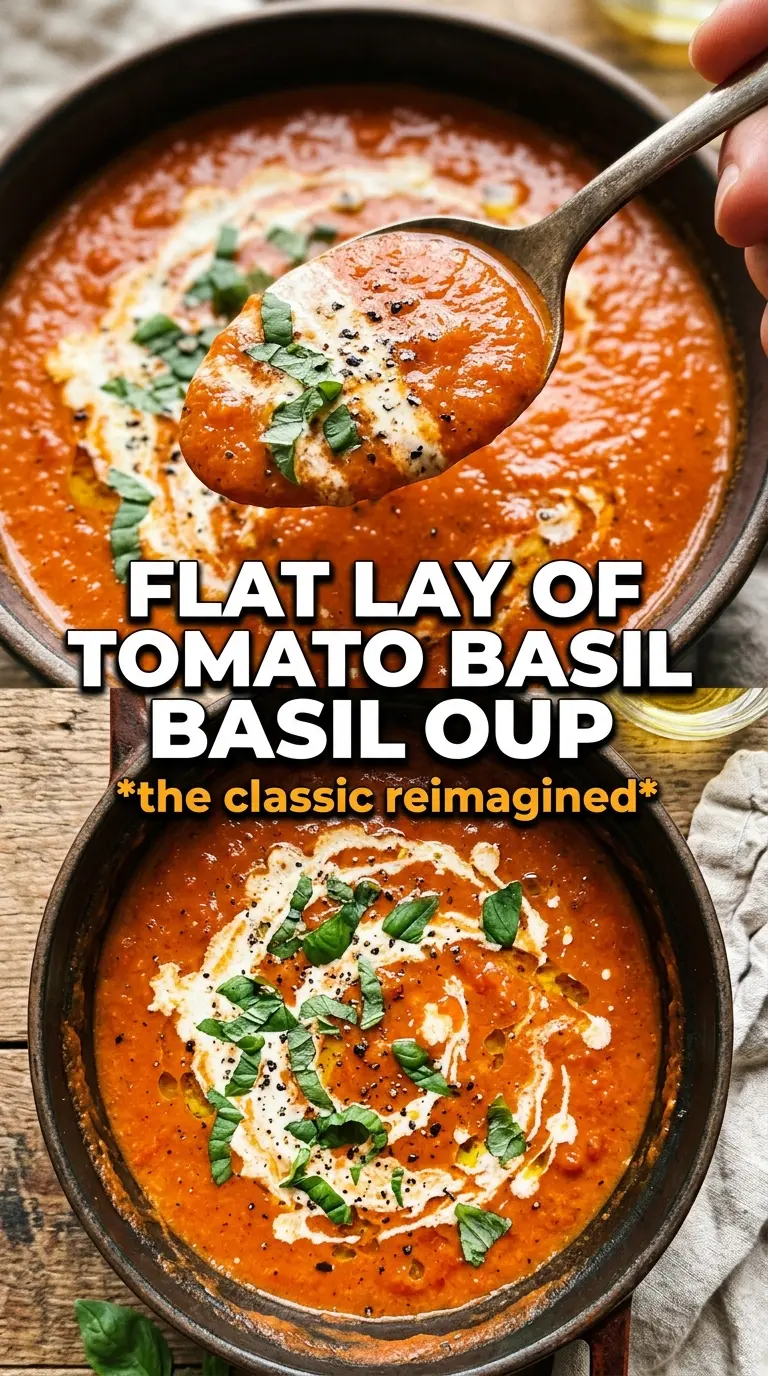
- Roma or vine tomatoes — Roma tomatoes roast down into a thicker, more concentrated soup because they have less water than many slicing tomatoes. Vine tomatoes work too if they’re ripe and fragrant. If your tomatoes are bland to begin with, roasting helps, but it won’t create sweetness out of nothing.
- Garlic and onion — The garlic softens and turns mellow while the onion brings body and a little natural sweetness. Roasting them with the tomatoes keeps the flavor unified. If you only have garlic cloves instead of a whole head, use 6 to 8 cloves and tuck them under the tomatoes so they don’t scorch.
- Balsamic vinegar — This sharpens the tomato flavor and gives the soup a subtle dark sweetness. Add it after roasting, not before, so it doesn’t turn harsh in the oven. A decent balsamic matters here, but it doesn’t need to be fancy.
- Heavy cream — This is what makes the soup velvety and smooth. Stir it in after blending and keep the heat low so it doesn’t split. Half-and-half works in a pinch, but the soup will be lighter and a little less plush.
- Fresh basil — Basil goes in at the end so it stays bright and fresh instead of tasting cooked out. Packed leaves make a big difference, so don’t be shy with them. Dried basil won’t give the same green, fragrant finish.
Getting the Vegetables Roasted, Blended, and Finished Without Breaking the Soup
Building the Pan Flavor
Spread the tomatoes, onion, and halved garlic cut-side up on the baking sheet so they can roast instead of steam. Drizzle with most of the olive oil, then season with salt, pepper, and oregano. The vegetables should have room around them; if they’re crowded, they’ll leak and soften before they brown. You’re aiming for caramelized edges and collapsed tomatoes, not dried-out wrinkled skins.
Blending Into a Smooth Base
Transfer everything from the pan into a large pot, including the juices and the browned bits stuck to the tray. Add the broth and balsamic vinegar, then blend until completely smooth with an immersion blender. If the soup seems too thick before the cream goes in, that’s fine; it will loosen once everything is combined. If you don’t have an immersion blender, blend in batches and hold the lid down with a towel so the steam doesn’t push it off.
Finishing With Cream and Basil
Keep the heat low before you stir in the cream. High heat is the fastest way to make a dairy soup look grainy or split, especially after it has already been blended. Add the basil, then let the soup simmer gently for about 10 minutes so the flavors knit together. Taste at the end and add the sugar only if the tomatoes are still sharp; it should round the soup out, not make it sweet.
Three Ways to Adapt This Soup Without Losing the Good Part
Dairy-Free Version
Swap the heavy cream for full-fat coconut milk or an unsweetened oat cream. Coconut milk makes the soup a little richer and adds a faint sweetness, while oat cream keeps the flavor closer to classic tomato basil soup. Add it off the heat and taste carefully, since both options can mute acidity less than dairy does.
Vegetarian Version
Use vegetable broth instead of chicken broth and the soup stays just as layered. Choose a broth with some body; very thin broth can make the finished soup taste flat after blending. If your vegetable broth is salty, hold back a little extra seasoning until the end.
No Blender, No Problem
If you don’t have an immersion blender, a regular blender works fine as long as you work in batches and vent the lid. The soup won’t be any less flavorful, but this method takes a little more time and attention. Blend until perfectly smooth if you want that restaurant-style finish, or leave a little texture if you like a more rustic bowl.
Storage and Reheating
- Refrigerator: Store for up to 4 days. The flavor deepens overnight, and the soup may thicken a little as it chills.
- Freezer: Freeze for up to 3 months, but the cream can separate slightly when thawed. For the best texture, freeze the soup before adding cream, then stir it in after reheating.
- Reheating: Warm it slowly over low heat, stirring often. Don’t let it boil hard, or the cream can break and the basil flavor will fade.
Questions I Get Asked About This Recipe
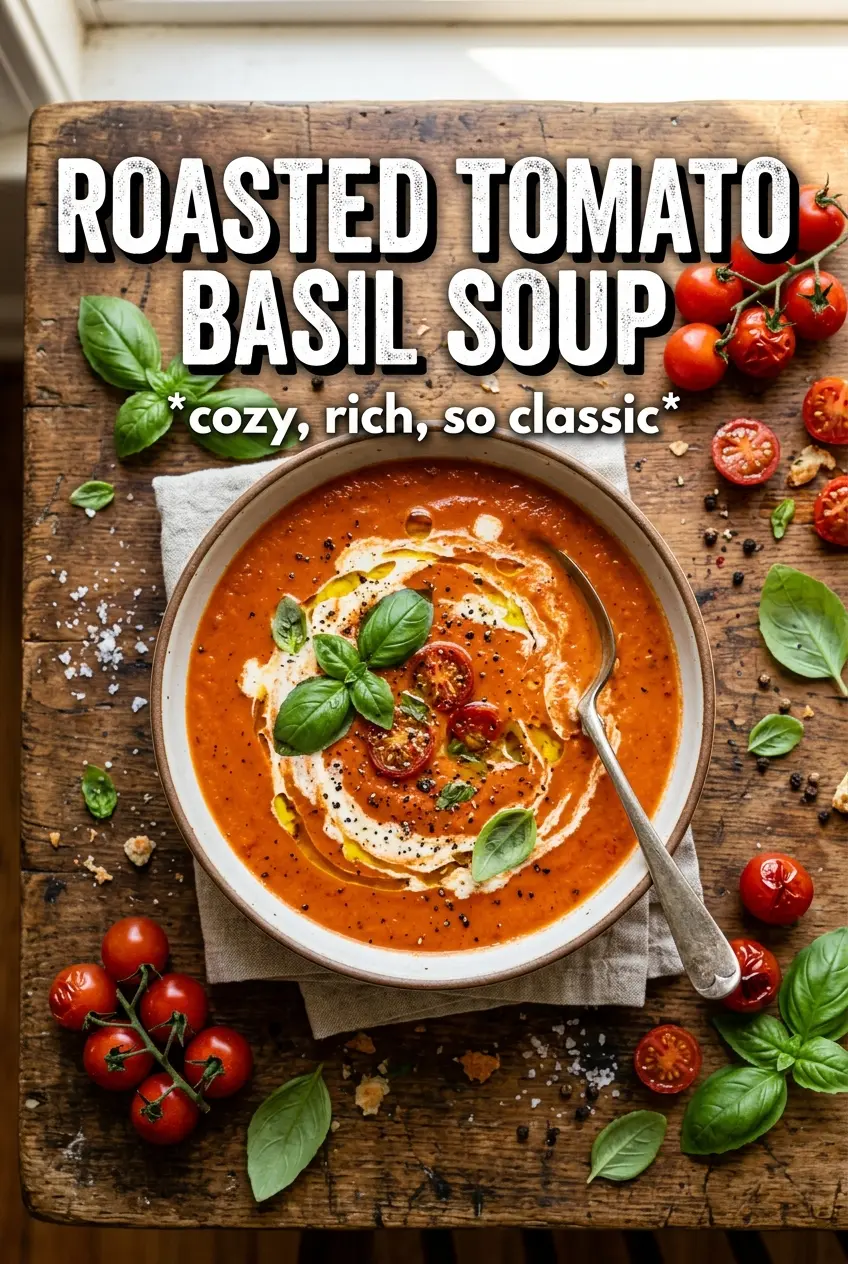
Roasted Tomato Basil Soup
Ingredients
Equipment
Method
- Preheat the oven to 425°F. Arrange the tomatoes, garlic, and onion on a rimmed baking sheet.
- Drizzle with 1/4 cup olive oil, then season with salt, pepper, and oregano. Toss lightly so the surfaces are coated.
- Roast for 35-40 minutes until caramelized and slightly charred at the edges. The tomatoes should look collapsed and browned in spots.
- Squeeze the roasted garlic from the skins into a large pot. Add all roasted vegetables to the same pot.
- Add the broth and balsamic vinegar. Blend smooth with an immersion blender until no chunks remain.
- Stir in the heavy cream and fresh basil. Simmer for 10 minutes, stirring occasionally so the basil stays bright.
- Add the sugar and season with salt and pepper. Taste and adjust until the flavor balances sweet, tangy, and savory.
- Serve immediately with grilled cheese croutons or crusty bread. Add a swirl of cream if desired and ladle while hot.