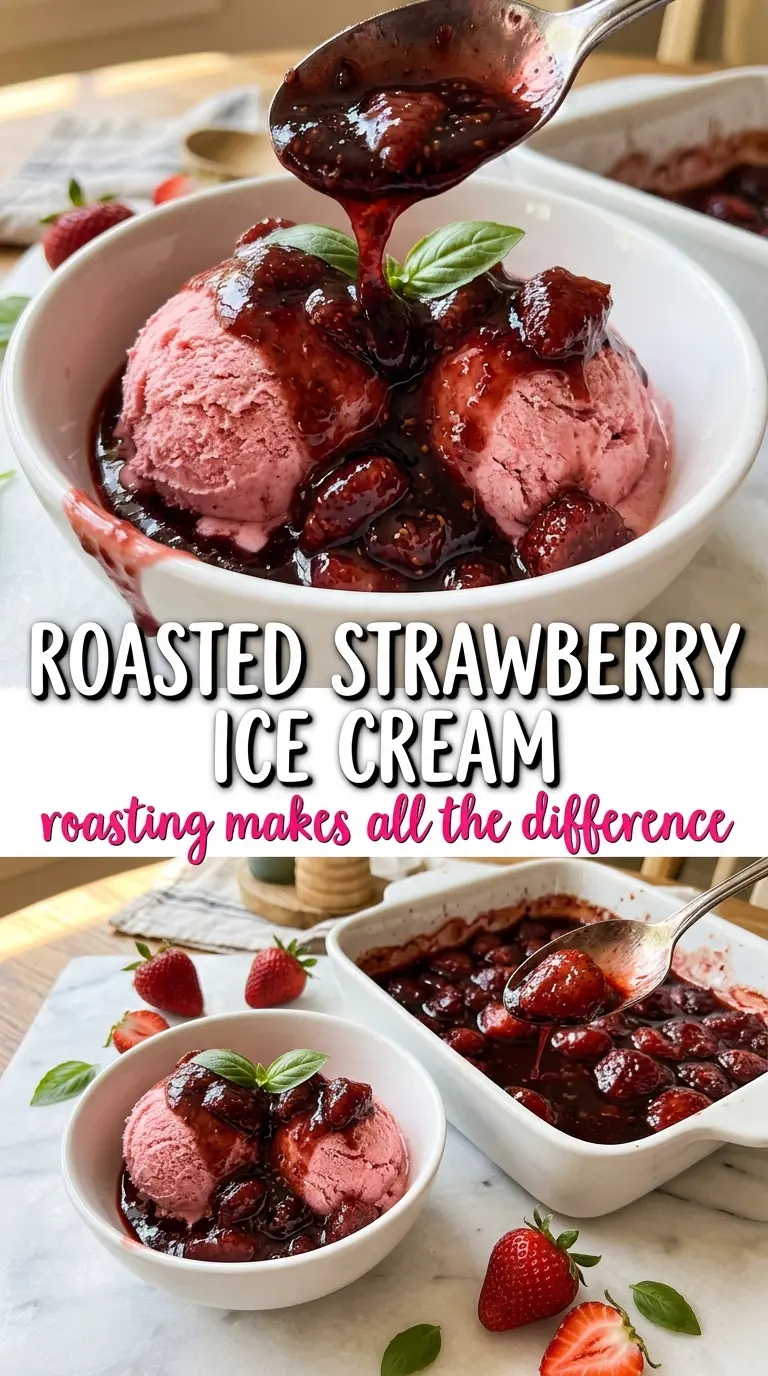
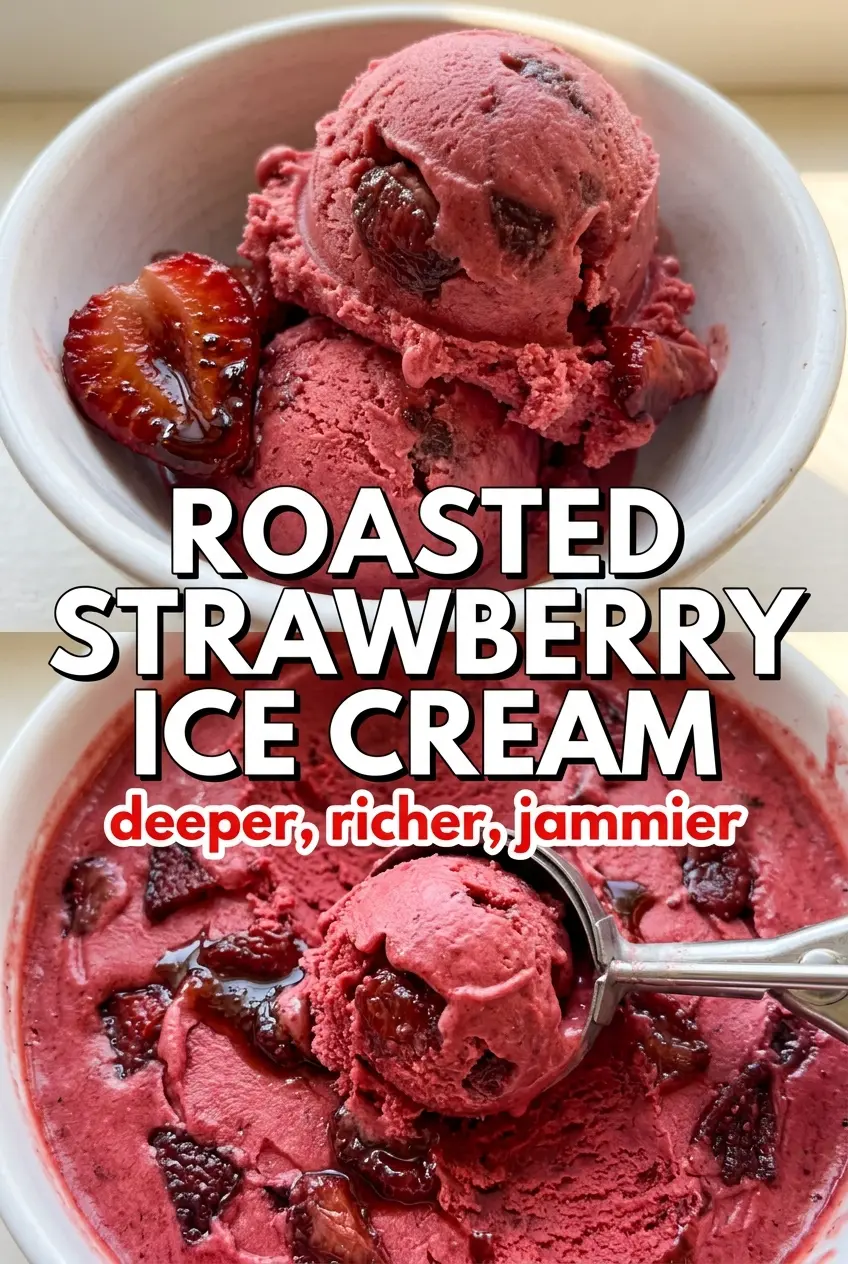
Roasted strawberry ice cream tastes like strawberries with their volume turned all the way up. The oven pulls out a deep, jammy sweetness that fresh berries just can’t match, and the little bit of balsamic vinegar pushes the flavor into something richer and more grown-up without making it taste savory. What you get is a scoop that’s bold, ruby-red, and dense with real strawberry flavor instead of that pale, icy version a lot of homemade ice creams end up being.
The key is roasting the berries long enough for their juices to reduce and concentrate before they ever hit the custard. That step does more than deepen the taste — it keeps the finished ice cream from tasting thin. I also like blending the roasted fruit smooth, then straining the custard base so the texture stays silky instead of grainy. The egg yolks give it body, but they need gentle heat; rush that part and you’ll scramble the base before it ever reaches the churn.
Below, I’ll walk through the roast, the custard, and the small details that make the difference between a nice strawberry ice cream and one with real depth. There’s also a note on how to keep the color vibrant and the texture scoopable straight from the freezer.
The roasted strawberries made all the difference — the ice cream turned out thick, smooth, and packed with berry flavor instead of tasting watered down.
Like this roasted strawberry ice cream? Save it for the nights when you want a deep, jammy berry dessert with real homemade custard flavor.
The Roasting Step That Gives This Ice Cream Its Depth
Most strawberry ice creams depend on raw fruit, which tastes bright but often turns faint once it’s folded into cream and frozen. Roasting fixes that. As the berries soften and their juices reduce, the flavor concentrates into something closer to strawberry jam than fresh fruit, and that stronger base holds up beautifully after churning.
The balsamic vinegar matters here too. It doesn’t make the ice cream taste like vinegar; it sharpens the strawberry flavor and keeps the sweetness from flattening out. If you skip the roast or pull the berries too early, the final ice cream will taste nice but one-note, and you’ll lose the deep color and body that make this version stand out.
- Roasting until jammy — You want the berries collapsed, glossy, and bubbling around the edges. That’s when the water has cooked off enough to concentrate the fruit.
- Cooling completely — Hot puree will thin the custard base and can cause condensation later, which leads to icier ice cream.
- Balsamic vinegar — Just a tablespoon is enough to deepen the strawberry flavor without reading as tangy.
What Each Ingredient Is Actually Doing in This Ice Cream
- Base ingredient (cream, milk, or custard) — This provides the foundation and richness. Quality matters.
- Sweetener (sugar, honey, or condensed milk) — This sweetens and prevents ice crystals. The ratio is critical.
- Flavor element (vanilla, fruit, chocolate, or other) — This defines the ice cream personality. Use quality ingredients.
- Egg yolks (if making custard base) — These create richness and silky texture. Optional but elevates ice cream.
- Churning (if using ice cream maker) — This incorporates air and prevents ice crystals. Critical for smooth texture.
- Freezing temperature and time — Proper freezing prevents rock-hard texture. Store at 0°F or below.
- Mix-ins (chocolate, cookies, fruit, or swirls) — These add texture and prevent one-dimensional flavor. Add near end of churning.
- Serving temperature (slightly soft, not rock hard) — This provides creamy mouthfeel. Remove from freezer 5 minutes before serving.
What the Custard Base Is Doing Behind the Scenes
The strawberries bring the character, but the custard gives this ice cream its scoopable texture. Heavy cream builds richness, whole milk keeps it from becoming greasy, and egg yolks give the finished ice cream that dense, smooth body people expect from a good homemade custard base. The balance matters; swap in too much milk and the texture gets lean, while too much cream can feel heavy instead of creamy.
If you only have vanilla bean paste, use it in place of the extract for a more pronounced vanilla note. If you’re tempted to cut the yolks, don’t. That’s the part that keeps the base stable once it freezes. Strain the custard after cooking if you want the cleanest texture possible; it catches any tiny bits of cooked egg before they show up in the finished scoop.
- Egg yolks — They thicken the base and make the ice cream feel plush instead of icy.
- Heavy cream and whole milk — This ratio keeps the ice cream rich but still easy to scoop after freezing.
- Vanilla extract — It rounds out the roasted fruit and keeps the flavor from tasting flat.
- Salt — A small amount makes the strawberry flavor pop and keeps the custard from tasting overly sweet.
How to Keep the Custard Smooth From Stove to Freezer
Heating the Dairy
Warm the cream and milk until steam rises and small bubbles form around the edge of the pan. You’re not boiling it; you’re just getting it hot enough to temper the yolks without shocking them. If the dairy is too hot when it hits the eggs, you’ll get little bits of scrambled egg in the base.
Tempering the Yolks
Whisk the sugar into the yolks until they lighten slightly, then add the hot dairy in a slow stream while whisking constantly. That gradual temperature change is what keeps the custard smooth. If you dump it all in at once, the yolks can seize and cook unevenly.
Cooking to the Right Thickness
Return the mixture to low heat and stir steadily until it reaches 175°F and lightly coats the back of a spoon. It should look glossy and slightly thicker, not pudding-thick. Pull it off the heat as soon as it reaches temperature; going much higher can make the custard taste eggy or grainy.
Finishing With the Strawberry Puree
Stir in the cooled roasted strawberry puree, vanilla, and salt, then chill the base completely before churning. Cold base churns faster and freezes with a finer texture. If it still tastes a little too bright or thin after mixing, that usually means the berries weren’t roasted long enough, not that you need more sugar.
How to Adapt This for Different Freezers, Diets, and Strawberry Cravings
Dairy-Free Version With Coconut Cream
Use full-fat coconut milk in place of the cream and milk, and thicken the base with a dairy-free custard method or your favorite ice cream stabilizer. The result will be a little less rich in the classic custard sense, but it carries roasted strawberry flavor well and still freezes creamy.
Extra-Strawberry Version
If you want a louder berry flavor, add a handful of extra roasted strawberries after churning for streaks of fruit through the ice cream. Don’t add extra raw berries; they’ll freeze hard and throw off the texture.
Lower-Sugar Adjustment
You can reduce the sugar slightly, but don’t cut it too far. Sugar does more than sweeten here; it keeps the ice cream softer straight from the freezer. If you reduce it a lot, expect a firmer scoop and a more brittle texture.
Storage and Reheating
- Refrigerator: Keep the custard base covered for up to 2 days before churning.
- Freezer: The finished ice cream keeps for about 2 weeks with a tight lid. It will get firmer after day one, so press parchment directly on the surface before sealing if you want to minimize ice crystals.
- Reheating: Not applicable for the finished ice cream. For the custard base, chill it fully before churning; freezing a warm base leads to coarse texture and weak overrun.
Answers to the Questions Worth Asking
Roasted Strawberry Ice Cream
Ingredients
Equipment
Method
- Preheat oven to 375F, then toss strawberries with 1/4 cup sugar and balsamic vinegar on a sheet pan. Spread into an even layer so the fruit can caramelize instead of steaming.
- Roast at 375F for 25-30 minutes, stirring once, until the strawberries are caramelized, jammy, and deeply concentrated. You should see softened berries with syrupy juices and darker roasted edges.
- Cool completely after roasting. The mixture should reach room temperature so it blends smoothly into the custard.
- Blend roasted strawberries into a smooth puree. Stop and scrape as needed so no large chunks remain.
- Heat heavy cream and whole milk until steaming but not boiling, then slowly whisk into egg yolks beaten with remaining 1/4 cup sugar. Stream in gradually and whisk constantly so the yolks thicken without scrambling.
- Cook the mixture to 175F, stirring until it coats the back of a spoon. Watch for a smooth, custard-thick texture and maintain gentle heat.
- Strain the custard, then stir in vanilla extract, salt, and the roasted strawberry puree. Mix until uniform in color with a silky consistency.
- Cool completely, then refrigerate for 4 hours until thoroughly chilled. The base should feel cold and thickened before churning.
- Churn the chilled mixture until it reaches soft-serve thickness. The ice cream should look aerated and hold soft peaks.
- Freeze until firm. The texture should be scoopable with no liquid pooling.