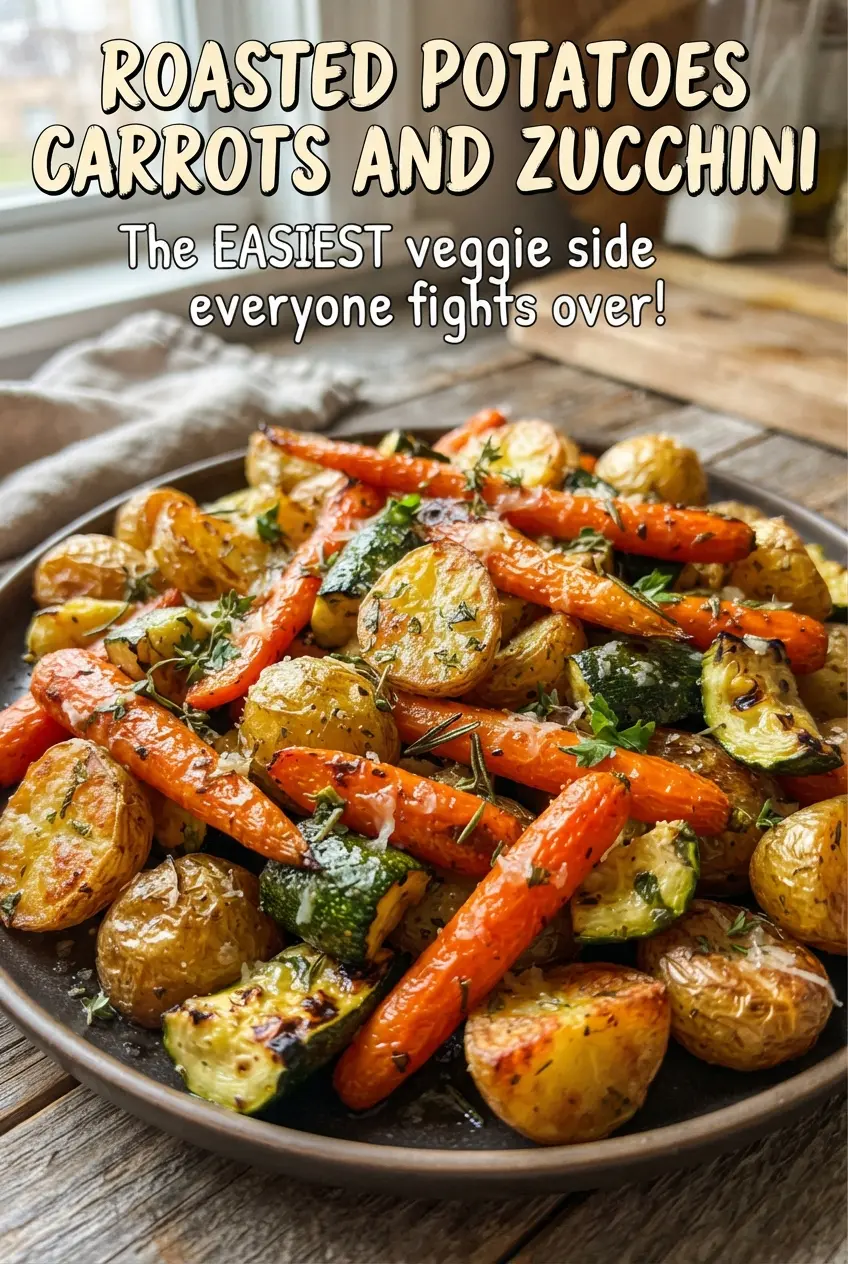
Roasted potatoes, carrots, and zucchini land on the plate with the kind of contrast that keeps people reaching back in for one more forkful: crisp-edged potatoes, sweet carrots with a little caramelization, and zucchini that stays tender instead of collapsing into a watery heap. The trick is giving the denser vegetables a head start, then adding the zucchini later so it roasts instead of steams.
This version leans on a hot sheet pan and a light hand with the oil. Potatoes and carrots need time to develop color, while zucchini only needs enough heat to brown at the edges and turn supple in the center. Garlic and Italian seasoning work best here when they cling to the vegetables before roasting, and Parmesan at the end adds a salty finish that sticks to all those craggy surfaces.
Below, I’ve laid out the timing that keeps the vegetables distinct, plus a few smart swaps if you need to work with what’s in your kitchen.
The potatoes got those crisp little corners I was hoping for, and the zucchini stayed firm instead of turning mushy. I added the Parmesan at the end and it melted just enough to coat everything.
Save these roasted potatoes, carrots, and zucchini for the nights when you want one sheet pan, crisp edges, and a vegetable side that actually gets finished.
The Reason the Zucchini Goes In Last
The biggest mistake in mixed vegetable roasting is treating everything like it needs the same amount of time. Potatoes and carrots are dense enough to handle a long roast, but zucchini gives up water fast. If you add it at the beginning, the pan cools down from the moisture and the vegetables start steaming instead of browning.
The split roast fixes that. Potatoes and carrots get a head start in contact with the hot pan, which is what gives you those crisp edges and sweet, concentrated flavor. Zucchini joins later, after the pan has already done the hard work, so it picks up color without turning soft and wet.
- Potatoes — Baby potatoes are ideal because they roast into crisp cubes with creamy centers. Bigger potatoes work too; just cut them into even 1-inch pieces so they finish at the same time as the carrots.
- Carrots — Their sweetness deepens in a hot oven, and the half-inch coin size gives them enough surface area to brown. Thinner slices cook too fast and can dry out before the potatoes are done.
- Zucchini — This is the ingredient that needs the late addition. Cut it into 1-inch chunks so it keeps some shape; smaller pieces soften too quickly and disappear into the pan juices.
- Olive oil — You need enough to coat the vegetables, not pool under them. The oil helps the seasoning cling and gives the surfaces the conductivity they need to brown.
What Each Seasoning Is Doing in the Pan
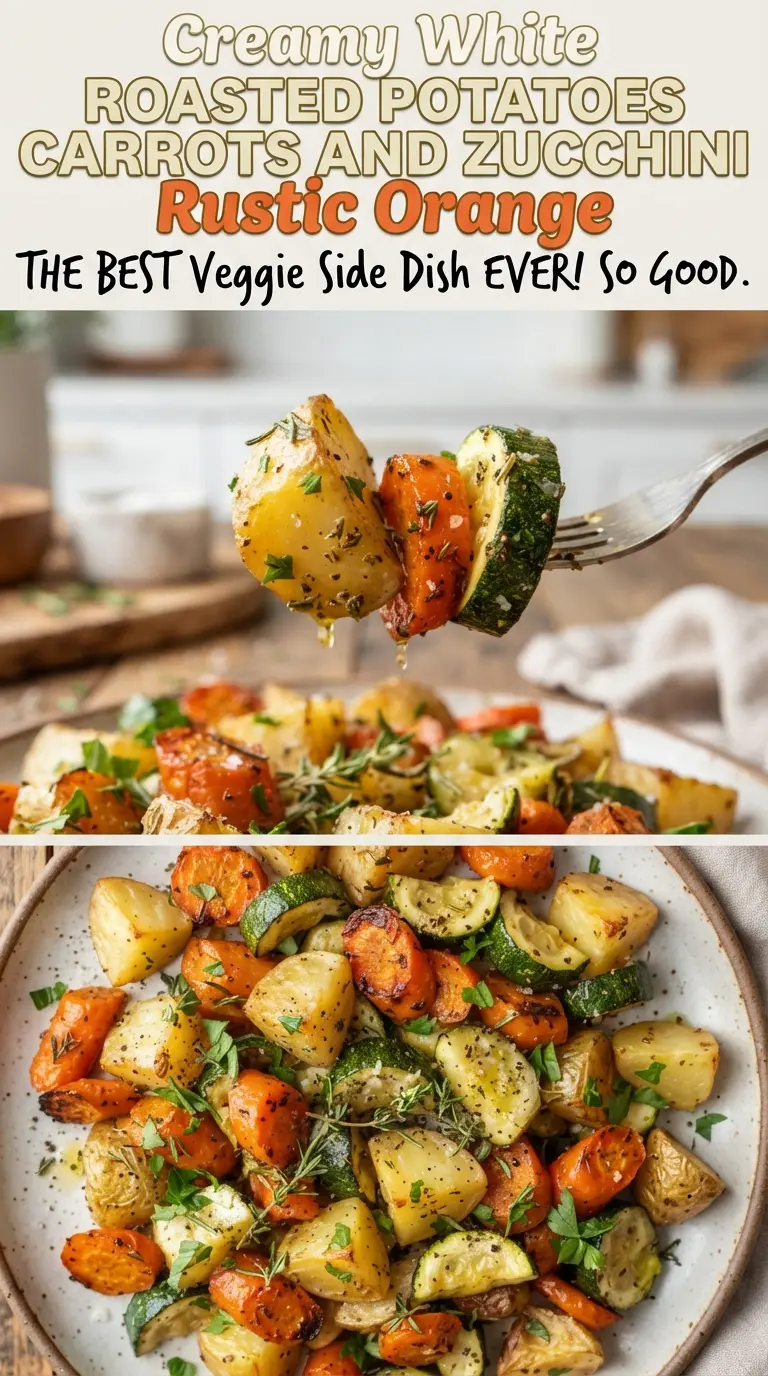
Garlic — Minced garlic perfumes the oil and the vegetables as they roast, but it can scorch if it’s left in a dry, bare patch of the pan. Toss it well with the potatoes and carrots so it’s coated before it goes into the oven.
Dried Italian seasoning — This brings the herbal backbone without needing fresh herbs in the oven. It holds up better than delicate fresh leaves during roasting, then parsley at the end gives the dish a fresher finish.
Parmesan — Add it after roasting so it melts lightly from the residual heat instead of burning on the pan. A pre-grated version works in a pinch, but a finer fresh grate clings better to the vegetables and tastes sharper.
Parsley — This is a finishing move, not a roasting ingredient. Stir it in right before serving so it stays bright and doesn’t lose its color in the oven.
Building the Roast So Nothing Turns Soggy
Start With the Densest Vegetables
Heat the oven to 425F and get the potatoes and carrots onto the sheet pan first with the oil, garlic, seasoning, salt, and pepper. Spread them in a single layer so as much surface as possible touches the hot pan. If they’re piled up, they’ll trap steam and stay pale. After 20 minutes, you should see browned edges and the potatoes beginning to crisp when you nudge them with a spatula.
Add the Zucchini After the Pan Is Hot
When the first vegetables have some color, toss the zucchini with the remaining oil and add it to the pan. Stir everything just enough to redistribute the vegetables without scraping off all the seasoning. The zucchini should look glossy and start to pick up browned spots before it softens completely. If your pieces are cut too small, they’ll shrink fast and go mushy before the potatoes finish.
Finish Hot, Then Season at the End
Roast for another 15 minutes until the potatoes are crisp at the edges, the carrots are tender, and the zucchini is soft but still holds shape. Pull the pan from the oven and scatter the Parmesan and parsley over the top while the vegetables are hot. That last minute of heat is enough to melt the cheese lightly and wake up the herbs without overcooking them.
How to Adapt This for Different Kitchens and Diets
Dairy-Free Version
Skip the Parmesan and finish with extra parsley plus a small squeeze of lemon if you want brightness. You lose the salty, savory coating, but the vegetables still roast beautifully and taste clean and sweet.
Make It Vegan
Use the recipe as written and leave off the cheese, or replace it with a vegan Parmesan-style topping after roasting. The texture stays the same, but the finish will be a little lighter and less salty.
Swap in Other Root Vegetables
Cauliflower, parsnips, or sweet potatoes can stand in for part of the potatoes and carrots. Just keep the pieces evenly sized and think about cook time: sweet potatoes soften faster, while parsnips behave more like carrots and handle the same schedule.
Storage and Reheating
- Refrigerator: Store leftovers in an airtight container for up to 4 days. The potatoes will soften a little, but the flavor holds well.
- Freezer: These don’t freeze well. Zucchini turns watery and the potatoes lose their crisp texture once thawed.
- Reheating: Spread the vegetables on a sheet pan and warm them in a 400F oven until hot and re-crisped at the edges. The microwave works in a pinch, but it turns the zucchini soft and the potatoes dull.