Roasted butternut squash and Brussels sprouts turn into one of those side dishes people keep picking at before dinner even starts. The squash gets caramelized at the edges and soft in the middle, the Brussels sprouts crisp up on the cut sides, and the sweet-tart finish pulls everything together without making it heavy. The pecans add crunch, the cranberries give little bursts of chew, and the whole platter feels balanced instead of one-note.
The part that makes this version work is the roast-and-finish method. The vegetables get enough time in a hot oven to brown properly before the maple balsamic goes on, which keeps the glaze from burning and lets it cling to the hot vegetables instead of disappearing into the pan. Cutting the squash into evenly sized cubes and halving the sprouts means they cook at roughly the same pace, so you don’t end up with mushy squash and underdone sprouts on the same tray.
Below you’ll find the little details that matter most: how to keep the vegetables from steaming, when to add the cranberries so they stay plump, and what to swap if you’re working with what you already have in the pantry.
The squash caramelized beautifully and the Brussels sprouts got those crisp edges I was hoping for. I tossed the cranberries in at the end and they stayed chewy instead of turning hard, which made the whole dish taste polished.
Save these roasted butternut squash and Brussels sprouts for a side dish with crisp edges, maple balsamic gloss, and just enough sweetness to balance the bite.
The Trick Is Roasting, Not Steaming
The fastest way to lose the appeal of this dish is to crowd the pan. When the vegetables sit too close together, they trap steam, and instead of browned edges you get soft, pale cubes and limp sprouts. A large sheet pan and a hot oven do the work here. Give the vegetables room, and let them sit undisturbed long enough to develop color before tossing halfway through.
The other place people trip up is the glaze. Maple syrup and balsamic vinegar should go on after roasting, not before. Added too early, the sugars can scorch before the vegetables finish cooking. Added at the end, the glaze coats the hot surface and tastes sharper, cleaner, and more balanced.
What Each Ingredient Is Actually Doing in the Pan
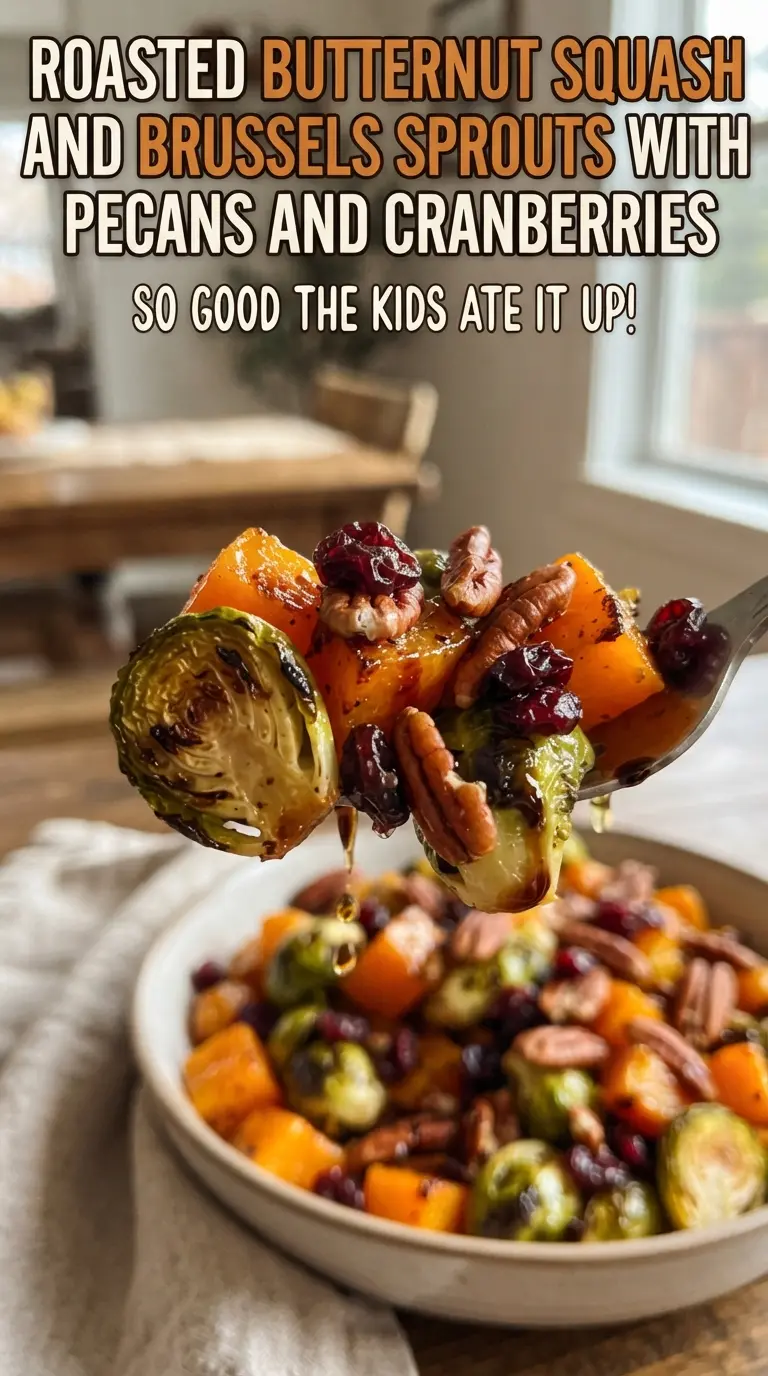
- Butternut squash — This brings the sweet, creamy base of the dish. Cut it into even cubes so it roasts through at the same rate as the sprouts; uneven pieces are the main reason one part of the tray finishes before the rest.
- Brussels sprouts — Halving them exposes the cut side, which is where the best browning happens. Fresh sprouts with tight leaves roast best; if they’re loose or dry, trim a little more off the stem end.
- Olive oil — This helps the vegetables caramelize and keeps the seasoning from clumping in dry spots. A neutral oil works too, but olive oil adds a little more depth.
- Maple syrup and balsamic vinegar — Together they make the glossy finish that ties the sweet squash and earthy sprouts together. Don’t swap in a thick glaze here; you want a light coating, not a sticky sauce that hides the vegetables.
- Pecans — Toasted pecans add crunch and a buttery, nutty finish. If you skip toasting, they’ll still work, but they won’t give the same layered flavor.
- Dried cranberries — These add the sharp pop that keeps the dish from tasting flat. Stir them in after roasting so they stay chewy and don’t toughen in the oven.
Building the Roast So Every Bite Has Contrast
Getting the Pan Hot and Ready
Start with a 425°F oven and a large sheet pan. The heat needs to be high enough to brown the vegetables before they dry out, especially the Brussels sprouts, which can turn dull and soft if the temperature is too low. Toss the squash and sprouts with oil, salt, and pepper until everything is lightly coated, then spread them in a single layer. If they overlap, the bottoms steam and the caramelization gets patchy.
Roasting Until the Edges Brown
Roast the vegetables for 25 to 30 minutes, tossing halfway through. You’re looking for tender squash with browned corners and Brussels sprouts with crisp, darkened cut sides. If the sprouts are getting too dark before the squash is tender, the pieces were probably cut too small or the pan was too crowded. Pull the tray when the vegetables are cooked through and glossy at the edges, not when they’ve turned soft all over.
Finishing With the Maple Balsamic
Whisk the maple syrup and balsamic vinegar together, then toss it with the roasted vegetables while they’re still hot. That heat helps the glaze spread evenly and cling instead of sitting in a puddle on the tray. Add the cranberries and pecans after that so the nuts stay crunchy and the cranberries keep their chew. Serve it warm, while the contrast between crisp, tender, sweet, and tart is at its best.
How to Adapt This for Different Tables and Pantry Realities
Make It Vegan and Naturally Gluten-Free
This recipe already fits both of those boxes as written. Just confirm your balsamic vinegar has no added thickeners if you’re being strict, and keep the pecans separate until the end so everything stays crisp and clean-tasting.
Swap the Pecans for Walnuts or Pepitas
Walnuts give a softer, slightly bitter edge, while pepitas bring a cleaner crunch and make the dish nut-free if allergies are a concern. Toast either one first so the flavor keeps up with the roasted vegetables.
Use Sweet Potatoes Instead of Butternut Squash
Sweet potatoes roast in a similar time and bring a slightly denser, earthier sweetness. Cut them into the same size as the squash cubes so they finish evenly, and watch the edges closely near the end because they can go from browned to dry faster.
Storage and Reheating
- Refrigerator: Store leftovers in an airtight container for up to 4 days. The sprouts will soften a bit, but the flavor stays strong.
- Freezer: The roasted vegetables freeze, but the texture turns softer after thawing, and the pecans lose some crunch. If you freeze it, keep the nuts out and add fresh toasted pecans after reheating.
- Reheating: Reheat on a sheet pan in a 375°F oven until warmed through and the edges start to re-crisp, about 10 to 12 minutes. The mistake to avoid is microwaving the whole batch, which makes the sprouts soggy and dulls the glaze.
Questions I Get Asked About This Recipe
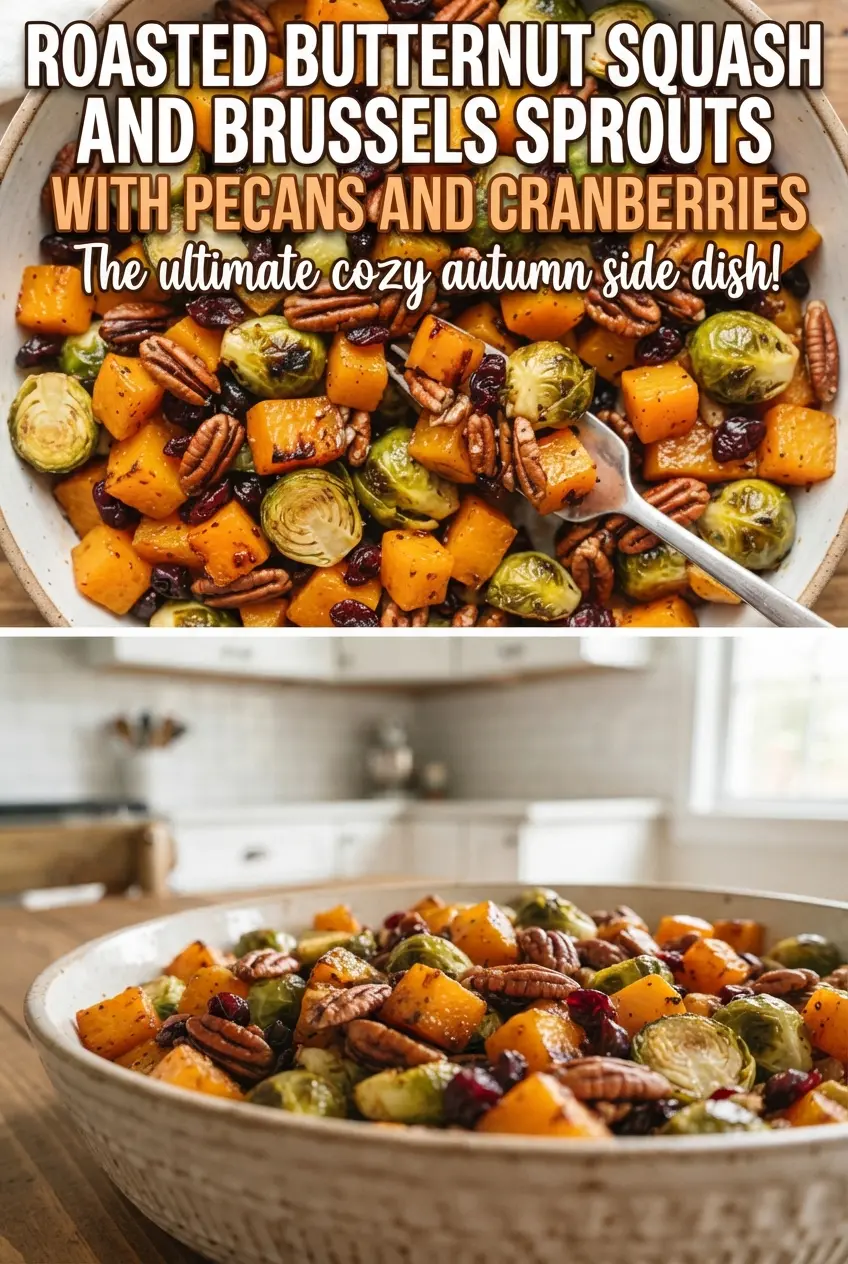
Roasted Butternut Squash and Brussels Sprouts with Pecans and Cranberries
Ingredients
Equipment
Method
- Preheat oven to 425F. Use the sheet pan to help create a fast start for roasting.
- Toss butternut squash and Brussels sprouts with olive oil, salt, and black pepper on a large sheet pan. Spread them into an even layer so edges caramelize.
- Roast for 25-30 minutes, tossing halfway, until the vegetables are tender and caramelized. Look for browned, slightly crisp edges on the squash and Brussels sprouts.
- Whisk maple syrup and balsamic vinegar in a small bowl until smooth. The mixture should look glossy and pourable.
- Toss the roasted vegetables with the maple balsamic, dried cranberries, and toasted pecans, then serve warm. Make sure the glaze lightly coats the vegetables and the nuts are distributed throughout.