Red wine braised short ribs come out impossibly tender when the braising liquid is built with patience instead of shortcuts. The meat turns spoon-soft, the sauce reduces into a deep mahogany glaze, and the carrots and herbs give the whole pot the kind of savory depth that makes this dish feel much bigger than the effort it takes to put it together.
The key is a hard sear at the start and a low, steady oven for the rest. Those browned bits on the bottom of the Dutch oven are what give the sauce its backbone, and the wine needs time to cook down before the ribs go back in. If you rush the liquid, the finished sauce can taste sharp instead of rich. If you braise too hot, the meat tightens up before it has a chance to relax.
Below you’ll find the small details that matter here: how dark the sear should look, when the braising liquid is at the right level, and how to reduce the sauce so it clings to the ribs instead of pooling thinly on the plate.
The ribs were fall-apart tender after 3 1/2 hours, and the sauce reduced into this glossy, rich gravy that was perfect over mashed potatoes. I scraped the pot clean.
Save these Dutch oven short ribs for the night you want fall-off-the-bone beef and a deep red wine sauce over mashed potatoes.
The Sear Is What Gives the Braise Its Backbone
Short ribs need a proper dark crust before they go anywhere near the oven. If the meat goes into the pot pale, the braising liquid can taste flat even after hours of cooking, because you missed the layered flavor that only comes from browning the surface. The goal here isn’t just color. It’s the nutty, meaty fond stuck to the bottom of the Dutch oven after the ribs come out.
That fond is what the wine loosens, and that’s where the sauce starts building. Keep the heat high enough that the ribs brown instead of steam, but don’t crowd the pan or the meat will release liquid and stall out. If you have a lot of ribs, sear in batches. It takes longer, but the finished dish tastes like you meant it that way.
What Each Ingredient Is Actually Doing in the Pot
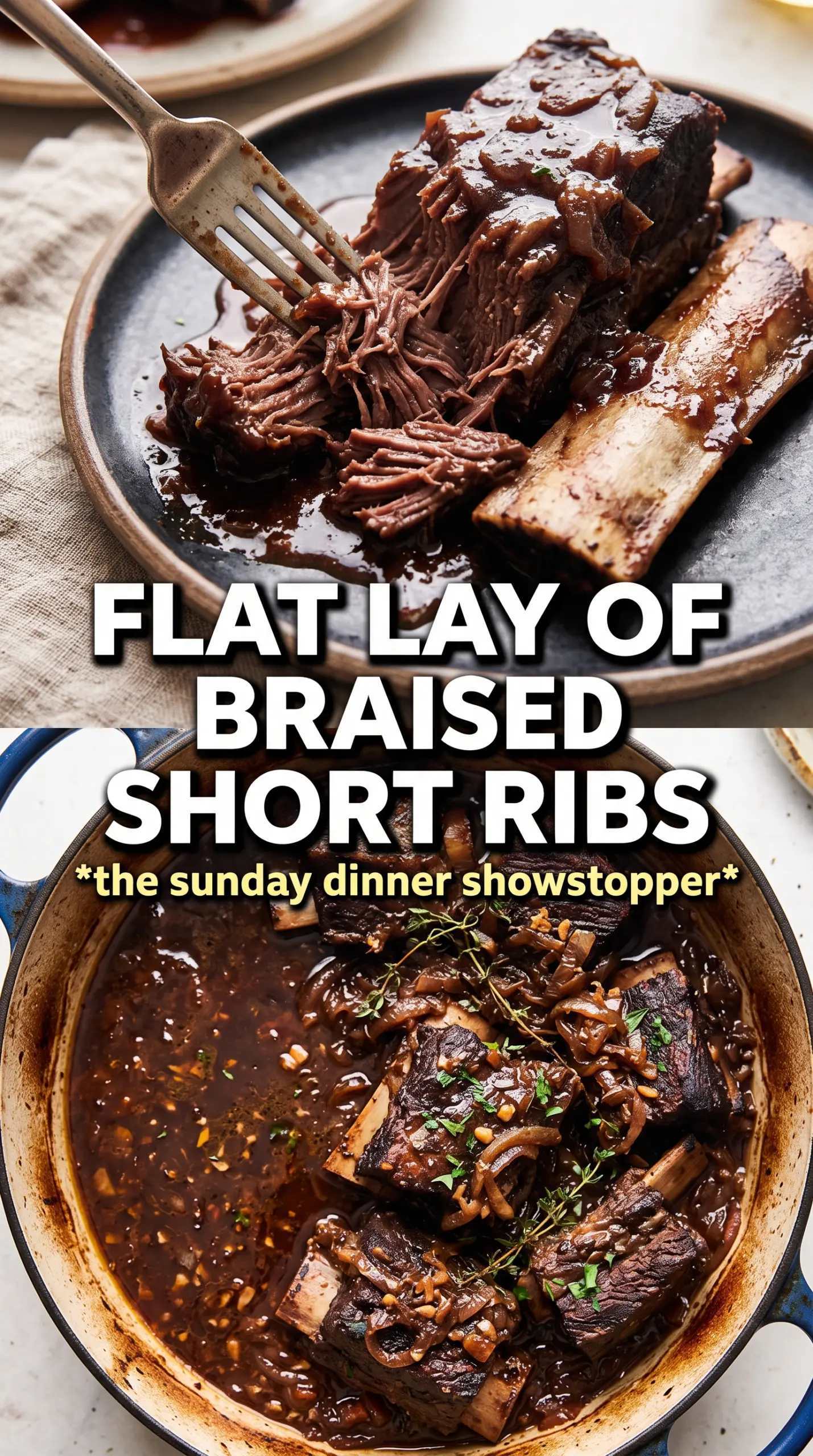
- Bone-in beef short ribs — These are the whole point of the recipe. The bones and connective tissue melt into the sauce as they braise, which is why boneless beef won’t give you the same body or silky texture.
- Dry red wine — Cabernet gives a deeper, more tannic finish; Merlot reads a little softer. Use a wine you’d actually drink. Cheap cooking wine can leave a harsh edge that never cooks out.
- Beef broth — This stretches the braising liquid without thinning the flavor too much. If your broth is very salty, hold back on the seasoning until the end.
- Tomato paste and diced tomatoes — Tomato paste adds concentration and color, while the diced tomatoes bring just enough acidity to keep the sauce from tasting heavy. Cook the paste for a full 2 minutes so it loses its raw bite.
- Carrots, onion, celery, garlic, and herbs — This is the aromatic base that gives the braise its classic French-American depth. The vegetables soften into the sauce, but they also help sweeten and round out the wine.
How to Build a Sauce That Turns Glossy, Not Thin
Searing the ribs until the pan tells you they’re ready
Season the short ribs generously, then sear them in hot olive oil until every side has a deep brown crust. Don’t move them around too early; they need contact with the hot pan to develop color. If they stick at first, leave them alone for another minute. Once they release cleanly, the sear is where you want it.
Cooking the vegetables in the drippings
After the ribs come out, add the onion, carrots, and celery and cook until the onion looks translucent and the edges start to pick up a little color. Stir in the garlic and tomato paste and cook for about 2 minutes, just until the paste darkens slightly and smells sweet instead of sharp. If the pan looks dry, the vegetables should still pick up enough from the beef drippings and oil. This step is where the sauce gets its base sweetness.
Reducing the wine before the long braise
Pour in the red wine and scrape the bottom of the pot hard enough to lift every browned bit. Let it bubble for a minute before adding broth, tomatoes, bay leaves, thyme, and rosemary. The liquid should come about halfway up the ribs, not cover them completely. Too much liquid waters down the sauce and makes the meat more like boiled beef than braised short ribs.
Finishing until the meat nearly falls from the bone
Cover the Dutch oven and braise at 325°F until the ribs are tender enough to pull apart with a fork, usually 3 to 3 1/2 hours. If the meat still feels tight, it needs more time, not more heat. Pull the ribs out carefully, strain the braising liquid if you want a smoother sauce, then simmer it down until it turns glossy and clings to the spoon. That final reduction is what makes the dish taste finished.
How to Adapt These Short Ribs Without Losing the Good Part
Gluten-Free and Naturally Thickened
This recipe is already gluten-free as written, as long as your broth is certified gluten-free. The sauce thickens by reduction instead of flour, which gives it a cleaner, more concentrated finish.
A Slightly Lighter Braise With More Tomato
If you want the sauce to taste a little brighter and less wine-forward, increase the diced tomatoes slightly and reduce the wine until it loses its sharp alcohol smell before adding the broth. You get a softer, more rustic sauce, though not quite the same deep, almost velvety finish.
Make-Ahead for Better Flavor
Braised short ribs taste even better the next day. Cool them in the sauce, then refrigerate overnight so the fat rises and the flavors settle together. Reheat gently, and don’t boil the sauce hard or the meat can break apart before serving.
Storage and Reheating
- Refrigerator: Store the ribs and sauce in an airtight container for up to 4 days. The sauce will thicken as it chills, and the fat may solidify on top.
- Freezer: This freezes well for up to 3 months. Cool completely first, then freeze the meat in the sauce so it stays moist.
- Reheating: Warm gently on the stovetop over low heat or in a 300°F oven, covered, until hot. The biggest mistake is a hard boil, which can make the beef stringy and split the sauce.
Questions I Get Asked About This Recipe
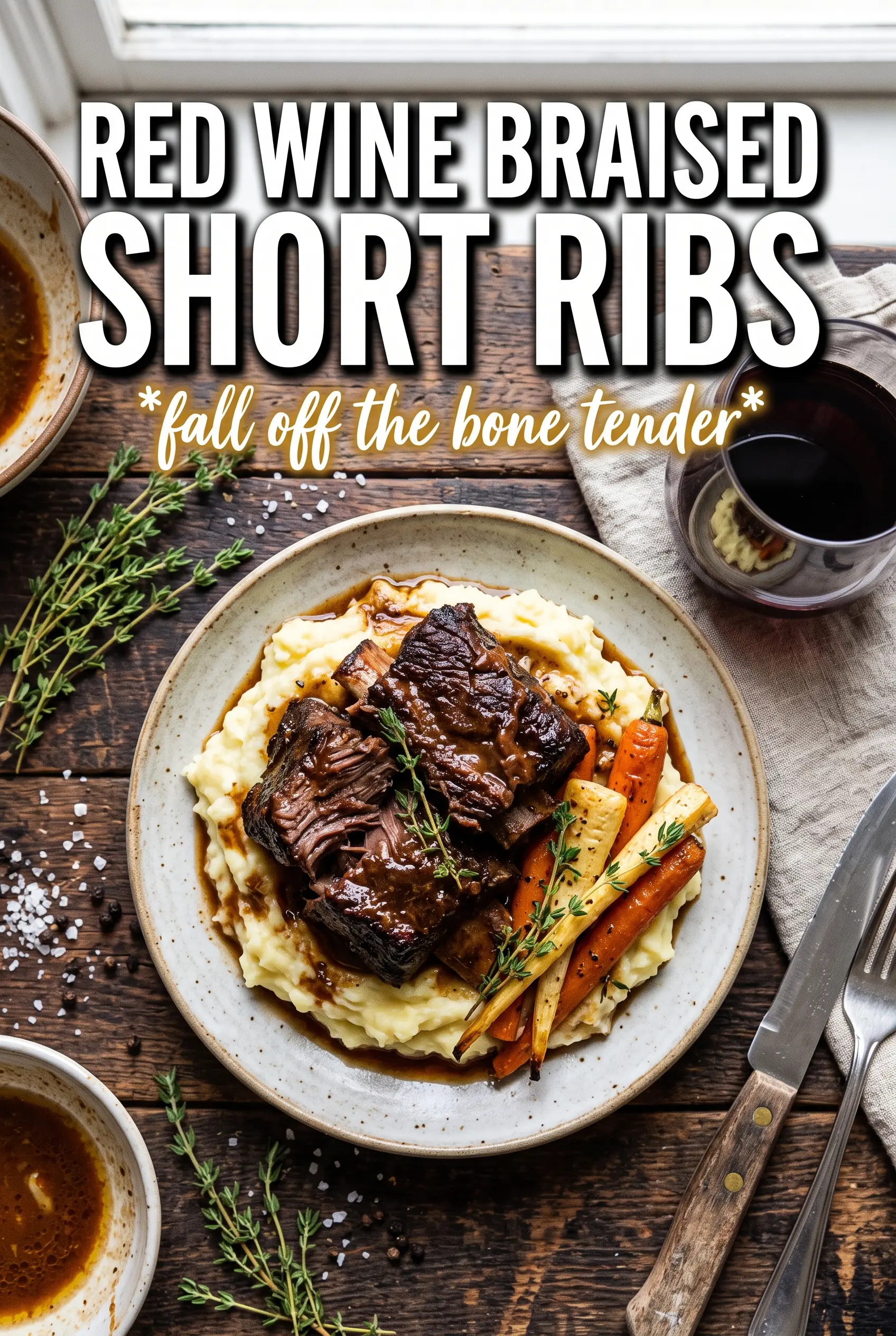
Red Wine Braised Short Ribs In Dutch Oven
Ingredients
Equipment
Method
- Preheat oven to 325°F, then season the bone-in short ribs generously with salt and pepper.
- Heat olive oil in a Dutch oven over high heat, then sear the ribs until deeply browned on all sides, about 6 to 10 minutes total; remove to a plate.
- Add onion, carrots, and celery to the Dutch oven and sauté for 5 minutes until slightly softened.
- Stir in smashed garlic and tomato paste, then cook for 2 minutes to deepen flavor.
- Pour in the red wine and deglaze, scraping the browned bits from the bottom of the Dutch oven.
- Add beef broth, diced tomatoes, bay leaves, thyme, and rosemary, then return ribs so the liquid comes halfway up the meat.
- Cover and braise in the oven at 325°F for 3 to 3-1/2 hours until fall-off-the-bone tender, keeping the lid on for steady moisture.
- Remove the ribs, then strain and reduce the braising liquid until glossy and lightly thickened.
- Serve the ribs over mashed potatoes and spoon the reduced braising sauce on top.