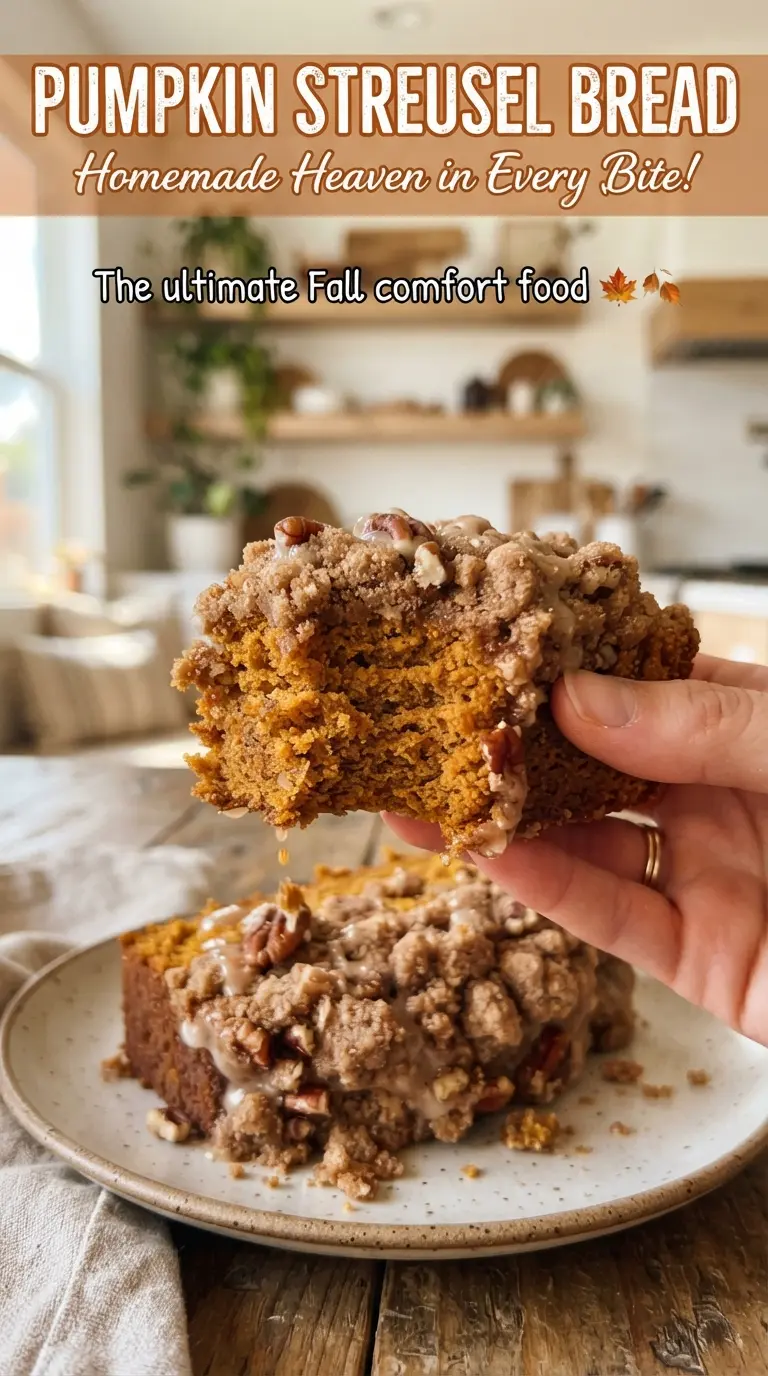
Pumpkin streusel bread bakes up with a tender, moist crumb and a thick cinnamon topping that stays crisp instead of sinking into the loaf. The contrast is what keeps people coming back for another slice: soft pumpkin bread underneath, buttery crumbs on top, and just enough spice to make the whole kitchen smell like you meant business.
The streusel works because the butter stays cold until the oven hits it. That gives you those big, crumbly pieces instead of a paste that melts flat before the bread is done. The batter itself is built for tenderness, too. Oil keeps the crumb soft for days, and pumpkin puree brings moisture without needing a complicated ingredient list.
Below, I’ve included the one step that keeps the topping from disappearing into the loaf, plus a few practical swaps if you need to work with what’s already in the pantry.
The streusel stayed crumbly and golden, and the loaf was still soft the next morning. I tented it after 40 minutes like you said, and the top didn’t get too dark.
Love that thick cinnamon streusel on Pumpkin Streusel Bread? Save it to Pinterest for the next time you want a soft loaf with a crunchy, bakery-style topping.
The Trick to Keeping the Streusel on Top Instead of Melting In
The biggest failure point with pumpkin streusel bread is a topping that turns into a damp layer instead of a crumbly crown. That happens when the streusel gets too warm, too fine, or too wet before it ever hits the oven. Cold butter cut into the flour and sugar gives you those pebbly bits that hold their shape long enough to bake into a crisp, golden crust.
The other place people go wrong is overmixing the batter. Pumpkin bread should be stirred just until the flour disappears. If you keep going, the loaf turns tight and bready instead of soft and tender. The batter will look a little thick, and that’s exactly what you want.
- Cold butter — This is what creates the crumbly streusel texture. If it softens while you’re mixing, the topping will smear instead of clump. If your kitchen is warm, pop the finished streusel in the fridge while you mix the batter.
- Pumpkin puree — Use plain pumpkin puree, not pumpkin pie filling. Pie filling is already sweetened and spiced, which throws off both the texture and the flavor balance.
- Brown sugar — This adds moisture and that deep caramel note that works so well with pumpkin. Light or dark brown sugar both work here; dark brown sugar gives a slightly richer finish.
- All-purpose flour — The loaf needs regular flour for structure, and the streusel needs its own separate measure so the topping stays dry enough to crumble. Don’t try to use one bowl for both parts unless you’re comfortable with a looser topping.
What Each Ingredient Is Actually Doing in This Recipe
- Primary ingredient (the star) — Quality matters most. Choose the best you can find.
- Cooking medium (oil, butter, or broth) — This carries flavors and prevents dryness.
- Seasonings (salt, pepper, spices, herbs) — Layer flavors so nothing overpowers. Build depth gradually.
- Aromatics (garlic, onion, herbs) — Cook with fat to bloom flavors. Become the foundation.
- Supporting ingredients — Complement the main ingredient without overpowering it.
- Sauce or liquid (if applicable) — Brings flavors together. Balance richness with acid.
- Acid (lemon, vinegar, wine, or other) — Brightens and prevents flat-tasting results.
- Final finish (garnish, glaze, or sauce) — Prevents one-dimensional taste and adds visual appeal.
Building the Batter and Streusel in the Right Order
Mix the Streusel First, Then Chill It
Start with the streusel so it has time to firm up while you work on the loaf. Rub the flour, brown sugar, cinnamon, and cold butter together until you get coarse crumbs with a few larger pieces mixed in. Stop before it turns into a paste. If the butter starts to soften, refrigerate the bowl; chilled streusel holds its shape better in the oven and gives you a more defined topping.
Whisk the Dry Ingredients Separately
The flour, baking soda, salt, and pumpkin pie spice should be mixed together before they meet the wet ingredients. That keeps the leavener and spice distributed evenly, so the bread rises and tastes the same in every slice. If you dump everything together at once, you can end up with pockets of spice or little streaks of baking soda that taste sharp.
Fold the Batter Just Until Combined
Whisk the pumpkin, oil, eggs, both sugars, and vanilla until smooth, then fold in the dry ingredients. The batter should look thick and uniform, but a few streaks of flour are better than overmixing. As soon as you stop seeing dry patches, pour it into the pan. Spread the streusel evenly over the top, pressing it down only lightly so it stays loose and crumbly.
Bake Until the Center Springs Back
Bake at 350°F until a toothpick inserted in the center comes out clean, usually 60 to 65 minutes. If the top is browning fast, tent it loosely with foil after about 40 minutes so the streusel doesn’t burn before the middle cooks through. The loaf is done when the center no longer jiggles and the edges pull slightly from the pan.
Make It With Walnuts in the Streusel
Stir 1/3 cup finely chopped walnuts into the streusel if you want more crunch and a slightly toastier finish. The nuts bring a bakery-style texture, but they also make the topping a little heavier, so keep the pieces small and don’t add too many.
Dairy-Free Version
Use a plant-based butter block in the streusel and keep everything cold. This swap works well because the topping depends on fat more than flavor, and a solid dairy-free butter gives you the same crumbly texture without changing the loaf itself.
Lower-Sugar Loaf
You can reduce the granulated sugar in the batter by 2 tablespoons and still get a good loaf, but don’t cut the brown sugar much further or the crumb will start to dry out. The bread will be a little less tender and slightly less caramel-like, but it still bakes up well.
Storage and Reheating
- Refrigerator: Store covered for up to 5 days. The streusel softens a little in the fridge, but the loaf stays moist.
- Freezer: Freeze tightly wrapped slices or the whole loaf for up to 2 months. Wrap in plastic and then foil so the topping doesn’t pick up freezer odors.
- Reheating: Warm slices in a 300°F oven for 8 to 10 minutes or in the toaster oven until just heated through. Microwaving too long will make the topping soft and the crumb gummy.
Answers to the Questions Worth Asking
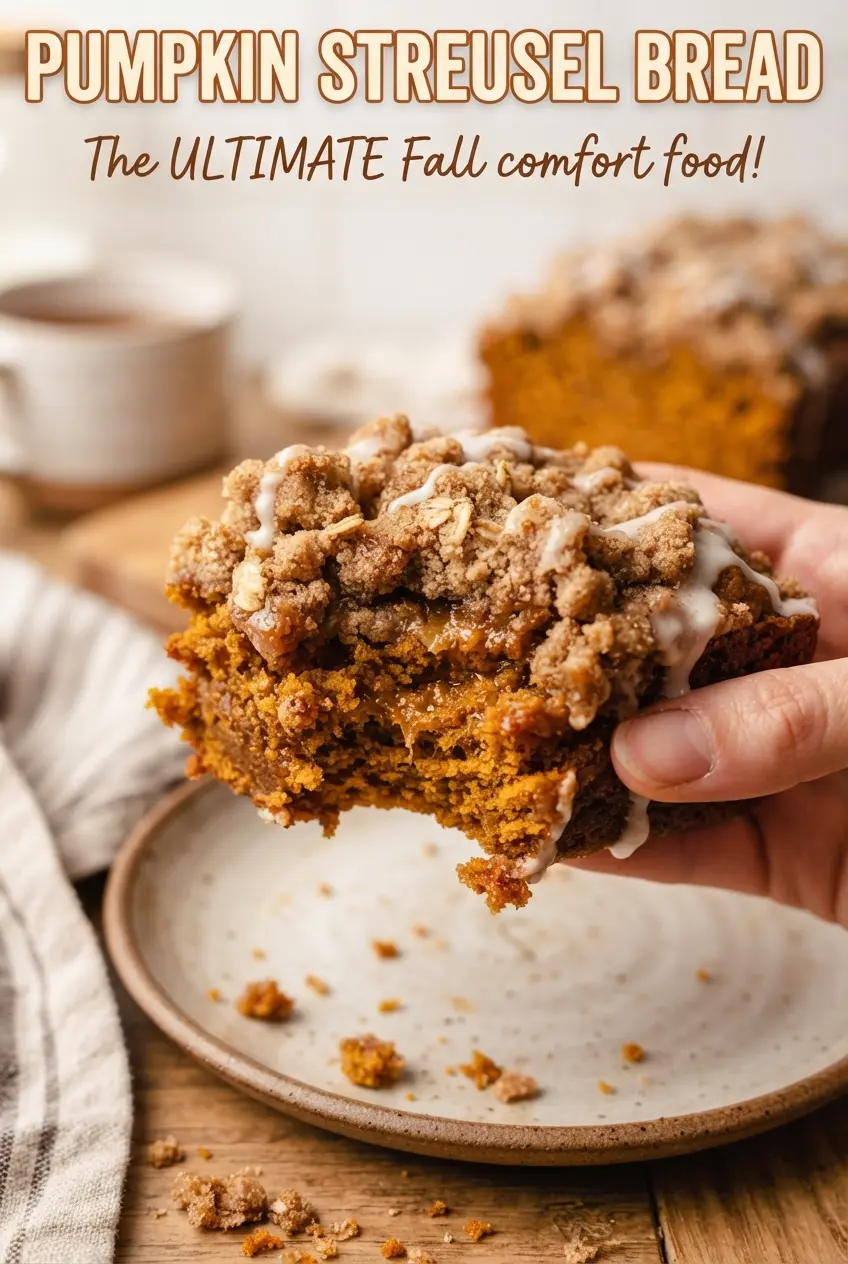
Pumpkin Streusel Bread
Ingredients
Equipment
Method
- Preheat oven to 350F and grease and line a 9x5-inch loaf pan.
- Rub streusel flour, brown sugar, cinnamon, and cold butter together until coarse crumbs form, then chill.
- Whisk all-purpose flour, baking soda, salt, and pumpkin pie spice in a bowl until evenly combined.
- Whisk pumpkin puree, vegetable oil, eggs, packed brown sugar, granulated sugar, and vanilla extract until smooth.
- Fold the dry ingredients into the pumpkin mixture just until combined, avoiding overmixing.
- Pour the batter into the loaf pan and cover evenly with the chilled streusel.
- Bake for 60-65 minutes at 350F, until a toothpick comes out clean.
- If the top browns quickly, tent with foil after 40 minutes to prevent over-browning.
- Cool completely in the pan before slicing so the crumb sets properly.