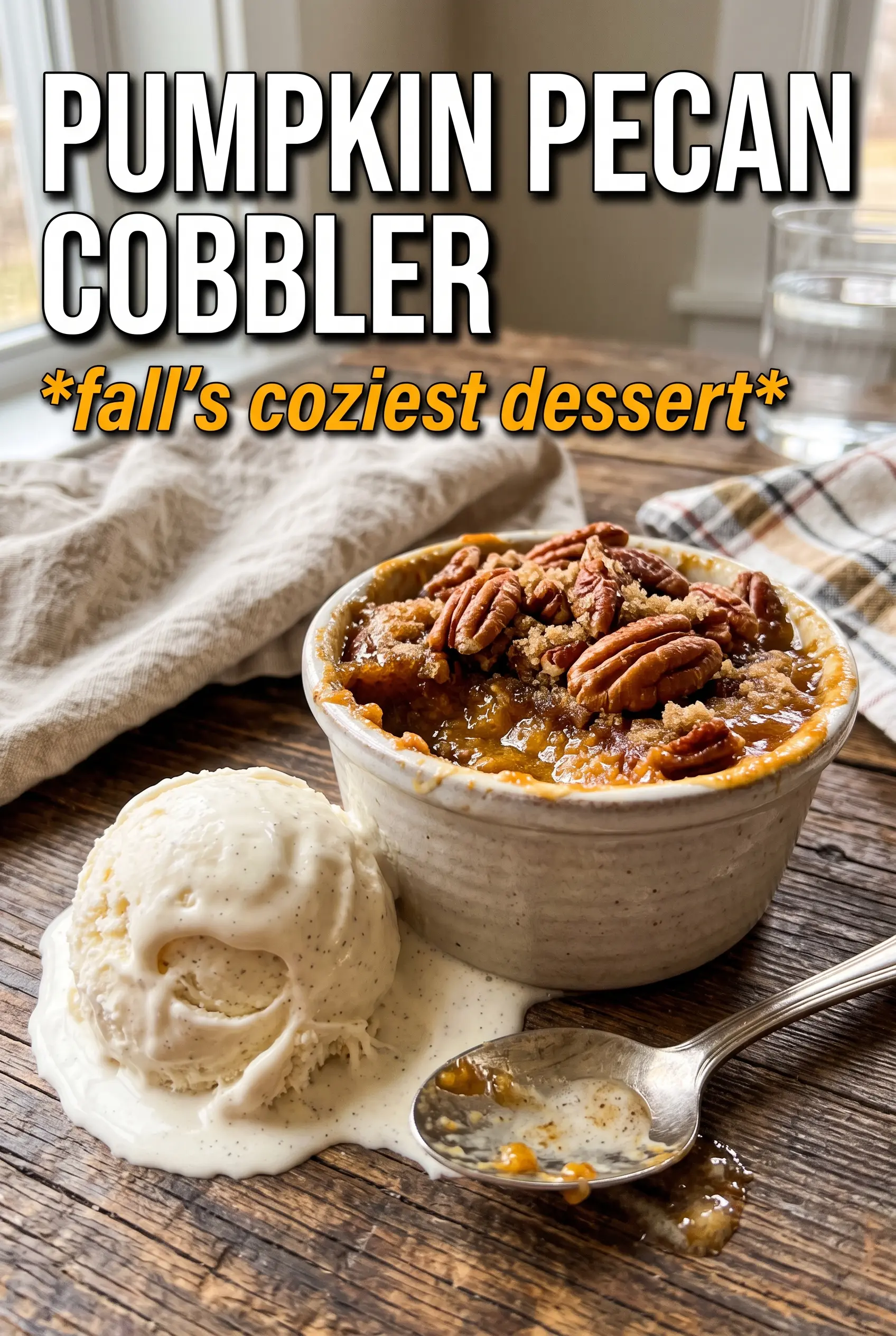
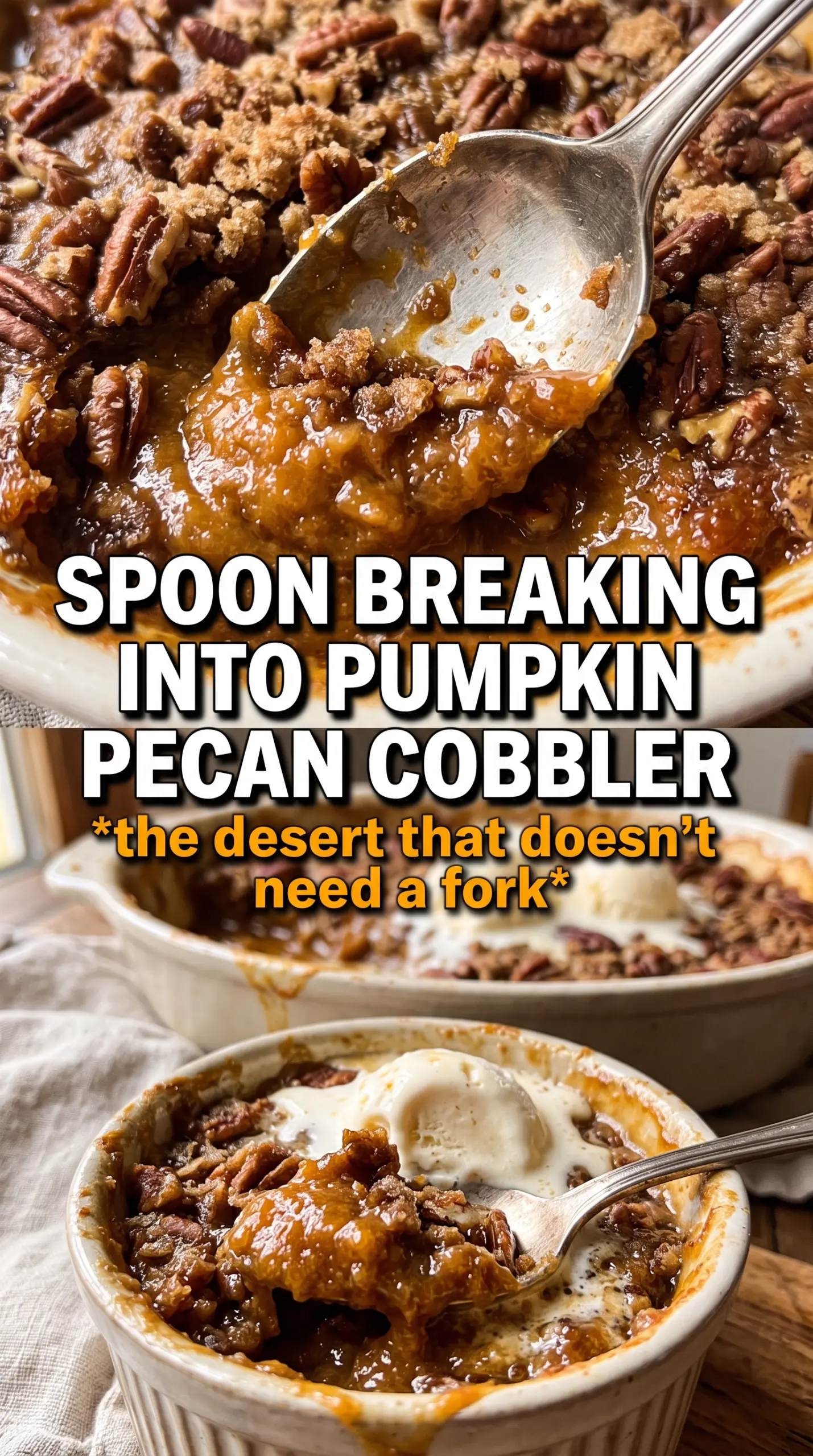
Pumpkin pecan cobbler bakes into one of those desserts that looks almost impossible when you pour it into the pan, then comes out with a tender spiced cake on top and a warm caramel sauce underneath. The pecans toast as everything bakes, so every spoonful has crunch, gooey sauce, and that soft pumpkin crumb that soaks up vanilla ice cream like it was made for it.
What makes this version work is the layering. The batter stays fairly thick so it can hold the topping, then the very hot water goes over the top without stirring, which sounds wrong the first time you do it but is exactly how the sauce ends up on the bottom. The brown sugar and cinnamon melt into the water while the pumpkin batter bakes above it, and the result is a dessert with two textures instead of one.
Below you’ll find the little details that matter most: how to pour the water without disturbing the layers, why the center should still have a slight jiggle when it comes out of the oven, and a few smart ways to adapt it if you need to change the nuts or make it dairy-free.
The sauce settled right under the cake layer and turned glossy instead of grainy. I served it with vanilla ice cream, and the pecans stayed crunchy even the next day.
Save this pumpkin pecan cobbler for the nights when you want a bubbling caramel sauce under a soft pumpkin topping.
The Trick to Getting Sauce Under the Cobbler, Not Over It
This dessert only works if you trust the process and leave the layers alone. The batter is thick enough to stay on top, but the hot water loosens the sugar mixture below it as the oven heat moves through the dish. If you stir after pouring the water, you’ll dissolve the separation that creates the sauce, and the whole thing bakes up more like a cake with syrup instead of a proper cobbler.
The other thing that matters is oven heat and bake time. Pull it when the center is just set and the top is lightly golden, because overbaking tightens the crumb and reduces the amount of sauce left underneath. You want a spoonable middle, not a dry square.
What Each Ingredient Is Actually Doing in This Cobbler
- Pumpkin puree — This gives the batter its moist, dense pumpkin texture and keeps the crumb from tasting plain. Use pure pumpkin, not pumpkin pie filling, or you’ll throw off the sweetness and spice balance.
- Pumpkin pie spice and cinnamon — These do the heavy lifting on flavor, especially because the sauce underneath is sweet and simple. If your spice blend is old, the cobbler will taste flat, so fresh spice matters here more than in a quick snack cake.
- Melted butter — It brings richness and helps the batter bake up tender instead of bready. You can swap in an equal amount of neutral oil, but the flavor won’t have the same warm, buttery finish.
- Brown sugar topping — This is what melts into the hot water and becomes the caramel layer. Pack it in the cup so you get the right amount of molasses flavor and enough sugar to create a real sauce.
- Pecans — They add crunch and a toasted, nutty bite that keeps the dessert from leaning too soft. Chop them roughly so you get bigger pieces that stay noticeable after baking.
Building the Layers Without Breaking the Sauce
Mix the batter until it just comes together
Whisk the dry ingredients first so the baking powder and spices are evenly distributed, then stir in the pumpkin, butter, milk, and vanilla just until no dry streaks remain. The batter will be thick, and that is what you want. If you beat it hard, the crumb gets tighter and less tender, which works against the saucy texture below.
Keep the pecans and sugar topping separate
Spread the batter evenly in the buttered dish, then scatter the pecans over the top before adding the sugar mixture. That order keeps the nuts from sinking straight to the bottom and lets them toast on the surface of the batter. Sprinkle the brown sugar mixture evenly so every bite gets the same caramel base.
Pour the hot water and walk away
Heat the water until it is very hot, then pour it slowly over the entire surface without stirring. It will look alarming, but that thin layer of water is what dissolves the sugar topping and creates the sauce as the cobbler bakes. Stirring here ruins the separation, and you’ll lose the distinct sauce layer that makes this dessert special.
Bake until the center is just set
Bake until the top looks set around the edges and the middle still has the slightest wobble when you nudge the pan. The sauce underneath thickens as it rests, so don’t wait for the whole dish to look firm in the oven. If it bakes too long, the top dries out before the sauce gets a chance to stay glossy.
How to Adjust the Cobbler for Different Kitchens and Diets
Dairy-Free Version
Use a neutral dairy-free milk and swap the butter for melted plant-based butter or a mild oil. The texture stays close, though butter gives the top a slightly richer flavor and browning. Serve with dairy-free vanilla ice cream if you want the same cold-and-warm contrast.
Walnut Swap
Walnuts work almost the same way as pecans and still give you that toasty crunch. They taste a little earthier and less sweet, which leans the cobbler more rustic than buttery, but the structure stays intact.
Gluten-Free Adaptation
A cup-for-cup gluten-free flour blend usually works well here because the batter is simple and doesn’t rely on bread-like structure. Use a blend that contains xanthan gum, and don’t overmix, since extra stirring can make gluten-free batters gummy.
Storage and Reheating
- Refrigerator: Store covered for up to 4 days. The sauce thickens as it chills, and the topping softens a bit.
- Freezer: It freezes, but the sauce texture is never quite as silky after thawing. Freeze in airtight portions for up to 2 months and thaw overnight in the fridge.
- Reheating: Warm individual portions in the microwave until just heated through, or reheat the dish covered in a 300F oven. Don’t blast it on high heat, or the top dries out before the sauce loosens.