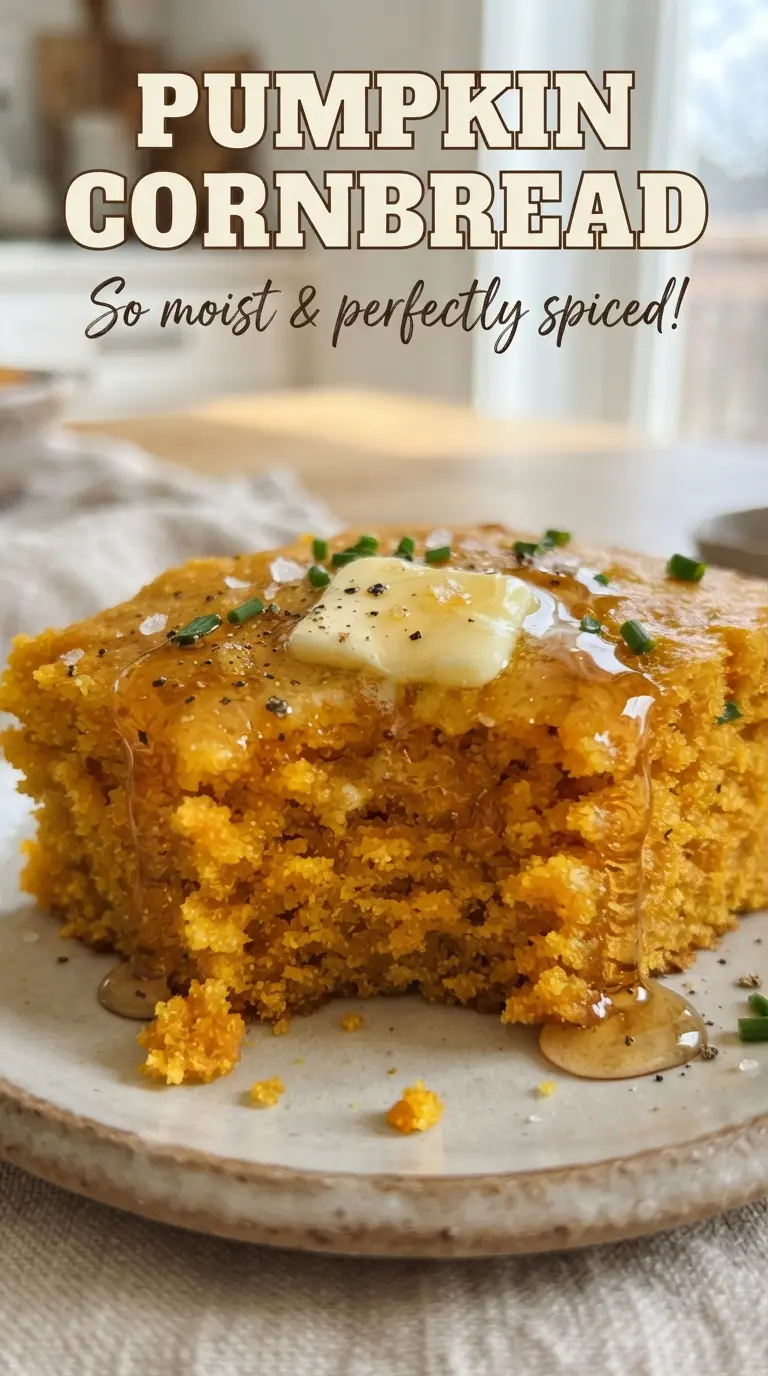
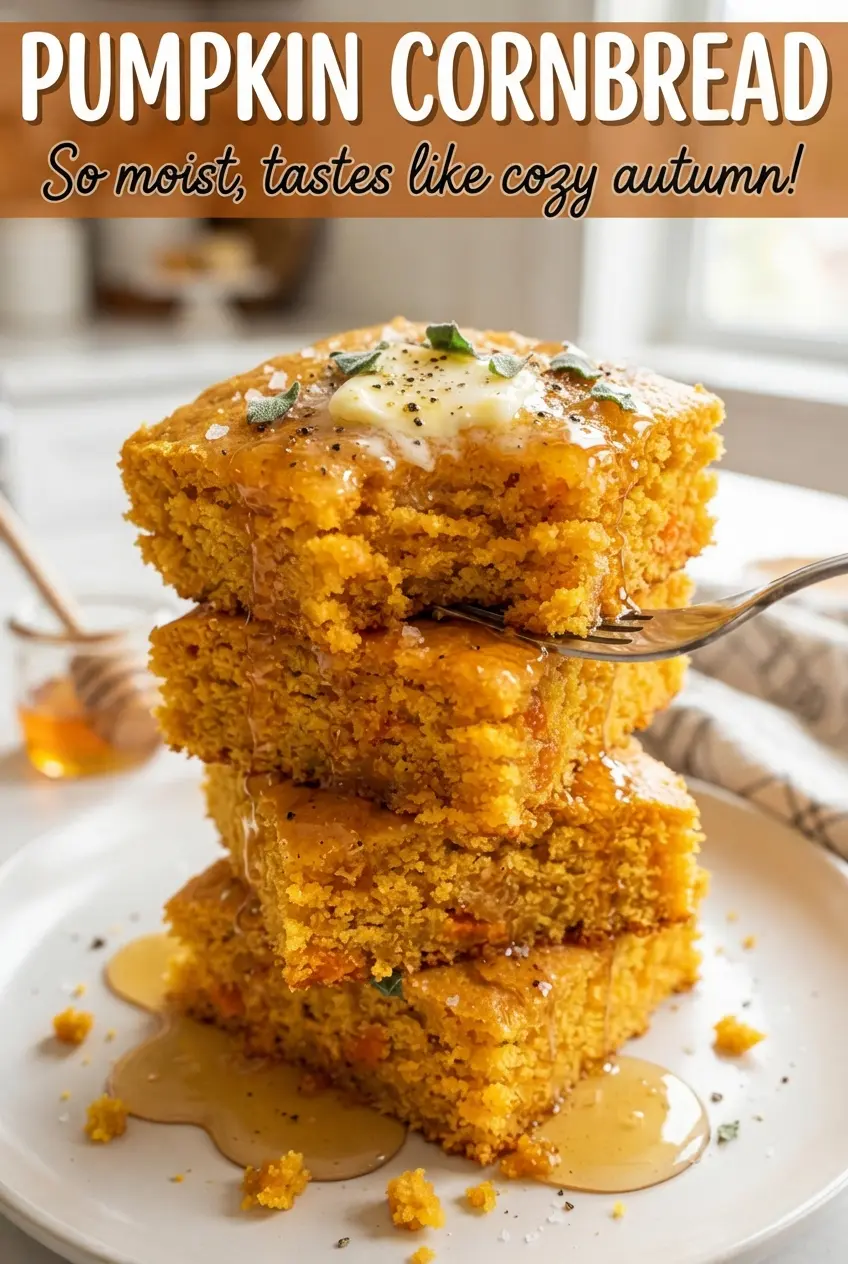
Golden pumpkin cornbread brings a softer, richer bite than classic skillet cornbread without losing the crumbly edges people love. It bakes up tender in the center, lightly sweet, and sturdy enough to cut into neat squares, with a warm spice note that plays nicely with butter, chili, soup, or a plate of greens.
The trick here is balance. Pumpkin puree adds moisture and a little body, so the batter needs enough cornmeal to keep that cornbread texture instead of turning cakey. Brown sugar and maple syrup round out the pumpkin pie spice without making it taste like dessert, and buttermilk keeps the crumb soft while giving the baking powder a boost in the oven.
Below, I’m breaking down the ingredient choices and the mixing method that keeps this cornbread from getting dense. I’ve also included a few smart swaps and storage notes, because this is the kind of side dish that disappears fast but is just as good warmed up the next day.
The pumpkin flavor came through without making it heavy, and the edges got that perfect little crunch in my cast iron pan. I served it with chili and there wasn’t a crumb left.
Save this pumpkin cornbread for the nights when you want a warm, maple-sweet side with a tender crumb and crisp edges.
The Difference Between Tender Pumpkin Cornbread and a Dense Quick Bread
Pumpkin changes cornbread in a sneaky way: it adds moisture without adding much structure. That means the line between tender and heavy is thin. If you overmix after the wet and dry ingredients meet, the flour starts building gluten and the batter tightens up fast. Stir just until you stop seeing dry streaks, then get it into the pan. The oven should already be hot so the baking powder starts lifting the batter right away.
The other thing that matters is pan choice. An 8×8-inch pan gives you thicker squares, while a 10-inch cast iron skillet gives you deeper browning around the edges. Both work, but cast iron gives the best crust because it holds heat and helps the bottom set quickly.
What Each Ingredient Is Doing in This Pumpkin Cornbread
- Yellow cornmeal — This gives the bread its grainy, cornbread texture. Fine or medium grind both work; a coarse grind makes it a little more rustic and a fine grind makes it softer.
- All-purpose flour — Flour keeps the crumb from falling apart. You need it here because pumpkin adds moisture, and without the flour the middle can turn pasty instead of sliceable.
- Pumpkin puree — Use plain pumpkin puree, not pumpkin pie filling. The puree adds body, color, and moisture without extra sugar or spices that would throw off the balance.
- Buttermilk — This brings tang and tenderness while helping the baking powder work. If you don’t have it, mix regular milk with a splash of lemon juice or vinegar and let it sit a few minutes.
- Maple syrup and brown sugar — These sweeteners soften the earthy pumpkin flavor and help the top brown. Brown sugar adds a deeper note; maple syrup gives the cornbread that warm finish.
- Butter — Melted butter carries flavor through the batter and keeps the crumb rich. Neutral oil will work in a pinch, but you’ll lose the buttery taste that makes this one worth repeating.
- Pumpkin pie spice — This is the easiest way to get that familiar warm spice note without measuring out five different spices. If you don’t have it, cinnamon with a pinch of ginger and nutmeg gets you close.
Building the Batter So the Crumb Stays Soft, Not Gummy
Whisk the dry ingredients first
Combine the cornmeal, flour, brown sugar, baking powder, salt, and pumpkin pie spice in a large bowl until the mixture looks even all the way through. This keeps the baking powder from clumping, which matters because uneven leavening gives you random pockets that rise too fast or not at all. If your brown sugar is lumpy, break it up with your fingers before adding the wet ingredients.
Mix the wet ingredients until smooth
Whisk the pumpkin puree, eggs, buttermilk, melted butter, and maple syrup until the mixture looks thick but fully blended. The batter should look glossy and uniform, with no streaks of butter floating on top. If the butter is hot, it can start cooking the eggs, so let it cool for a minute before whisking it in.
Stop stirring the second the batter comes together
Pour the wet mixture into the dry ingredients and stir just until the flour disappears. A few small lumps are fine; those won’t matter after baking. What does matter is not beating the batter smooth, because that’s how pumpkin cornbread turns tight and bready instead of tender.
Bake until the center is set and the edges pull back
Spread the batter into the prepared pan and bake at 400°F for 22 to 25 minutes. You’re looking for a golden top, browned edges, and a toothpick that comes out clean or with a few dry crumbs. If the center still looks shiny when the edges are already dark, give it a few more minutes and tent loosely only if the top is getting too deep in color.
How to Change the Flavor Without Losing the Cornbread Texture
Dairy-Free Version
Swap the buttermilk for unsweetened non-dairy milk mixed with 1 tablespoon lemon juice or vinegar, and use melted dairy-free butter or neutral oil. The texture stays soft, though oil will give you a slightly less rich flavor than butter.
Less Sweet, More Savory
Cut the brown sugar to 2 tablespoons and leave the maple syrup out if you want a more classic cornbread feel. The pumpkin still keeps it tender, but the finished bread will lean more toward a side dish for chili or barbecue instead of a snack bread.
Gluten-Free Swap
Use a 1:1 gluten-free flour blend in place of the all-purpose flour. The cornbread will still bake up well, but let the batter rest for 5 minutes before baking so the flour hydrates and the crumb doesn’t feel sandy.
Storage and Reheating
- Refrigerator: Store in an airtight container for up to 4 days. The crumb firms up a little in the fridge, but that’s normal.
- Freezer: Wrap individual squares tightly and freeze for up to 2 months. Thaw at room temperature or overnight in the fridge before reheating.
- Reheating: Warm in a 300°F oven for 8 to 10 minutes or microwave briefly. Don’t blast it on high heat too long or the edges dry out before the center softens.
Answers to the Questions Worth Asking
Pumpkin Cornbread
Ingredients
Equipment
Method
- Preheat the oven to 400°F, then grease an 8x8-inch pan or a 10-inch cast iron skillet.
- Whisk yellow cornmeal, all-purpose flour, brown sugar, baking powder, salt, and pumpkin pie spice in a bowl until evenly combined; the mixture should look speckled with spice.
- Whisk pumpkin puree, large eggs, buttermilk, melted butter, and maple syrup in a separate bowl until smooth and glossy.
- Stir the wet mixture into the dry just until combined; stop when no dry streaks remain for a tender crumb.
- Spread the batter into the prepared pan in an even layer so the surface bakes uniformly.
- Bake at 400°F for 22-25 minutes, until golden and a toothpick inserted in the center comes out clean.
- Let the pumpkin cornbread cool briefly, then serve warm with butter so it melts into the crumb.