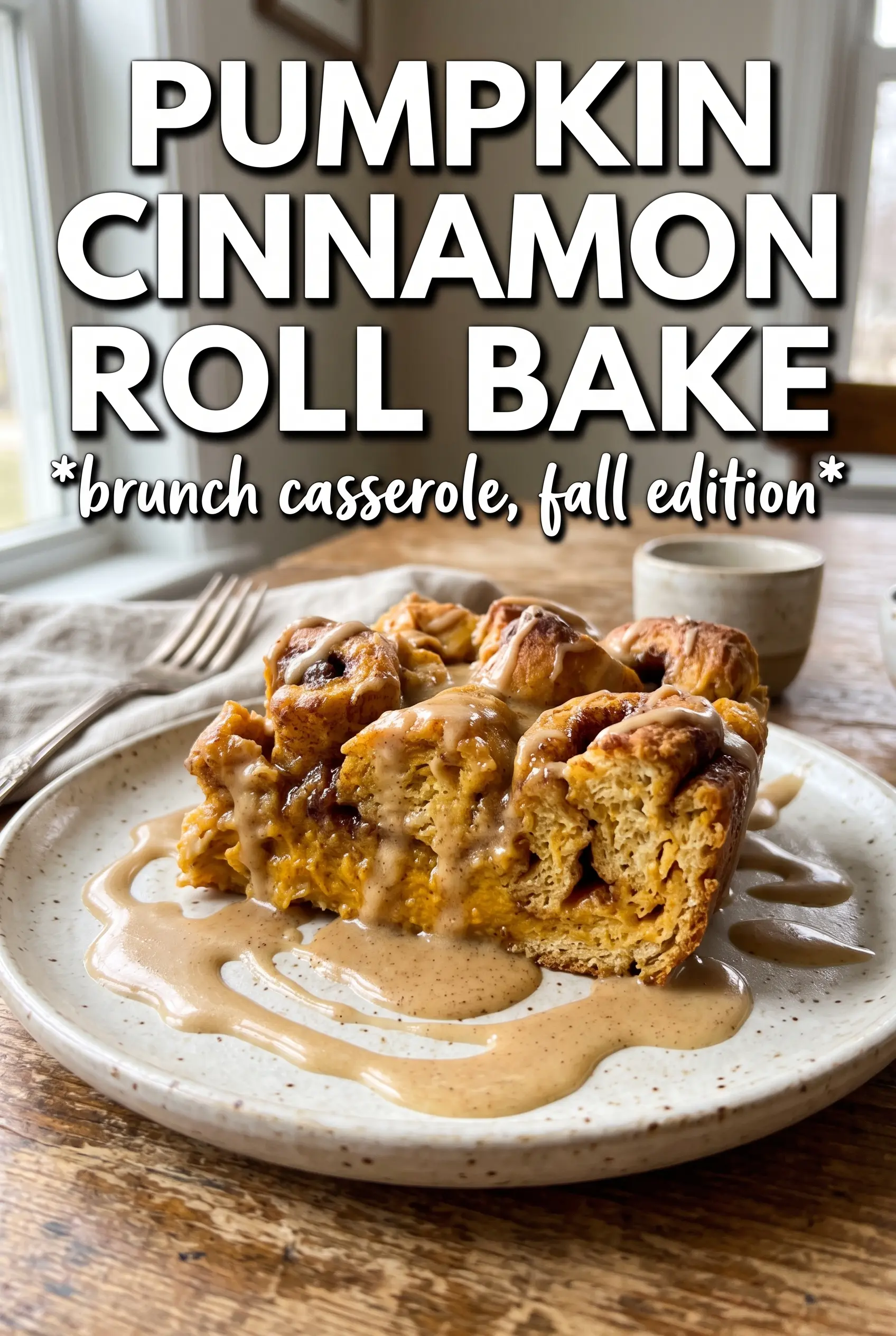
Pumpkin cinnamon roll bake comes out soft in the middle, puffed at the edges, and sticky with warm frosting in all the right places. It has the pull-apart comfort of cinnamon rolls, but the pumpkin custard turns it into something closer to a baked breakfast pudding, with tender bites and a golden top that holds its shape when you scoop it. It’s the kind of pan you set on the table and watch disappear fast.
The trick is cutting the rolls into quarters so every piece gets coated, then letting the pumpkin mixture soak in for a few minutes before baking. That short rest gives the custard time to sink into the dough instead of pooling on the bottom of the dish. The maple-sweetened frosting finishes it with just enough extra warmth to echo the spice without turning it cloying.
Below, I’ve included the few details that matter most here: how to keep the center from turning gummy, what to look for when the bake is done, and the best swaps if you want to change up the spice or make it a little lighter.
The edges baked up golden and the middle stayed soft instead of soggy. I liked that the pumpkin custard soaked into the rolls without making them fall apart, and the maple frosting was the perfect finish.
Love the puffed pumpkin cinnamon roll layers? Save this bake for an easy breakfast that tastes like a bakery panful of fall spices.
The Part That Keeps the Center Soft Instead of Gummy
The biggest mistake with a bake like this is rushing the custard or packing the pan too tightly. The cinnamon roll pieces need space so the egg mixture can move between them and set evenly. If the dish is crowded, the top browns before the center has a chance to cook through, and you end up with dry edges and a wet middle.
That short five-minute soak matters more than it sounds. It gives the pumpkin custard time to seep into the cut edges, which is what makes the finished texture tender instead of just tasting like rolls with eggs poured over them. Bake until the top is puffed and golden and the center no longer looks sloshy when you jiggle the dish gently.
What Each Ingredient Is Doing in the Pan
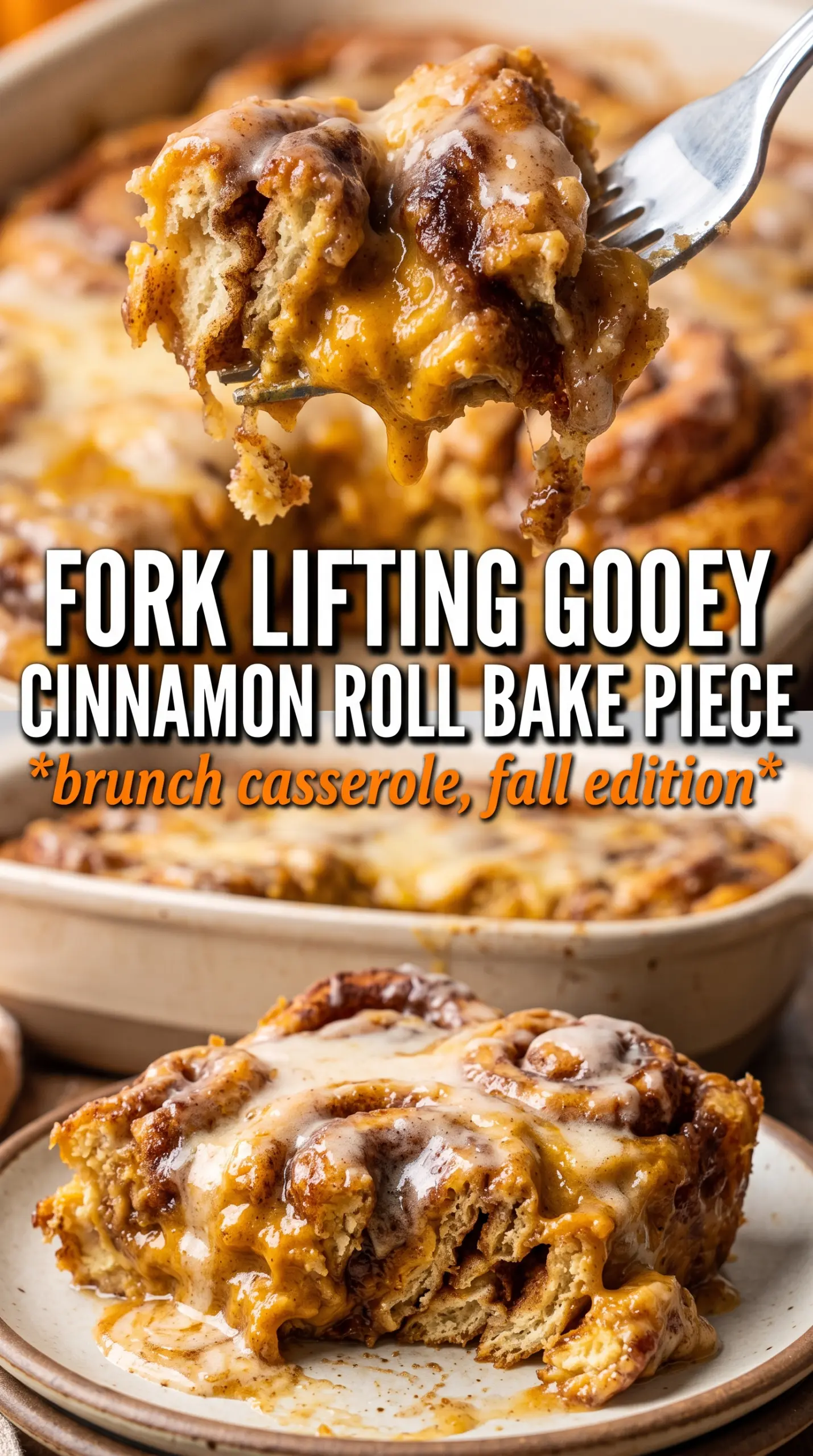
- Refrigerated cinnamon rolls — These do the heavy lifting for texture and sweetness. The dough bakes up soft and pillowy, and the little swirls hold pockets of frosting and pumpkin custard. Use the regular cream cheese-frosted kind, not the jumbo style, so the bake sets more evenly.
- Pumpkin puree — This adds flavor, color, and body to the custard. Use plain pumpkin puree, not pumpkin pie filling, or the bake turns too sweet and the spice balance goes off. If your puree looks watery, spoon it into a bowl and stir it first so the custard stays thick.
- Heavy cream — This makes the custard rich enough to coat the rolls without turning eggy. Half-and-half works in a pinch, but the final bake will be a little less lush. Milk is thinner and can make the middle bake up more like bread pudding than a soft breakfast casserole.
- Brown sugar, pumpkin pie spice, cinnamon, and vanilla — This is the warming base that makes the pumpkin taste like pumpkin and not just orange puree. Brown sugar gives a deeper sweetness than white sugar, while the extra cinnamon keeps the spice flavor from getting lost after baking.
- Frosting packets plus maple syrup — The frosting melts into the warm bake, and the maple syrup loosens it just enough to drizzle cleanly. Stir it while the bake is still warm so it ribbons over the top instead of sitting in clumps.
Building the Bake So It Sets Evenly
Cutting and Arranging the Rolls
Cut each cinnamon roll into quarters and scatter the pieces in a greased 9×13 dish. Don’t press them down hard; you want the pieces loose enough for the custard to fill the gaps. If the pan is overpacked, the center stays dense and the tops bake before the custard underneath finishes setting.
Whisking the Pumpkin Custard
Whisk the eggs, pumpkin puree, cream, brown sugar, spices, vanilla, and salt until the mixture looks smooth and evenly colored. Any streaks of pumpkin or egg mean you haven’t combined it fully, and uneven custard shows up later as patches that bake differently. Pour it over the rolls in all corners of the dish so nothing stays dry on top.
Letting It Soak Before It Bakes
Give the dish five minutes before it goes into the oven. That pause lets the custard sink into the cut edges and start softening the dough, which is what keeps the finished bake tender. If you bake it immediately, the liquid stays on top too long and the bottom pieces can turn heavy instead of fluffy.
Knowing When It’s Done
Bake at 350F until the rolls are puffed and golden, usually 30 to 35 minutes. The center should look set, not wet, and a knife inserted near the middle should come out without raw custard clinging to it. Pull it from the oven as soon as it looks done; overbaking dries out the rolls and makes the top lose that soft, pull-apart texture.
Finishing With the Frosting
Warm the frosting packets with the maple syrup and drizzle it over the bake while it’s still hot. That heat helps the frosting melt just enough to seep into the cracks without disappearing completely. If the bake cools too much first, the frosting sits on top in thick stripes instead of glazing the surface.
Three Ways to Change It Without Losing the Good Part
Dairy-Free Version With a Different Finish
Use a dairy-free cinnamon roll if you can find one, then swap the heavy cream for canned coconut cream or an unsweetened oat-based creamer. The texture stays rich, but the flavor shifts slightly toward coconut or oats depending on what you use. Skip the cream cheese frosting packets unless your brand has a dairy-free version, and finish with a simple maple glaze instead.
Extra-Spiced Pumpkin Bake
Add another 1/2 teaspoon of cinnamon or a pinch of cloves if you want the spice to lean more assertive. That makes the pumpkin taste deeper and a little more bakery-style, but don’t overdo the cloves or they take over fast. This version works well if you’re serving it with coffee and want the spice to read clearly through the frosting.
Smaller, Sweeter Brunch Portions
Bake the mixture in two smaller dishes instead of one 9×13 if you want more browned edges and easier serving. The cook time may drop by a few minutes, so watch for the center to set instead of relying only on the clock. This is the better move when you’re feeding a group and want neat squares instead of spooned portions.
Storage and Reheating
- Refrigerator: Store leftovers covered for up to 3 days. The rolls soften a bit more as they sit, but the flavor stays great.
- Freezer: It freezes, though the texture gets a little softer after thawing. Wrap portions tightly and freeze without the frosting if possible, then add fresh frosting after reheating.
- Reheating: Warm individual portions in the microwave in short bursts or reheat larger amounts in a 300F oven covered with foil. The common mistake is blasting it too long, which makes the eggs rubbery and dries out the rolls before the center heats through.