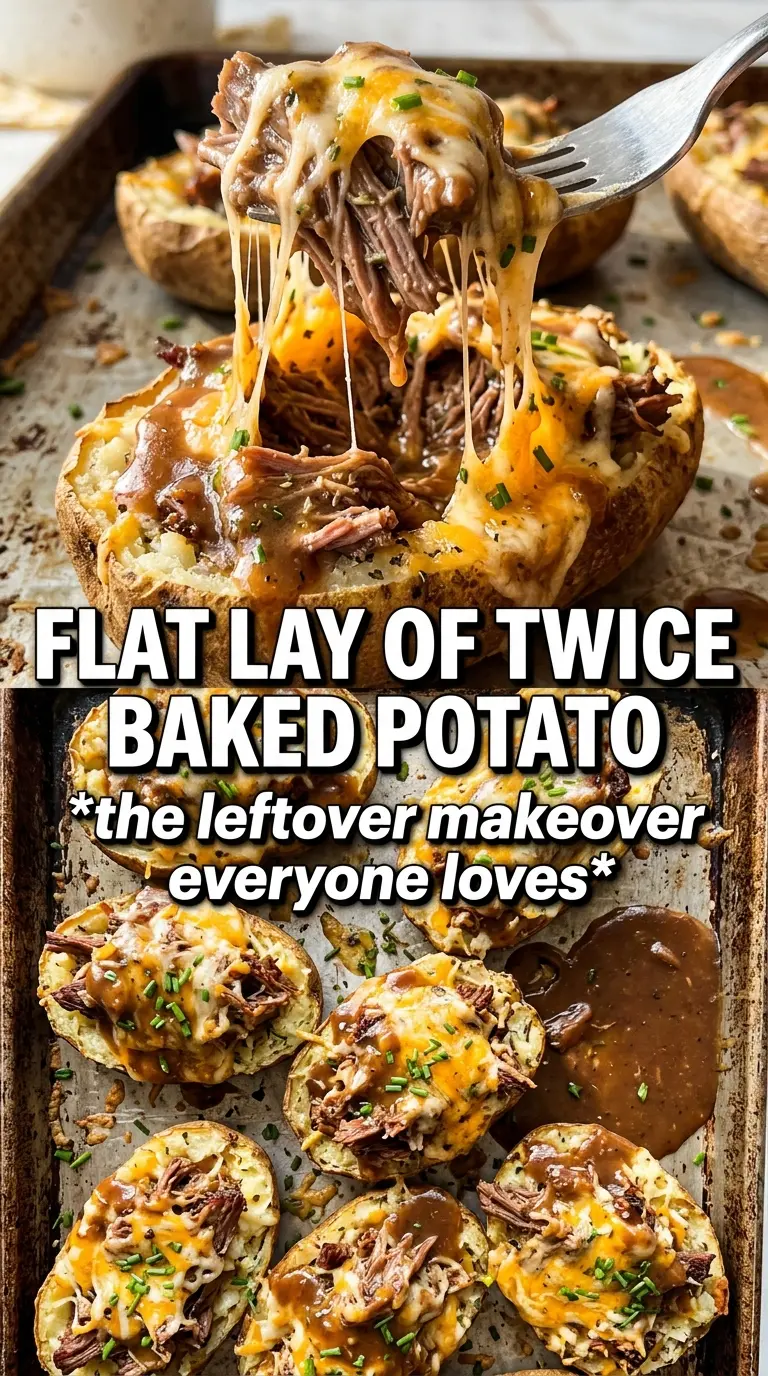
Pot roast twice baked potatoes hit that sweet spot between comfort food and smart leftovers. The potato shells stay crisp at the edges, the filling turns rich and creamy, and the shredded beef brings enough savory depth to make the whole thing feel like a proper dinner instead of a side dish dressed up for the job.
What makes this version work is the balance. The baked potato flesh gets mashed with butter, sour cream, milk, and cheddar until it’s smooth but still sturdy enough to hold the beef. Then the pot roast is warmed in a little gravy first, so it folds into the filling without drying out or turning stringy in the oven. The final broil gives you those browned cheese spots that make every bite better.
Below, I’ve included the small details that matter here: how to keep the shells from collapsing, how wet the filling should be before it goes back in the oven, and what to do if your roast is a little leaner than mine.
The potatoes held their shape and the filling stayed creamy instead of getting watery. I loved that the gravy went into the beef first — it kept every bite moist and the cheese on top browned beautifully.
Save these pot roast twice baked potatoes for the night when you want leftover beef turned into a crisp, cheesy main dish.
The Part That Keeps the Filling Creamy Instead of Heavy
The mistake most twice baked potatoes make is going dense before they go back in the oven. Once the potato flesh is scooped out, it needs to be mashed while it’s still warm and mixed just until smooth. If you beat it hard or overwork it, the starch turns gluey and the filling loses that soft, fluffy texture that makes this dish worth making.
The other key move is to warm the pot roast in gravy before folding it in. Cold beef steals heat from the filling, and dry beef never quite softens enough in the oven. When the meat is already hot and lightly coated, it settles into the potatoes without breaking the texture of the mash.
- Russet potatoes — These are the right choice because the skins hold up and the centers mash light and fluffy. Waxy potatoes stay too firm and won’t give you the same baked potato texture.
- Leftover pot roast — This recipe works best with beef that’s already tender enough to shred. If your roast is a little dry, add extra gravy or a splash of broth before folding it in.
- Gravy — This is what keeps the filling moist and carries the beef flavor through the whole potato. Beef broth works in a pinch, but the finished dish will taste a little less rich.
- Sharp cheddar — Use a good sharp cheddar here. It cuts through the richness of the potatoes and beef, and it melts cleanly without disappearing into the filling.
- Sour cream — This adds tang and keeps the mash from tasting flat. Plain Greek yogurt can stand in if that’s what you have, but it will be a little brighter and less lush.
What Each Ingredient Is Actually Doing in This Recipe
- Primary ingredient (the star) — Quality matters most. Choose the best you can find.
- Cooking medium (oil, butter, or broth) — This carries flavors and prevents dryness.
- Seasonings (salt, pepper, spices, herbs) — Layer flavors so nothing overpowers. Build depth gradually.
- Aromatics (garlic, onion, herbs) — Cook with fat to bloom flavors. Become the foundation.
- Supporting ingredients — Complement the main ingredient without overpowering it.
- Sauce or liquid (if applicable) — Brings flavors together. Balance richness with acid.
- Acid (lemon, vinegar, wine, or other) — Brightens and prevents flat-tasting results.
- Final finish (garnish, glaze, or sauce) — Prevents one-dimensional taste and adds visual appeal.
Building the Stuffed Potatoes So They Hold Together
Keeping the Shells Thick Enough
After halving the baked potatoes, scoop out the centers and leave about a 1/4-inch shell. That thin border is what keeps the potatoes from collapsing under the filling, but if you scrape too aggressively, the skins tear and the bottoms split once they get hot again. A sturdy shell should still feel flexible, not stiff and brittle.
Mashing the Filling Before the Beef Goes In
Mash the potato flesh with butter, sour cream, milk, and most of the cheddar until it’s smooth and spreadable. The filling should be soft enough to spoon easily, but not loose enough to slump off the potato halves. If it looks dry, add a little more milk; if it looks soupy, the potatoes were probably too wet from the start and need a few more minutes in the oven before scooping.
Heating, Filling, and Broiling for the Finish
Warm the shredded pot roast in the gravy first, then fold it gently into the potato mixture. Spoon the filling into the shells, pile on the remaining cheddar, and bake until everything is hot all the way through and the cheese is bubbling at the edges. Broil only at the very end, for about 2 minutes, and watch it closely; the line between golden and burned is short.
How to Adapt These Pot Roast Twice Baked Potatoes
Make It with Braised Beef Instead of Pot Roast
If you don’t have leftover pot roast, any braised beef that shreds easily will work. Use the same amount and keep the gravy or braising liquid in the mix so the filling stays moist and savory. Leaner beef needs a little extra butter or sour cream to keep the potatoes from feeling dry.
Gluten-Free by Default, with One Check
The potatoes themselves are naturally gluten-free, but the gravy needs a quick label check if you’re using leftovers. If your roast gravy was thickened with wheat flour, swap in a gluten-free beef broth or a certified gluten-free gravy so the whole dish stays safe.
Cheddar and Green Onion Only for a Simpler Finish
If you want the beef to stay front and center, cut the amount of cheese in the filling and use only a light layer on top. You’ll get a cleaner potato flavor and a sharper hit from the green onions, with less richness in every bite.
Dairy-Light Version
You can replace the sour cream with plain Greek yogurt and use a bit less butter if needed. The filling will taste a touch tangier and a little less rich, but it still bakes up creamy as long as you don’t overmix it.
Storage and Reheating
- Refrigerator: Store leftovers for up to 4 days. The skins soften a little as they sit, but the flavor holds up well.
- Freezer: Freeze the stuffed, unbaked potatoes for up to 2 months. Wrap them tightly, then thaw in the fridge before baking so the centers heat evenly.
- Reheating: Reheat in a 350F oven until hot through, about 15-20 minutes. Microwaving works for speed, but it softens the skins and can make the filling separate a bit.
Answers to the Questions Worth Asking

Pot Roast Twice Baked Potatoes
Ingredients
Equipment
Method
- Preheat the oven to 400F. Bake-ready potatoes should be halved lengthwise and the flesh scooped out, leaving about a 1/4-inch shell for structure.
- Mash the potato flesh with butter, sour cream, milk, 1 cup cheddar, salt, and pepper until smooth. Mix until no lumps remain so the filling stays creamy after reheating.
- Warm the pot roast in the gravy, then fold it into the mashed potato mixture. Stir until evenly coated and hot throughout.
- Fill the potato shells with the pot roast mixture and top each with the remaining cheddar. Arrange on a sheet pan for even heating.
- Bake for 15-18 minutes at 400F until heated through and the cheese is bubbly. Look for edges warming and a melted, lightly set top.
- Broil for 2 minutes until golden, watching closely to prevent burning. The top should turn golden and blistered.
- Top with green onions and extra gravy right after broiling. Serve while hot so the cheddar stays melty.