Pork tenderloin medallions tucked into a creamy mushroom sauce with pasta is the kind of dinner that tastes like it took more effort than it did. The pork stays tender if you sear it fast and let it finish gently in the sauce, and the mushrooms give the whole dish a deep, savory base that keeps the cream from tasting flat. Tossed with wide pasta ribbons, every bite lands with a little richness, a little bite, and just enough parmesan to pull it all together.
The key is building the sauce in the same pan you used for the pork. Those browned bits on the bottom are where the flavor lives, and a splash of white wine loosens them into the cream instead of letting them burn onto the pan. I also like cremini mushrooms here because they hold their shape and give you more mushroom flavor than the softer white ones.
Below, I’ve added the timing cues that matter most, the ingredient swaps that work without wrecking the texture, and a few fixes for the problems people run into with cream sauces. If you’ve ever ended up with dry pork or a thin sauce, this version will make sense fast.
The sauce thickened up beautifully and the pork stayed tender even after simmering in it. I served it with pappardelle, and my husband asked if this could go into our regular dinner rotation.
Save this pork tenderloin mushroom pasta for the night you want a creamy pasta dinner that feels a little special without extra work.
The Trick to Keeping Pork Tenderloin Tender in a Cream Sauce
Pork tenderloin gets tough when it’s treated like a braise. It’s lean, cooks fast, and doesn’t need a long simmer to be edible. The fix is simple: sear it hard, pull it out while it’s still a little underdone in the center, and let the final 3 minutes in the sauce finish the job. That short return to the pan warms the pork through without squeezing the juices out.
The second mistake is boiling the cream after the parmesan goes in. Hard heat can make the sauce split or turn grainy, especially with a salty cheese like parmesan. Keep the sauce at a gentle simmer, then add the cheese off the hottest part of the burner and stir until it melts smoothly.
What Each Ingredient Is Actually Doing in This Pasta
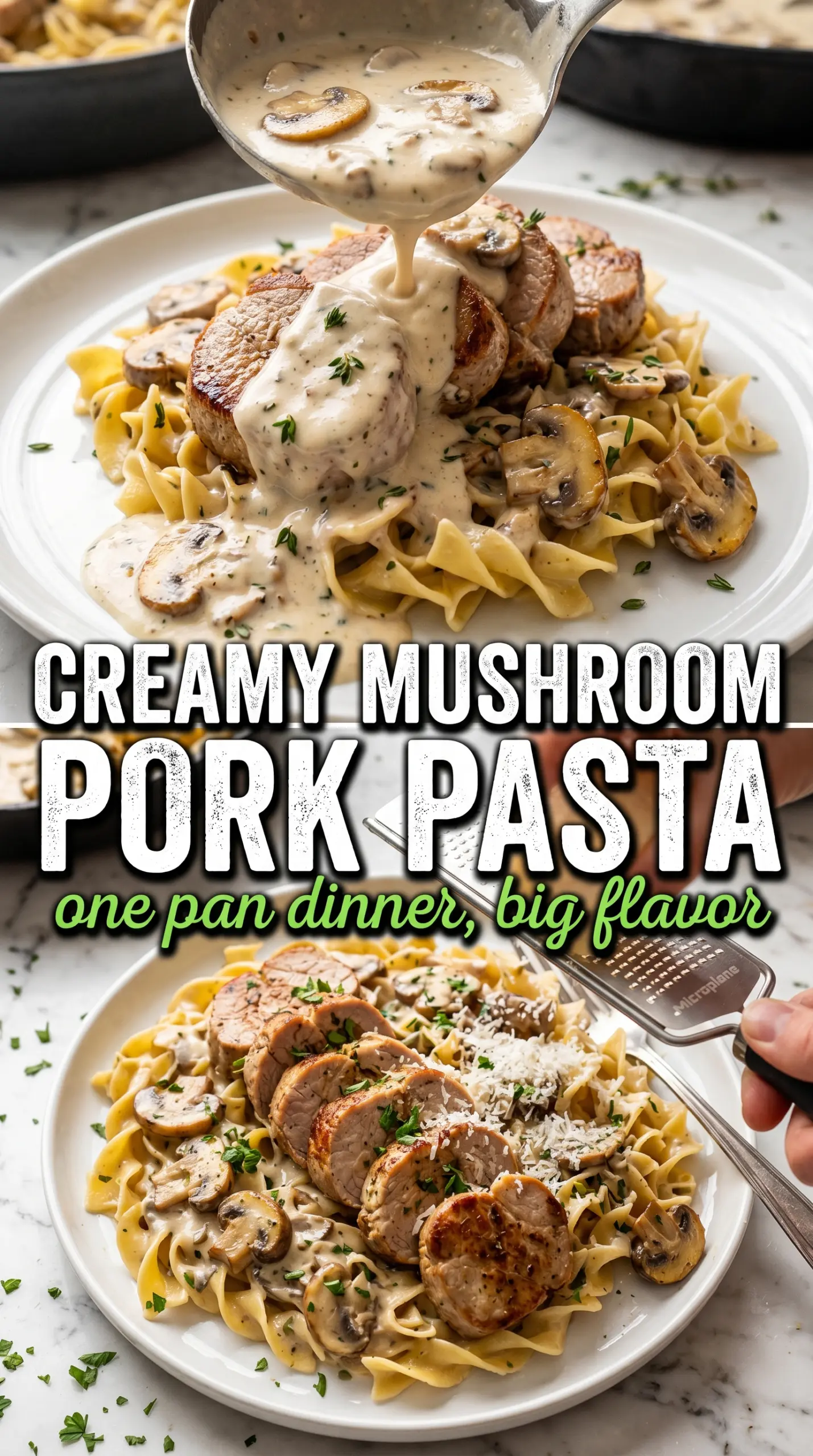
- Pork tenderloin — This is the lean cut that gives you tender medallions in a short cook time. Pork loin will work in a pinch, but it needs a little longer and won’t stay quite as silky. Slice it into even 1-inch pieces so the whole batch finishes at the same time.
- Cremini mushrooms — These bring the deepest mushroom flavor in a supermarket-friendly package. White mushrooms work, but the sauce tastes lighter and less savory. Let them brown before you add the garlic so they release moisture and then caramelize instead of steaming.
- Dry white wine — This lifts the browned bits from the pan and gives the sauce a clean edge that keeps it from feeling heavy. If you don’t cook with wine, use extra chicken broth plus a teaspoon of lemon juice at the end. The acidity matters here because cream and parmesan need something sharp to balance them.
- Heavy cream — This is what gives the sauce body without a flour roux. Half-and-half can be used, but the sauce will be thinner and a little more fragile. Let it simmer long enough to reduce before adding the cheese, or it’ll stay loose.
- Parmesan — Grate it fresh if you can. Pre-grated parmesan often contains anti-caking agents that can make the sauce less smooth. Stir it in once the sauce has reduced a bit, not before, so it melts instead of clumping.
- Pappardelle or fettuccine — Wide pasta holds onto the cream sauce better than short shapes. If you use a thinner noodle, the sauce will slide off more easily. Cook it just to al dente so it can finish in the pan without turning soft.
Building the Sauce in the Same Pan That Seared the Pork
Searing the Medallions Fast
Heat the oil until it shimmers, then lay the pork in without crowding the pan. You want a deep golden crust in about 2 minutes per side; if the pieces sit too close together, they’ll steam and pale instead of browning. Pull them out as soon as they color because they finish later in the sauce, and overcooked tenderloin turns dry fast.
Letting the Mushrooms Brown, Not Sweat
Add the butter, then the mushrooms, and give them space to release their moisture. At first they’ll look wet and crowded, then the pan will dry out and the edges will start to take on color. That’s the point where the flavor shows up. Add the garlic and thyme only after that step, because garlic burns quickly and goes bitter if it sits in a wet pan for too long.
Reducing the Wine and Cream
Pour in the wine and scrape up every browned bit from the bottom of the pan. Let it bubble until the sharp alcohol smell fades and the liquid drops by about half. Then add the cream and broth and keep the heat at a gentle simmer, not a hard boil. If the sauce looks thin at first, that’s normal; it needs a few minutes to reduce before the parmesan goes in.
Finishing the Pasta and Pork Together
Stir in the parmesan once the sauce coats the back of a spoon, then slide the pork back in. Let it simmer just long enough to warm through. Toss in the cooked pasta and use tongs to coat every ribbon, adding a splash of pasta water only if the sauce tightens too much. The final dish should look glossy and clingy, not soupy.
How to Make This Pasta Fit Your Table
Gluten-Free Version
Use your favorite gluten-free pasta and cook it a minute under al dente so it doesn’t fall apart when tossed with the sauce. The sauce itself is already naturally gluten-free as written, so the main job is choosing a pasta that can hold up to the cream and mushrooms.
Dairy-Light Option
You can swap the heavy cream for half-and-half, but the sauce won’t be as thick or as stable. Skip any extra broth and let it reduce a little longer so it still clings to the pasta. The result is lighter, but it won’t have the same luxurious finish.
Make It Without Wine
Use an equal amount of chicken broth and add a small squeeze of lemon at the end. You lose the dry, savory edge that wine brings, so the lemon steps in to keep the sauce from tasting heavy. Add it sparingly and taste as you go.
Storage and Reheating
- Refrigerator: Store leftovers for up to 3 days. The sauce will thicken as it chills, and the pasta will absorb some of the cream.
- Freezer: I don’t recommend freezing this one. Cream sauces can separate after thawing, and the pasta turns soft.
- Reheating: Warm it slowly in a skillet over low heat with a splash of broth or cream. Don’t blast it in the microwave at full power or the sauce can split and the pork can turn rubbery.
Answers to the Questions Worth Asking
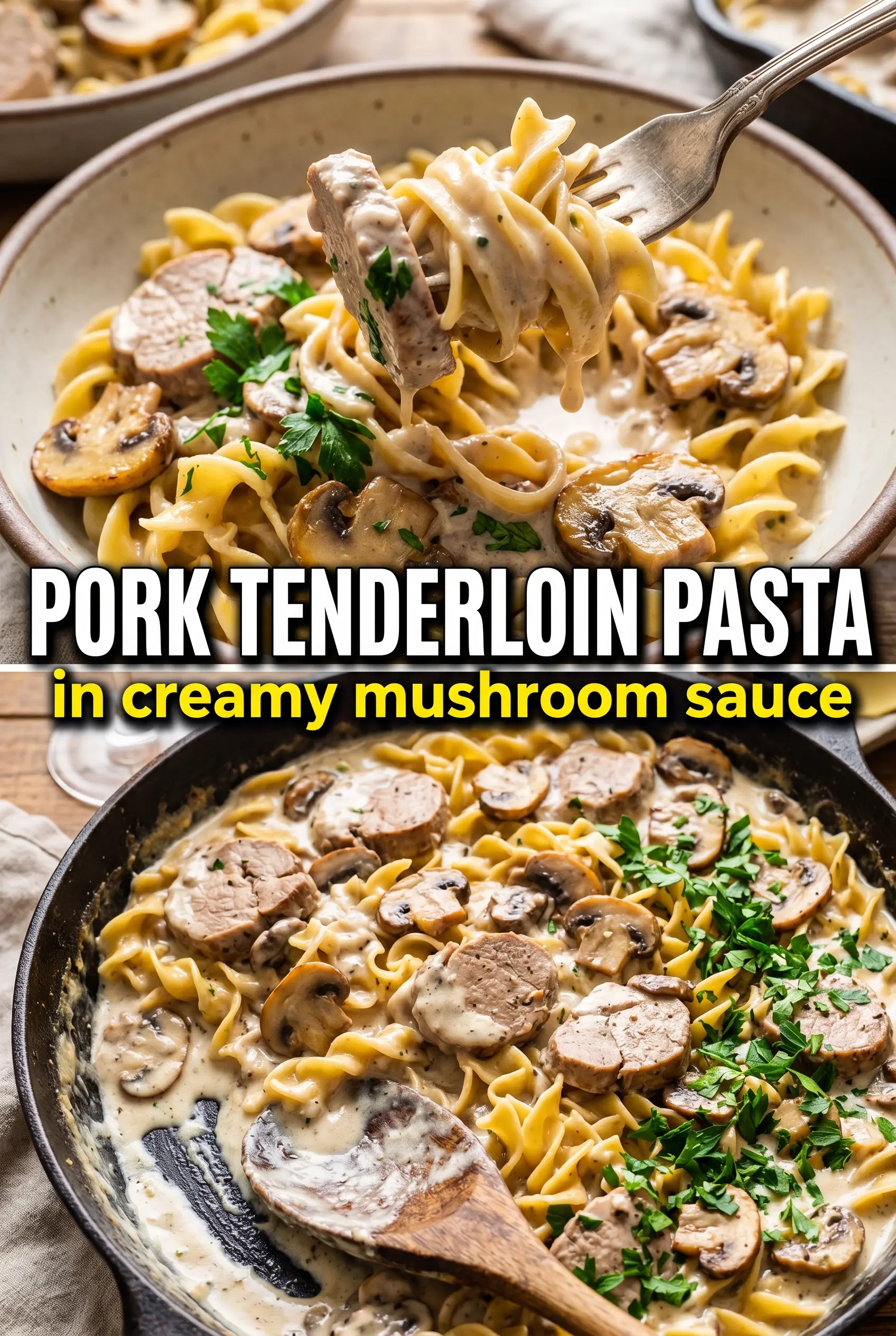
Pork Tenderloin in Creamy Mushroom Sauce with Pasta
Ingredients
Equipment
Method
- Season the pork medallions with salt and pepper and sear in olive oil over high heat 2 minutes per side until golden, then set aside.
- Melt the butter in the same pan, then cook the mushrooms until golden, about 8 minutes.
- Add the garlic and fresh thyme and cook for 30 seconds, stirring until fragrant.
- Pour in the wine and simmer for 2 minutes to deglaze the pan, scraping up browned bits.
- Pour in the heavy cream and chicken broth, then simmer for 5–6 minutes until the sauce thickens.
- Stir in the parmesan until smooth and fully melted.
- Return the pork medallions to the sauce and gently simmer for 3 minutes until heated through.
- Toss the sauce with the cooked pappardelle or fettuccine, then serve immediately with fresh parsley garnish.