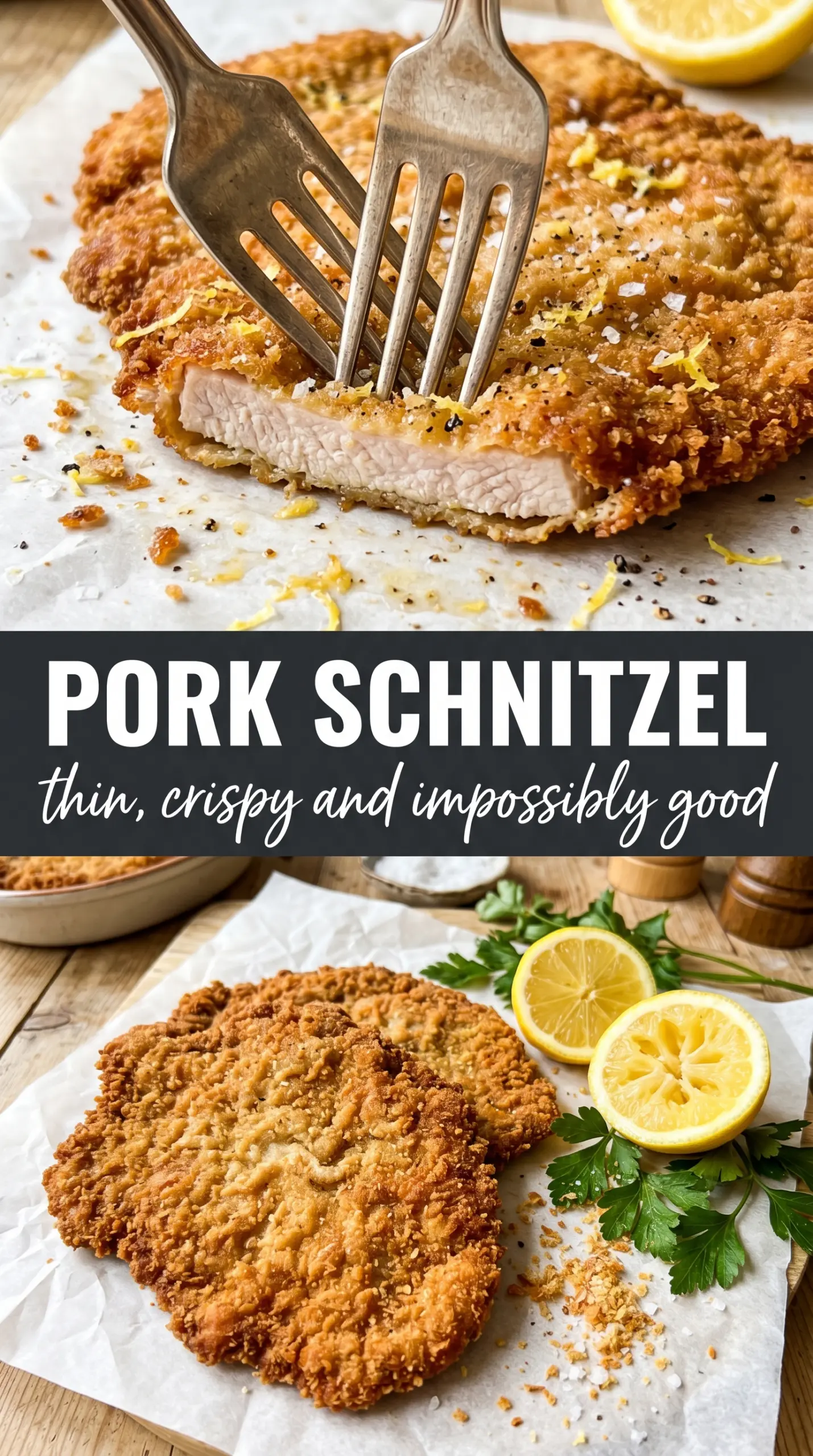
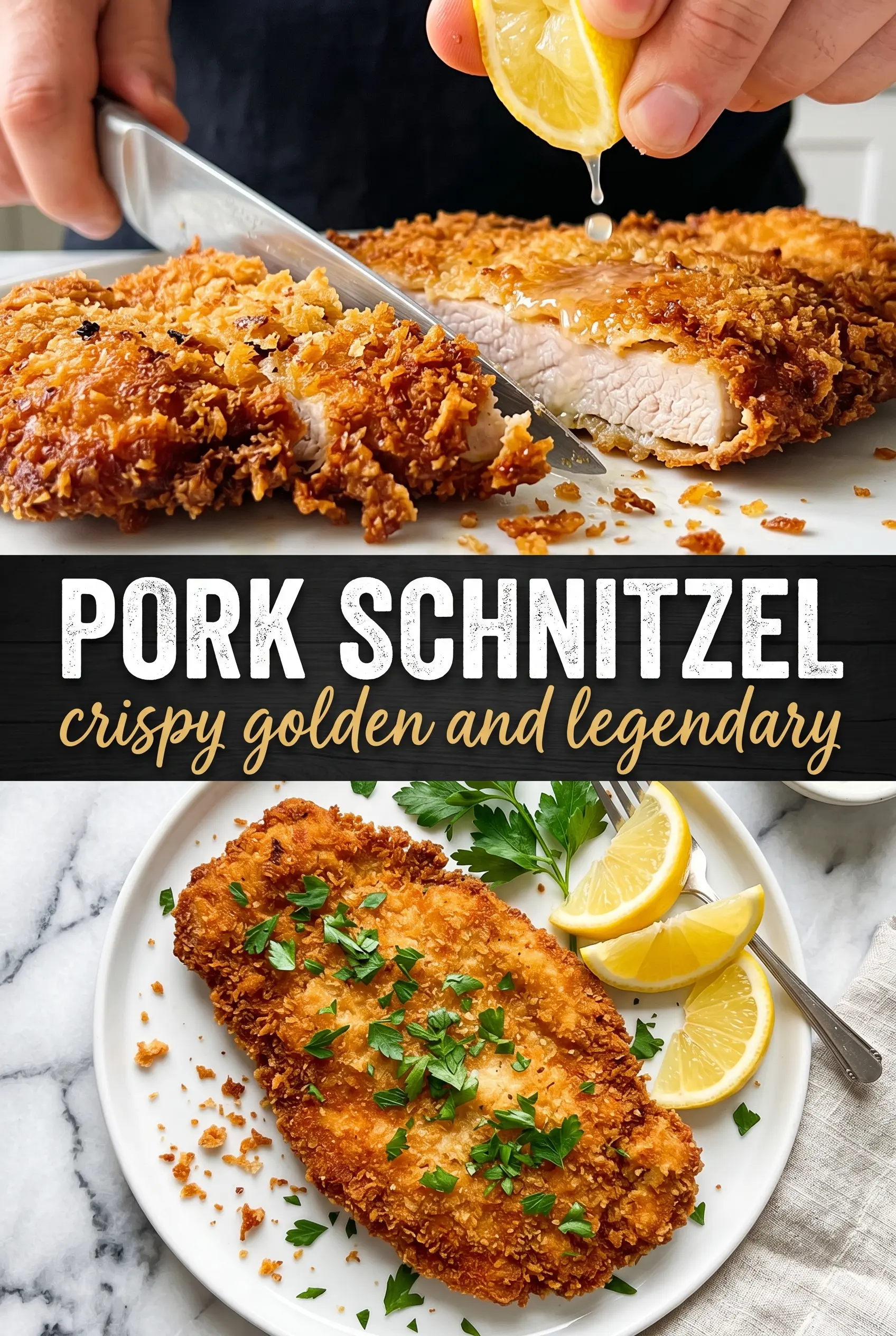
Thin pork cutlets turn into something special when they hit hot oil and come back out with a crust that crackles at the touch of a fork. Pork schnitzel should be light, crisp, and evenly browned, with the meat staying juicy because it was pounded thin enough to cook fast. The breading belongs on the pork, not flaking off in the pan, and that comes down to the order of the coating and the heat of the oil.
The trick is a dry flour layer, then egg, then breadcrumbs pressed on firmly so the crust has something to hold onto. Shallow frying in enough oil to come about a quarter inch up the pan gives you that even, golden surface without steaming the cutlets. A squeeze of lemon at the end sharpens everything and keeps the dish from tasting heavy.
Below, I’ve included the part that matters most when you’re making schnitzel at home: how to keep the coating crisp, how to avoid a soggy crust, and what to change if you need to use a different breadcrumb or cut of pork.
The crust stayed on beautifully and came out shatteringly crisp. I used the lemon at the end like you suggested, and it cut the richness perfectly.
Save this crispy pork schnitzel for the night you want a golden cutlet with a shattering crumb and a bright lemon finish.
The Part Most People Miss When Frying Schnitzel
The crust on schnitzel fails for two reasons: it doesn’t get a strong bond to the pork, or the pan isn’t hot enough to set that crust before the meat starts steaming. Pounding the cutlets to a thin, even thickness matters more than people think, because a thicker edge cooks at a different pace than the center and leaves you with uneven meat under a dark shell. The flour layer dries the surface, the egg gives the crumbs something to grab, and the firm press into the breadcrumbs locks that coating in place.
Oil temperature matters just as much. If the oil is too cool, the breading drinks it in and turns heavy. If it’s too hot, the crust browns before the pork cooks through. You want a steady shimmer and immediate bubbling around the edges as soon as the cutlet goes in.
What the Breadcrumbs and Egg Are Doing Here
- Pork loin chops — Boneless loin chops are lean and tender enough for quick frying once pounded thin. If you use a thicker cut, pound it evenly to 1/4 inch so the meat cooks through before the crust gets too dark.
- Fine breadcrumbs — Fine crumbs give you the most even, tight crust. Panko works if you want a lighter, loftier crunch, but it won’t cling quite as smoothly, so press it on well after the egg dip.
- Egg and milk — This is the glue. The milk loosens the egg just enough for an even coating without making it runny. If the mixture is too thin, the crumbs slide right off in the pan.
- Flour — Don’t skip it. Flour dries the surface of the pork so the egg can stick instead of slipping around on wet meat.
- Garlic powder — This seasons the crust without adding anything that can burn quickly in the hot oil. It gives a little depth, but the schnitzel still tastes clean and classic.
- Lemon wedges — They’re not garnish in the decorative sense. The acid wakes up the fried crust and keeps each bite from feeling flat.
Frying the Cutlet So the Crust Stays Crisp
Setting Up the Breading Line
Arrange the flour, egg mixture, and seasoned breadcrumbs in three shallow dishes before you start coating. The workflow matters because breading goes fastest when one hand stays dry and the other handles the wet side. Press the crumbs onto the pork instead of sprinkling them over the top; that pressure helps the crust stay put through the fry.
Heating the Oil to the Right Stage
Pour in enough oil to come about 1/4 inch up the skillet and heat it over medium-high until it shimmers. Test with a breadcrumb: it should sizzle right away, not sink and soak or explode violently. If the oil is smoky, it’s too hot and the crust will darken before the pork is done.
Frying Without Crowding the Pan
Lay the schnitzels in carefully and leave space between them. Crowding traps steam, and steam is the enemy of a crisp crust. Fry for 2 to 3 minutes per side until deep golden brown, then move them to paper towels just long enough to drain the excess oil. Serve right away, because schnitzel loses its brittle edge as it sits.
How to Change This Recipe Without Losing the Crunch
Use panko for a lighter crust
Panko gives the schnitzel a bigger, airier crunch. It’s a little less traditional and a bit more delicate, so press it on firmly and handle the cutlets gently when they go into the pan.
Make it gluten-free with GF crumbs and flour
A 1:1 gluten-free flour blend and gluten-free breadcrumbs work well here. The texture stays crisp, though usually a little more fragile, so let the coating set for a minute before flipping.
Swap the pork for chicken cutlets
Thin chicken breast cutlets can stand in for pork with the same breading method. They’ll cook a touch faster, so start checking a minute earlier and pull them as soon as the crust is deep golden and the centers are no longer pink.
Dairy-free version
Use water instead of milk in the egg wash. The coating still works, and the difference is small enough that the finished schnitzel stays crisp and light.
Storage and Reheating
- Refrigerator: Store leftovers in an airtight container for up to 3 days. The crust softens, but the flavor holds up well.
- Freezer: Freeze cooked schnitzel in a single layer, then wrap tightly once solid. It freezes fine, though the crust won’t stay quite as crisp as fresh.
- Reheating: Reheat on a wire rack in a 375°F oven until hot and re-crisped, about 10 to 12 minutes. Don’t microwave it if you want to keep any crunch at all.
Questions I Get Asked About This Recipe
Pork Schnitzel
Ingredients
Equipment
Method
- Season the pounded pork cutlets generously with salt and pepper. Keep the cutlets flat and ready for coating.
- Set up three shallow dishes for dredging: flour, beaten egg mixed with milk, and breadcrumbs mixed with garlic powder and salt. Arrange them in assembly-line order.
- Dredge each cutlet in flour, shaking off the excess. Make sure the surface is evenly dusted.
- Dip the floured cutlet into the egg mixture. Let the excess drip back into the dish.
- Coat the cutlet in the breadcrumbs, pressing firmly for even coverage. Ensure the crust is thick and uniform all over.
- Heat 1/4 inch of oil in a large skillet over medium-high heat until shimmering. The oil should look lively but not smoking.
- Fry the schnitzels 2–3 minutes per side until deep golden brown, working in batches and not crowding the pan. Flip once when the underside is crisp and browned.
- Drain briefly on paper towels and serve immediately with lemon wedges and fresh parsley. Serve hot so the crust stays shatteringly crispy.