Creamy vanilla custard and crunchy praline pecans make this ice cream feel old-fashioned in the best way. The base stays rich and smooth, while the candy-coated nuts bring a deep caramel snap that keeps every bite from tasting flat. It’s the kind of dessert that disappears fast because the contrast is just that good.
What makes this version work is the praline stage. Those pecans aren’t just stirred in with sugar at the end; they’re cooked into a proper candy coating first, then broken into shards that hold their crunch in the freezer. The custard also gets cooked gently to the right temperature, which gives you a thick, silky base without any eggy taste or curdled bits.
Below you’ll find the exact cue for when the custard is ready, how to keep the praline from turning into a sticky clump, and the best way to fold the candy pieces in so they stay distinct instead of melting into the ice cream.
The praline stayed crunchy even after a day in the freezer, and the custard turned out smooth and rich without tasting too sweet. I loved that the pecans kept their little candy shells instead of disappearing into the base.
Like the contrast of creamy custard and crunchy praline pecans? Save this Pecan Praline and Cream Ice Cream for the next time you want a homemade frozen dessert with real texture.
The Praline Has to Hard-Crack Before It Ever Hits the Custard
The mistake people make with praline ice cream is stopping the candy stage too early. If the sugar mixture only turns glossy and thick, the pecans stay soft and sticky instead of crisping into shards that break cleanly through the ice cream. You want a true soft-ball stage in the praline mixture, then a quick stir with the nuts and a fast spread onto parchment so it hardens in separate pieces.
That matters because the freezer dulls texture. A barely set praline will melt into the base and leave you with a sweet, chewy ribbon instead of distinct crunch. Once it cools, break it into pieces small enough to distribute evenly, but not so fine that they disappear completely.
- Pecans — Pecan halves hold up better than chopped pieces here. They give you bigger candy shards and more defined crunch after freezing.
- Brown sugar — Brown sugar gives the praline its caramel note and also deepens the custard. White sugar will work in a pinch, but you’ll lose some of that butterscotch depth.
- Heavy cream — Cream is what keeps both the praline and the base rich. Don’t swap in half-and-half for the praline if you want it to set up properly.
- Egg yolks — The yolks are what turn this from sweet cream into a real custard. They thicken the base and give it that dense, scoopable body.
What Each Part of the Custard Is Doing

Heavy cream and whole milk work together for balance. All cream makes the ice cream heavy and almost greasy; all milk makes it icy. This ratio gives you a rich scoop that still tastes clean on the tongue.
Brown sugar carries the praline theme into the custard so the whole dessert tastes connected instead of like vanilla ice cream with mix-ins. If you’re out of brown sugar, you can use white sugar in the base, but the flavor will be lighter and less rounded.
Vanilla and salt are small additions that matter more than they look like they should. Vanilla lifts the caramel notes, and the salt keeps the candy from tasting flat. Don’t skip it just because the praline already has salt in it.
Cooking the Custard Without Scrambling the Yolks
Making the Praline First
Start with the praline pecans so they have time to cool completely before churning. Cook the brown sugar, cream, and butter until the mixture reaches 235°F and looks thick and bubbling, then stir in the pecans, vanilla, and salt right away. Spread the nuts onto parchment in an even layer; if you leave them in one hot mound, they keep cooking and become sticky instead of crisp.
Tempering the Egg Yolks
Warm the cream, milk, and brown sugar until the sugar dissolves and the mixture steams, not boils. Whisk a little of that hot liquid into the yolks first, then slowly add the rest while whisking constantly. This step keeps the yolks from curdling, and if you rush it, you’ll end up with tiny sweet bits of scrambled egg in the custard.
Cooking to the Right Thickness
Return the custard to the pan and cook it gently until it reaches 175°F. It should coat the back of a spoon and leave a clean line when you swipe a finger through it. Pull it off the heat as soon as it hits that point; going much farther can make the base grainy or overly thick once it chills.
Chilling, Churning, and Folding in the Crunch
Strain the custard, stir in the vanilla and salt, then chill it until it is completely cold. A warm base won’t churn properly and can stay soft and loose even after freezing. Add the praline pieces during the last few minutes of churning so they stay suspended instead of sinking to the bottom, then freeze the ice cream until firm enough to scoop.
How to Change the Texture, Sweetness, or Diet Without Losing the Point
Dairy-Free Version
Use full-fat canned coconut milk in place of the cream and milk, then keep the custard technique the same. The ice cream will freeze a little firmer and taste more coconut-forward, but the praline still gives it the same candy crunch. Use a dairy-free butter substitute for the pecans if needed.
Extra-Crunchy Praline
Spread the cooled praline into thinner shards instead of one thick sheet. That gives you smaller, sharper pieces that stay crunchy longer in the freezer. It’s the best move if you like a higher ratio of candy to cream in each scoop.
Nut Swap
Walnuts can stand in for pecans if that’s what you have, though the flavor will be a little more bitter and less buttery. The candy method stays the same, but walnuts break more easily, so stir them in gently and don’t over-handle the cooled pieces.
Storage and Reheating
- Refrigerator: The custard base can be chilled up to 2 days before churning; once churned, the ice cream belongs in the freezer, not the fridge.
- Freezer: Store in a tightly sealed container for up to 2 weeks. The praline stays best in the first week, before it starts softening slightly from freezer moisture.
- Reheating: No reheating is needed. For the cleanest scoops, let the container sit at room temperature for 5 to 10 minutes before serving; trying to force a scoop straight from the freezer can crack the praline into dust.
Answers to the Questions Worth Asking
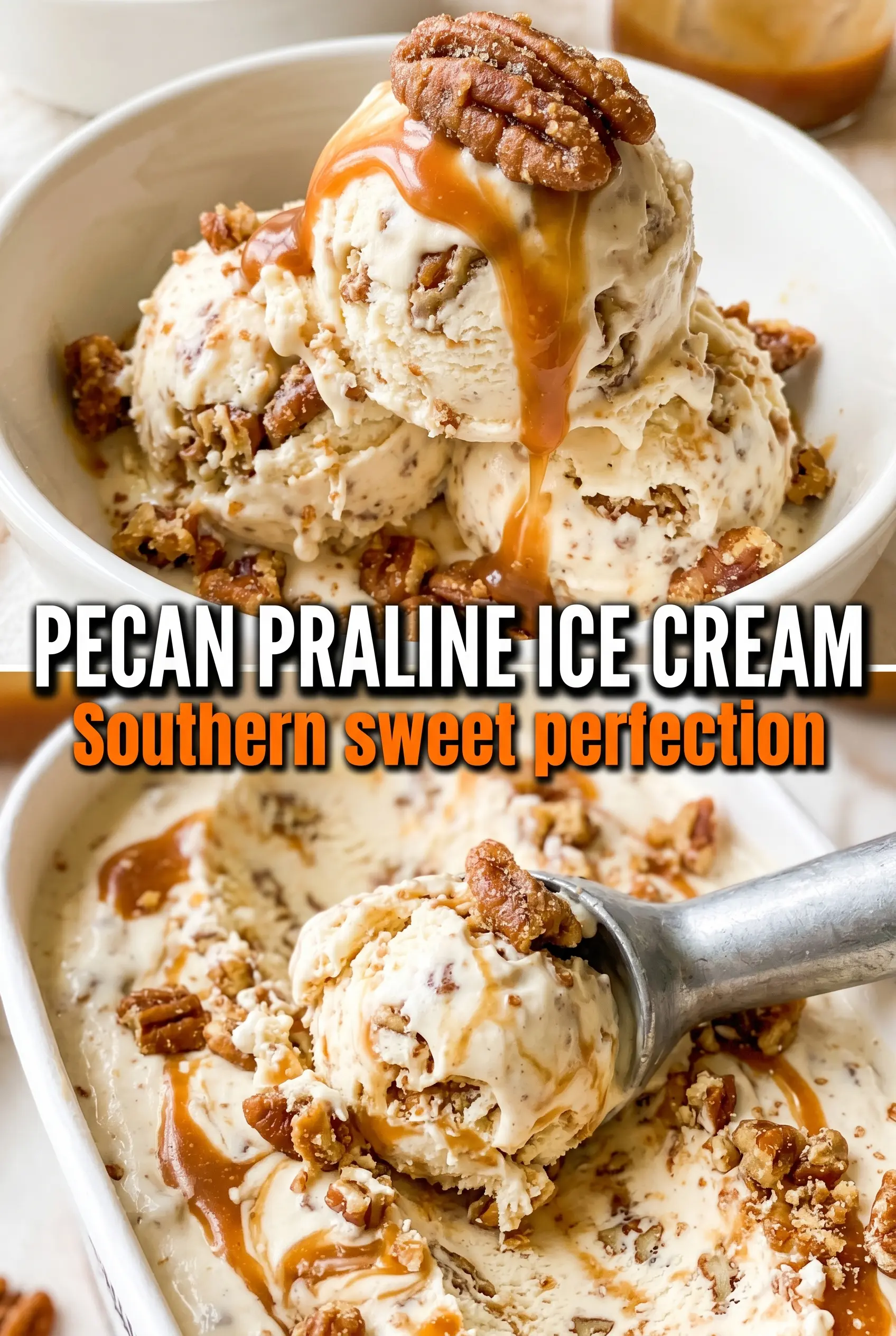
Pecan Praline and Cream Ice Cream
Ingredients
Equipment
Method
- Combine brown sugar, heavy cream, and butter in a saucepan over medium heat and cook until it reaches 235F (soft ball stage), stirring constantly.
- Stir in pecan halves, then cook 1 minute more until glossy; mix in vanilla extract and salt, and immediately spread the candy on parchment.
- Let praline pecans cool until hardened, then break into chunks for folding later.
- Heat heavy cream, whole milk, and brown sugar in a saucepan until the sugar dissolves and the mixture looks smooth.
- Slowly whisk the hot cream mixture into egg yolks until combined and glossy.
- Cook the custard to 175F, stirring, until it thickens enough to coat the back of a spoon.
- Strain the custard, then whisk in vanilla extract and salt, scraping for even seasoning.
- Cool completely, then refrigerate 4 hours until very cold.
- Churn the chilled custard in an ice cream maker until it reaches a thick, soft-serve texture.
- Fold in praline pecan chunks during the last 5 minutes of churning so they stay evenly distributed with a crunchy bite.
- Transfer to a container and freeze until firm, until the surface is set and scoopable.