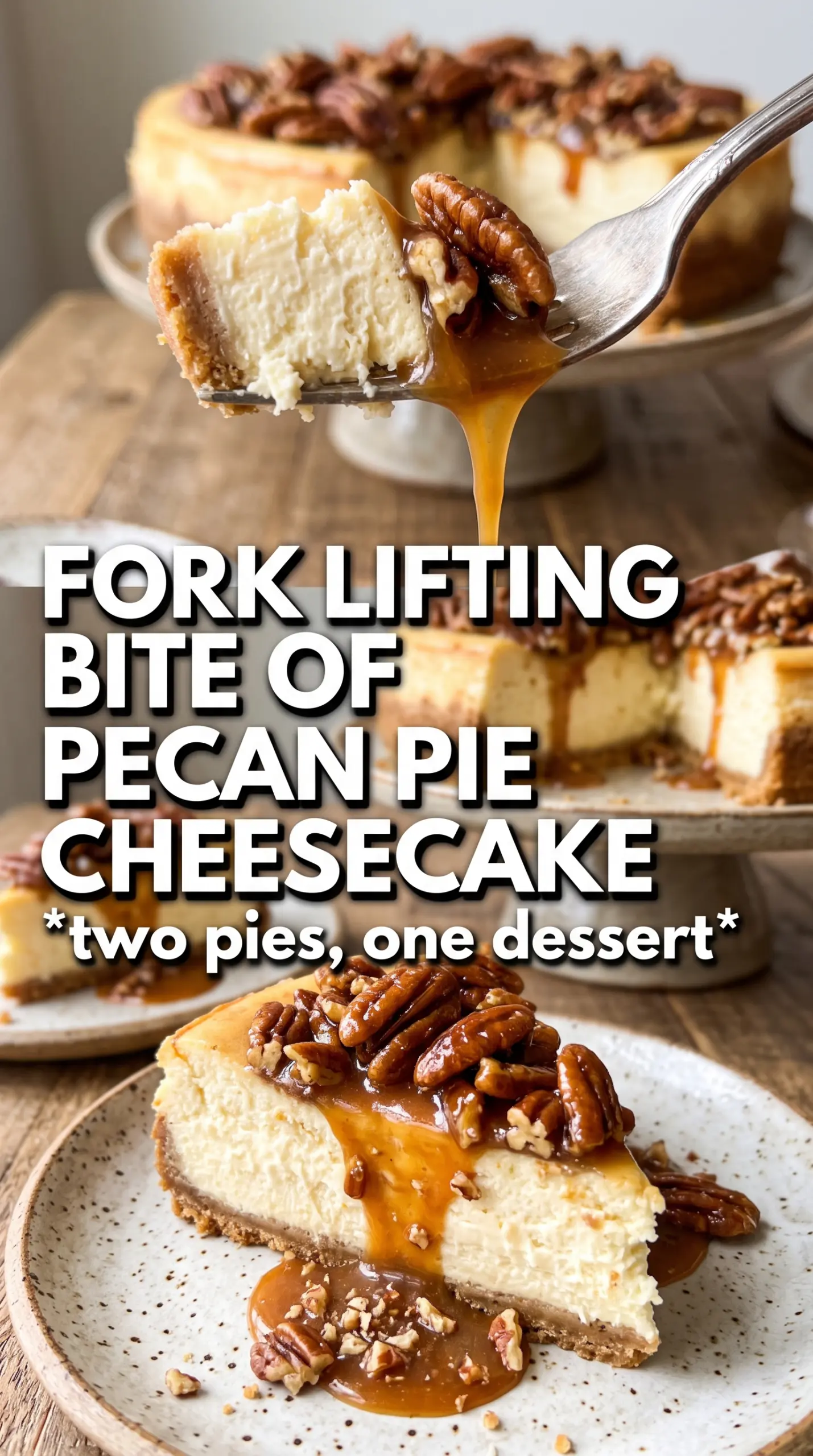
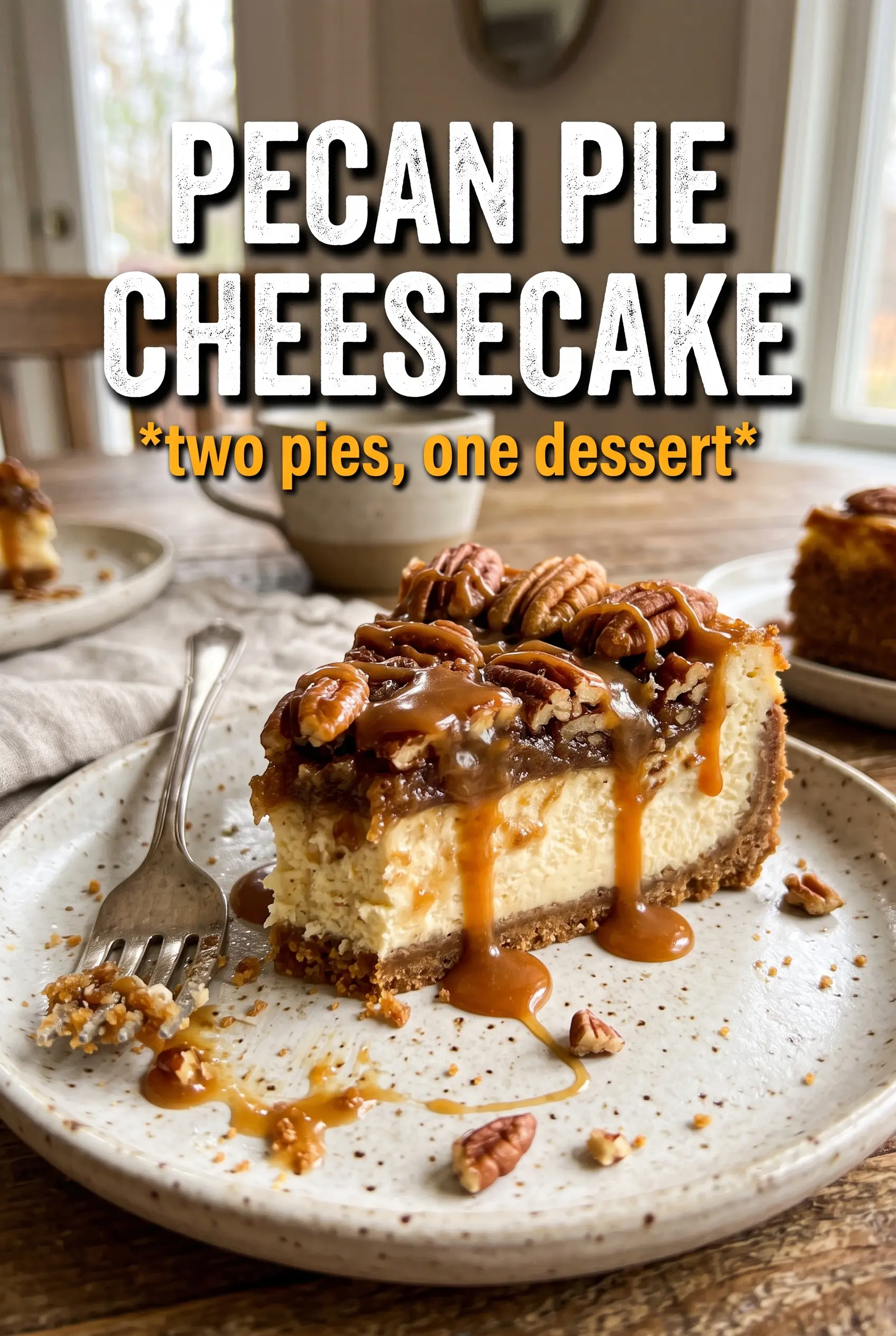
Pecan pie cheesecake lands with the best parts of two desserts in one slice: a buttery crust, a dense and creamy middle, and a glossy pecan topping that settles into sticky caramel peaks instead of sliding off the top. The first bite gives you crunch, then velvet, then that deep toasted-sugar finish that keeps you going back for another forkful.
What makes this version worth baking is the order of operations. The cheesecake bakes on its own until just set, then chills completely before the pecan topping goes on. That keeps the topping shiny and spoonable instead of sinking into the filling or turning the surface greasy. A water bath helps the cheesecake stay even and smooth, and the sour cream adds a little tang so the finished dessert doesn’t taste flat or overly sweet.
Below, I’ve broken down the part that matters most: keeping the cheesecake from cracking, getting the topping thick enough to coat the nuts, and timing the final assembly so every slice looks clean on the plate.
The cheesecake came out perfectly smooth and the pecan topping set up thick enough to slice without running all over the plate. I chilled it overnight and the layers stayed neat.
Pecan pie cheesecake slices cleanly when the topping is cooled before it goes on, and this one keeps that glossy, sticky pecan finish everyone wants.
The Step That Keeps the Cheesecake Smooth Instead of Cracked
The most common mistake with a cheesecake like this is pushing it too far in the oven. You’re not waiting for the center to look firm all the way across. You’re looking for set edges and a center that still has a gentle wobble when you nudge the pan. That little bit of movement finishes setting as it cools, and it’s what keeps the filling creamy instead of dry and grainy.
The water bath matters because it buffers the heat around the pan. Without it, the edges grab too fast while the middle lags behind, and that’s when cracks show up. Don’t rush the cooling either. A fast temperature drop is another easy way to split the top, even if the baking time was perfect.
What Each Layer Is Actually Doing in This Dessert
- Graham cracker crumbs — These give the crust its classic buttery crunch and hold up well under the dense filling. A fine crumb presses together better than big, sandy pieces, so crush them until they look even.
- Brown sugar — This pulls double duty in the crust, filling, and topping. It brings molasses depth that white sugar can’t replace, which is what makes the whole dessert taste like pecan pie instead of plain cheesecake with nuts on top.
- Cream cheese — Use full-fat blocks, not tub-style spread. You need the structure and richness of the brick-style version, or the filling can turn loose and soft in the oven.
- Sour cream — This loosens the batter just enough and adds a clean tang that balances the sweet topping. Plain Greek yogurt can work in a pinch, but it usually tastes a little sharper.
- Heavy cream — This is what gives the pecan topping its glossy caramel body. Half-and-half won’t reduce the same way, so the topping can end up thinner and less plush.
- Whole pecans — Use whole or large pieces here if you want that dramatic pie-style finish. Smaller pieces will work, but you lose the full layered look that makes each slice so nice to serve.
Building the Cheesecake and Topping in the Right Order
Pressing and Prebaking the Crust
Mix the graham crumbs, brown sugar, and melted butter until the texture looks like damp sand, then press it firmly into the springform pan. The crust should feel packed and even, especially up the sides if you choose to bring it up a little. Bake it for 10 minutes so it sets before the filling goes in. If the crust goes in raw, it can soften under the cheesecake and lose that crisp edge.
Mixing the Filling Without Whipping in Air
Beat the cream cheese and brown sugar until smooth before adding the eggs, sour cream, vanilla, and cinnamon. Stop mixing as soon as the batter looks uniform. Too much air trapped in the batter can puff the cheesecake in the oven and then collapse as it cools, which is one of the easiest ways to end up with a cracked top. The filling should pour thickly and look satiny, not fluffy.
Baking Until Just Set
Set the pan in the water bath and bake until the edges are firm and the center still moves slightly like set custard. That usually lands in the 60 to 65 minute range, but the visual cue matters more than the clock. Pull it when the center no longer looks wet, not when it looks fully baked. It will finish setting during the long chill in the fridge.
Cooking the Pecan Topping to a Thick Spoonable Finish
Melt the butter with the brown sugar, cream, and corn syrup over medium heat, then let it simmer for about 3 minutes. You’re looking for a bubbling mixture that starts to look glossy and slightly thicker around the edges. Stir in the pecans, vanilla, and salt, then cool it for about 15 minutes. If you pour it on while it’s too hot, it can slide off the cheesecake or soften the top.
Make It Gluten-Free with a Simple Crust Swap
Use gluten-free graham-style crumbs in the crust and keep the filling and topping as written. The texture stays close to the original, though the crust may be a touch more delicate, so press it firmly and let it cool fully before filling.
How to Make It Without Corn Syrup
Maple syrup or honey can stand in for the corn syrup, but the topping won’t be quite as glossy or as stable. Reduce the cream slightly if the mixture seems loose, and cook it until it thickens enough to coat a spoon before adding the pecans.
A Lighter Tangier Filling
Swap the sour cream for full-fat Greek yogurt if that’s what you have. The cheesecake will still set well, but the finish will be a little tangier and less rich, so it pairs best if you like a sharper contrast against the sweet topping.
Storage and Reheating
- Refrigerator: Store covered for up to 5 days. The topping stays sticky and the filling firms up even more after the first day.
- Freezer: Freeze the cheesecake without the topping for the best texture. Wrap it well, thaw overnight in the fridge, then add the pecan topping after thawing.
- Reheating: This dessert is best served chilled or cool from the fridge. Don’t microwave slices to warm them up, or the topping can loosen and the cheesecake can turn greasy at the edges.
Answers to the Questions Worth Asking
Pecan Pie Cheesecake
Ingredients
Equipment
Method
- Preheat the oven to 325F and press the crust mixture into a 9-inch springform pan, packing it evenly to form a firm base. Bake for 10 minutes, until the crust looks set and lightly fragrant.
- Allow the crust to cool slightly while you prepare the cheesecake filling, keeping the oven at 325F.
- Beat the cream cheese with the brown sugar until smooth, then beat in the eggs one at a time until the batter is silky. Mix in the sour cream, vanilla, and cinnamon just until combined.
- Pour the cheesecake batter over the baked crust, then bake in a water bath for 60-65 minutes at 325F until the edges are set but the center still jiggles slightly. The surface should look mostly set with a gentle wobble in the middle.
- Remove from the oven and cool completely at room temperature, so the cheesecake firms up without cracking. Refrigerate for 6 hours, until fully chilled and sliceable.
- Melt the unsalted butter with the packed brown sugar, heavy cream, and corn syrup over medium heat, stirring until smooth and glossy. Simmer for 3 minutes, until slightly thickened and caramel-colored.
- Stir in the whole pecans, vanilla, and salt, then continue cooking just until the pecans are evenly coated. Cool the topping for 15 minutes, until thick enough to spoon.
- Spoon the pecan pie topping over the chilled cheesecake just before serving so it stays thick and doesn’t run. Cut into 12 slices and serve with visible whole pecans on top.