Pear potato soup lands in that sweet spot between comforting and a little unexpected. The potatoes give it body, the pears bring a gentle perfume and natural sweetness, and the whole pot blends into something silky without feeling heavy. It tastes refined enough for a dinner starter, but it still eats like a real bowl of soup you’d want on a weeknight.
Yukon gold potatoes are the right choice here because they turn creamy instead of gluey, and ripe pears melt into the base without leaving any graininess behind. I like to simmer the pears with the potatoes until both are completely tender, then blend everything until it’s totally smooth before the cream goes in. That order keeps the texture velvety and the flavor balanced.
Below you’ll find the small details that matter most: how to keep the soup from tasting flat, which pear swap works if yours aren’t perfectly ripe, and why the gorgonzola, walnuts, and honey on top are worth the extra minute.
The soup came out silky and the pears gave it this gentle sweetness that didn’t taste dessert-like at all. I topped mine with the blue cheese and honey like suggested, and it made the whole bowl taste restaurant-level.
Save this pear potato soup for a silky, elegant bowl topped with gorgonzola, candied walnuts, and honey.
The Trick Is Keeping the Pears From Turning Dessert-Sweet
The pears do not need to dominate this soup. Their job is to soften the potato base and add a floral note that keeps the bowl from tasting flat. If the pears are too firm, they stay sharp and slightly grainy; if they’re overripe, they can push the soup too sweet before you’ve added the cream and cheese on top. Ripe pears with a little give at the stem are the sweet spot.
The other thing that matters is texture. Yukon gold potatoes break down into a naturally creamy puree, while starchy russets can make the soup feel heavier and a little pasty after blending. Blend it until completely smooth, then add the cream off the heat or over very low heat so it stays glossy. If you boil it hard after the cream goes in, the soup can taste flat and lose that silky finish.
What Each Ingredient Is Actually Doing in This Bowl

- Yukon gold potatoes — These create the body of the soup and blend into a smooth, buttery texture. I wouldn’t swap them for russets unless that’s what you have; russets will work, but the final bowl tends to feel a little fluffier and less naturally rich.
- Ripe pears — Pears are the surprise here, and they need to be ripe enough to soften fully during the simmer. Bosc or Bartlett both work well; Bartlett pears will read a little brighter and sweeter, while Bosc stay slightly firmer and more aromatic.
- Heavy cream — This gives the soup its velvety finish. Half-and-half will work in a pinch, but the soup won’t have the same lush body, and you’ll need to keep the heat low so it doesn’t separate.
- Fresh thyme, nutmeg, and white pepper — These are what keep the soup from tasting one-note. Thyme brings a savory backbone, nutmeg adds warmth, and white pepper gives a gentle bite without leaving black flecks in the pale soup.
- Gorgonzola, candied walnuts, and honey — These toppings turn the bowl from good to memorable. The cheese adds salt and sharpness, the walnuts bring crunch, and the honey ties the pear flavor back into the finish without making it taste sweet.
How to Build the Silky Base Without Losing the Balance
Sweating the Onion First
Cook the onion in butter until it turns soft and lightly golden at the edges. That step builds a sweeter base and keeps the finished soup from tasting raw or watery. If the onion browns too fast, lower the heat; dark bits will pull the flavor away from the pears instead of supporting them.
Simmering the Pears and Potatoes Together
Add the broth, potatoes, pears, and thyme, then bring everything up to a boil before dropping it down to a steady simmer. You want the potatoes collapsing easily when pierced and the pears losing all resistance, which usually takes about 25 minutes. If the cubes are too large, they’ll cook unevenly and you’ll end up waiting on a few stubborn pieces while the rest start to overcook.
Blending Until It Turns Velvety
Use an immersion blender and work the pot until there’s no visible texture left. The soup should look smooth and uniform, with a slight sheen. If you’re using a countertop blender, blend in batches and don’t fill it too high with hot liquid, or pressure will build and make a mess fast.
Finishing With Cream and Seasoning
Stir in the cream after blending, then season with nutmeg, white pepper, and salt. The soup should taste rounded, not sweet, and the salt is what brings the pear flavor into focus. If the bowl tastes a little soft or muted, it usually needs another pinch of salt rather than more spice.
How to Adapt Pear Potato Soup for Different Kitchens
Make It Dairy-Free
Swap the butter for olive oil and use full-fat coconut milk or unsweetened oat cream instead of heavy cream. Coconut milk adds more richness, while oat cream stays more neutral; either way, add it off the heat so the soup stays smooth and doesn’t separate.
Use Bartlett or Bosc Pears
Bartlett pears make the soup a touch sweeter and softer, while Bosc pears keep a little more perfume and structure before blending. Both work well, but if your pears are underripe, give them the full simmer time or the soup can taste sharp instead of rounded.
Skip the Blue Cheese Topping
If blue cheese isn’t your thing, use shaved Parmesan or a little grated aged cheddar instead. You’ll lose that tangy contrast, but the soup will still have enough salt and richness to feel complete.
Make It Vegetarian
Use vegetable broth instead of chicken broth and the soup stays fully vegetarian without losing depth. If your broth is mild, add an extra pinch of salt at the end, because the pears can soften savory flavors if the base is too light.
Storage and Reheating
- Refrigerator: Keeps well for 4 days. The soup may thicken as it chills, but the texture stays smooth.
- Freezer: It freezes, but cream-based soups can change slightly after thawing. For the best result, freeze before adding the cream, then stir the cream in when you reheat.
- Reheating: Warm it gently over low heat and stir often. Don’t let it boil, or the cream can lose its silkiness and the soup can taste dull.
Answers to the Questions Worth Asking
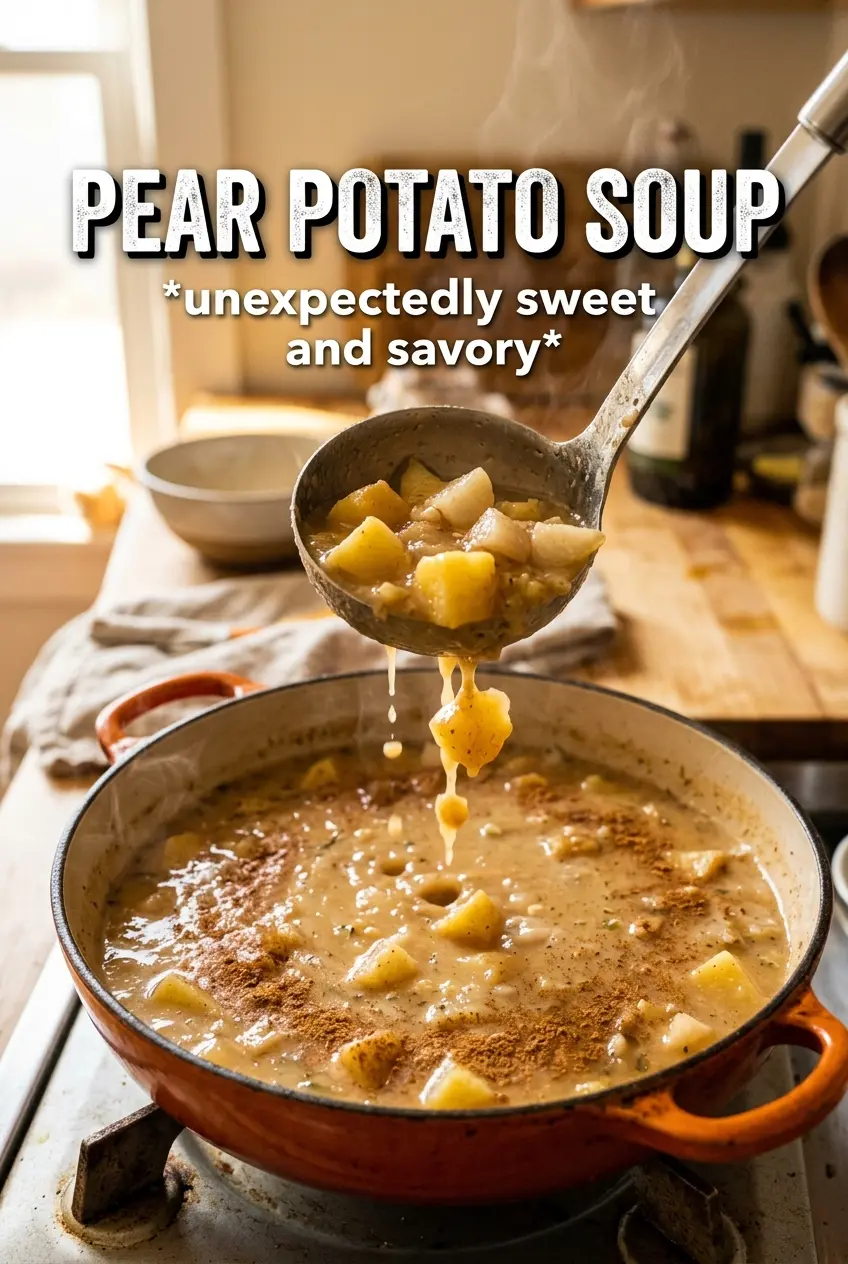
Pear Potato Soup
Ingredients
Equipment
Method
- Melt the butter in a large pot over medium heat, then sauté the onion for 5 minutes until soft and golden. Look for softened edges and a lightly golden color.
- Add the garlic and cook for 1 minute. Stir until fragrant but not browned.
- Add the broth, potatoes, and pears to the pot. Bring the mixture to a boil so the liquid actively bubbles across the surface.
- Stir in the fresh thyme leaves, then reduce to a simmer and cook for 25 minutes until both potatoes and pears are completely tender. The potatoes should break easily with a fork.
- Blend the soup completely smooth with an immersion blender. Stop and scrape the sides until no chunks remain.
- Stir in the heavy cream, then season with nutmeg, white pepper, and salt. Taste and adjust salt until balanced.
- Ladle the soup into bowls and top each serving with crumbled gorgonzola or blue cheese, candied walnuts, a drizzle of honey, and fresh thyme. The contrast should be visible: creamy base with specks of cheese and crunchy walnuts on top.