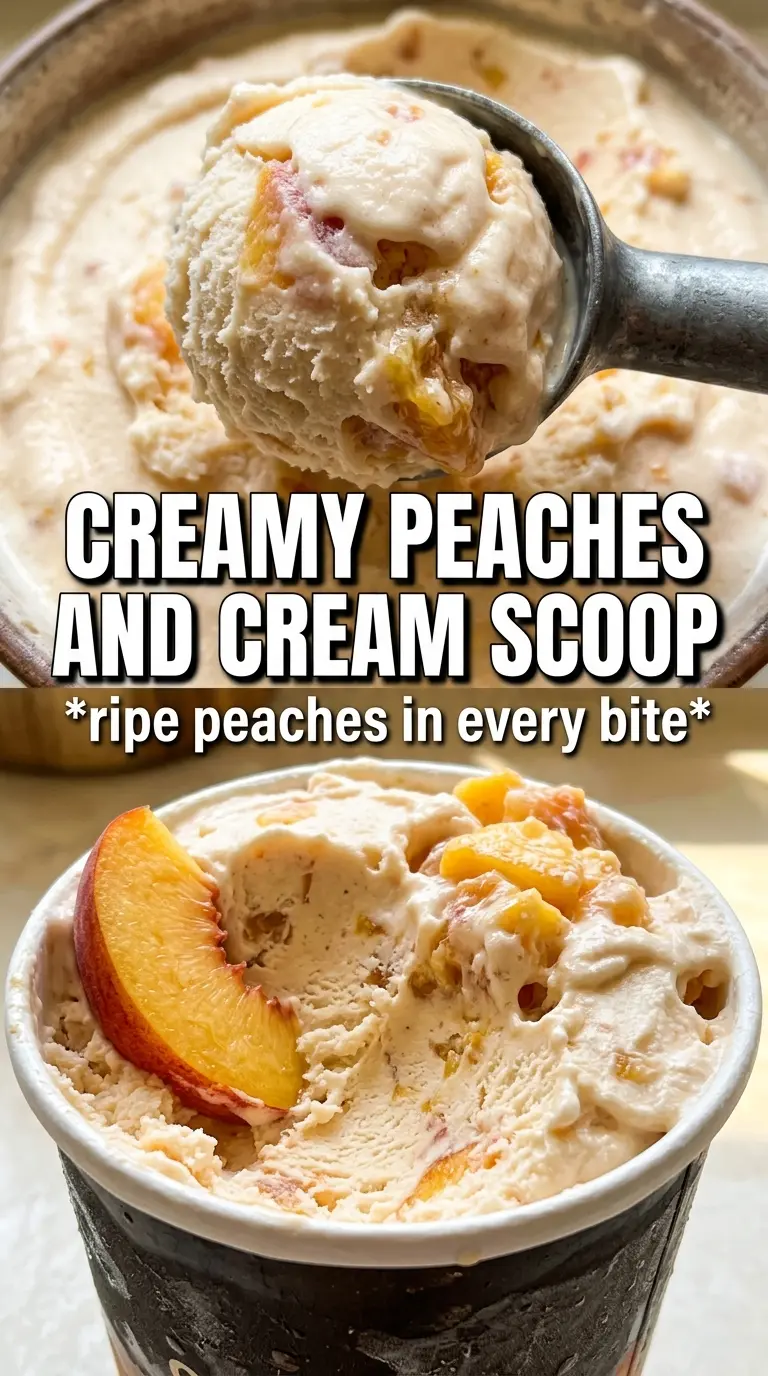
Peaches and cream ice cream tastes like the best part of a peach stand run through a custard base: lush, pale-golden, and full of soft peach flavor with little bites of fruit scattered through every scoop. The cream doesn’t hide the peaches here. It rounds them out, giving you that classic pairing in a frozen dessert that scoops cleanly instead of turning icy or flat.
The trick is splitting the peaches into two textures. Blending part of them into the custard gives the base a full peach flavor, while folding in the rest near the end keeps those bright fruit pieces from disappearing. The egg yolks add body, but the custard needs gentle heat and steady whisking so it stays silky instead of turning grainy.
Below you’ll find the exact point where the custard should thicken, why the peaches get macerated first, and the small finish that keeps the final ice cream tasting fresh instead of cooked.
The peach flavor came through beautifully, and the custard stayed silky after churning. I loved the little chunks at the end — they kept the texture interesting instead of making it just one smooth scoop.
Save this peaches and cream ice cream for the days when you want ripe peach flavor in a custard base with those creamy fruit swirls in every scoop.
The Trick to Keeping Peach Ice Cream from Turning Watery
Fresh peaches bring a lot of juice with them, and that’s where many homemade peach ice creams go sideways. If you dump all of that liquid straight into the base, the churned ice cream can end up soft, thin, or icy instead of creamy and scoopable. Macerating the peaches with sugar first pulls out their juices on purpose, which lets you control the texture instead of fighting it.
Blending only part of the peaches gives you a smoother custard without losing that fresh fruit bite. The smooth puree helps flavor the whole base, while the diced pieces stay intact enough to show up after churning. The vanilla and cinnamon don’t take over; they just deepen the peach flavor and keep it from tasting one-note.
- Fresh ripe peaches — Use fruit that smells fragrant and gives slightly at the stem. Hard peaches won’t blend into a flavorful puree, and overly soft ones can turn mushy before the ice cream even hits the machine.
- Heavy cream and whole milk — This mix gives the base enough fat to stay rich without becoming greasy. Swapping in low-fat dairy makes the ice cream colder and icier, not lighter in a good way.
- Egg yolks — These thicken the custard and keep the finished ice cream smooth. There isn’t a true substitute here if you want the same custardy body.
- Lemon juice — It brightens the peaches and keeps the fruit flavor from tasting dull. That little bit of acid matters more than you’d think.
What Each Ingredient Is Actually Doing in This Ice Cream
- Base ingredient (cream, milk, or custard) — This provides the foundation and richness. Quality matters.
- Sweetener (sugar, honey, or condensed milk) — This sweetens and prevents ice crystals. The ratio is critical.
- Flavor element (vanilla, fruit, chocolate, or other) — This defines the ice cream personality. Use quality ingredients.
- Egg yolks (if making custard base) — These create richness and silky texture. Optional but elevates ice cream.
- Churning (if using ice cream maker) — This incorporates air and prevents ice crystals. Critical for smooth texture.
- Freezing temperature and time — Proper freezing prevents rock-hard texture. Store at 0°F or below.
- Mix-ins (chocolate, cookies, fruit, or swirls) — These add texture and prevent one-dimensional flavor. Add near end of churning.
- Serving temperature (slightly soft, not rock hard) — This provides creamy mouthfeel. Remove from freezer 5 minutes before serving.
Building the Custard Without Scrambling the Yolks
Macerating the Peaches
Toss the diced peaches with part of the sugar and the lemon juice, then let them sit until the bowl looks juicy and glossy. That resting time draws out flavor and softens the fruit just enough to blend part of it later. If the peaches are under-ripe, the mixture won’t give up much syrup and the final ice cream will taste flat.
Tempering the Egg Yolks
Heat the cream and milk until they’re steaming, not boiling, then whisk a little of that hot dairy into the yolks and sugar before adding the rest. This keeps the yolks from turning into little cooked bits the second they hit the pan. If you pour everything in at once, the yolks can seize and you’ll feel the texture go grainy under the whisk.
Cooking to the Right Thickness
Cook the custard over medium-low heat and stir constantly until it reaches 175F and lightly coats the back of a spoon. At that point it should feel thicker, but still pourable. Pull it off the heat as soon as it gets there; going much hotter can push the yolks toward curdling and leave you with a sandy base.
Finishing with the Peaches
Strain the custard, then stir in the vanilla, cinnamon, salt, and the smooth peach puree while it’s still warm. Straining catches any tiny bits of cooked egg so the finished ice cream stays silky. Chill the mixture completely before churning, because a warm base won’t freeze properly in the machine and can leave you with a soft, slushy result.
How to Adapt This for Different Kitchens and Different Peaches
Dairy-Free Version
Use full-fat canned coconut milk in place of the cream and milk. The texture will be a little softer and the coconut note will sit in the background, but it still churns into a rich frozen dessert. Skip the dairy expectation here and lean into the fruit flavor.
Extra Peachy, More Chunky
If you want bigger fruit pieces throughout, hold back a little more of the diced peaches and fold them in at the very end. The ice cream will be a touch icier around the fruit pockets, so keep the pieces small and well-drained after macerating.
Using Frozen Peaches
Thaw the peaches first and drain off excess liquid before macerating them. Frozen fruit can work, but it tends to release more water, so the draining step matters if you want a clean, creamy finish instead of a slushy one.
No Ice Cream Maker
Pour the chilled custard into a shallow pan and freeze it, stirring every 30 to 40 minutes until it’s thick and scoopable. The texture won’t be as smooth as churned ice cream, but the custard base still keeps it much creamier than a simple no-churn mix.
Storage and Reheating
- Refrigerator: The custard base can sit covered in the fridge for up to 2 days before churning. The peaches may darken slightly, but the flavor holds.
- Freezer: Store the finished ice cream in an airtight container for up to 2 weeks. Press a piece of parchment or plastic wrap directly on the surface to help prevent ice crystals.
- Reheating: Let it stand at room temperature for 5 to 10 minutes before scooping. Trying to carve it straight from the freezer can crack the top and mash the texture around the edges.
Answers to the Questions Worth Asking
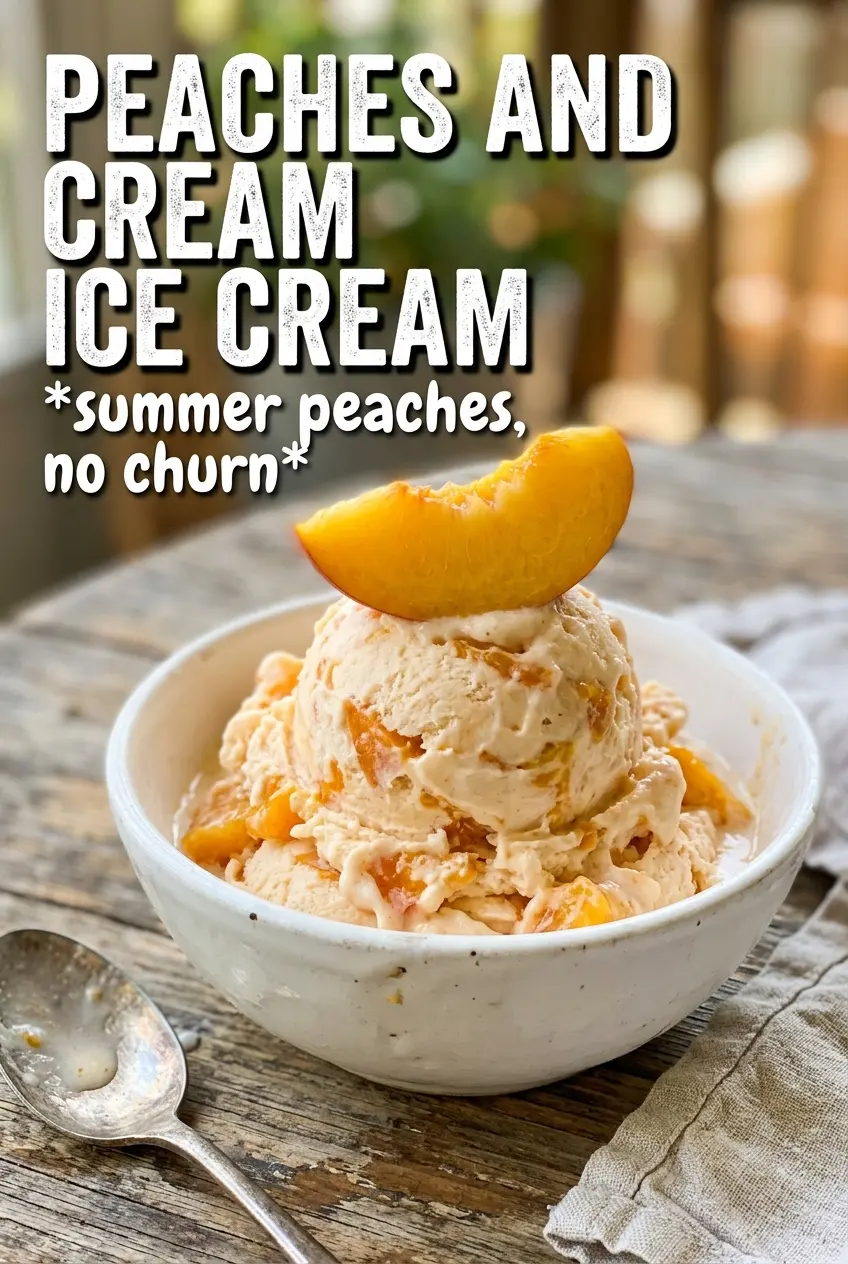
Peaches and Cream Ice Cream
Ingredients
Equipment
Method
- Toss the diced fresh ripe peaches with 1/4 cup granulated sugar and lemon juice, then let sit for 30 minutes to macerate. The fruit should look juicier as it releases liquid.
- Blend 2 cups of the macerated peaches until smooth, then set aside the remaining peaches as a chunky portion. You should see a thick, pastel-gold puree with some visible peach bits remaining for later.
- Heat heavy cream and whole milk over medium heat until steaming. Do not boil; small steam bubbles should form around the edges.
- Whisk the egg yolks with the remaining 1/2 cup granulated sugar until the mixture looks smoother and slightly lighter. It should ribbon off the whisk more easily.
- Slowly whisk the steaming cream mixture into the egg yolks in a thin stream. Keep whisking continuously to prevent curdling.
- Cook the custard, stirring, until it reaches 175°F. The custard should coat the back of a spoon and hold a light line when you draw a finger through it.
- Strain the custard, then stir in vanilla extract, cinnamon, and salt. The base should look evenly colored with no egg bits.
- Cool the custard completely, then refrigerate for 4 hours. It should feel cold all the way through before churning.
- Churn the chilled custard in an ice cream maker until thickened. The mixture should resemble soft-serve with visible peach swirl potential.
- Fold in the chunky peach pieces during the last 5 minutes of churning. The peach pieces should stay intact and suspended through the pale base.
- Transfer to a container and freeze until firm. The ice cream should scoop cleanly after it sets.