Parmesan crusted chicken earns its place in the dinner rotation when the coating turns deeply golden and crackly before the chicken has a chance to dry out. The best versions give you a shattery crust with real cheese flavor, not just a dusty breading that flakes off in the pan. When it comes out of the oven, the crust should sound crisp when you tap it with a knife and the meat should still be juicy in the center.
The trick is a dry, even breading and enough heat to brown the panko before the chicken overcooks. Freshly grated Parmesan matters here because the pre-shredded stuff doesn’t melt and cling the same way. A wire rack helps air move underneath, so the bottom stays crisp instead of turning soggy on the baking sheet.
Below, I’ve included the small details that make the crust stick, the spot where the color happens fast, and a few swaps that still keep the chicken crisp and weeknight-friendly.
The crust stayed crunchy even after the chicken rested, and the Parmesan flavor came through in every bite. I used the wire rack like you suggested and the bottoms didn’t get soggy at all.
Like this Parmesan crusted chicken? Save it to Pinterest for a crispy baked chicken dinner with a golden Parmesan-panko crust.
The Crust Only Stays Crisp When the Chicken Goes in Dry
The biggest mistake with breaded chicken is rushing the coating and then wondering why it slides off or softens in the oven. Moisture is the enemy here. Pounding the breasts to an even thickness helps them cook at the same pace, and the flour-egg-panko sequence gives each layer something to grab onto. If the chicken goes into the breadcrumb mix wet or uneven, the crust turns patchy and peels as soon as it hits the rack.
Oven temperature matters too. At 425°F, the panko and Parmesan brown fast enough to get crisp before the chicken dries out. If your crust looks pale after 22 minutes, your oven is probably running cool or the chicken breasts were much thicker than average. A thermometer takes the guesswork out: pull the chicken once the center hits 165°F and rest it briefly so the juices settle back into the meat.
What the Parmesan, Panko, and Oil Are Each Doing Here
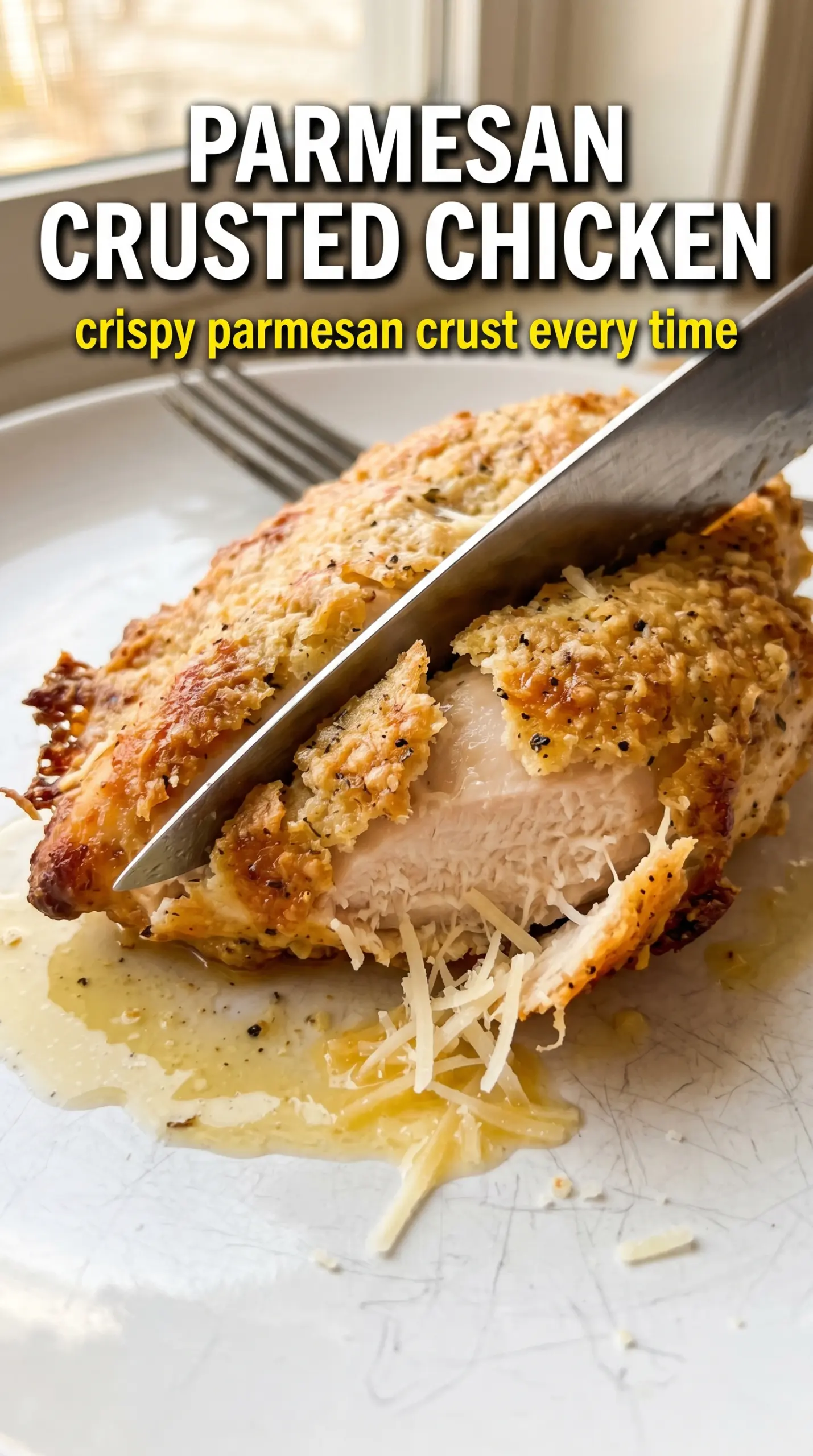
- Parmesan cheese — Freshly grated Parmesan melts into the crumbs and gives the crust its salty, nutty bite. Pre-grated cheese can work in a pinch, but it often stays drier and less cohesive, so the crust won’t cling as well.
- Panko breadcrumbs — Panko gives you the light, jagged crunch that regular breadcrumbs can’t match. If you swap in fine crumbs, the coating will be denser and less crisp.
- Olive oil — A light drizzle or spray helps the crust brown evenly in the oven. Skip it and the breading can bake up dry and chalky instead of crisp and toasty.
- Wire rack — This isn’t an ingredient, but it changes the result. The rack keeps hot air moving under the chicken so the bottom crust doesn’t steam on the pan.
Building the Coating So It Bakes Up Shatteringly Crisp
Season the Chicken First
Start by seasoning the chicken breasts with salt, pepper, and garlic powder before they ever touch the breading. That layer under the crust is what keeps every bite seasoned, not just the outside. If the chicken is very thick in the middle, pound it to an even thickness so the thinner end doesn’t dry out while the center finishes cooking. Uneven chicken is the main reason breaded cutlets go from crisp to overdone.
Set Up a Clean Breading Line
Use one shallow dish for flour, one for beaten eggs, and a third for the Parmesan-panko mixture. The flour helps the egg stick, and the egg helps the crust stick, so skipping either layer weakens the whole coating. Press the chicken firmly into the crumbs and turn it to coat every side, especially the edges. Those edges brown fast and give you the best crunch if they’re covered well.
Bake on a Rack, Not Directly on the Pan
Place the breaded chicken on the prepared wire rack and coat the tops lightly with olive oil or cooking spray. The fat helps the crust color evenly and keeps the coating from looking dry before the chicken is cooked through. Bake until the crust is deep golden and the juices run clear, about 20 to 22 minutes. If you bake directly on the pan, the underside will soften before the top finishes browning.
Let It Rest Briefly Before Serving
Give the chicken three minutes after it comes out of the oven. That short rest keeps the crust crisp while the juices settle back into the meat, so the first cut doesn’t send everything running onto the plate. Finish with parsley and lemon wedges for brightness. The lemon cuts through the richness of the cheese and makes the whole dish taste cleaner.
How to Adjust This Chicken Without Losing the Crunch
Gluten-Free Version With a Crisp Coating
Use a gluten-free flour blend for the first dredge and gluten-free panko for the crust. The texture stays close to the original as long as you still press the crumbs on firmly and bake on a rack. Rice-based crumbs brown nicely, but they can be a little lighter, so watch the color near the end.
Lower-Dairy Swap That Still Tastes Like Parmesan Chicken
This recipe leans on Parmesan, so a true dairy-free version changes the character of the dish. If you need to avoid dairy, use a firm dairy-free Parmesan-style topping and expect a slightly less savory, less cohesive crust. Add a pinch more salt to the breadcrumb mix to help the coating taste fuller.
Chicken Cutlets for a Faster Weeknight Dinner
Slice the breasts in half horizontally or buy cutlets so they cook faster and more evenly. The crust-to-chicken ratio goes up, which is a good thing here. Reduce the bake time and start checking early; thinner pieces can be done a few minutes sooner than the full 20 minutes.
Storage and Reheating
- Refrigerator: Store leftovers in an airtight container for up to 3 days. The crust softens a little, but it still reheats well.
- Freezer: Freeze cooked chicken on a tray until solid, then wrap and store for up to 2 months. The coating won’t be quite as crisp after freezing, but it still works for a make-ahead meal.
- Reheating: Reheat on a wire rack in a 375°F oven or air fryer until hot and crisp again. The common mistake is microwaving it, which turns the crust soggy and steams the chicken.
Answers to the Questions Worth Asking
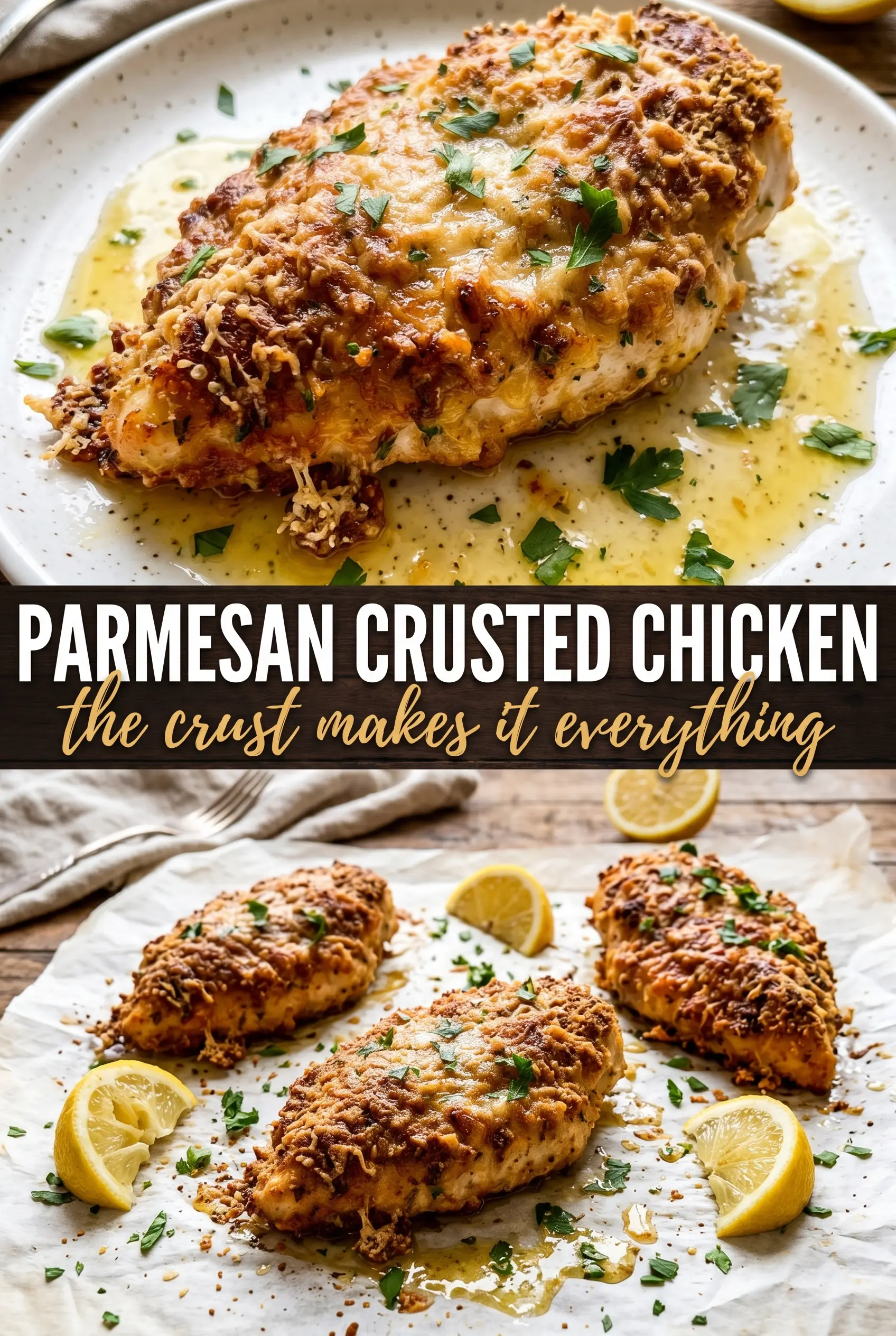
Parmesan Crusted Chicken
Ingredients
Equipment
Method
- Preheat oven to 425°F and line a baking sheet with a wire rack; spray the rack with cooking spray so the crust stays crisp.
- Season the chicken breasts with salt, pepper, and garlic powder to taste.
- Add the all-purpose flour to the first station, keeping it ready for a quick dredge.
- Beat the eggs until smooth in the second station for even coating.
- Mix the panko breadcrumbs, Parmesan cheese, Italian seasoning, garlic powder, and smoked paprika in the third station.
- Dredge each chicken breast in flour, shaking off excess so the next layer adheres.
- Dip the floured chicken into the beaten eggs so it forms a sticky coating.
- Press the chicken firmly into the Parmesan panko to coat all sides, then place it on the rack.
- Drizzle or spray the olive oil over the breaded chicken for deep golden browning.
- Bake at 425°F for 20-22 minutes until the crust is deep golden and the internal temperature reaches 165°F.
- Rest the chicken for 3 minutes so the juices set and the crust stays shatter-crisp.
- Garnish with fresh parsley and serve with lemon wedges.