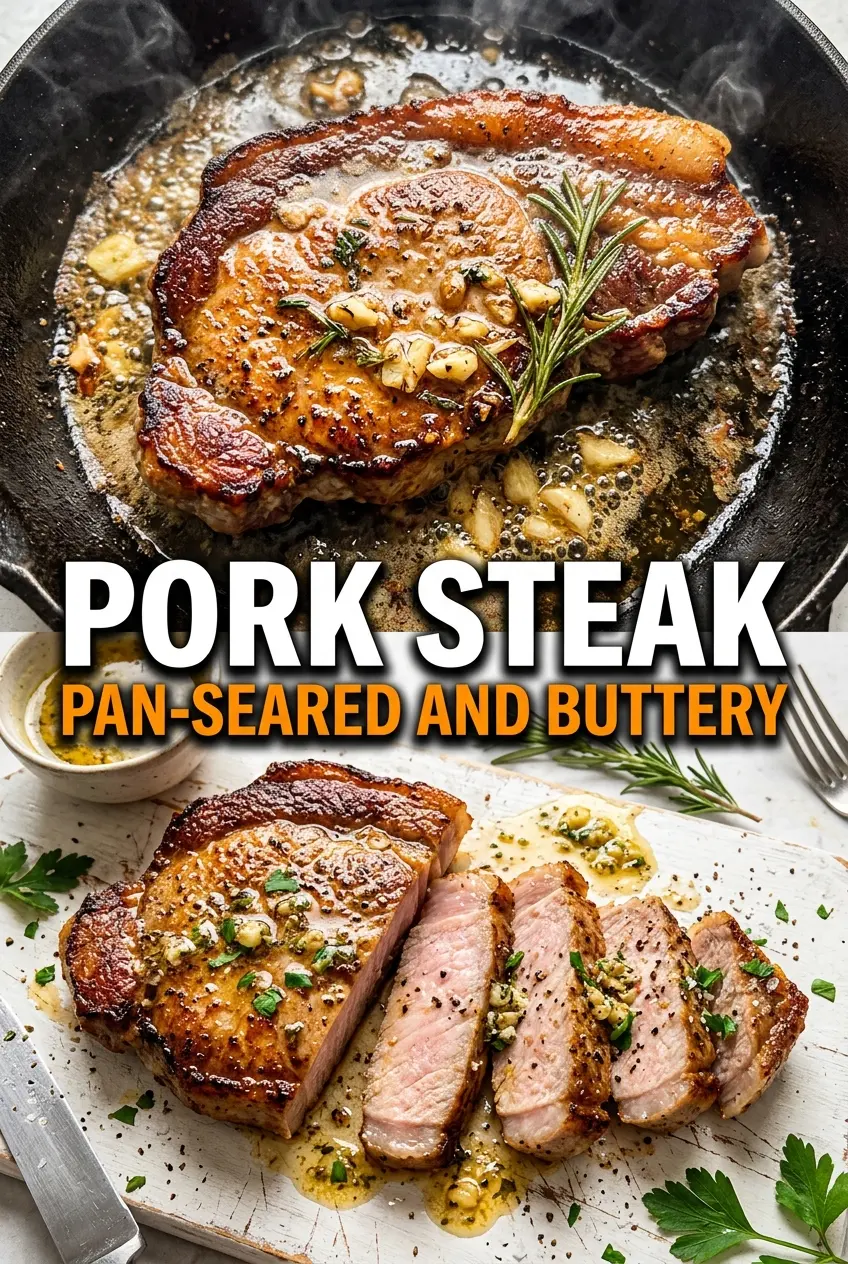
Thick pork steaks earn their spot when they come off the pan with a hard, golden crust and a juicy center that stays tender after the rest. Pork blade steak can be a bargain cut, but it eats like something far better when you treat it like a proper sear-and-baste situation instead of a quick fry. The smoked paprika gives the crust color and a little warmth, while the butter, garlic, and thyme finish the meat with pan drippings that taste like you spent a lot longer on dinner than you did.
The trick here is simple: dry meat, hot skillet, and no poking at the steaks once they hit the pan. That first side needs time to build real browning, and the butter goes in only after both sides have seared so it can perfume the pan without burning. A short rest at the end matters too, because pork steak loses a lot of juice if you cut in too soon.
Below, I’ve laid out the little details that keep this cut juicy, plus a few ways to adapt it for the grill, the oven, or a smothered version when you want the same flavor in a different format.
The crust came out deep and crisp, and the butter-basted garlic thyme flavor made the pork taste like something from a steakhouse. I followed the timing exactly and the steaks stayed juicy after the rest.
Save this pan-seared pork steak with smoky crust and garlic-thyme butter for the nights when you want big flavor from a simple skillet dinner.
The One Mistake That Keeps Pork Steak From Browning
Pork steak has enough surface area and natural richness to make a gorgeous crust, but only if the pan is genuinely hot and the meat is dry enough to sear instead of steam. A lot of people crowd the skillet or move the steak too soon, and that’s where the crust turns patchy and gray. The first side needs a full uninterrupted sear so the proteins can brown and release cleanly from the pan.
If the steak sticks when you try to flip it, it’s not ready yet. Give it another minute and let the skillet do the work. Cast iron helps here because it holds heat after the meat goes in, which means the surface keeps browning instead of cooling off the second the pork hits the pan.
- Dry pork is non-negotiable — moisture on the surface is the fastest way to lose that deep crust.
- High heat at the start builds the browned exterior before the inside has time to overcook.
- Moving the steak too early tears the crust, so let it release on its own.
What the Seasoning and Basting Are Actually Doing

- Pork blade steaks are the right cut here because they have enough fat and marbling to stay juicy under high heat. If you use a leaner pork steak, watch the cook time closely because it can dry out faster.
- Smoked paprika adds color and a deeper savory edge without needing a long spice rub. Regular paprika works in a pinch, but you’ll lose some of that subtle woodsy note.
- Butter, garlic, and thyme turn the pan drippings into the finish. The butter should go in after searing, when the skillet has enough heat to perfume everything without scorching the garlic.
- Worcestershire sauce adds a quick hit of salt, tang, and depth at the end. It tastes best when it hits the hot pan for just a minute, not when it’s cooked down for ages.
- Lemon wedges brighten the richness right before serving. That little squeeze cuts through the butter and makes the pork taste cleaner.
Getting the Sear, Baste, and Rest in the Right Order
Drying and Seasoning the Meat
Pat the pork steaks completely dry first, then season them generously on both sides with salt, pepper, garlic powder, and smoked paprika. The seasoning needs to cling to the meat, not dissolve on a damp surface, so don’t rush this part. If your steaks are thick, season the edges too; that’s where a lot of flavor gets missed.
Building the Crust in the Skillet
Heat the oil in a cast iron skillet over high heat until it’s smoking lightly, then lay the steaks in and leave them alone for 4 to 5 minutes. You’re looking for a dark golden crust and edges that look sealed, not pale or wet. Flip and sear the second side for 3 to 4 minutes; if the pan is crowded or the heat drops too low, the meat will start braising instead of browning.
Finishing With Butter and Aromatics
Add the butter, smashed garlic, and thyme after both sides are seared. Tilt the pan and spoon the melted butter over the steaks for 1 to 2 minutes so the aromatics coat the meat without burning. If the garlic starts to brown too fast, pull the pan off the heat for a few seconds; burnt garlic will overpower the whole dish.
The Rest That Keeps the Juices Inside
Splash in the Worcestershire sauce and cook for about 1 minute more, just long enough for it to mingle with the pan juices. Transfer the steaks to a plate and rest them for 5 minutes before serving with lemon wedges. Cutting immediately sends the juices onto the plate instead of back into the meat, and that’s how good pork ends up dry.
Three Ways to Make This Pork Steak Work for Your Table
Grilled Pork Steak
Season the steaks the same way, then grill over medium-high heat instead of pan-searing. You’ll lose the butter-basted pan sauce, but you gain a smoky char that works especially well with the smoked paprika. Brush with melted butter after grilling and finish with lemon to keep the meat from tasting flat.
Smothered Pork Steak
After searing, remove the steaks and build a quick onion gravy in the same skillet with a little flour and broth. Nestle the pork back in and simmer until tender. This turns the crisp seared edges softer, but you get a full pan of savory gravy that’s built for mashed potatoes or rice.
Dairy-Free Version
Swap the butter for more oil or a dairy-free butter alternative. You’ll still get a good sear and plenty of flavor from the garlic, thyme, and Worcestershire sauce, but the finish won’t taste quite as rich. If you use oil alone, add an extra squeeze of lemon at the end to keep the dish balanced.
Storage and Reheating
- Refrigerator: Store leftovers in an airtight container for up to 3 days. The crust softens a bit, but the flavor stays solid.
- Freezer: Freeze cooked pork steak for up to 2 months, wrapped tightly and sealed well. Thaw overnight in the fridge before reheating so it warms evenly.
- Reheating: Rewarm gently in a skillet over low heat with a splash of water or broth and a lid for a minute or two. High heat will dry the pork out fast and make the outside tough before the center is warm.
Answers to the Questions Worth Asking
Pork Steak
Ingredients
Equipment
Method
- Pat the pork blade steaks completely dry, then season generously with salt, coarse black pepper, garlic powder, and smoked paprika to coat both sides.
- Rest the seasoned steaks at room temperature while you preheat the skillet.
- Heat the vegetable oil in a cast iron skillet over high heat until it’s smoking.
- Sear the steaks 4–5 minutes without moving them until a deep golden-brown crust forms.
- Flip the pork steaks and sear 3–4 minutes more until the second side is deeply browned.
- Reduce heat slightly and add the butter, smashed garlic, and fresh thyme, then continuously baste the steaks for 1–2 minutes until the butter foams.
- Splash the Worcestershire sauce over the steaks and cook 1 more minute to glaze lightly.
- Remove the steaks to a plate and rest for 5 minutes so the juices redistribute.
- Serve hot with lemon wedges.