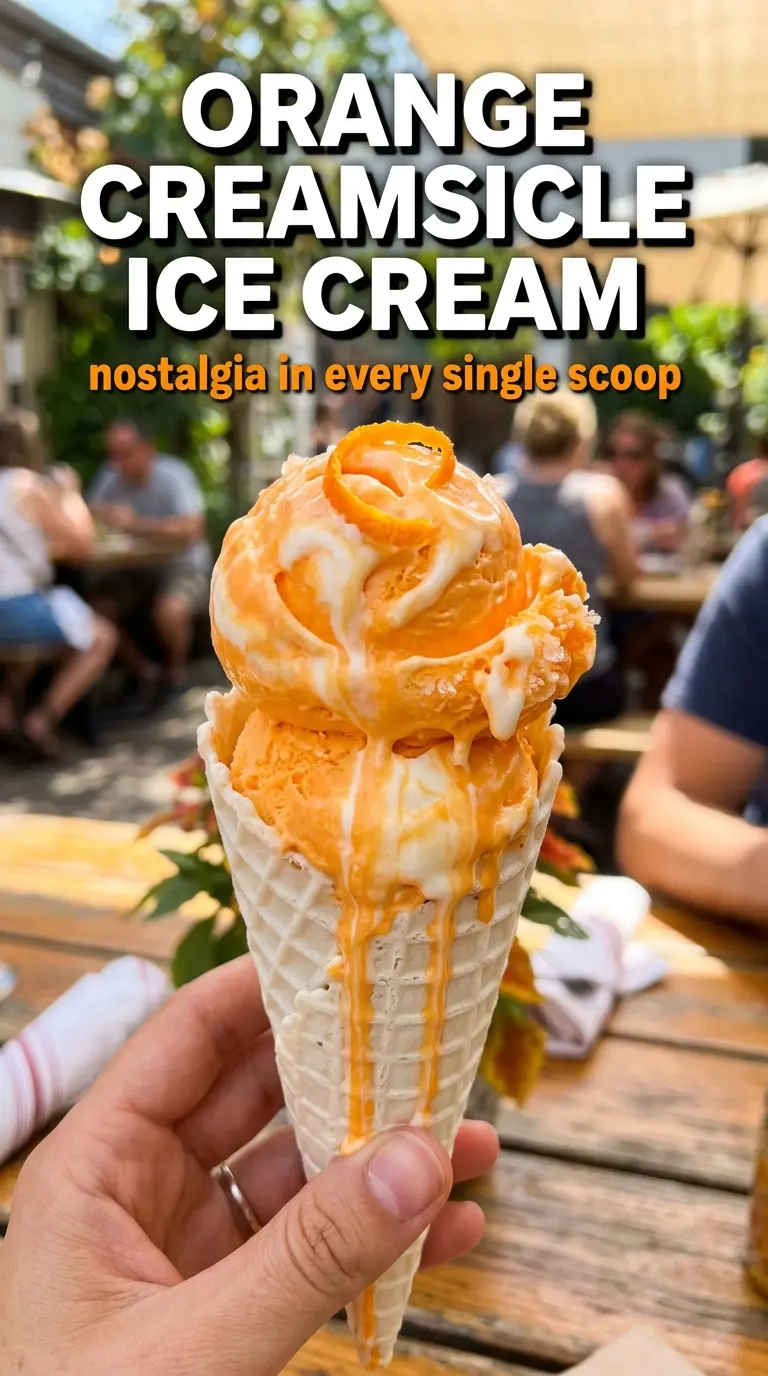
Orange Creamsicle Ice Cream turns into that old-fashioned frozen treat people remember for a reason: the orange stays bright, the vanilla stays rich, and the whole thing lands somewhere between sherbet and custard in the best possible way. The texture is scoopable and creamy, with little streaks of citrus running through each bite instead of one flat, uniform flavor.
The trick is giving each part its own job. The vanilla base gets cooked into a real custard, which keeps the ice cream smooth and dense enough to scoop cleanly. The orange mixture is reduced just enough to concentrate the juice and zest without making it watery, then added at the very end so the swirls stay distinct instead of disappearing into the base.
Below, I’ve included the small timing details that matter most here, plus the best way to keep the orange ripple visible after freezing. If you’ve ever had homemade creamsicle ice cream turn icy or dull, this version fixes both problems.
The custard came out silky and the orange swirl stayed bright after freezing. I liked that it tasted like a real creamsicle instead of just vanilla ice cream with orange extract.
Like this orange creamsicle ice cream? Save it for the days when you want a bright citrus swirl and real vanilla custard in one scoop.
The Custard Needs Gentle Heat, Not a Hard Boil
Ice cream goes grainy or eggy when the custard cooks too fast. The yolks thicken best between medium-low heat and 175°F, which is hot enough to set the base but not so hot that the eggs scramble. If you see steam and tiny bubbles around the edge, that’s fine. If the whole pan starts boiling, pull it off the burner and whisk immediately.
Straining matters here because orange zest, cooked egg, and little bits of coagulated yolk can all make the finished ice cream feel rough. A smooth custard gives you that clean, creamy creamsicle texture instead of something icy and sharp. Chill it all the way through before churning; warm base in the machine means soft, thin ice cream that never really firms up right.
What Each Ingredient Is Actually Doing in This Ice Cream
- Base ingredient (cream, milk, or custard) — This provides the foundation and richness. Quality matters.
- Sweetener (sugar, honey, or condensed milk) — This sweetens and prevents ice crystals. The ratio is critical.
- Flavor element (vanilla, fruit, chocolate, or other) — This defines the ice cream personality. Use quality ingredients.
- Egg yolks (if making custard base) — These create richness and silky texture. Optional but elevates ice cream.
- Churning (if using ice cream maker) — This incorporates air and prevents ice crystals. Critical for smooth texture.
- Freezing temperature and time — Proper freezing prevents rock-hard texture. Store at 0°F or below.
- Mix-ins (chocolate, cookies, fruit, or swirls) — These add texture and prevent one-dimensional flavor. Add near end of churning.
- Serving temperature (slightly soft, not rock hard) — This provides creamy mouthfeel. Remove from freezer 5 minutes before serving.
What the Orange Syrup Is Actually Doing Here
- Fresh orange juice — This is the main source of the citrus flavor, but it needs a short simmer with sugar so it tastes concentrated instead of watery. Bottled juice won’t give the same brightness, and the finished swirl can taste flat.
- Orange zest — The zest carries the oils that make this taste like an actual creamsicle. Don’t skip it. If you only use juice, the orange note fades once the ice cream is cold.
- Egg yolks — These make the base rich and scoopable. There isn’t a true substitute that gives the same custard body, though you can make a no-egg version if you’re willing to lose some creaminess.
- Heavy cream and whole milk — The cream brings body, while the milk keeps the texture from becoming overly dense. Using all cream makes the ice cream heavy; using lower-fat milk makes it lean and more icy.
- Vanilla extract — Vanilla is what turns orange ice cream into a creamsicle. Add it after cooking so the flavor stays clean and doesn’t cook off.
Building the Swirl Without Losing the Contrast
Making the Vanilla Custard
Heat the cream and milk until steaming, not boiling. Whisk the sugar into the egg yolks until they look lighter and a little thickened, then slowly add the hot dairy while whisking so the eggs warm up gradually. Return everything to the pan and cook, stirring constantly, until the custard reaches 175°F and lightly coats the back of a spoon. If you rush this part, the yolks can curdle and leave flecks in the base.
Reducing the Orange Mixture
Combine the orange juice, zest, and remaining sugar in a small saucepan and simmer until it turns slightly syrupy. That reduction does two important things: it deepens the orange flavor and keeps extra liquid from turning the finished ice cream icy. Cool it completely before swirling it in, or it will melt the churned custard on contact.
Churning and Layering the Swirl
Churn the chilled custard until it looks thick and soft-serve-like. In the last couple of minutes, drizzle in the cooled orange syrup so the machine can streak it through without fully blending it. When you transfer the ice cream to a container, layer spoonfuls instead of dumping it in all at once. That keeps the orange ribbons visible after freezing instead of burying them in one pale orange block.
Make it dairy-free with coconut cream
Swap the heavy cream and milk for full-fat coconut milk and coconut cream. The texture stays rich, but you’ll pick up a light coconut note that sits nicely with orange. Use the same custard-style method only if you’re comfortable working with a non-dairy base; otherwise, a no-egg coconut version is simpler and more stable.
Skip the food coloring and lean on zest
The color is optional, and the ice cream will still taste like creamsicle without it. If you want a more natural look, add extra orange zest to the syrup and keep the swirl lighter and more marbled. The flavor stays the same; you just lose the bright neon orange.
Make it more sherbet-like
Cut the cream back a little and increase the milk for a lighter texture, but don’t remove the yolks entirely. You’ll get a softer, brighter scoop with less richness, though it won’t hold the same plush custard feel. This is the better route if you want the orange to stand out more than the vanilla.
Storage and Reheating
- Refrigerator: Not applicable once churned; the base can be chilled for up to 2 days before freezing, and the flavor actually improves after the custard rests overnight.
- Freezer: Freeze in an airtight container for up to 2 weeks for the best texture. After that, it still tastes fine, but the swirl can start to fade and the edges may pick up ice crystals.
- Reheating: Not applicable. Let the container sit at room temperature for 5 to 10 minutes before scooping. If you try to dig in straight from a hard-frozen container, you’ll crush the swirl and tear the ice cream instead of getting clean scoops.
Questions I Get Asked About This Recipe
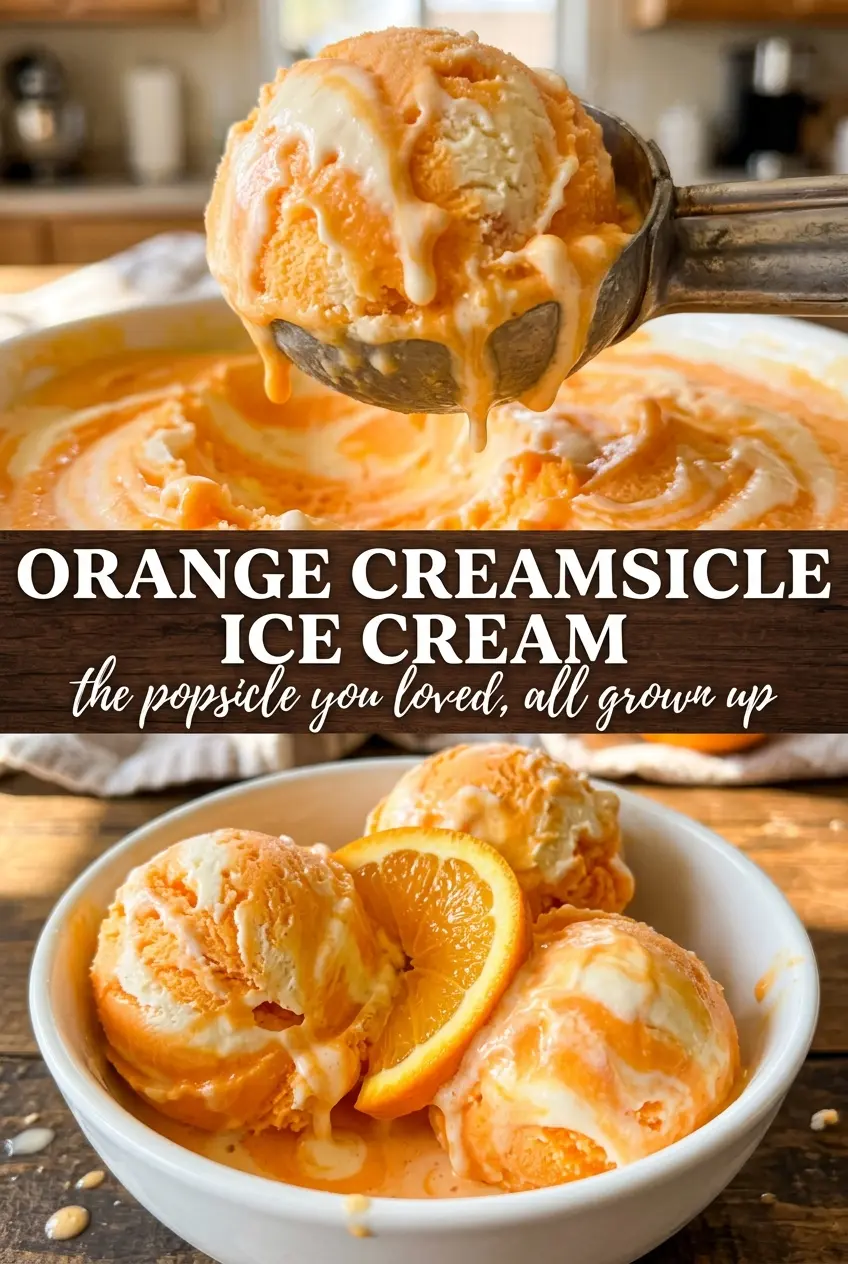
Orange Creamsicle Ice Cream
Ingredients
Equipment
Method
- Heat the heavy cream and whole milk until steaming, then whisk into the egg yolks that have been beaten with 1/2 cup of the granulated sugar. Keep whisking until smooth.
- Return the mixture to the heat and cook, stirring, until it reaches 175F. The custard should visibly thicken enough to coat the back of a spoon.
- Strain the custard, then whisk in the vanilla extract and salt. Cool completely until no longer warm.
- In a small saucepan, combine the fresh orange juice, orange zest, and the remaining 1/4 cup granulated sugar. Stir until dissolved.
- Simmer for 5 minutes until slightly syrupy, then remove from the heat. Cool completely until chilled.
- Churn the vanilla custard in an ice cream maker until thick. It should look like soft-serve when done.
- During the last 2 minutes of churning, drizzle in the orange syrup to create swirls, without fully mixing. Look for distinct orange streaks against the white base.
- Transfer the ice cream to a container, layering spoonfuls while preserving the swirl. Add more orange streaks where you can see them.
- Freeze at least 4 hours until firm. The surface should be scoopable with minimal wobble.