Golden chicken thighs and fluffy rice baked together in one dish hit that sweet spot between comfort food and practical dinner. The chicken skin turns crisp on top while the rice underneath drinks in every bit of seasoned broth and pan drippings, so nothing tastes flat or separate. You get a full meal with the kind of payoff that usually takes two pots and a lot more attention.
The trick here is to keep the chicken on top and the rice underneath. That lets the skin stay exposed for the last part of baking, which is what keeps it from going soft. Long-grain white rice works best because it stays distinct after it soaks up the broth; short-grain rice turns too dense, and brown rice needs a different liquid ratio and a much longer bake.
Below, I’m walking through the one detail that keeps the rice from going mushy, plus a few swaps that help if you need to work with what’s already in your pantry.
The rice came out fluffy and soaked up all the chicken drippings, and the skin on top stayed crisp instead of getting soggy. I’ve made this twice now and the foil timing was spot on.
Save this one-pan chicken and rice bake for the nights when you want crispy chicken skin and savory rice from one baking dish.
The Trick That Keeps the Rice Fluffy Under Crispy Chicken
The biggest failure point in a chicken and rice bake is moisture management. If the rice sits too dry, it stays hard at the edges; if it sits too wet, it turns pasty before the chicken is done. This version uses a covered bake first, which steams the rice in the broth and chicken juices, then an uncovered finish that lets the top dry out just enough for the skin to crisp.
That two-stage bake matters. The foil traps heat and keeps the rice cooking evenly, but once it comes off, the surface can finally breathe. If you’ve ever ended up with soft skin or a wet top layer, it usually means the dish stayed covered too long or the oven ran cool. Give the final uncovered minutes their full time and don’t pull it early just because the chicken looks done on the surface.
What Each Ingredient Is Actually Doing in This Recipe
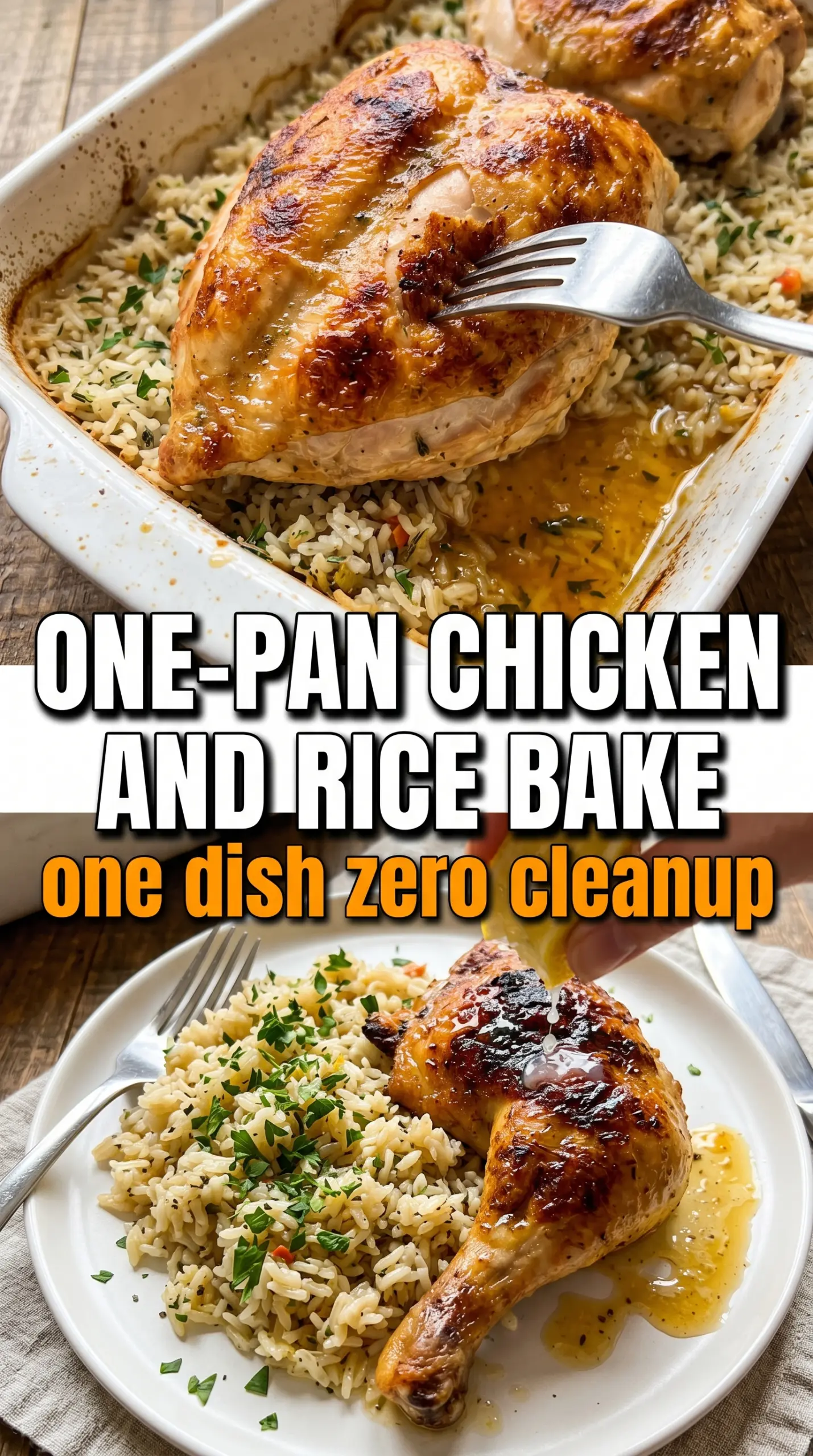
- Primary ingredient (the star) — Quality matters most. Choose the best you can find.
- Cooking medium (oil, butter, or broth) — This carries flavors and prevents dryness.
- Seasonings (salt, pepper, spices, herbs) — Layer flavors so nothing overpowers. Build depth gradually.
- Aromatics (garlic, onion, herbs) — Cook with fat to bloom flavors. Become the foundation.
- Supporting ingredients — Complement the main ingredient without overpowering it.
- Sauce or liquid (if applicable) — Brings flavors together. Balance richness with acid.
- Acid (lemon, vinegar, wine, or other) — Brightens and prevents flat-tasting results.
- Final finish (garnish, glaze, or sauce) — Prevents one-dimensional taste and adds visual appeal.
What the Rice, Broth, and Chicken Skin Are Each Doing Here
The ingredients aren’t just sharing a pan; they’re building the dish together. Bone-in, skin-on thighs bring flavor and enough fat to keep the chicken juicy through a longer bake. Long-grain white rice is the right choice because it holds its shape instead of collapsing into a creamy mass.
- Bone-in, skin-on chicken thighs — These stay juicier than boneless pieces and give you the best flavor in the pan drippings. If you swap in boneless thighs, cut the covered bake time down a bit so they don’t dry out.
- Chicken broth — This gives the rice its seasoning base, and a good broth makes a noticeable difference. Low-sodium broth is the safest pick because the chicken and seasoning already bring salt.
- Long-grain white rice — This is the texture anchor. It cooks up separate and fluffy after absorbing the liquid; medium- or short-grain rice can go sticky in this amount of broth.
- Onion and garlic — They melt into the rice while baking and build the savory base without any extra stovetop work. Dice the onion finely so it softens completely in the oven.
- Olive oil — A light drizzle over the chicken helps the skin brown better once the foil comes off. You don’t need much, just enough to encourage color and crispness.
Building the Bake in Two Stages
Seasoning the Chicken So the Top Layer Tastes Like Dinner
Coat the thighs generously with salt, pepper, garlic powder, paprika, and Italian seasoning before they go into the dish. The seasoning on the chicken matters because the rice underneath will pick up only part of it through the broth. If the chicken is underseasoned, the whole pan tastes dull even when the rice is cooked perfectly.
Letting the Rice Start Under Cover
Stir the rice, broth, onion, garlic, thyme, Italian seasoning, and salt together in the baking dish first, then nestle the chicken skin-side up on top. Cover the dish tightly with foil so steam stays trapped and the rice can cook evenly from edge to center. If the foil isn’t sealed well, the liquid evaporates too fast and the rice at the top goes dry before the middle is done.
Finishing Uncovered for Color and Texture
After 40 minutes covered, remove the foil and keep baking until the skin is golden and the rice has absorbed the liquid. This last stretch is where the dish changes from steamed to baked. If there’s still a little liquid at the bottom, give it a few more minutes instead of serving early; rice that looks almost done often needs that final bit of time to settle and finish absorbing.
How to Adapt This When You Need a Different Pan or a Different Diet
Use boneless chicken thighs for a faster bake
Boneless thighs work if that’s what you have, but they cook faster and don’t give quite the same depth of flavor in the pan. Start checking them earlier, around the uncovered stage, so they don’t go stringy. You’ll still get a good result, just with less built-in richness from the bones.
Make it gluten-free without changing the method
This recipe is naturally gluten-free as long as your broth is certified gluten-free. That’s the only place hidden gluten usually shows up. The texture and bake time stay the same.
Swap in brown rice only if you’re ready to adjust the whole bake
Brown rice needs more liquid and a longer bake, so this isn’t a straight substitution. If you try to swap it in without changing the ratios, the chicken will be done before the rice softens. For this exact method, stick with long-grain white rice.
Add vegetables without throwing off the bake
Frozen peas, diced carrots, or chopped bell pepper can be stirred into the rice mixture before baking. Keep the pieces small so they soften in the same window as the rice. Big chunks stay undercooked by the time the chicken is finished.
Storage and Reheating
- Refrigerator: Store leftovers covered for up to 4 days. The rice firms up a bit as it chills, but it softens again when reheated.
- Freezer: This freezes well. Portion it into airtight containers and freeze for up to 2 months for the best texture.
- Reheating: Reheat covered in the oven at 325°F with a splash of broth or water to loosen the rice. The common mistake is blasting it uncovered in the microwave, which dries out the chicken and makes the rice tough around the edges.
Questions I Get Asked About This Recipe
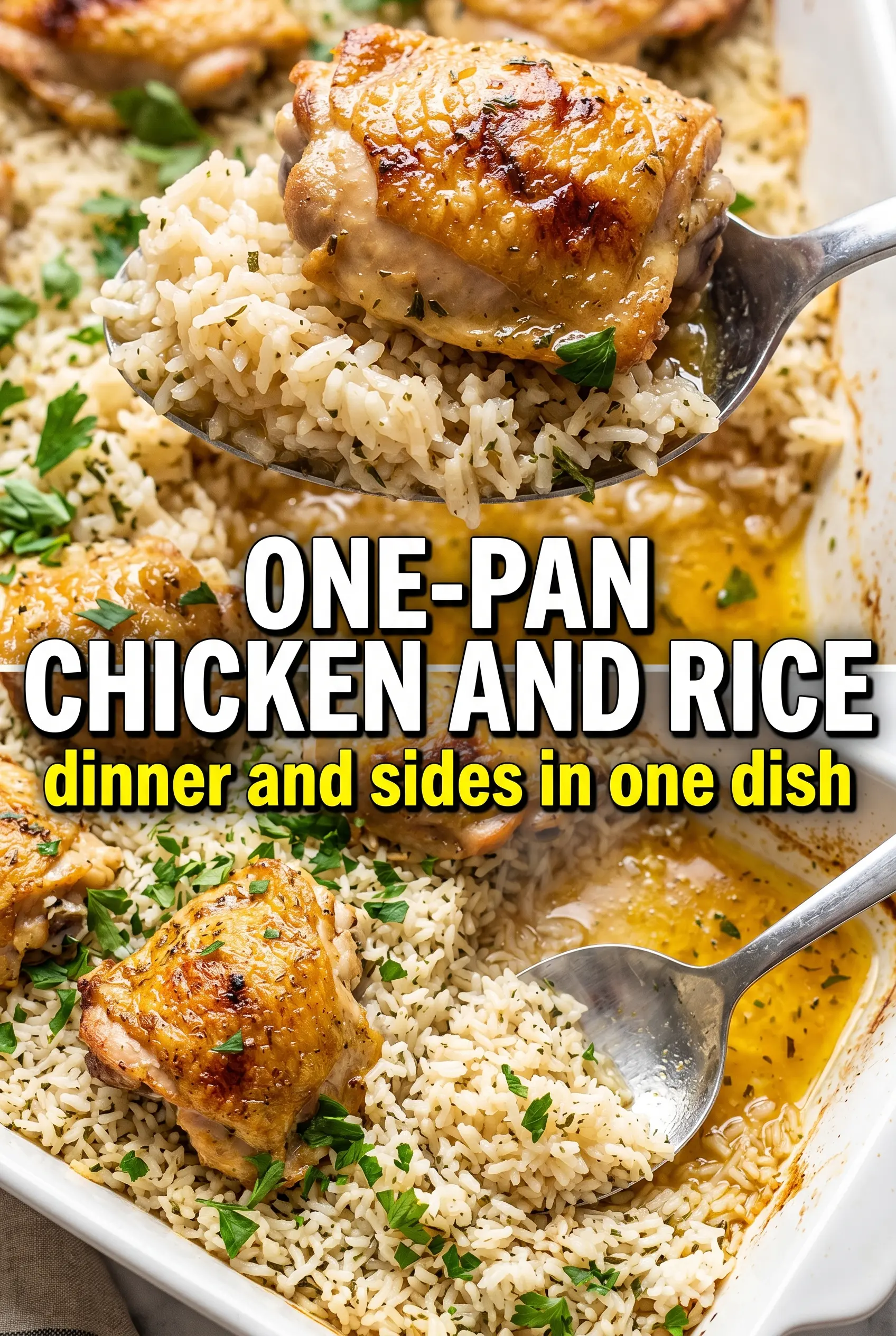
One-Pan Chicken and Rice Bake
Ingredients
Equipment
Method
- Preheat the oven to 375°F.
- In a 9x13 baking dish, mix long-grain white rice, chicken broth, diced onion, minced garlic, dried thyme, Italian seasoning, and salt; stir to combine.
- Season the bone-in skin-on chicken thighs generously on all sides with pepper, garlic powder, paprika, and Italian seasoning.
- Nestle the chicken skin-side up on top of the rice mixture, then drizzle with olive oil.
- Cover tightly with foil and bake for 40 minutes.
- Remove the foil and bake for 15 minutes, until the chicken skin is golden and the rice has absorbed all liquid.
- Garnish with fresh parsley and serve directly from the baking dish.