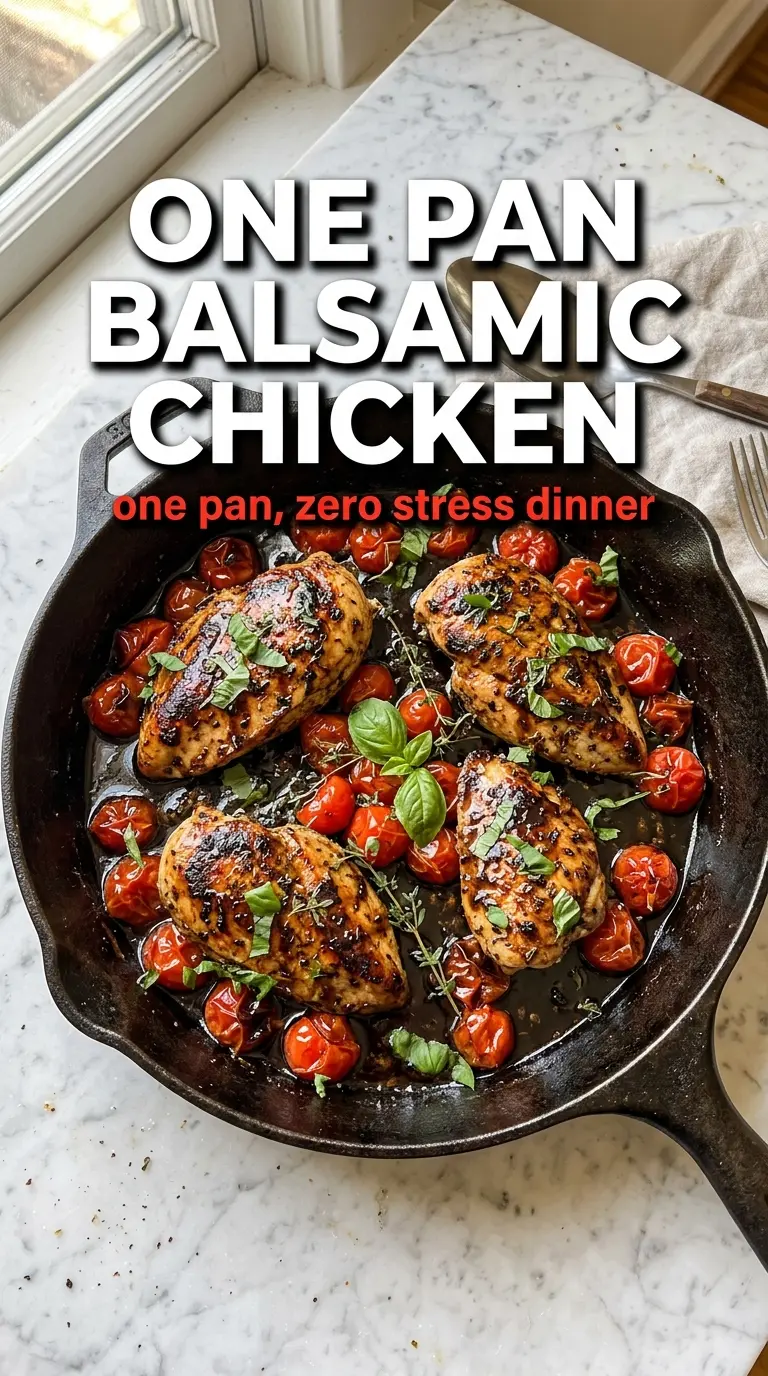
Golden, crispy chicken thighs and a glossy balsamic glaze make this one-pan dinner feel like much more than a quick skillet meal. The skin stays crackly on top while the sauce turns dark, sticky, and just sweet enough to cling to every bite. Bursting tomatoes and soft garlic round it out, so the whole pan tastes layered instead of rushed.
What makes this version work is the order. The chicken gets a hard sear first, which renders the skin and builds the browned bits that later flavor the sauce. Then the balsamic, honey, and broth reduce together in the same pan, so nothing gets lost and the glaze thickens naturally as the chicken finishes cooking. A small knob of butter at the end gives the sauce a smoother finish without making it heavy.
Below you’ll find the little details that keep the skin crisp, the glaze balanced, and the sauce from turning flat or sharp. If you’ve ever ended up with limp chicken or a thin balsamic pan sauce, this one fixes both.
The skin turned out crisp and the balsamic glaze reduced right in the skillet without burning. I liked that the tomatoes burst into the sauce and gave it a sweet, fresh finish.
One Pan Balsamic Chicken with crispy skin, burst tomatoes, and that deep glossy glaze is worth keeping close for busy nights.
The Skin Stays Crisp Because the Sauce Comes Later
The biggest mistake with balsamic chicken is rushing the sauce into the pan before the chicken has had time to brown. Skin-on thighs need direct contact with the skillet long enough to render fat and build a real crust. If you add liquid too early, the skin steams, and that shattery top never happens.
This recipe protects the texture by treating the sear as its own stage. The chicken comes out of the pan before the balsamic goes in, which lets the tomatoes blister and the garlic soften without burning. Then the sauce reduces around the chicken instead of underneath it, so the skin stays above the glaze and keeps its bite.
- Bone-in, skin-on thighs — These stay juicier than breasts and give you the best chance at crisp skin. Boneless thighs work, but they cook faster and won’t have quite the same rich finish.
- Cherry tomatoes — They add acidity and a little sweetness once they burst. Grape tomatoes work too, but cut them in half if they’re large so they collapse at the same pace as the sauce.
- Balsamic vinegar — Use a balsamic you’d actually enjoy tasting on its own. A harsh, thin vinegar turns sharp as it reduces, while a decent one becomes glossy and mellow.
- Honey — This rounds out the balsamic and helps the glaze cling to the chicken. Maple syrup can stand in, but it brings a different note and makes the sauce a touch darker.
What Each Ingredient Is Actually Doing in This Recipe
- Primary ingredient (the star) — Quality matters most. Choose the best you can find.
- Cooking medium (oil, butter, or broth) — This carries flavors and prevents dryness.
- Seasonings (salt, pepper, spices, herbs) — Layer flavors so nothing overpowers. Build depth gradually.
- Aromatics (garlic, onion, herbs) — Cook with fat to bloom flavors. Become the foundation.
- Supporting ingredients — Complement the main ingredient without overpowering it.
- Sauce or liquid (if applicable) — Brings flavors together. Balance richness with acid.
- Acid (lemon, vinegar, wine, or other) — Brightens and prevents flat-tasting results.
- Final finish (garnish, glaze, or sauce) — Prevents one-dimensional taste and adds visual appeal.
Building the Glaze in the Same Pan You Brown the Chicken In
Seasoning and Searing the Thighs
Coat the chicken generously with salt, pepper, garlic powder, and Italian seasoning before it ever hits the heat. Lay it skin-side down in a hot skillet and don’t move it for the full 7 to 8 minutes; that stillness is what lets the skin release and crisp instead of tearing. If it sticks at first, it’s not ready yet. Flip once the skin is deep golden and the fat in the pan has rendered out.
Softening the Garlic and Blistering the Tomatoes
Pull the chicken out briefly, then add the whole garlic cloves and cherry tomatoes. The tomatoes should start to blister and split at the edges, not collapse into mush right away. Whole garlic cloves stay sweet and mellow here; chopped garlic would burn before the sauce has time to reduce.
Reducing the Balsamic
Pour in the balsamic vinegar, honey, and chicken broth, then stir and scrape up every browned bit on the bottom. Those bits are the backbone of the sauce, so don’t leave them behind. Bring the liquid to a boil first, then lower to a steady simmer once the chicken goes back in. The sauce should look loose at the start and turn syrupy near the end.
Finishing With Butter and Basil
When the chicken reaches 165°F and the sauce coats the spoon, pull the pan off the heat and stir in the butter. That last step softens the edges of the balsamic without dulling it. Scatter the basil over the top right before serving so it stays bright and fragrant instead of turning dark in the pan.
What to Change When You Need a Different Version of Balsamic Chicken
Dairy-Free Finish
Skip the butter and let the sauce reduce a minute longer before serving. You’ll lose a little roundness, but the glaze still clings well because the honey and reduced balsamic do most of the thickening.
Chicken Breasts Instead of Thighs
Use boneless, skinless breasts and cut the simmer time way down. They cook faster and won’t give you the same crisp top, so keep the heat gentler and pull them as soon as they hit 165°F to avoid dry meat.
Lower-Sugar Version
Reduce the honey to 1 tablespoon if you want a sharper, more savory glaze. The sauce will still thicken, but it will finish with more bite and less shine.
Storage and Reheating
- Refrigerator: Store leftovers for up to 3 days. The skin softens as it sits, but the flavor gets deeper.
- Freezer: It freezes fairly well for up to 2 months, though the tomatoes will be softer after thawing. Freeze the chicken and sauce together in an airtight container.
- Reheating: Warm gently in a covered skillet over low heat with a splash of broth. High heat will tighten the chicken and make the glaze sticky in the wrong way, so take your time.
Questions I Get Asked About This Recipe
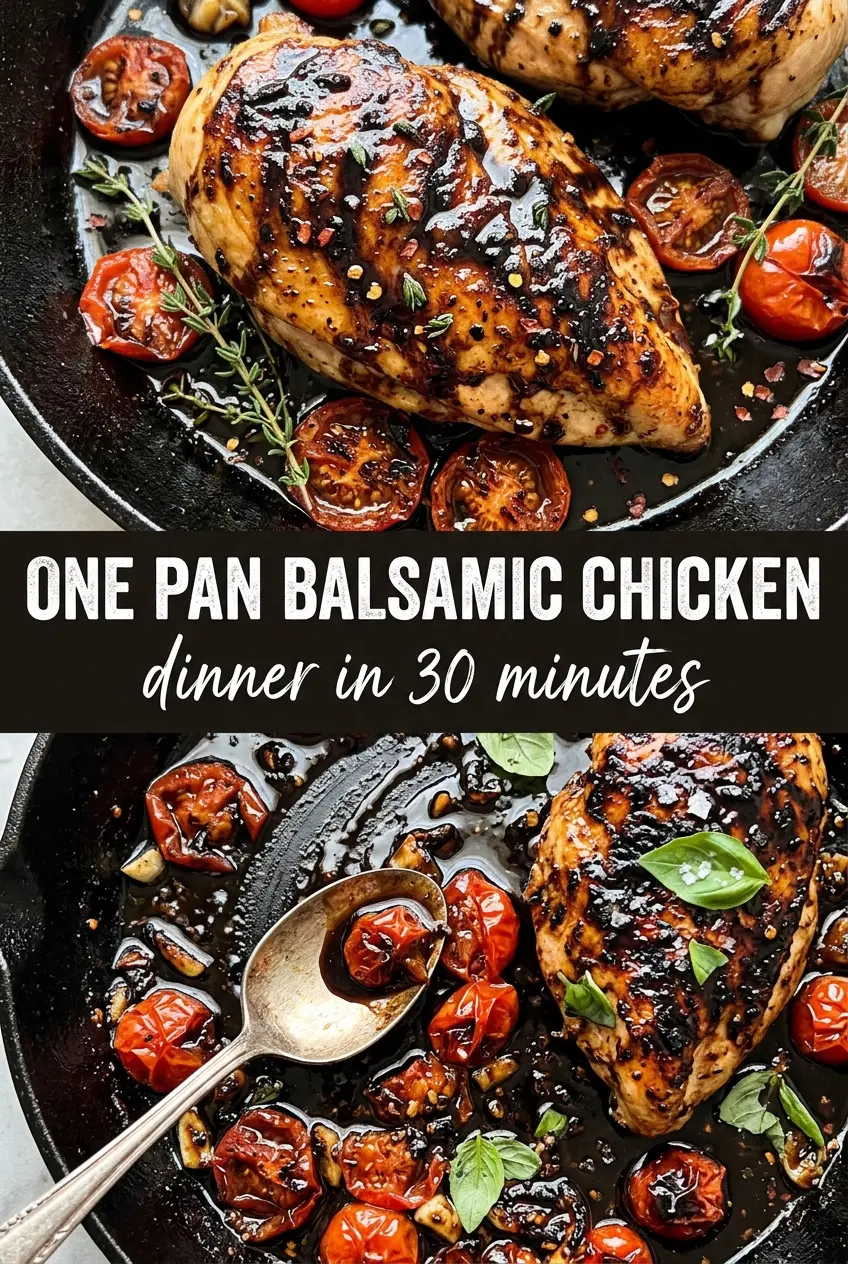
One Pan Balsamic Chicken
Ingredients
Equipment
Method
- Season the bone-in skin-on chicken thighs generously on both sides with salt, pepper, garlic powder, and Italian seasoning.
- Heat the olive oil in a large cast iron skillet over medium-high heat and sear the chicken skin-side down for 7-8 minutes, until the skin is deeply golden and crispy (visual cue: crisp, dark-golden edges).
- Flip the chicken and sear for 3 more minutes, until well browned (visual cue: browned surface and crisp skin).
- Remove the chicken from the skillet.
- Add the whole garlic cloves and cherry tomatoes, cooking for 2 minutes until the tomatoes begin to blister (visual cue: split, blistered tomato skins).
- Pour in the balsamic vinegar, honey, and chicken broth, then stir and bring to a boil while scraping up any browned bits (visual cue: dark liquid turns glossy and bubbling).
- Return the chicken skin-side up to the skillet and cook over medium heat for 12-15 minutes until the chicken reaches 165°F (visual cue: caramelized sauce thickens and coats the chicken).
- Stir in the butter until melted, scatter fresh basil over the top, and serve straight from the skillet (visual cue: sauce turns extra glossy and smooth).