Soft oatmeal cookies with a thick marshmallow cream center hit that sweet spot between nostalgic and genuinely worth making from scratch. The cookies stay chewy in the middle with just enough edge to hold the filling, and the cream layer gives each bite that classic bakery-style pull without turning greasy or overly sweet. When they’re right, they taste like the lunchbox treat you remember, only fresher, fuller, and a lot better textured.
The trick is keeping the cookies soft without making them cakey. Brown sugar, molasses, and a generous amount of oats do most of the work, but the cookies need to come out of the oven while the centers still look slightly underdone so they finish setting as they cool. For the filling, softened butter and cream cheese give structure, while marshmallow creme keeps it light and spreadable instead of dense.
Below, I’ve included the small details that matter most: how to keep the cookies from spreading too much, how to get a filling that pipes cleanly, and the one storage note that keeps these sandwich cookies from losing their softness overnight.
The cookies baked up soft and chewy instead of dry, and the filling stayed thick enough to sandwich without squishing out the sides. My kids said they tasted just like the ones from the bakery.
Save these oatmeal cream pies for the days when you want soft chewy cookies with a thick marshmallow filling that tastes bakery-made.
The Mistake That Makes Oatmeal Cream Pies Dry Instead of Soft
The biggest failure with oatmeal cream pies is baking the cookies until they look finished in the oven. By the time the centers look fully set, they’ve already gone past the soft, tender stage you want, and once they cool they can turn firm and crumbly instead of chewy. Pull them when the edges are set and the centers still look a little puffy and underbaked.
The other trap is using too much flour or overmixing after the oats go in. This dough should look thick, but not stiff enough to shape by hand. Stir until the dry ingredients disappear, then stop. Overworking the dough tightens the cookies and makes them spread less evenly, which can throw off the sandwich shape.
There’s one more detail worth respecting: let the cookies cool completely before filling them. Warm cookies soften the cream too much, and the filling can slide right out the sides when you press the sandwiches together.
What Each Ingredient Is Actually Doing in These Cookies

- Old-fashioned rolled oats — These give the cookies their chew and structure. Quick oats will work in a pinch, but they make the cookies softer and less textured. If you swap them, expect a finer, more uniform crumb.
- Brown sugar — This is where the softness comes from. The molasses in brown sugar keeps the cookies moist and gives them that classic oatmeal cream pie depth, while granulated sugar helps with spread and the light crisp edge.
- Molasses — A little goes a long way here. It deepens the color and pushes the flavor toward that familiar bakery-style oatmeal cookie. Don’t skip it unless you have to; the cookies will taste flatter without it.
- Cream cheese in the filling — It keeps the marshmallow cream from turning cloying and gives the filling enough body to stay put. If you leave it out, the center gets sweeter and softer, and the sandwich can feel one-note.
- Marshmallow creme — This is what gives the filling that light, fluffy, nostalgic texture. I wouldn’t replace it with melted marshmallows; they don’t whip the same way and the filling won’t hold as nicely.
Building the Cookies So They Stay Chewy After They Cool
Creaming the Butter and Sugars
Beat the butter with both sugars until the mixture looks pale and fluffy. That step traps air and gives the cookies a lighter bite, but stop once it looks cohesive and a little whipped. If the butter is too warm, the dough will turn greasy and the cookies will spread too thin in the oven.
Adding the Wet Ingredients
Mix in the eggs, molasses, and vanilla until the batter looks smooth and glossy. The molasses should disappear into the mixture without streaks. Scrape the bowl well here, because any unmixed butter at the bottom can leave the dough uneven and patchy.
Folding in the Dry Ingredients and Oats
Add the flour, baking soda, spices, salt, and oats, then mix just until no dry pockets remain. The dough will be thick and a little sticky, which is exactly what you want. If it gets overmixed, the flour tightens up and the cookies lose that soft, rounded texture.
Baking and Cooling
Scoop the dough into 2-tablespoon ovals and bake just until the tops lose their raw sheen and the edges look set. The centers should still look soft when they come out. Let them sit on the pan for a few minutes before moving them, because they’re fragile while warm and finish setting as they cool.
How to Make These Oatmeal Cream Pies Fit Different Kitchens
Gluten-Free Swap
Use a good 1:1 gluten-free flour blend in place of the all-purpose flour, and keep the oats certified gluten-free. The cookies will still be soft and chewy, though the crumb may be a touch more tender and less sturdy when warm.
Dairy-Free Version
Swap in plant-based butter for both the cookies and filling, then use a dairy-free cream cheese that’s firm enough to beat smoothly. The filling will be a little less tangy, but it still holds its shape and gives you that creamy middle.
Extra-Spiced Cookies
Add a pinch of ground ginger or cloves if you want a deeper spice note. Keep it light; too much spice can take over the marshmallow filling instead of supporting the cookie.
Storage and Reheating
- Refrigerator: Store in an airtight container for up to 5 days. The cookies stay soft, but the filling firms up a bit when chilled.
- Freezer: Freeze the assembled cookies between layers of parchment for up to 2 months. Thaw in the refrigerator or at room temperature; don’t freeze them while warm or the filling can weep.
- Reheating: These don’t need reheating, but if you want them softer, let them sit at room temperature for 15 to 20 minutes. Microwaving is risky because it melts the filling fast and can make the cookies greasy.
Questions I Get Asked About This Recipe
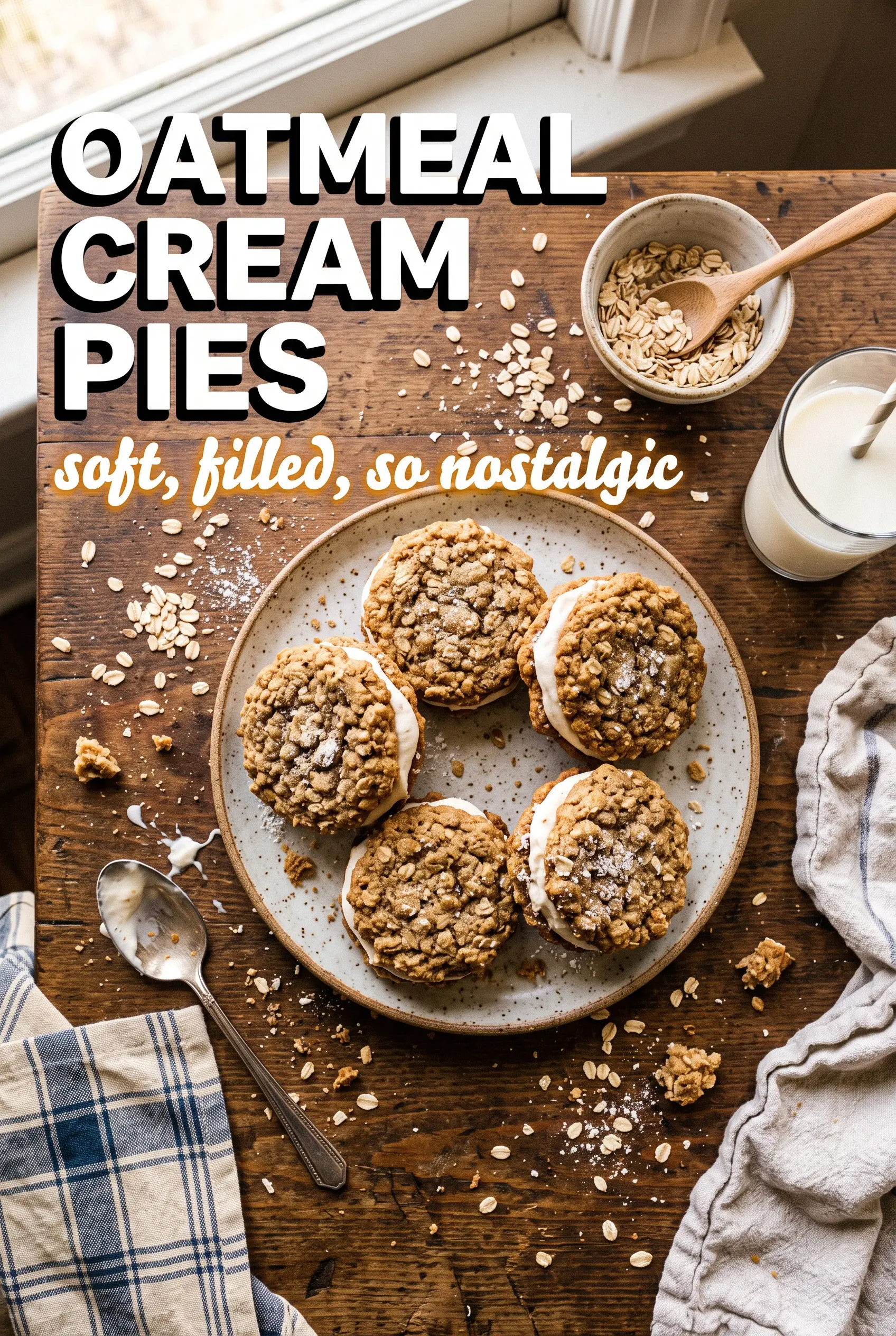
Oatmeal Cream Pies
Ingredients
Equipment
Method
- Beat the softened butter with the brown sugar and granulated sugar until fluffy, then scrape the bowl. Beat until the mixture looks lighter in color and more aerated.
- Add the eggs, molasses, and vanilla, then beat just until combined. Stop when you no longer see streaks.
- Fold in the flour, baking soda, cinnamon, nutmeg, salt, and oats until you have a thick dough. Mix only until no dry flour remains.
- Scoop 2-tablespoon ovals onto a baking sheet with space between them. Aim for even size so they bake in the same time.
- Bake at 350F for 10-12 minutes, until the cookies are set. Look for edges that hold their shape while centers stay soft.
- Cool the cookies completely before filling. Wait until they are fully cool to the touch so the filling doesn’t melt.
- Beat the softened butter and cream cheese until very smooth. Continue until the mixture looks silky with no lumps.
- Beat in the marshmallow creme, powdered sugar, vanilla, and cinnamon until fluffy and very smooth. Keep beating until the texture is thick, pale, and spreadable.
- Match cookies in pairs by size, then spread a generous layer of filling on one cookie. Use enough to reach near the edges without overflowing.
- Press the second cookie on top to form sandwiches. Gently press so the filling spreads evenly across the seam.