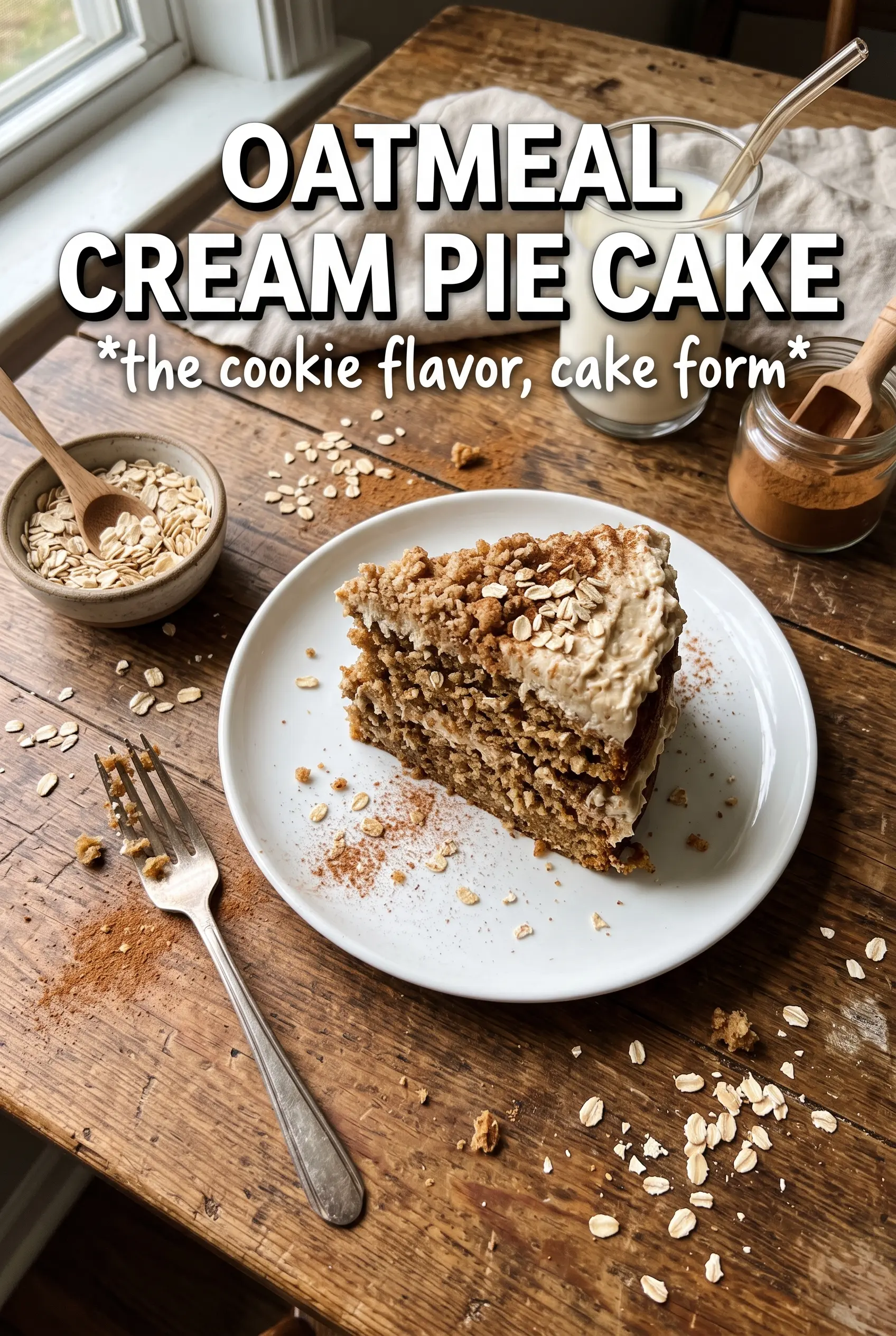
Soft oatmeal spice cake layered with fluffy marshmallow cream has that old-school snack cake feel, only dressed up enough to bring to a celebration. The cake stays tender and moist from sour cream and brown sugar, while the oats give it the nubby, familiar texture that makes each bite taste like a better version of the classic treat.
What makes this version work is balance. The batter uses enough flour to hold the oats without turning heavy, and the cinnamon-nutmeg blend keeps the flavor warm without taking over. The filling leans on cream cheese and marshmallow creme together, which gives you sweetness, tang, and a frosting that spreads cleanly instead of sliding around the layers.
Below you’ll find the small details that matter most, from keeping the cake layers soft to getting the filling fluffy enough to frost the outside without tearing crumbs into it. If you’ve ever wanted an oatmeal cream pie in cake form that actually slices neatly, you’re in the right place.
The filling whipped up smooth and fluffy, and the cake stayed soft for two days without getting dry. The cinnamon flavor comes through just enough and it sliced cleanly after chilling.
Save this Oatmeal Cream Pie Cake for the days when you want soft spice cake and marshmallow filling in one neat layer cake.
The crumb in this cake stays tender because the oats are carrying the texture, not the flour
The mistake with a lot of oatmeal cakes is overmixing the batter until the oats break down and the crumb turns pasty. Here, the oats are folded in with the dry ingredients so they hydrate just enough in the oven to soften, but still leave little pockets of chew. That gives the cake its classic oatmeal cookie feel without making it dense.
Sour cream does the quiet work here. It adds moisture and a little tang, which keeps the brown sugar and spice from tasting flat. If your cake has ever baked up dry around the edges, the usual culprit is too much flour or an oven that runs hot, so pull the layers as soon as the center springs back and the edges release from the pan.
What each ingredient is actually doing in this oatmeal cream pie cake
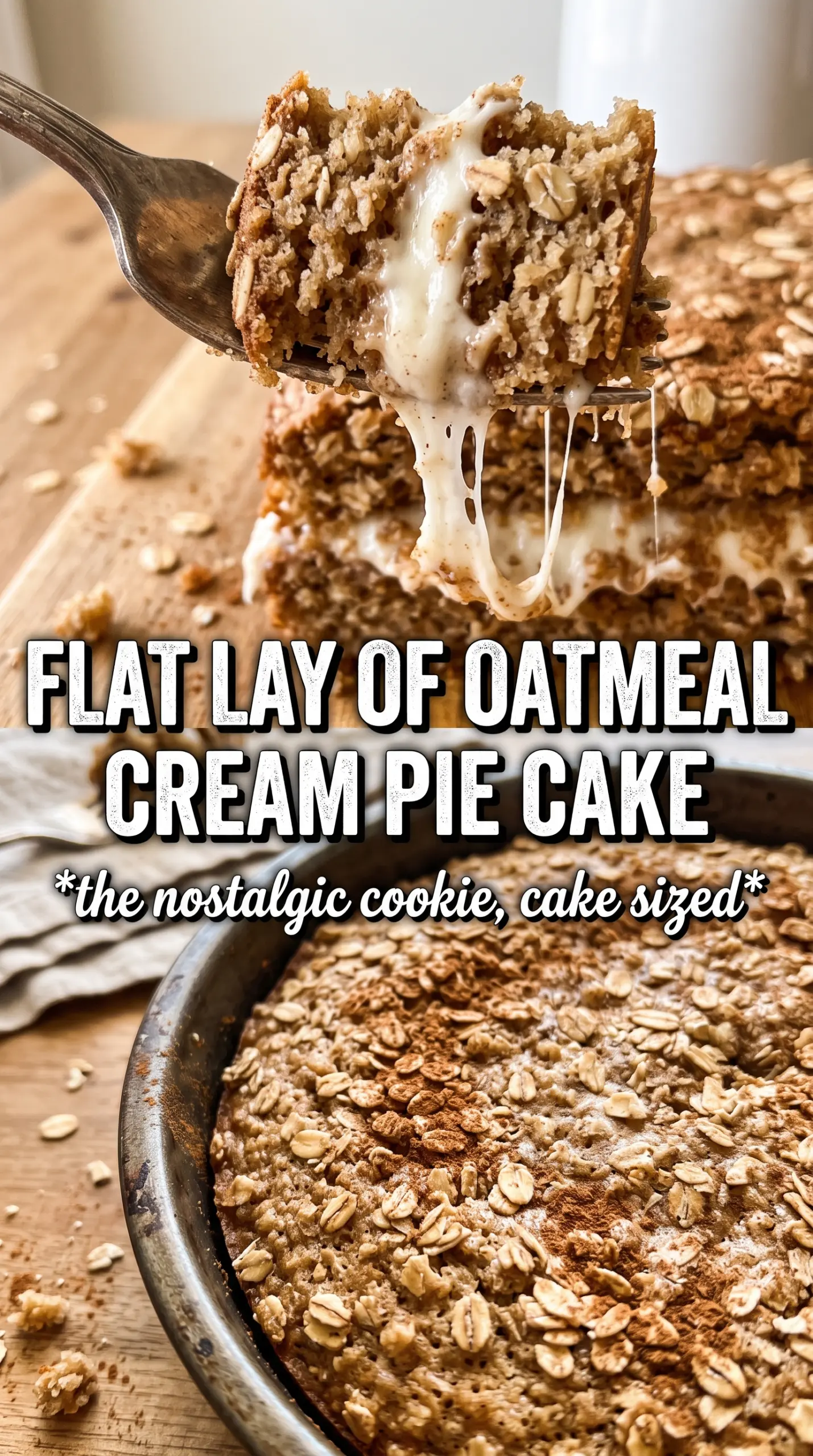
- Rolled oats — These give the cake its signature texture. Quick oats will work in a pinch, but they soften faster and make the crumb a little less distinct. Old-fashioned oats keep the layers hearty without turning them heavy.
- Brown sugar — This is the flavor backbone. It adds molasses depth and helps the cake stay moist for days. Light brown sugar is fine; dark brown sugar will push the cake a little richer and more caramel-like.
- Sour cream — This is what keeps the crumb soft and plush. Plain full-fat Greek yogurt can stand in, but the texture is slightly tighter and the flavor a touch sharper.
- Cream cheese and marshmallow creme — Together they make the filling pipeable, fluffy, and stable enough to spread on the sides of the cake. Marshmallow fluff alone is too sweet and soft; the cream cheese reins it in and gives the filling structure.
- Butter — Use softened butter for both the cake and filling so everything emulsifies smoothly. If the butter is too cold, the batter looks broken; if it’s melted, the cake loses structure.
Building the layers so the filling stays fluffy instead of squishing out
Creaming the base properly
Beat the butter and brown sugar until the mixture looks lighter in color and a little fluffy, not just blended. That step traps air, which gives the cake lift before the leaveners even start working. Add the eggs one at a time so the batter stays smooth; if it looks curdled after the sour cream goes in, don’t panic, because the flour will pull it back together.
Bringing the batter together
Fold in the dry ingredients just until the last streaks disappear. The batter will be thick, and that’s exactly what you want for layer cakes that hold a filling. If you keep mixing, the oats absorb too much liquid early and the cake bakes up tighter than it should.
Baking and cooling the layers
Divide the batter evenly between the pans so the layers bake at the same rate. Pull them when the tops spring back and a tester comes out with a few moist crumbs, not wet batter. Cool them completely before filling, because even a little warmth will soften the marshmallow cream and make the cake slide.
Whipping the filling until it’s spreadable
Beat the butter and cream cheese until smooth before adding the marshmallow creme and powdered sugar. If the cream cheese still has lumps, they’ll stay there. The finished filling should look airy, pale, and thick enough to hold swirls on a spoon; if it’s loose, chill it for 10 to 15 minutes before assembling.
Three ways to make this cake work for different kitchens and occasions
Gluten-free version with the right texture
Swap in a good 1:1 gluten-free baking flour and use certified gluten-free oats. The cake will be a little more delicate when slicing, but the sour cream keeps it from turning crumbly. Let the layers cool fully before moving them.
A less sweet filling
If you want the frosting to taste more like cream cheese icing and less like a bakery filling, reduce the powdered sugar by 1/2 cup. The filling will be a little softer, but the tang comes forward and balances the cake better.
Cupcake-style presentation
Bake the batter in lined muffin tins and fill the centers with a spoonful of marshmallow cream filling. You’ll get a lighter dessert with more edge per bite, and the portions are easier for a party. Start checking for doneness earlier, since cupcakes finish faster than layers.
Storage and Reheating
- Refrigerator: Store covered for up to 4 days. The filling firms up in the fridge, and the cake actually slices cleaner after a chill.
- Freezer: Freeze individual slices wrapped tightly in plastic and foil for up to 2 months. Thaw overnight in the refrigerator; the filling softens back up better than it does at room temperature.
- Reheating: This cake isn’t meant to be heated. Let a chilled slice sit at room temperature for 20 to 30 minutes so the filling softens without melting.