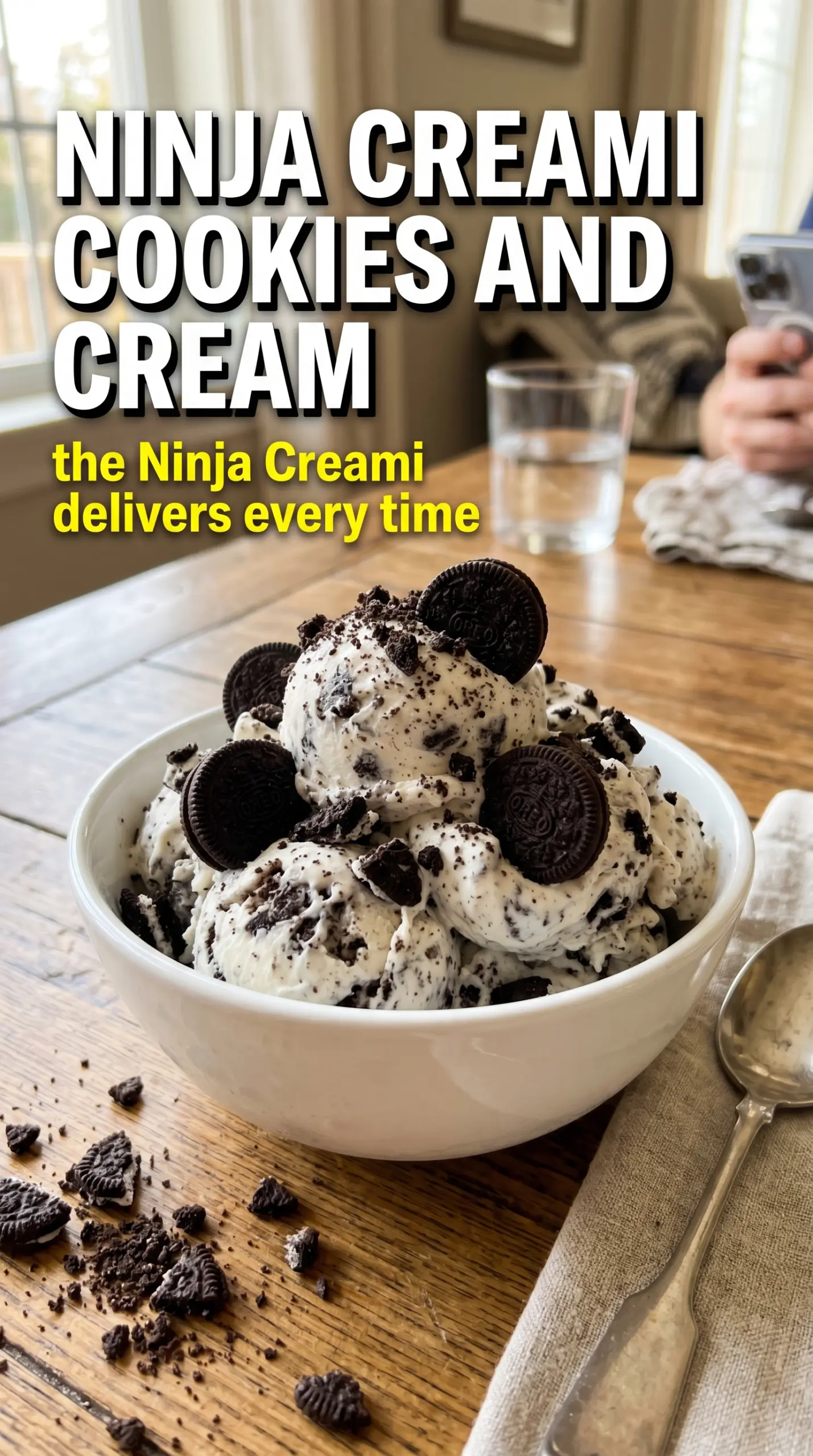
Cookies and cream in the Ninja Creami comes out dense, smooth, and full of real cookie pieces instead of the icy, airy texture you get from a lot of homemade ice creams. The base freezes firm, then the machine turns it into a rich pint with that classic milky vanilla flavor and the crunch of chocolate sandwich cookies folded through at the end.
What makes this version work is the cream cheese. It gives the base a little body and helps the pint re-spin into something scoopable instead of crumbly. The blend also matters: if the cream cheese isn’t fully dissolved before freezing, you’ll get little bits that never quite disappear. Crush the cookies by hand or with a rolling pin so you get a mix of fine crumbs and bigger pieces; that mix gives you the best texture after the Mix-In cycle.
Below, I’ve included the one timing detail that keeps the pint from turning chalky, plus a few swaps and troubleshooting notes for the people who want this to work the first time, not on the third re-spin.
The base turned out super creamy after one spin, and the Mix-In function kept the cookie pieces crunchy instead of pulverizing them. Mine only needed a tablespoon of milk for the perfect scoopable texture.
Save this Ninja Creami cookies and cream pint for the nights when you want a smooth base, crunchy cookie pieces, and no guesswork on the re-spin.
The Part That Keeps a Creami Base from Turning Grainy
The biggest mistake with Ninja Creami ice cream is freezing a base that wasn’t fully smooth to begin with. Cream cheese needs to disappear into the milk and cream before the pint goes into the freezer, or you end up with tiny soft lumps that show up after spinning and make the texture feel uneven. A blender handles this better than whisking by hand, especially once the sugar is in and the mixture starts to thicken.
The other trap is overloading the pint with cookies before freezing. The Mix-In cycle works because it folds crushed cookies into a finished base; if they go in too early, they get soggy and muddy the flavor. Keep the first freeze plain, then add the cookies after the base has already turned creamy.
- Whole milk — This gives the base enough water to freeze cleanly, but not so much that it turns icy. Lower-fat milk will work in a pinch, but the finished pint won’t have the same richness.
- Heavy cream — This is what gives the ice cream that dense, scoopable body. Half-and-half will make a lighter pint, but it also makes the texture less plush after spinning.
- Cream cheese — The small amount here is doing a lot of work. It helps the base emulsify and gives the ice cream a smoother, less icy finish after the freeze.
- Chocolate sandwich cookies — Use the real thing if you want that classic cookies-and-cream flavor and crunchy bits that stay distinct. If you use sandwich cookies with a softer creme filling, crush them a little smaller so the pieces mix in cleanly.
What Each Ingredient Is Actually Doing in This Recipe
- Primary ingredient (the star) — Quality matters most. Choose the best you can find.
- Cooking medium (oil, butter, or broth) — This carries flavors and prevents dryness.
- Seasonings (salt, pepper, spices, herbs) — Layer flavors so nothing overpowers. Build depth gradually.
- Aromatics (garlic, onion, herbs) — Cook with fat to bloom flavors. Become the foundation.
- Supporting ingredients — Complement the main ingredient without overpowering it.
- Sauce or liquid (if applicable) — Brings flavors together. Balance richness with acid.
- Acid (lemon, vinegar, wine, or other) — Brightens and prevents flat-tasting results.
- Final finish (garnish, glaze, or sauce) — Prevents one-dimensional taste and adds visual appeal.
Freezing, Spinning, and Adding the Cookies at the Right Moment
Blending the Base Until It Looks Uniform
Blend the milk, cream, sugar, softened cream cheese, vanilla, and salt until the mixture looks smooth and pale with no visible cream cheese specks. If you can still see little lumps, they’ll freeze as hard bits and stay that way. A high-speed blender or immersion blender works best here because the cream cheese needs real force to break down.
Freezing the Pint Flat and Undisturbed
Pour the mixture into the Ninja Creami pint and stop about an inch below the top. That headspace matters because the base expands a little as it freezes, and an overfilled pint can warp the texture or spill. Set it on a level shelf and leave it alone for the full 24 hours so the center freezes evenly.
Spinning, Re-Spinning, and Folding in the Cookies
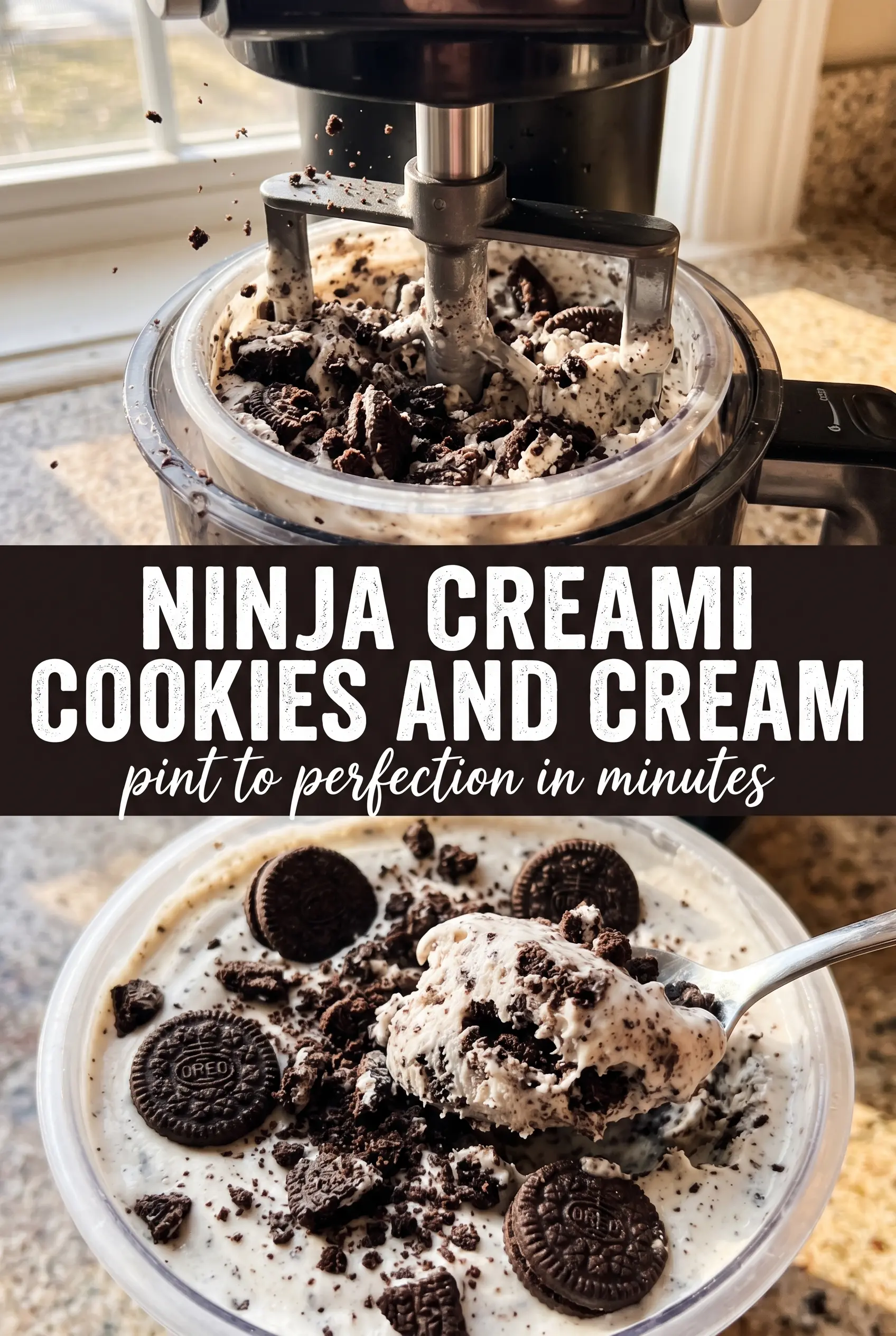
Run the Ice Cream setting first. If the top looks powdery or crumbly after the spin, add one tablespoon of milk and use Re-spin; that small addition is usually enough to bring it back to creamy without turning it slushy. Add the crushed cookies only after the base is smooth, then use the Mix-In function so you get distinct cookie pieces instead of gray streaks.
How to Change the Pint Without Losing the Texture
Make It Higher in Protein
Replace part of the milk with a protein milk or stir in a scoop of vanilla protein powder before freezing. The base will be a little less custardy and a little more firm, so plan on using Re-spin more often. Keep the cookie amount the same so the pint still tastes like cookies and cream, not vanilla protein dessert with cookie bits.
Dairy-Free Version
Use full-fat canned coconut milk or a rich oat-based cream alternative in place of the dairy. You’ll lose a little of the classic ice cream tang from the cream cheese, but the base still spins creamy if the fat content is high enough. Use dairy-free sandwich cookies for the Mix-In.
Extra Cookie Crunch
Crush half the cookies into small pieces and leave the rest in larger chunks. The fine crumbs flavor the base, while the bigger pieces stay crunchy after mixing. If all the cookies are dust, you lose that contrast that makes this pint fun.
Storage and Re-Spinning
- Refrigerator: This isn’t a fridge dessert; it softens too fast and loses the Creami texture within an hour or two.
- Freezer: Store the finished pint tightly covered for up to 2 weeks. The cookie pieces will soften a little over time, but the base stays good.
- Reheating: No reheating needed. If the pint freezes hard after storage, let it sit on the counter for 5 to 10 minutes, then spin again or use Re-spin with a splash of milk. Going straight from deep freeze to the spoon is what makes it crumbly.
Answers to the Questions Worth Asking
Ninja Creami Cookies and Cream
Ingredients
Equipment
Method
- Add whole milk, heavy cream, granulated sugar, softened cream cheese, vanilla extract, and salt to a blender and blend until completely smooth and the cream cheese is fully incorporated.
- Let the blender run until there are no visible cream cheese streaks, so the base will spin dense and creamy white in the Ninja Creami.
- Pour the mixture into the Ninja Creami pint container, leaving 1 inch of headspace.
- Freeze for 24 hours until firm enough to process.
- Process on the Ice Cream setting; if the pint is too firm, add 1 tablespoon milk and re-spin.
- Use the Mix-In function to fold in crushed chocolate sandwich cookies so the pieces are distributed throughout.
- Serve immediately for the creamiest texture, or return the pint to the freezer if you’re not finishing right away.