Bold coffee ice cream with a fudge ribbon and toasted almonds has a way of disappearing faster than any plain chocolate or vanilla ever does. The base stays silky and clean-tasting, the fudge cuts through with a dark, glossy sweetness, and the almonds bring the kind of crunch that keeps every bite interesting. When those three parts are balanced, the whole thing tastes like a grown-up scoop shop dessert made at home.
What makes this version work is the way the espresso gets dissolved right into the dairy before it ever hits the yolks, so the coffee flavor is deep instead of gritty or bitter. The custard is cooked just to 175°F, which is enough to thicken it without pushing the eggs too far and risking a cooked-egg taste. Churning with the almonds at the end keeps them from turning soggy, and the fudge goes in as a ribbon, not a mix-in, so you still get those dramatic swirls in every scoop.
Below, I’ve broken down the part that matters most: keeping the custard smooth, the almonds crunchy, and the fudge visible instead of lost in the base. I’ve also included the substitutions that still give you a real mocha-almond result if you need to work around what’s in your kitchen.
The espresso flavor came through beautifully, and the fudge stayed in proper ribbons instead of turning the whole batch muddy. I toasted the almonds a little longer and they stayed crunchy even after freezing overnight.
Like this mocha almond fudge ice cream? Save it to Pinterest for the nights when you want a coffee-rich scoop with real fudge ribbons and crunchy almonds.
The Custard Needs Gentle Heat, Not a Hard Cook
The biggest mistake with homemade ice cream is rushing the custard. If the heat climbs too fast, the yolks seize into tiny bits and the base turns grainy before it ever gets a chance to chill. Here, the milk and cream are warmed first, then whisked into the yolks slowly so the eggs temper instead of scrambling.
Cooking to 175°F is the sweet spot. The custard will coat a spoon and feel slightly thickened, but it should still pour smoothly. If it starts steaming hard or bubbling at the edges, pull it off the heat; that extra minute can be the difference between glossy and curdled.
What Each Ingredient Is Actually Doing in This Scoop
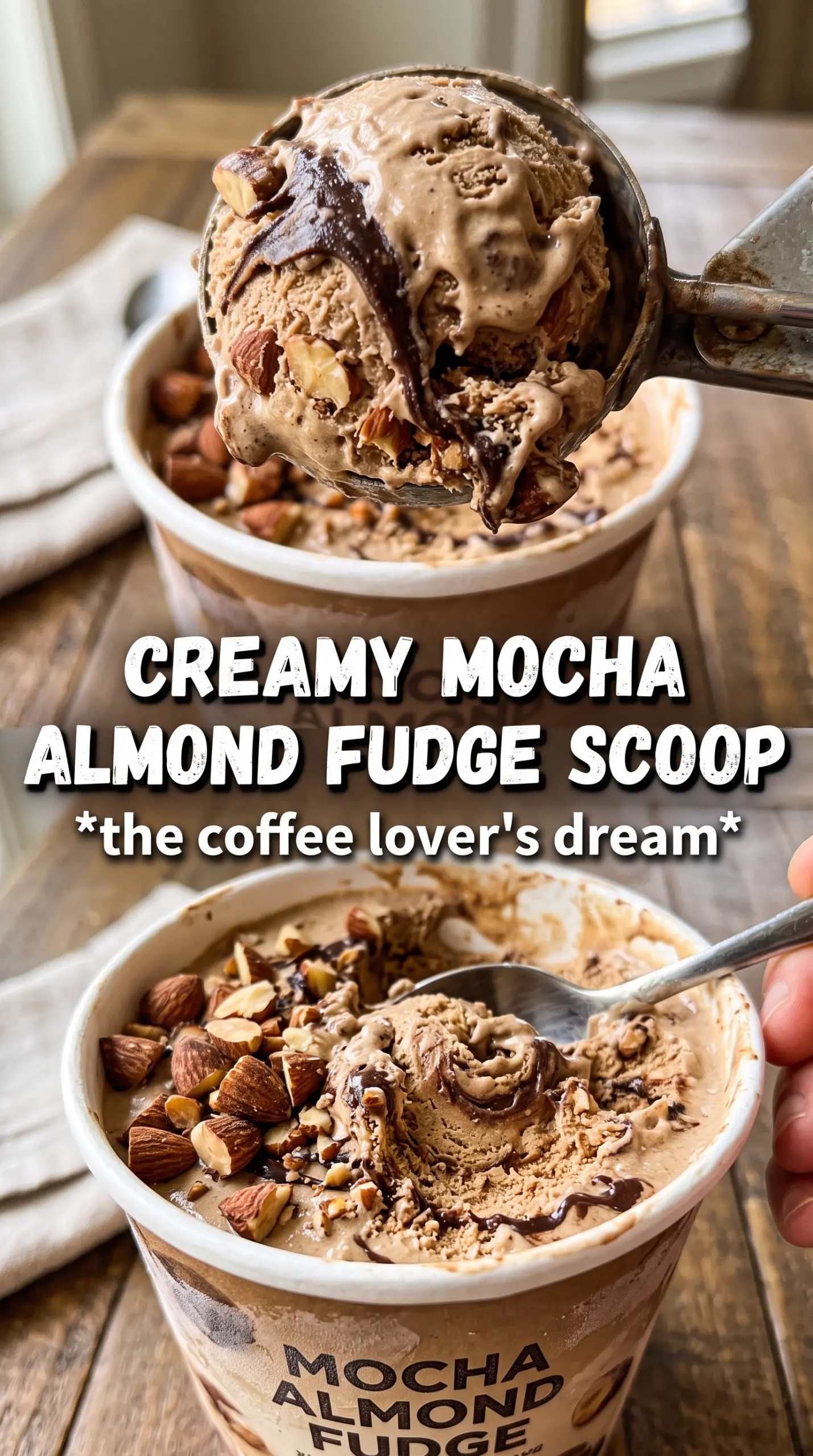
- Heavy cream — This gives the ice cream its plush body and keeps the custard from freezing into a hard block. You need the fat here; lower-fat cream substitutes make the texture icier.
- Whole milk — It lightens the base just enough so the coffee flavor doesn’t get buried. Using all cream makes the ice cream taste heavy before the espresso has a chance to come through.
- Instant espresso powder — This is the ingredient that makes the flavor unmistakably mocha. Brewed coffee is too diluted for this job; espresso powder dissolves cleanly and gives you a stronger, deeper taste without adding extra liquid.
- Egg yolks — They thicken the custard and keep the finished ice cream smooth. If you’ve ever had homemade ice cream freeze too icy, it’s often because the base didn’t have enough yolk structure.
- Toasted whole almonds — Toasting matters more than the type of almond. Warm, nutty almonds stay crisp and taste fuller; raw almonds just get swallowed by the cold base.
- Hot fudge sauce — Warmed fudge ribbons spread in clean streaks through the container instead of clumping. If the sauce is too thick or cold, it will sink in blobs instead of swirls.
Churning, Layering, and Keeping the Fudge Visible
Building the Coffee Custard
Start by warming the cream and milk with the espresso powder until the powder disappears completely. Whisk the yolks with the sugar until they look pale and slightly thick, then stream in the hot dairy slowly so the eggs warm gradually. Return everything to the pan and cook, stirring constantly, until it reaches 175°F and lightly coats the back of a spoon.
Cooling Before the Churn
Strain the custard into a clean bowl, then stir in the vanilla and salt. The straining step catches any tiny egg bits before they become a texture problem in the freezer. Chill the base completely; if it goes into the machine warm, the churn takes longer and the texture gets softer and less controlled.
Adding Almonds at the End
Churn the ice cream until it’s thick and soft-serve-like, then add the toasted almonds during the last few minutes. That timing keeps them suspended instead of settling to the bottom of the machine. If you add them too early, they get knocked around so long that they lose their crunch.
Swirling in the Fudge
Scoop the churned ice cream into a container in layers and drizzle warm fudge sauce between the layers. Drag a knife through just a few times for ribbons, not a full mix. If you over-swirl, the fudge disappears into the base and you lose the contrast that makes the whole dessert special.
How to Adapt This Mocha Almond Fudge Ice Cream Without Losing the Point
Dairy-Free Version
Use full-fat canned coconut milk in place of the cream and milk. The texture will be a little denser and the coconut flavor will show through, but the espresso and fudge still carry the dessert. Skip the yolks and use a dairy-free ice cream base designed for churning if you want the cleanest result.
No-Churn Shortcut
Fold whipped cream into a sweetened condensed milk base flavored with espresso powder and vanilla, then layer in the almonds and fudge. It won’t have the same custard richness, but it will still freeze up creamy and scoopable. Keep the fudge in thin ribbons so the texture doesn’t turn heavy.
Walnut or Pecan Swap
If almonds aren’t in the pantry, toasted walnuts or pecans work well. Walnuts lean a little more bitter and pecans read sweeter, so either one changes the balance slightly, but the crunch and contrast still hold the recipe together.
Storage and Reheating
- Refrigerator: Not applicable for long storage once churned; this ice cream should go straight to the freezer after layering.
- Freezer: Store in an airtight container for up to 2 weeks for the best texture. After that, it can pick up ice crystals and the fudge swirls lose some of their clean contrast.
- Reheating: Let it sit at room temperature for 5 to 10 minutes before scooping. If it’s rock hard, don’t microwave the whole container; that softens the edges unevenly and makes the fudge smear instead of staying ribboned.
Answers to the Questions Worth Asking
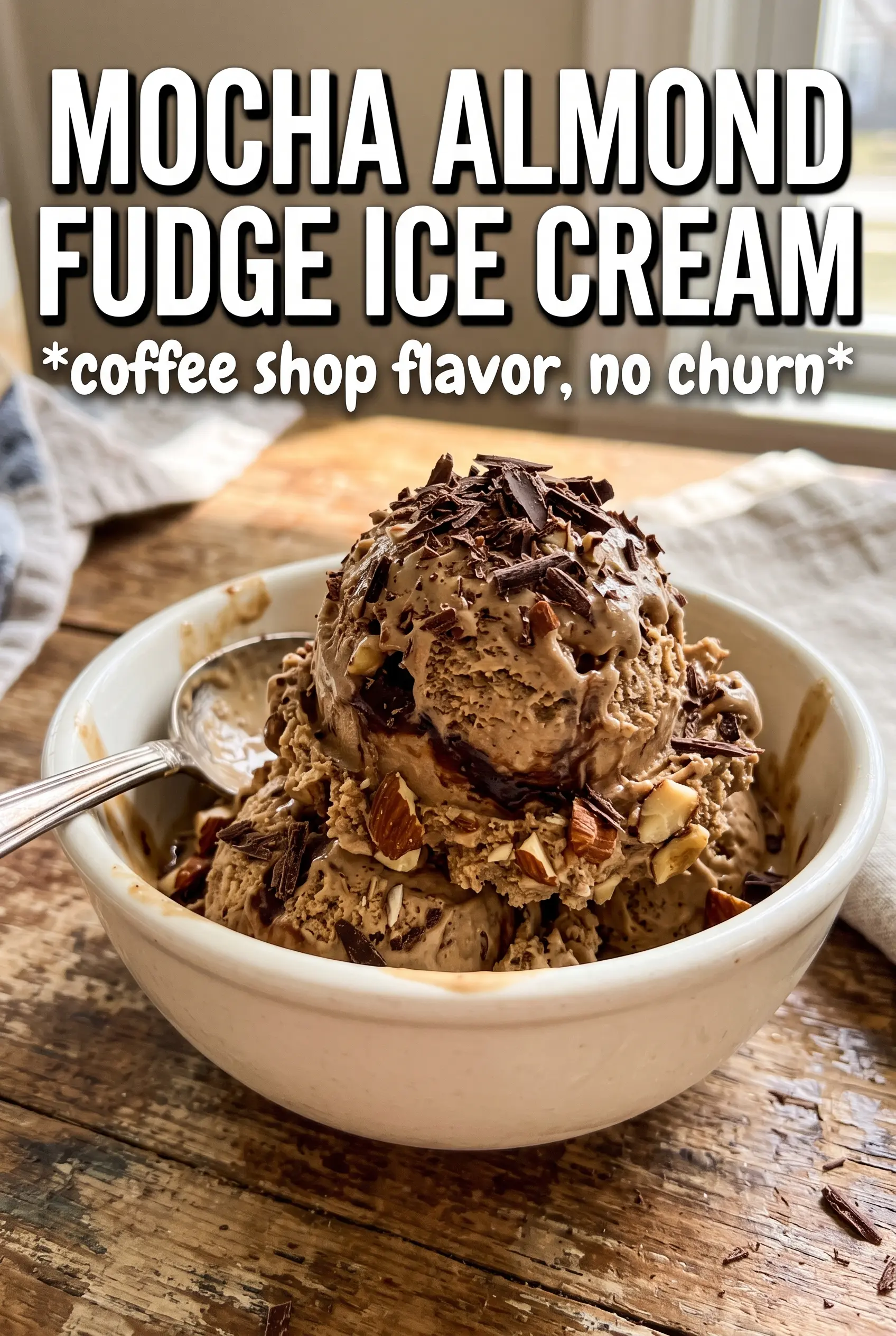
Mocha Almond Fudge Ice Cream
Ingredients
Equipment
Method
- Heat the heavy cream and whole milk in a saucepan until steaming, then whisk in the instant espresso powder until completely dissolved. Keep whisking so the espresso powder doesn’t clump.
- In a bowl, beat the egg yolks with the granulated sugar until slightly thickened, then slowly whisk the warm cream mixture into the yolks. Pour in a thin stream to prevent scrambling.
- Return the mixture to the saucepan and cook, stirring constantly, until it reaches 175F. The custard should coat the back of a spoon.
- Strain the custard to remove any bits of cooked egg, then whisk in the vanilla extract and salt. Discard any solids in the strainer.
- Cool the custard completely, then refrigerate for 4 hours. Cover once cool to prevent a skin from forming.
- Churn the chilled custard in an ice cream maker according to the manufacturer’s instructions. Stop when the texture is thick and soft-serve like.
- Add the toasted whole almonds in the last 5 minutes of churning. Mix just until evenly distributed.
- Layer the churned ice cream into a container, drizzling warm hot fudge sauce between layers. Swirl each layer with a knife to create visible fudge ribbons.
- Freeze until firm. Let sit at room temperature for 5 minutes before scooping for clean cuts.