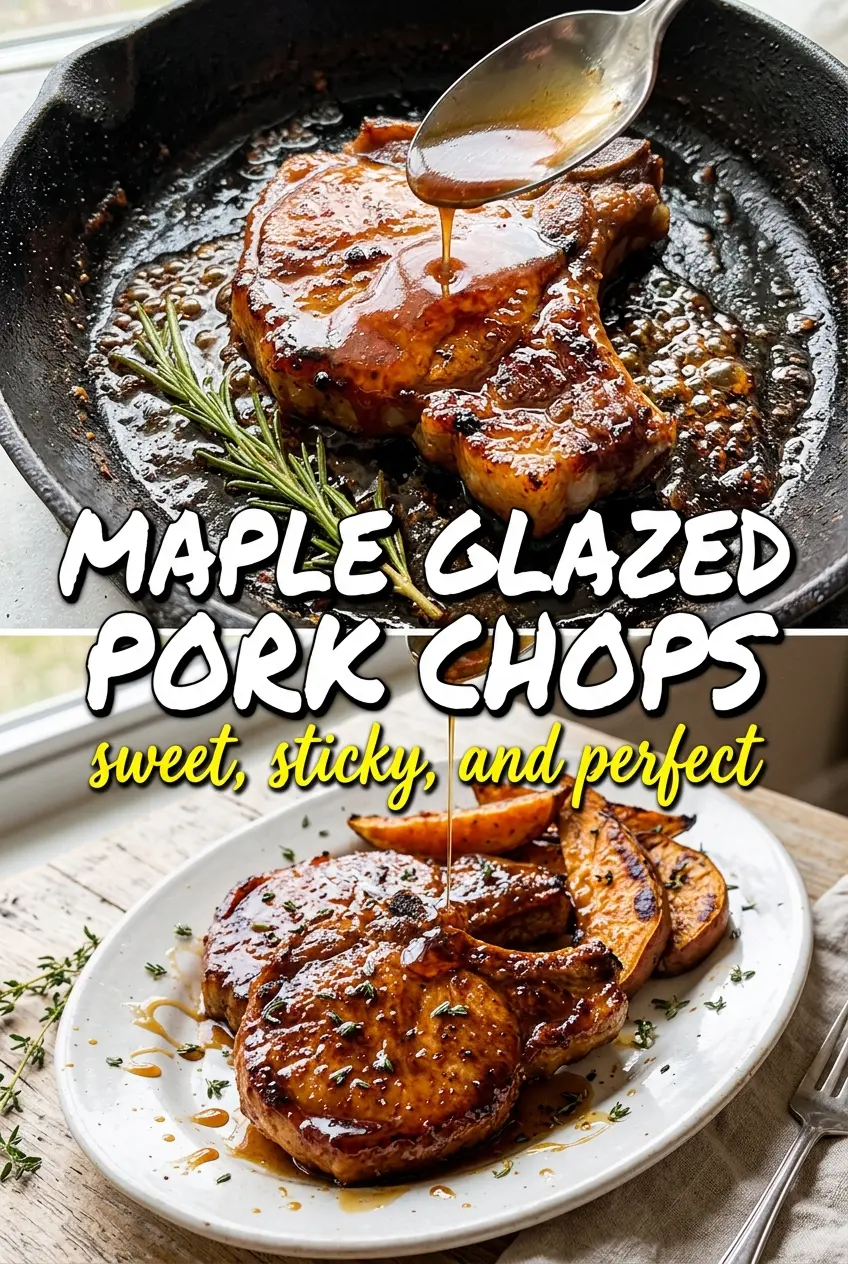
Sticky maple glazed pork chops hit that sweet-savory spot that keeps people coming back for seconds. The glaze clings to the meat in a thin, glossy layer, and when it caramelizes in the skillet, it picks up just enough browned flavor to keep the sweetness in check. You get juicy pork, a little sharpness from Dijon, and an amber finish that looks like you worked harder than you did.
What makes this version work is the order of operations. The chops get a hard sear first so they build color before the glaze goes in, and the sauce is reduced right in the same pan so every bit of fond turns into flavor instead of getting washed down the drain. Maple syrup brings the sweetness, soy sauce adds salt and depth, and garlic plus rosemary keep the glaze from tasting flat.
Below you’ll find the small details that matter most: how to keep the pork from drying out, when the glaze is thick enough to coat, and a few smart swaps if you need to work with what’s already in your pantry.
The glaze thickened up perfectly in the skillet and coated the chops without burning. I served it with rice and the pan was scraped clean.
Love the sticky maple glaze and golden skillet crust? Save these maple glazed pork chops for your next fast, sweet-savory dinner.
The Sear That Keeps the Maple Glaze From Going Bitter
The biggest mistake with glazed pork chops is trying to cook the sauce and the meat at the same time from the start. Maple syrup burns fast, especially in a hot skillet, so the chops need their sear first and the glaze needs to come in after the pan has come down a notch. That gives you browned pork and a sauce that turns glossy instead of scorched.
Boneless chops that are about 1 inch thick hold up best here. Thinner chops cook too quickly and leave you with dry meat before the glaze has a chance to cling. Once the chops are seared, the pan should still have a little fond stuck to the bottom; that’s the flavor base the glaze picks up when it simmers.
- Pork chops — Thick, boneless chops stay juicy through the final glaze step. If yours are thinner, shorten the second cook dramatically or they’ll dry out before the sauce finishes.
- Pure maple syrup — This is where the shine and the sticky finish come from. Pancake syrup won’t behave the same way and often tastes flatter, so use the real thing if you can.
- Dijon mustard — Dijon sharpens the sweetness and helps the glaze feel balanced instead of candy-like. Yellow mustard works in a pinch, but the flavor will be simpler and a little louder.
- Soy sauce — It brings salt and depth, and it also darkens the glaze as it reduces. If you need a gluten-free swap, use tamari in the same amount.
- Fresh rosemary — A little goes a long way here. It cuts through the sweetness and makes the whole pan smell incredible, but dried rosemary can turn woody fast, so use half as much if that’s what you have.
What Each Ingredient Is Actually Doing in This Recipe

- Primary ingredient (the star) — Quality matters most. Choose the best you can find.
- Cooking medium (oil, butter, or broth) — This carries flavors and prevents dryness.
- Seasonings (salt, pepper, spices, herbs) — Layer flavors so nothing overpowers. Build depth gradually.
- Aromatics (garlic, onion, herbs) — Cook with fat to bloom flavors. Become the foundation.
- Supporting ingredients — Complement the main ingredient without overpowering it.
- Sauce or liquid (if applicable) — Brings flavors together. Balance richness with acid.
- Acid (lemon, vinegar, wine, or other) — Brightens and prevents flat-tasting results.
- Final finish (garnish, glaze, or sauce) — Prevents one-dimensional taste and adds visual appeal.
Building the Glaze So It Stays Glossy
Getting the Pork Sear Right
Pat the chops dry before they hit the skillet. Moisture on the surface keeps them from browning properly, and browning is what gives this dish its depth. Heat the oil until it shimmers, then lay the pork in without crowding the pan. If the chops steam instead of sizzle, the pan is too full or too cool.
Pulling the Glaze Together
Mix the maple syrup, Dijon, soy sauce, garlic, rosemary, and black pepper before you pour anything into the skillet. That keeps the garlic from clumping and helps the sauce start evenly. When it goes into the pan, let it bubble gently for just a minute or two. If it boils hard, the maple can turn dark and bitter before it thickens.
Finishing Without Overcooking
Return the chops to the skillet and spoon the glaze over them constantly. You’re looking for a lacquered coating and an internal temperature of 145°F, not a long simmer. Once the sauce starts to look shiny and cling to the meat instead of sliding off, it’s ready. Let the chops rest for a couple of minutes so the juices settle before you serve them.
Small Changes That Still Keep the Glazed Pork Chop Magic
Make it gluten-free with tamari
Swap the soy sauce for tamari in the same amount. You’ll keep the salty depth and dark color without changing the texture of the glaze. This is the cleanest substitution in the recipe and it doesn’t ask you to change anything else.
Use bone-in chops for a little more forgiveness
Bone-in chops can work well if they’re similar in thickness to the boneless ones. They usually stay juicier, but they take a bit longer to finish and the glaze may need another minute to cling. Watch the temperature instead of the clock.
Dial back the sweetness
If you want a more savory glaze, cut the maple syrup to 3 tablespoons and keep the mustard and soy sauce the same. The sauce will be a little less sticky and a little sharper, which works well if you’re serving the pork with mashed potatoes or rice.
Storage and Reheating
- Refrigerator: Store leftovers in an airtight container for up to 3 days. The glaze will thicken as it chills.
- Freezer: Freeze cooked pork chops for up to 2 months, though the glaze will lose a little shine after thawing. Wrap tightly and thaw overnight in the refrigerator.
- Reheating: Warm gently in a covered skillet over low heat with a splash of water to loosen the glaze. High heat will tighten the meat fast and can make the sauce turn sticky in the wrong way.
Questions I Get Asked About This Recipe
Maple Glazed Pork Chops
Ingredients
Equipment
Method
- Season the pork chops all over with salt and pepper.
- Heat the olive oil in a skillet over medium-high heat and sear the pork chops for 4 minutes per side until golden; set aside.
- Mix the pure maple syrup, Dijon mustard, soy sauce, minced garlic, minced fresh rosemary, and black pepper until smooth.
- Pour the glaze into the same pan over medium heat and simmer for 1–2 minutes until slightly thickened.
- Return the pork chops to the pan and cook for 2–3 minutes, spooning the glaze over constantly.
- Continue cooking until the internal temperature reaches 145°F, for a glossy lacquered finish.
- Garnish with fresh rosemary and serve immediately.