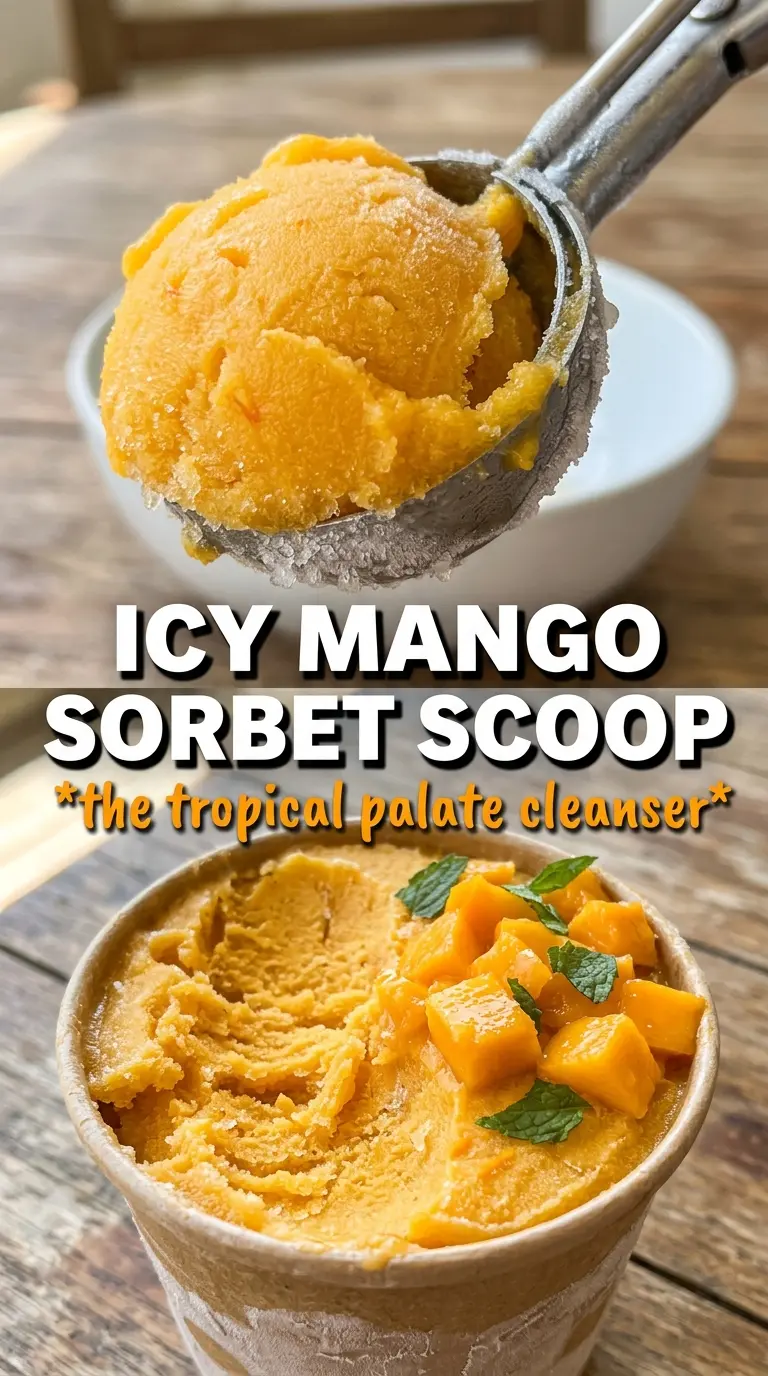
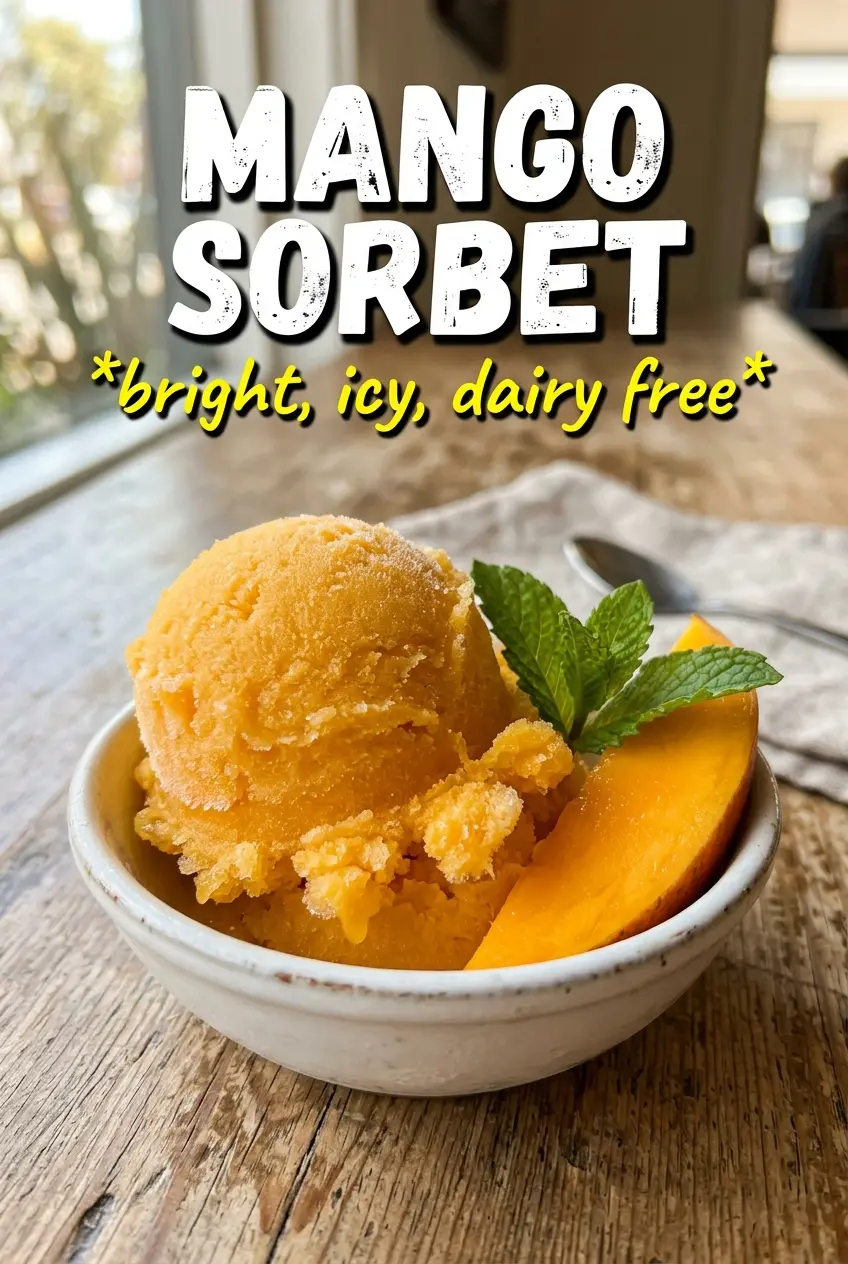
Vivid mango sorbet turns into one of those desserts people keep sneaking spoonfuls of from the freezer because the texture lands somewhere between plush and icy in the best way. The mango stays front and center, brightened just enough with lime to taste clean instead of flat, and the color alone makes it feel like a small celebration in a bowl.
The trick here is balancing sweetness and acidity before the mixture ever hits the freezer. Mangoes vary a lot in how sweet and fiber-heavy they are, so the simple syrup gives you control, while the lime juice keeps the sorbet tasting like fruit instead of frozen candy. A fine mesh strain at the end is optional, but it matters if your mangoes are stringy or if you want that smooth, scoopable finish.
Below, I’ve included the small details that keep the sorbet from freezing into a hard block, plus a few ways to adjust it depending on whether you’re using fresh fruit, frozen fruit, or making it ahead for a crowd.
The lime kept the mango from tasting flat, and after an hour of stirring the freezer texture was smooth enough to scoop without waiting forever. My kids asked for seconds before dinner was even over.
Like this mango sorbet? Save it for the days when you want a bright, dairy-free dessert with a silky scoop and a clean lime finish.
The Part That Keeps Mango Sorbet Creamy Instead of Icy
Mango sorbet looks simple, but the difference between a smooth scoop and a hard, crunchy block usually comes down to water balance. Too much plain fruit puree and not enough sugar syrup, and the freezer wins. Sugar lowers the freezing point, which keeps the sorbet softer and easier to scoop, while lime adds the brightness that stops the sweetness from feeling heavy.
The other thing people miss is texture before freezing. If your mango is fibrous, the blender will leave tiny strings behind, and those strings turn more obvious once frozen. Straining is the easiest fix, and it’s worth the extra minute if you want a cleaner spoonful.
- Mango — Use the ripest fruit you can find. Fresh mango gives the most vivid flavor, but good frozen mango works well because it’s picked at peak ripeness and blends smoothly once thawed just enough to break down.
- Simple syrup — This does more than sweeten. It helps the sorbet freeze with a softer texture, and you can’t fully replace that effect by just adding more mango.
- Lime juice and zest — Juice sharpens the flavor, while zest adds the citrus oil that makes the mango taste fresher. Don’t skip the zest if your mangoes are very sweet.
- Fine mesh sieve — Optional, but it removes fibers and any tiny unmixed bits. If your mangoes are buttery and low-fiber, you can skip it.
What Each Ingredient Is Actually Doing in This Ice Cream
- Base ingredient (cream, milk, or custard) — This provides the foundation and richness. Quality matters.
- Sweetener (sugar, honey, or condensed milk) — This sweetens and prevents ice crystals. The ratio is critical.
- Flavor element (vanilla, fruit, chocolate, or other) — This defines the ice cream personality. Use quality ingredients.
- Egg yolks (if making custard base) — These create richness and silky texture. Optional but elevates ice cream.
- Churning (if using ice cream maker) — This incorporates air and prevents ice crystals. Critical for smooth texture.
- Freezing temperature and time — Proper freezing prevents rock-hard texture. Store at 0°F or below.
- Mix-ins (chocolate, cookies, fruit, or swirls) — These add texture and prevent one-dimensional flavor. Add near end of churning.
- Serving temperature (slightly soft, not rock hard) — This provides creamy mouthfeel. Remove from freezer 5 minutes before serving.
Building the Base Before It Goes Into the Freezer
Start by dissolving the sugar completely in the water. If the syrup still feels gritty, that graininess can linger in the finished sorbet, and it also makes the final mixture harder to judge for sweetness. Let it cool all the way down before blending it with the fruit; hot syrup dulls the mango and can make the puree taste cooked.
Making the Simple Syrup
Warm the sugar and water just until the crystals disappear. You don’t need a boil here, just enough heat to dissolve everything cleanly. Pull it off the burner as soon as it’s clear, then let it cool until it’s no longer warm to the touch. If you blend in warm syrup, the mango loses some of its fresh flavor and the freezer time gets longer than it should.
Blending Until Completely Smooth
Add the mango, cooled syrup, lime juice, lime zest, and salt to the blender and run it until the mixture looks glossy and uniform. Stop and scrape down the sides if you see pale streaks of fruit. The mixture should taste a little sweeter than you want the finished sorbet to taste, because freezing mutes sweetness more than most people expect.
Freezing for Scoopable Texture
Pour the puree into a shallow container so it freezes evenly. If you’re stirring by hand, scrape and mix it every hour; that breaks up ice crystals before they get large and gritty. If you’re using an ice cream maker, churn until it looks like soft-serve, then move it to the freezer to firm up. The sorbet is ready when it’s set around the edges but still gives slightly in the center.
Use frozen mango when fresh isn’t at its best
Frozen mango is a great backup and often tastes better than mediocre fresh fruit. Let it sit just long enough to blend smoothly, then use it the same way you would fresh mango. The sorbet may need a minute or two longer to come to the right scoopable texture because frozen fruit starts out colder and denser.
Make it lower sugar
You can reduce the sugar a little, but don’t cut it too far or the sorbet turns hard and icy. If your mangoes are exceptionally sweet, start with 1/3 cup sugar and taste the puree before freezing. The result will be firmer and a little less silky, but still good if you like a sharper fruit taste.
No ice cream maker method
The hand-stirred method works well here because the base is simple and fruit-heavy. Use a shallow container and stir thoroughly every hour so the freezing happens in small layers instead of one solid mass. This keeps the texture lighter and makes it easier to break up before serving.
Dairy-free by nature
This sorbet is already dairy-free and vegan as written, which makes it one of the easiest desserts to serve to a crowd. The one thing to watch is hidden dairy in add-ins or garnishes if you change the recipe. Keep the mint and lime garnish simple and the recipe stays clean and bright.
Storage and Reheating
- Refrigerator: Not recommended. Sorbet melts unevenly and won’t come back the same once chilled in the fridge.
- Freezer: Store covered for up to 2 weeks. After that, ice crystals start to build and the texture gets noticeably rougher.
- Reheating: No reheating needed. Let it sit at room temperature for 5 to 10 minutes before scooping; if it’s rock hard, a brief rest is better than microwaving, which melts the edges before the center softens.
Questions I Get Asked About This Mango Sorbet
Mango Sorbet
Ingredients
Equipment
Method
- Combine granulated sugar and water in a saucepan over medium heat, stirring until fully dissolved, about 4-5 minutes, until the syrup looks clear and smooth.
- Remove from heat and cool the simple syrup completely, 15-20 minutes, until no warmth remains.
- Add mango chunks to a blender and blend until thick but still scoopable.
- Blend in the cooled simple syrup, lime juice, lime zest, and salt until completely smooth, about 1-2 minutes, with no visible mango bits.
- Strain through a fine mesh sieve for a very smooth sorbet if desired, scraping the mixture with a spatula until most of it passes through.
- Pour the sorbet mixture into a shallow freezer container and freeze for 4 hours, stirring every hour, until it turns into a scoopable, glistening frozen texture.
- Alternatively, churn in an ice cream maker for 20-25 minutes, until it looks thicker and aerated, then transfer to a container to firm up if needed.
- Serve with fresh mint and a lime wedge, spooning immediately for the best vibrant color and icy texture.