Bright lemon sorbet lands with the kind of clean, sharp finish that makes a dessert feel refreshing instead of heavy. The texture is pale, icy, and spoonable, with enough sugar to keep the citrus from turning harsh and enough zest to make every bite taste like the peel, not just the juice. It’s the kind of frozen dessert I want after a rich meal or on a day when I want something cold and bracing, not creamy and soft.
The balance matters here. Fresh lemon juice gives you the tartness, but the syrup carries the sweetness evenly through the base so the sorbet freezes with a smoother texture instead of turning into a hard block of ice. A little zest adds back the oils you lose when you strain juice alone, and if you use the egg white, you get a slightly lighter, less brittle finish without turning it into sherbet.
Below, I’ve laid out the part that makes homemade sorbet work consistently, plus the one optional step that changes the final texture more than you’d expect. If you’ve ever had sorbet freeze too hard or taste flat, this version fixes both problems.
The texture came out smooth and icy instead of hard and crumbly, and the lemon flavor stayed bright even after it froze overnight.
Pin this homemade lemon sorbet for the nights when you want a sharply tart, dairy-free frozen dessert with a clean finish.
The Part That Stops Lemon Sorbet From Freezing Into a Brick
The biggest mistake with sorbet is treating lemon juice like the whole base. It isn’t. Sugar isn’t just there for sweetness; it changes how the mixture freezes, which is why a properly balanced syrup gives you a scoopable texture instead of a frozen puck. If the base tastes sharp but thin before freezing, it usually tastes flat after it freezes.
This recipe also works because the syrup is cooled before it meets the lemon juice. Hot syrup can dull the fresh citrus aroma and make the mixture take longer to chill, which affects the churn. If you want a cleaner lemon flavor, use freshly zested lemons before juicing them; the oils from the zest carry more perfume than juice alone ever will.
What Each Ingredient Is Actually Doing In This Sorbet
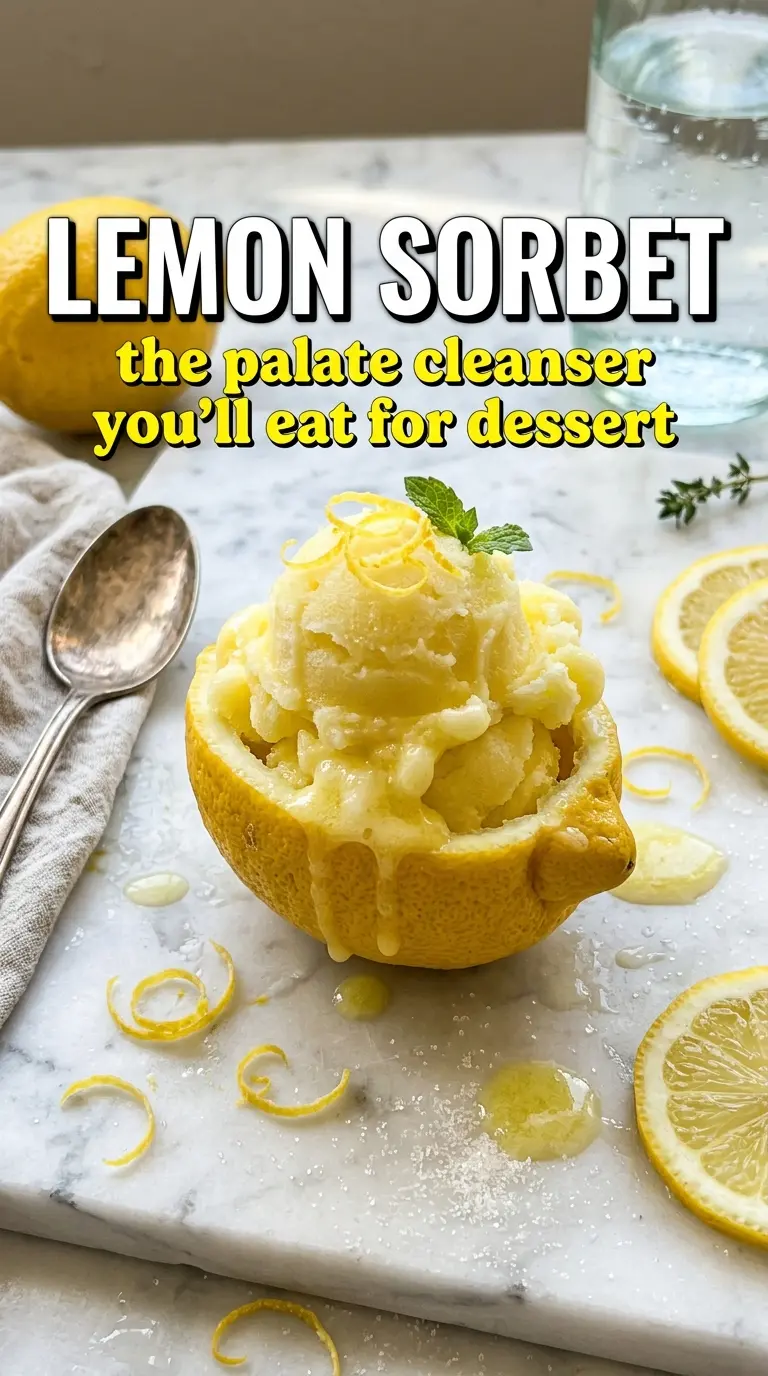
- Fresh lemon juice — This is the backbone of the recipe, and bottled juice won’t give you the same bright, clean edge. Fresh juice tastes less flat and less metallic. Strain out the seeds, but don’t overstrain the pulp unless you want a cleaner, less rustic texture.
- Lemon zest — The zest adds the aromatic oils that make the sorbet smell and taste like fresh lemon instead of just sour liquid. Zest the fruit before juicing it, while the skins are still taut. Fine zest is easier to disperse evenly through the chilled base.
- Sugar — Granulated sugar does the texture work here. It lowers the freezing point and keeps the sorbet from getting icy and hard. Cutting it much lower will make the final dessert sharper, but also more brittle.
- Water — This becomes the simple syrup and helps dissolve the sugar completely. There’s no need for a more complicated syrup here. Just cook until the liquid turns clear and the grains are gone.
- Egg white, optional — Whipped to soft peaks and folded in, it lightens the finished sorbet and gives it a little more body. It’s optional, but it does make the texture less dense and less icy. Use only a fresh egg from a source you trust, and fold it in gently so you don’t knock out all the air.
Chilling, Churning, and Freezing the Base the Right Way
Building the Syrup
Combine the sugar and water in a saucepan and heat over medium, stirring until the mixture turns completely clear and no sugar crystals remain on the bottom. You’re not trying to reduce it or color it. If you see bubbling for long before the sugar dissolves, the heat is too high and you’re wasting time fighting evaporation instead of making a clean syrup.
Cooling the Citrus Base
Let the syrup cool all the way before adding the lemon juice, zest, and salt. Warm syrup can mute the citrus and send the mixture into the freezer while it’s still too hot, which makes churning take longer and can throw off the final texture. The base should be cold enough to refrigerate immediately without steaming the container.
Churning to the Right Thickness
Churn the mixture until it looks thick, slushy, and softly mounded, usually 20 to 25 minutes depending on your machine. Don’t wait for it to look finished like ice cream; sorbet should still be loose enough to spread when it hits the container. If you’re adding the whipped egg white, fold it in after the base is fully chilled so the foam stays light.
Firming Up in the Freezer
Move the churned sorbet to a lidded container and freeze it for at least 2 hours until firm enough to scoop. Press a piece of parchment directly on the surface if your freezer tends to form ice crystals. If it freezes too hard, let it sit at room temperature for a few minutes before scooping instead of microwaving the container or hacking at it with a wet spoon.
How to Tweak Lemon Sorbet Without Losing the Clean, Tart Finish
Make It Dairy-Free and Egg-Free
Skip the egg white and churn the base as written. You’ll get a firmer, more crystalline sorbet, which is still excellent if you like a sharper snap on the spoon. The tradeoff is texture, not flavor.
Make It Sweeter or Sharper
If your lemons are especially tart, add another tablespoon or two of sugar to the syrup before chilling. If you want a sharper finish, don’t cut the sugar too far; instead, serve smaller scoops and let the tartness stay focused without wrecking the texture.
Turn It Into a Bigger Batch for Guests
This base scales cleanly. Double everything, chill it in a shallow container so it cools faster, and churn in batches if your machine can’t hold the full volume. A deeper container slows freezing and can leave the center softer than the edges.
Storage and Reheating
- Refrigerator: Not recommended once mixed, since the base is meant to be churned and frozen. Before churning, the chilled lemon mixture can sit in the fridge for up to 24 hours.
- Freezer: It keeps well for about 2 weeks in a sealed container. After that, the texture gets icier and the citrus flavor starts to fade.
- Reheating: There’s no reheating here, but for scooping, let the sorbet stand at room temperature for 5 to 10 minutes. Don’t force it with a hot spoon, which melts the outer layer and leaves the center hard.
Answers to the Questions Worth Asking
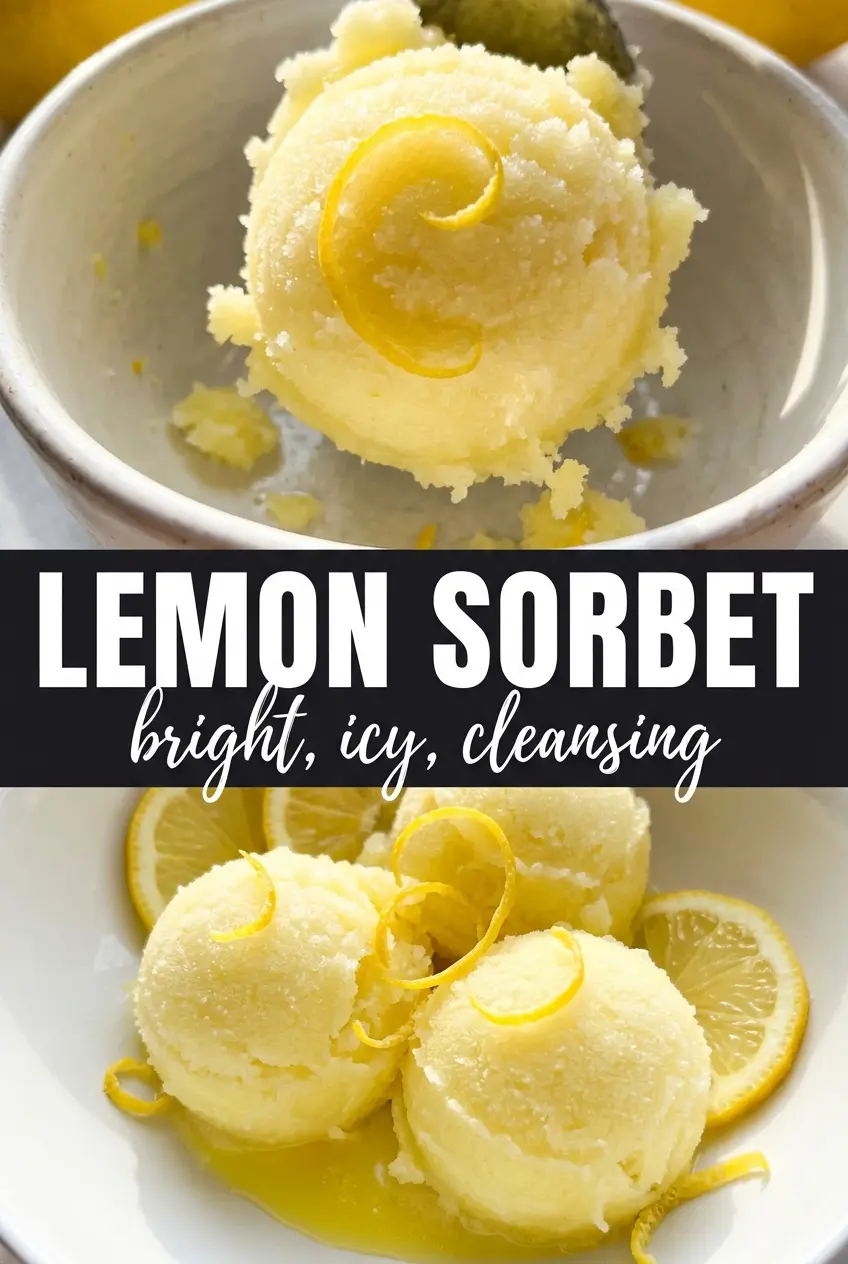
Lemon Sorbet
Ingredients
Equipment
Method
- Combine granulated sugar and water in a saucepan, then heat over medium while stirring until the sugar fully dissolves. Stop when the mixture turns clear, then set aside to cool completely.
- Stir the cooled simple syrup into fresh lemon juice, lemon zest, and salt until fully combined. Refrigerate the mixture until very cold, at least 4 hours.
- If using egg white, whip it to soft peaks and fold it into the cold lemon mixture until no streaks remain. Keep the mixture cold until ready to churn.
- Pour the cold lemon mixture into an ice cream maker and churn until thick and slushy, about 20-25 minutes. Look for a pale icy-yellow texture that holds soft peaks.
- Transfer the churned sorbet to a container, cover, and freeze at least 2 hours until firm. For scooping, let it sit 2-3 minutes at room temperature if needed.
- Serve lemon sorbet in chilled bowls or scoop into hollowed lemon halves. Garnish with a light scatter of lemon zest for extra brightness.